A painful sunburn can turn a fun day outdoors into days of redness, peeling, and discomfort, and choosing the wrong product can make irritated skin feel even worse.
Yes, Aquaphor is good for sunburn, but only at the right stage of healing. It works best once your skin starts to cool, dry, or peel, not on fresh, hot, red skin.
I’ll help you understand how Aquaphor works, when it can be useful, and why timing matters when applying it to sunburned skin.
You’ll also learn what to use during the first stages of a burn, how to care for sunburned lips, which ingredients can help or irritate your skin, and when a sunburn needs medical attention.
By the end, you’ll know how to make better choices for your recovery.
Understanding Aquaphor and How It Works on Sunburn
Aquaphor is a petroleum-based healing ointment formulated to protect and moisturize dry, irritated, or damaged skin.
Its main ingredient, petrolatum, forms a protective seal over the skin that helps limit water loss and keeps the area hydrated as it heals.
Petrolatum’s role here isn’t just brand marketing. The U.S. Food and Drug Administration (FDA) recognizes it under an official OTC drug monograph as a skin protectant approved to temporarily protect minor burns, the same category Aquaphor’s core ingredient falls under.
Sunburn damages the skin barrier, letting moisture escape faster, which is what drives the dryness, tightness, peeling, and discomfort that follow.
By sealing that barrier, Aquaphor helps trap moisture in and keep peeling skin more comfortable as it recovers.
That said, Aquaphor can’t undo UV damage or heal a sunburn faster than the skin’s own timeline. It’s most useful once the skin has cooled and started to feel dry or flaky rather than hot and swollen.
For a fresh sunburn, the American Academy of Dermatology (AAD) recommends cool baths or showers first, then a moisturizer with aloe vera or soy while skin is still damp, a step that should come before reaching for a heavier ointment like Aquaphor.
The Right Time to Use Aquaphor
Yes, Aquaphor can help with sunburned skin, but timing matters. Avoid applying it immediately on fresh, hot, red skin. First, cool the burn with a compress, cool water, or aloe vera.
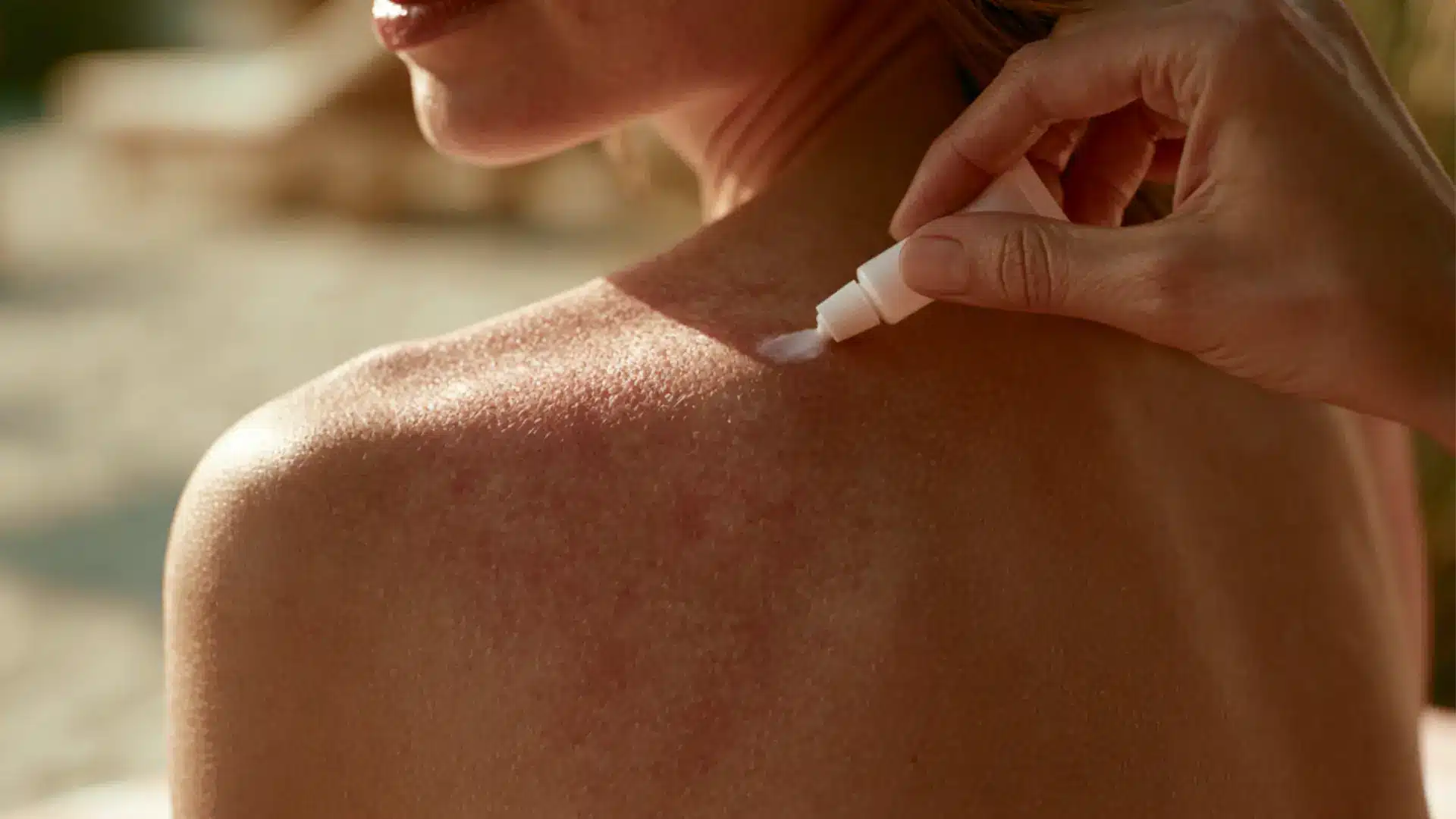
Once your skin has fully cooled, with no remaining redness or warmth, and starts to dry, peel, or feel tight, Aquaphor can help lock in moisture and protect the damaged skin barrier.
| Sunburn Stage | Skin Needs | Aquaphor Use |
|---|---|---|
| First few hours | Cooling relief | Avoid initially |
| First 24–48 hours | Soothe irritation | Use lightweight moisturizers |
| Skin cools down, no redness or warmth | Restore moisture | Aquaphor may help |
| Peeling or dryness, fully cooled | Protect the skin barrier | Good option |
| Cracked skin | Prevent moisture loss | Helpful |
The best time to use Aquaphor is when your skin needs protection and hydration, not when it still needs cooling or still feels warm or inflamed.
How to Treat Sunburn at Home?
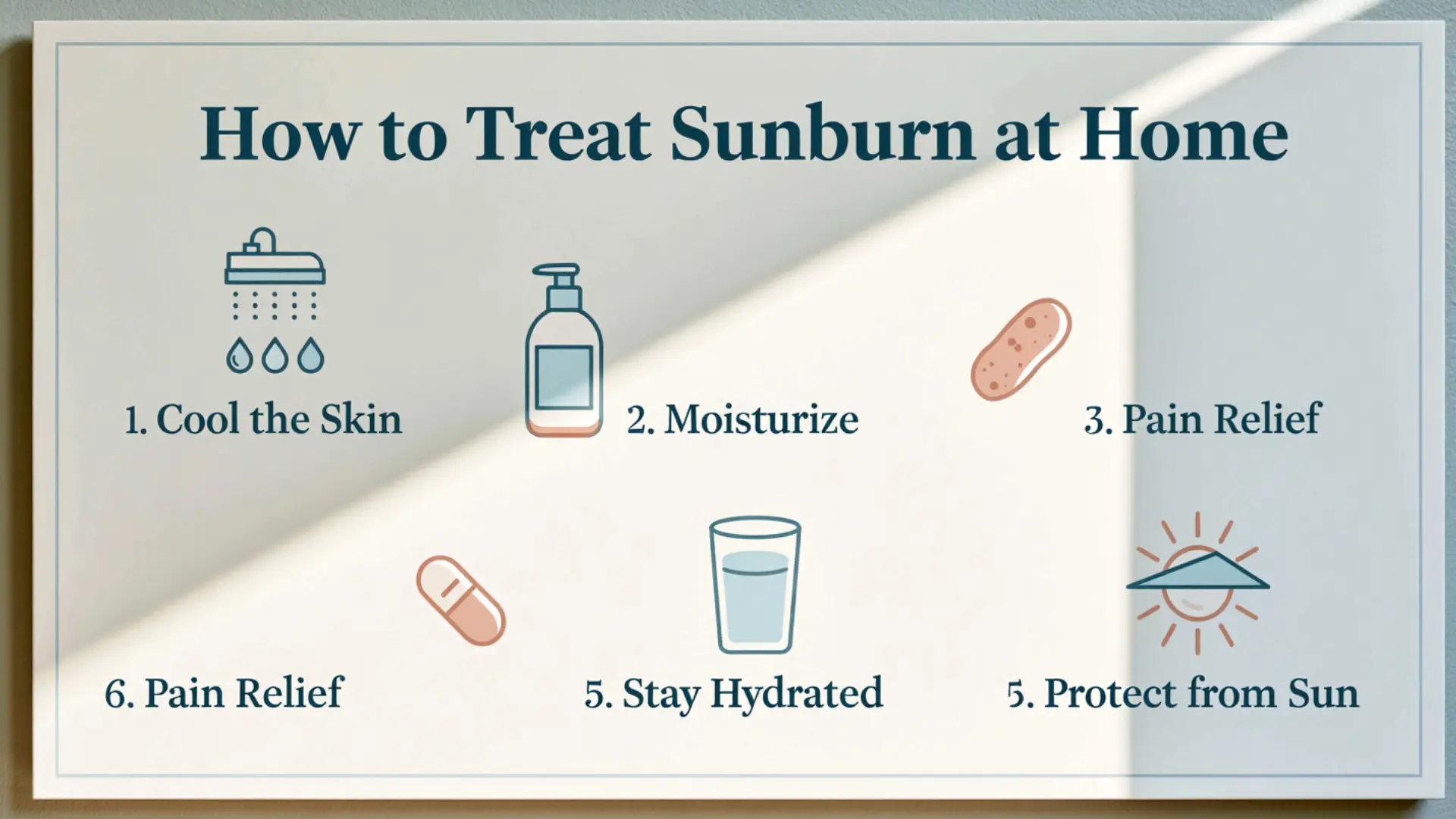
Most mild sunburns can improve with proper home care. The focus should be on cooling the skin, restoring lost moisture, reducing discomfort, and preventing further irritation while your skin repairs itself.
1. Cool the Burned Skin
Cooling your skin is the first step after noticing a sunburn. Take a cool shower or bath, or apply a damp, cool cloth to the affected area for short periods.
This helps reduce heat, redness, and discomfort without further irritating the skin. Avoid using ice directly on a sunburn because extreme cold can damage already sensitive tissue.
Gentle cooling prepares your skin for moisturizers and other soothing treatments.
2. Moisturize With the Right Products
Once your skin has cooled, apply gentle moisturizers to help restore hydration and reduce dryness.
Ingredients like aloe vera, ceramides, glycerin, colloidal oatmeal, hyaluronic acid, and panthenol can help soothe irritated skin and support the barrier.
Choose fragrance-free and alcohol-free products because harsh ingredients may cause more stinging or irritation.
Keeping your skin moisturized can also reduce tightness and discomfort during peeling.
3. Take Pain Relief if Needed
An over-the-counter pain reliever may help when taken as directed on the label. Ask a healthcare professional if you have medical conditions, take other medicines, are pregnant, or are unsure which option is safe.
Ibuprofen may also help calm inflammation when suitable. Always follow the recommended dosage instructions and avoid using medications that may not be safe for your health conditions or personal situation.
4. Stay Hydrated
Sunburn can increase moisture loss from the skin and may contribute to dehydration, especially after long periods outdoors.
Drinking enough fluids helps your body recover and supports the skin’s natural repair process.
Pay attention to warning signs like headaches, fatigue, dizziness, or unusual thirst. Increasing your water intake while your skin heals can help you feel better and support recovery from the inside.
5. Protect Skin From More Sun Exposure
Sunburned skin is more sensitive and can become worse with additional UV exposure. Until your skin fully heals, avoid direct sunlight whenever possible.
Stay in shaded areas, wear protective clothing, and use hats to cover affected areas.
If you must go outside, protect your skin with suitable sunscreen. Giving your skin a break from the sun helps prevent further damage and supports faster healing.
Most mild sunburns improve with home care, but seek medical help if you have severe pain, large blisters, fever, chills, nausea, dizziness, confusion, or signs of infection like spreading redness, swelling, warmth, or pus. Extra care is needed for burns on the face, hands, or genitals.
Best Ingredients for Sunburn Relief
Choosing products with the right ingredients can help soothe discomfort, restore moisture, and support your skin barrier while a sunburn heals.
Look for gentle, hydrating ingredients that calm irritation rather than products that may further dry or damage sensitive skin.
| Ingredient | How It Helps Sunburned Skin |
|---|---|
| Aloe Vera | Provides a cooling effect and helps soothe redness and irritation. |
| Petrolatum | Creates a protective barrier that helps prevent moisture loss. |
| Ceramides | Support the skin barrier and help repair damaged skin. |
| Colloidal Oatmeal | Helps calm itching, dryness, and irritation. |
| Glycerin | Draws moisture into the skin to improve hydration. |
| Panthenol | Supports skin comfort and helps maintain moisture levels. |
For sunburned skin, gentle hydration and barrier support are more important than harsh active ingredients. Choose fragrance-free products with soothing ingredients to help your skin recover comfortably.
NOTE: Sunburn healing takes time, and no cream can instantly reverse UV damage. A mild burn may improve within a few days, while deeper burns can take weeks. Focus on soothing your skin, keeping it moisturized, and watching for signs like blisters, swelling, or severe pain.
Can You Put Aquaphor on Sunburned Lips?
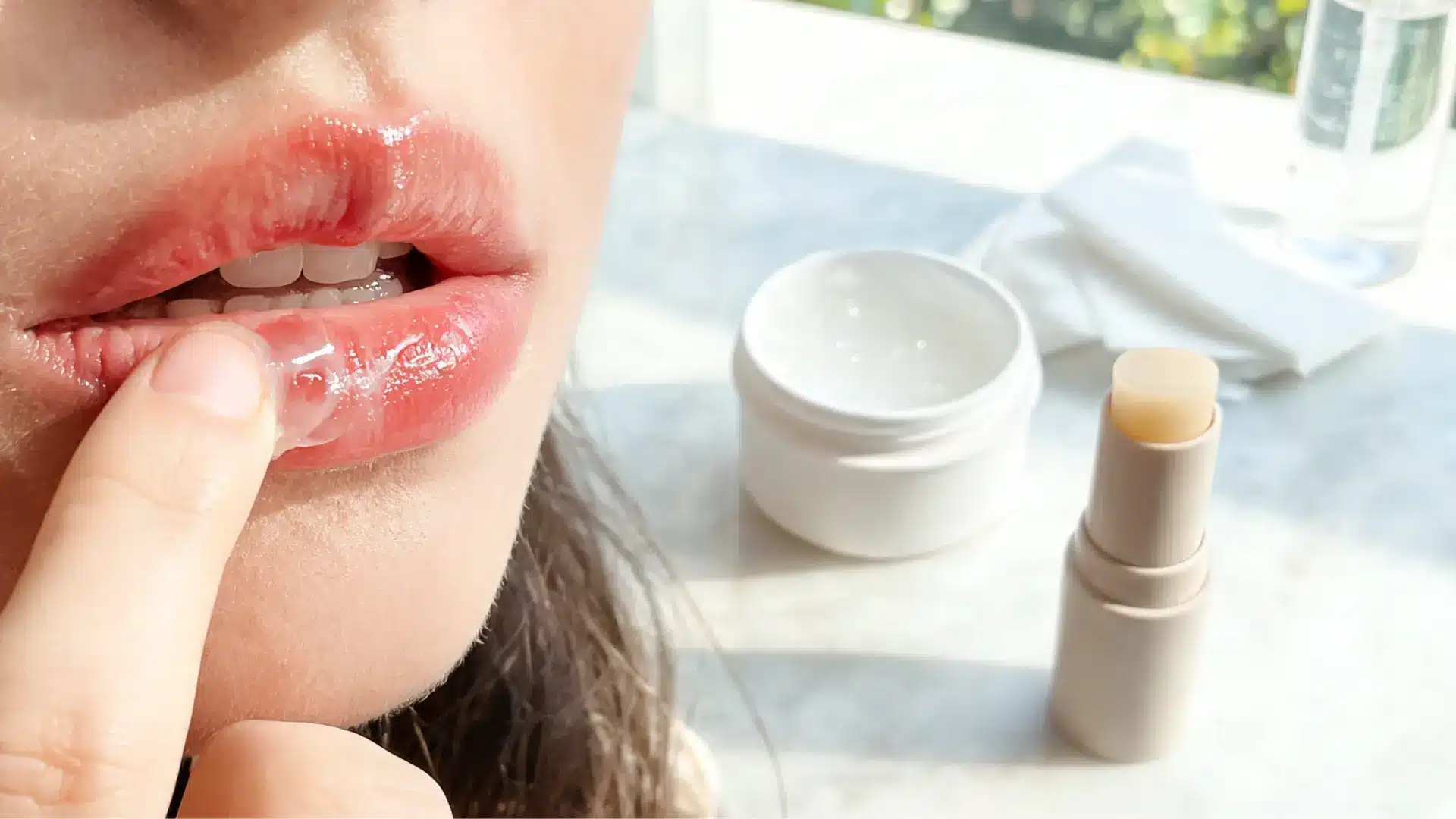
Yes, Aquaphor works well on sunburned lips because the lips have a thinner protective barrier and dry out or become damaged faster than other areas of the skin.
It creates a protective layer that locks in moisture, reduces dryness, and protects irritated lips while they heal, also helping prevent cracking, peeling, and discomfort from sun exposure.
Apply a thin layer whenever lips feel dry or tight, reapplying throughout the day, especially after eating or drinking.
During the daytime, pair it with an SPF lip balm, since the American Academy of Dermatology notes that skin cancer can also develop on the lips and recommends SPF 30 or higher.
Avoid picking peeling skin or using harsh products, as these delay recovery. Choose soothing, protective options over anything tingly, and skip fragrance, menthol, alcohol, or scrubs while lips heal.
For sunburned lips, choose soothing and protective products over anything that feels refreshing or tingly. Aquaphor works well for dry, cracked lips, while aloe vera can provide cooling relief. During the day, use an SPF lip balm and avoid fragrance, menthol, alcohol, or scrubs that may increase irritation.
Aquaphor vs Aloe Vera vs Vaseline for Sunburn
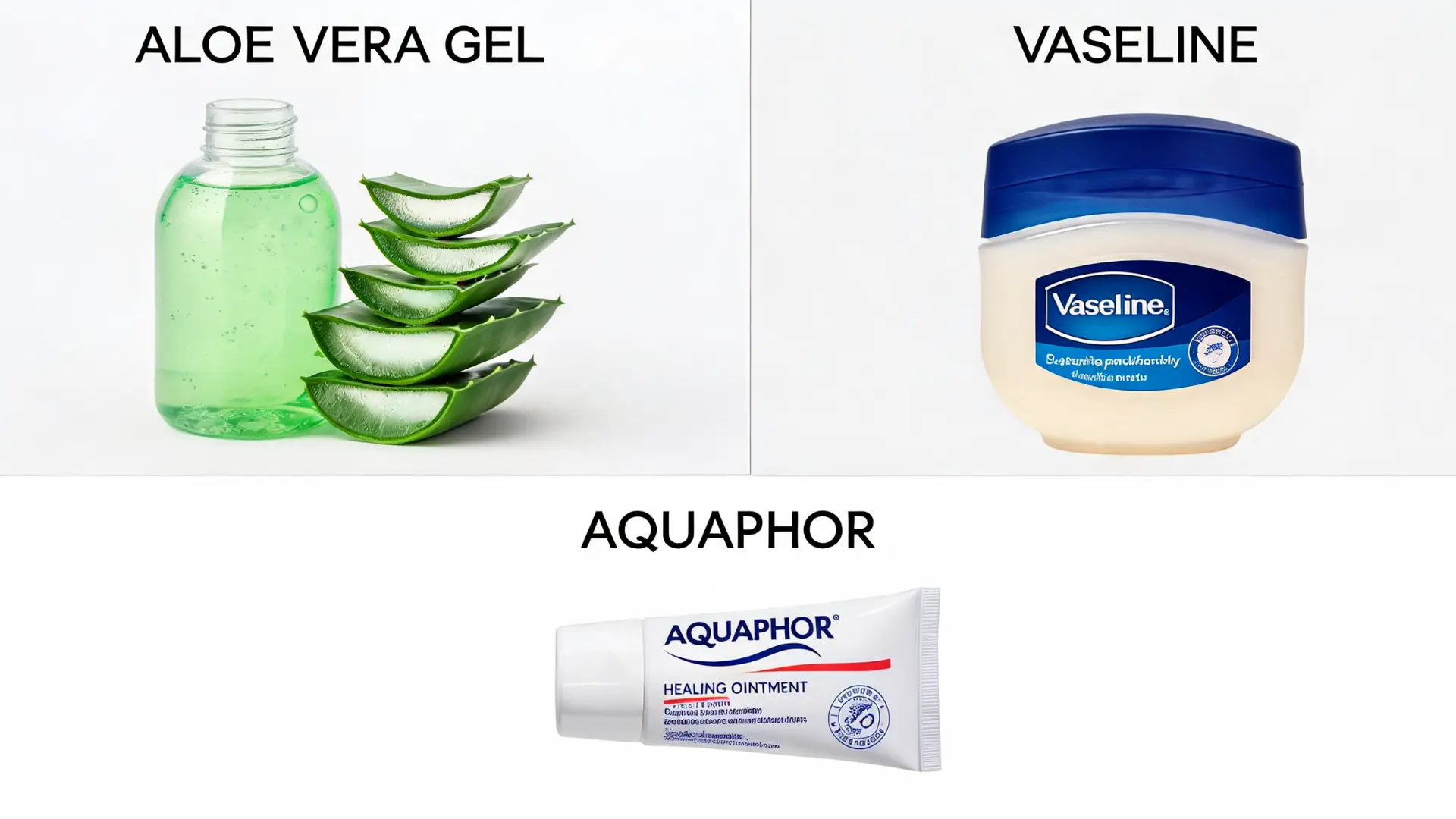
Choosing the right product for sunburn depends on the stage of healing. Aloe vera is usually better for fresh, hot sunburns because it provides a cooling and soothing effect.
Aquaphor and Vaseline work better later when the skin becomes dry, peeling, or cracked because they help prevent moisture loss and protect the skin barrier.
| Product | Best For | How It Helps | Best Time to Use |
|---|---|---|---|
| Aloe Vera | Fresh sunburn and redness | Provides cooling relief and soothes irritation | First stage of sunburn |
| Aquaphor | Dry, peeling, irritated skin | Locks in moisture and protects the skin barrier | After the skin cools and during peeling |
| Vaseline | Very dry skin needing protection | Creates a moisture-locking barrier | Later healing stage |
Which One Should You Choose?
-
Fresh, painful sunburn: Choose aloe vera or a lightweight moisturizer first.
-
Peeling or dry sunburn: Aquaphor may provide better protection and hydration.
-
Very dry, cracked areas: Vaseline can help prevent moisture loss.
The best option depends on your skin’s condition. Cooling products help early, while barrier-protecting ointments help during recovery.
Seek medical care for large blisters on the face, hands, or genitals, widespread blistering, worsening pain, fever, confusion, nausea, vision changes, or signs of infection.
How to Prevent Future Sunburn?
Preventing sunburn is easier than treating damaged skin. Simple habits like sunscreen, protective clothing, and smart sun timing can help protect your skin.
- Use Broad-Spectrum Sunscreen: Apply a broad-spectrum sunscreen with SPF 30 or higher before going outdoors. Reapply every 2 hours and after swimming, sweating, or towel-drying to maintain protection against harmful UVA and UVB rays.
- Wear Protective Clothing: Cover your skin with wide-brimmed hats, long sleeves, and UV-protective clothing when outdoors. These physical barriers provide extra protection, especially during long outdoor activities or strong sunlight.
- Avoid Peak Sun Hours: Limit direct sun exposure during midday hours when UV rays are usually strongest. Try staying in shaded areas or planning outdoor activities earlier in the morning or later in the afternoon.
- Protect Forgotten Areas: Small areas such as the lips, ears, neck, and hands are often overlooked when applying sunscreen. Apply sun protection to these spots regularly because they can burn easily with repeated UV exposure.
Consistent sun protection keeps your skin healthier and reduces the risk of future burns. Small daily habits can make a big difference in long-term skin care.
Summing Up
Choosing the right sunburn care depends entirely on timing.
Aloe vera and cool compresses ease fresh, hot skin, while Aquaphor and Vaseline step in once skin cools and starts peeling or drying out.
Stay hydrated, keep skin protected from further sun exposure, and watch for signs such as blisters, fever, or spreading redness that require medical attention.
Match the product to your skin’s stage, and healing feels far more manageable.
Frequently Asked Questions
Can Aquaphor Reduce Sunburn Pain?
Aquaphor does not directly relieve sunburn pain, but it can reduce discomfort caused by dryness and irritation by keeping the skin moisturized and protected.
Can You Apply Aquaphor Immediately After Getting Sunburned?
It is better to cool the skin first. Applying Aquaphor on a fresh, hot sunburn may feel uncomfortable, so wait until the skin temperature has settled.
Does Aquaphor Work For Peeling Skin From Sunburn?
Yes, Aquaphor can help soften peeling skin and reduce moisture loss. It supports the healing process but does not stop the natural peeling caused by sun damage.
Can Aquaphor Be Used With Aloe Vera For Sunburn?
Yes, you can use aloe vera first to cool the skin, then apply Aquaphor to lock in moisture once the skin has calmed down.
Can Aquaphor Cause Breakouts On Sunburned Skin?
Aquaphor is generally considered safe for many skin types, but some people may find that thick ointments feel heavy. Avoid applying excessive amounts, especially on acne-prone areas.
Is Aquaphor Good For Sunburn Scars?
Aquaphor does not remove sunburn scars, but keeping healing skin moisturized may support the skin barrier and reduce dryness during recovery.