Some skincare routines get crowded fast. Cleanser, toner, serum, cream, mask, treatment, facial oil, and several products for occasional use. A long routine can work, but it can also become expensive, difficult to follow, and hard to adjust when the skin changes.
Carrier oils are simpler. They are plant-based oils used for face care, body care, hair care, massage, and homemade blends. They can be applied on their own, added to a moisturizer, or used as a base for other ingredients.
The main thing is choosing an oil that fits the intended use. An oil that works well on dry body skin may feel too rich on the face. Hair texture also affects how much oil is needed.
What Is a Carrier Oil?
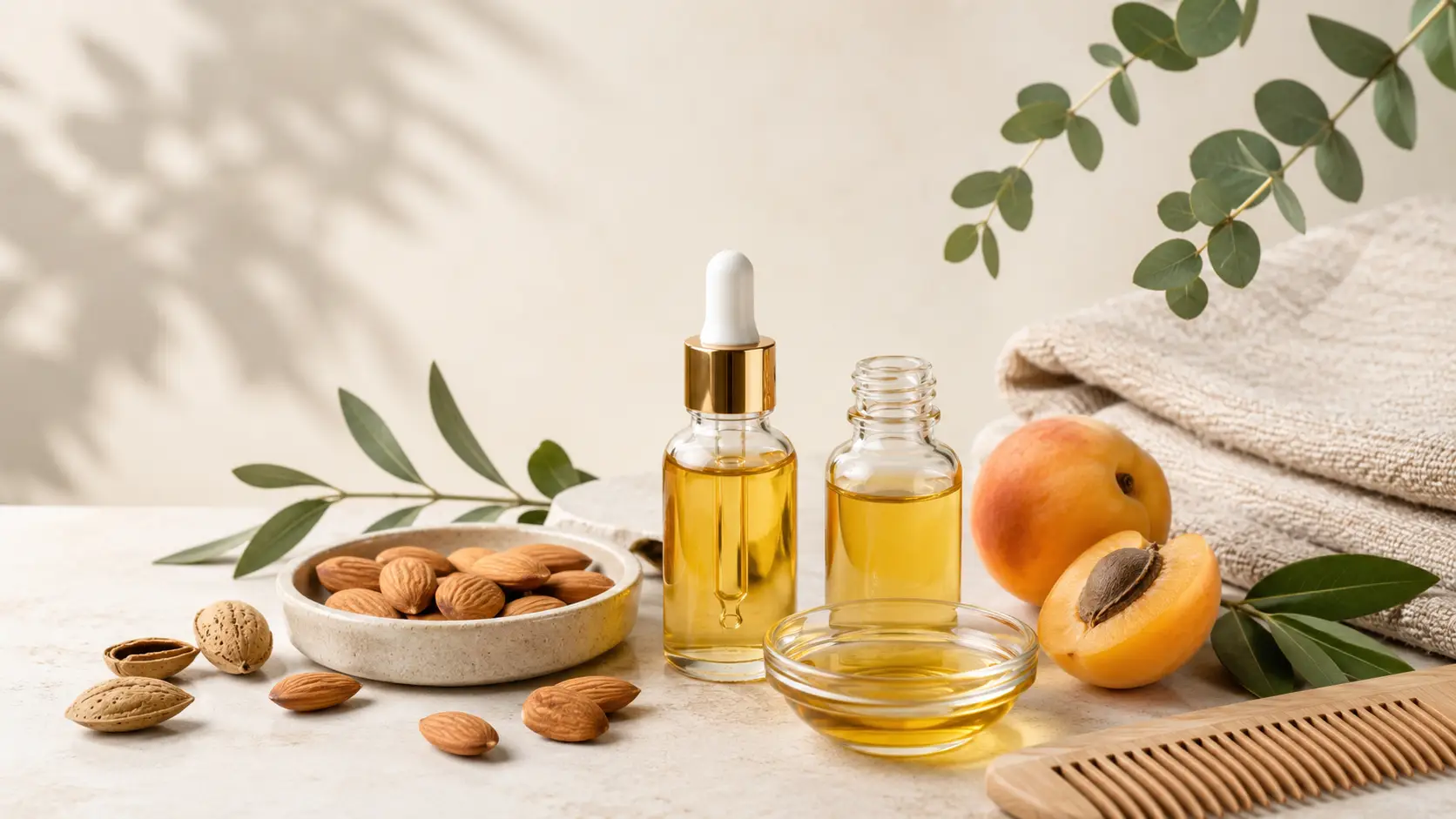
What is a carrier oil? It is a plant-based oil usually made from seeds, nuts, or fruit kernels. Almond oil and apricot kernel oil are common examples.
Carrier oils are different from essential oils. Essential oils are highly concentrated and usually need to be diluted before they are applied to the skin. Carrier oils provide the base for that dilution and help spread the mixture more evenly.
Carrier oils are milder and can often be used directly on the skin or hair. However, every oil has a different texture. Some absorb quickly, while others leave a richer protective layer.
That does not mean every oil suits every person. Skin type, hair type, sensitivity, and the amount applied still matter.
What Is Carrier Oil Used For?
What is carrier oil used for? Most often, it is used to soften the skin, reduce dryness, improve product spread, and add shine to dry hair.
A light oil can work as a natural face oil. A richer one may be better for body care, massage, hands, elbows, or other rough areas.
Some people apply an organic face oil after moisturizer at night. Others mix one or two drops into a basic cream when their skin feels dry. Applying oil to slightly damp skin can also help it spread more evenly.
Carrier oils can work like a simple oil serum, but only a small amount is needed. One to three drops may be enough for the face. Too much can leave oily or combination skin feeling greasy.
Carrier Oils for Skin
For skin, texture is important.
Cold pressed almond oil has a soft, slightly richer feel. It works well for dry areas and is often used on the body, hands, elbows, knees, and cuticles. It also spreads easily enough for massage.
Apricot kernel oil usually feels lighter. It can be a practical option for people looking for natural oils for skin without a heavy finish. It may be used on the face, neck, hands, or body.
For facial care, start with one or two drops. Warm the oil between clean fingertips and press it gently onto the skin. A natural face oil should leave the skin feeling comfortable, not covered by a thick layer.
People with sensitive skin should patch test a new product first. It is also worth checking whether the formula contains fragrance, essential oils, or additional extracts. Natural does not always mean irritation-free.
Carrier Oils for Hair
Carrier oils can also be used as part of a simple hair care routine.
A natural hair oil can help soften dry ends, add a little shine, or reduce the rough feeling that appears after frequent washing or heat styling. It can also be used for scalp massage before shampooing.
Fine hair usually needs very little oil. One drop applied only to the ends may be enough. Thick, curly, coarse, or dry hair can often handle a larger amount.
An organic hair oil may be used in several ways:
- apply a small amount to dry ends;
- use it before washing as a short pre-shampoo treatment;
- massage a limited amount into the scalp;
- apply it after styling as a light hair oil serum.
The goal is not to coat the entire hair. It is to add softness where it is actually needed. When the hair looks flat or greasy, too much product was probably applied.
How to Choose a Carrier Oil
There is no one best oil for everyone.
For dry body skin, almond oil can be a good fit because it has a richer feel and spreads easily. For a lighter facial oil, apricot kernel oil may be more comfortable. For hair, the choice depends on thickness, dryness, and how often the oil will be used.
Era of Nature brings different natural carrier oils together, making it easier to compare them by texture and purpose instead of choosing a random bottle.
Think about the main goal first.
For face care, begin with a lighter oil and use only a few drops. For body care or massage, choose something that spreads easily over a larger area. For hair, start with the ends and increase the amount only when needed.
It is also useful to check the ingredient list. Some products contain one pure oil, while others combine several oils, fragrances, or botanical extracts.
Carrier Oils in Body Butter
Carrier oils are often used in homemade body butter. Plant butters can feel dense or stiff on their own, especially in a cooler room. Adding a liquid oil makes the texture smoother and easier to spread.
Carrier oils for body butter may include almond oil, apricot kernel oil, or other plant-based oils. The butter provides richness, while the oil helps the mixture move across the skin without feeling too heavy.
The amount matters. Too little oil can leave the butter difficult to apply. Too much can make the mixture soft or greasy. It is better to use measured ingredients rather than adding oil without a clear formula.
Simple Use Works Best
Carrier oils do not need to replace every product in a routine. They usually work best as one simple extra step.
Use a few drops on damp body skin. Apply a small amount over facial moisturizer when the skin feels dry. Add one or two drops to the ends of the hair. Massage a limited amount into the scalp before washing. Use a suitable carrier oil to improve the texture of homemade body butter.
The best carrier oil is not necessarily the most expensive one. It is the oil that fits the skin, hair, and daily routine.
A simple product that is comfortable to use regularly is more useful than a complicated routine that is quickly abandoned.