It’s 8:00 PM on a Tuesday. Your workday is officially over, dinner is done, and you’re sitting on the couch wrapped in a blanket.
So why does your mind still feel like rush-hour traffic?
You replay a comment from lunch, worry about Thursday’s deadline, and endlessly swipe through your phone. You’re physically on the sofa, but mentally everywhere else.
We spend all day learning how to turn our brains on, but nobody teaches us how to turn them off. Relaxation isn’t automatic; it’s a skill that requires a clear signal. To actually enjoy your evenings, you need to show your brain the workday is done, and the simplest way to send that signal is with small physical habits called evening rituals.
Why Your Mind Won’t Be Quiet
To fix this, it helps to look at how our brains handle unfinished business. Psychologists call this tendency the Zeigarnik effect —our brain’s natural habit of keeping open, incomplete tasks at the front of our memory until they are closed out.
Imagine your memory is a desk. Every email, project, and errand is a paper folder. By 5:00 PM, that desk is piled high with open folders. If you walk away without filing them, your brain worries in the background, constantly poking you with “Don’t forget!”
Add in screens that ping and flash all day, tricking your body into staying on high alert, and genuine peace doesn’t stand a chance. Telling yourself to “just relax” when your brain is still running is like telling a dog to sit while you’re still throwing a ball across the yard. You have to stop throwing the ball first.
The Trick Behind Small Evening Rituals
Some people hear about evening routines and immediately picture something huge and complicated. We think we need to spend two hours meditating, drink rare herbal teas, do forty minutes of yoga, and write five pages in a journal every single night.
While those are wonderful activities, trying to fit them into an evening every single night just isn’t realistic fot most of us. If a routine feels like a second job, you will quit doing it after three days.
Real rituals are tiny. They take almost no effort. The secret is not how long they take, but how consistent they are. A five-minute habit that you do every night beats an elaborate two-hour routine that you only manage once a month.
A ritual works because it uses your five senses—touch, sight, sound, smell, and taste—to drop you right into the current moment. When your hands are busy touching real things in the real world, your mind stops spinning around in abstract worries. Your body remembers where it actually is.
Four Simple Rituals to Try
The beauty of this approach is that you can use almost anything as a ritual, as long as it gets you out of your head and into your physical space. Here are four ideas that work really well.
1. Paint by Numbers Art
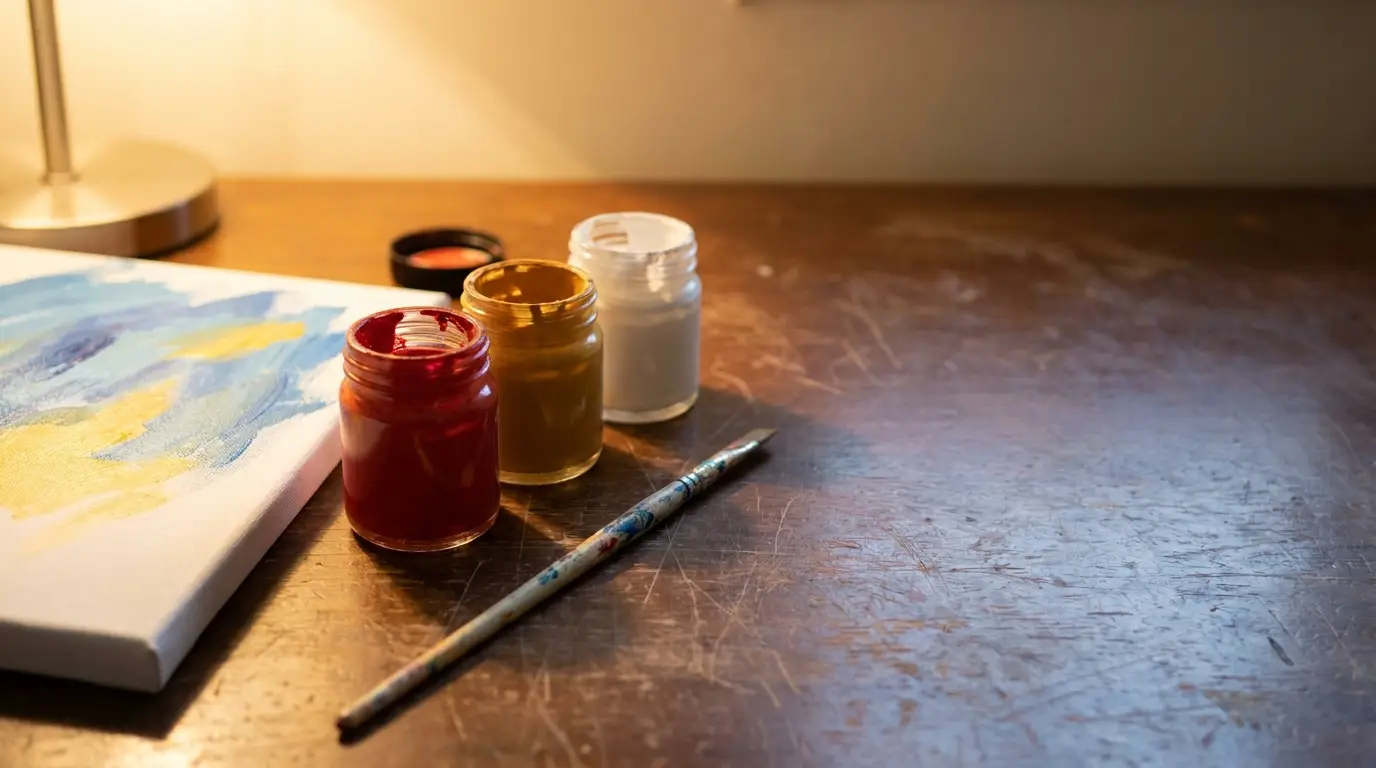
Take a paint-by-numbers kit as an example. You can choose a soothing design, like a calm ocean view or a peaceful forest scene, to eventually hang on your bedroom wall to help create a relaxing atmosphere.
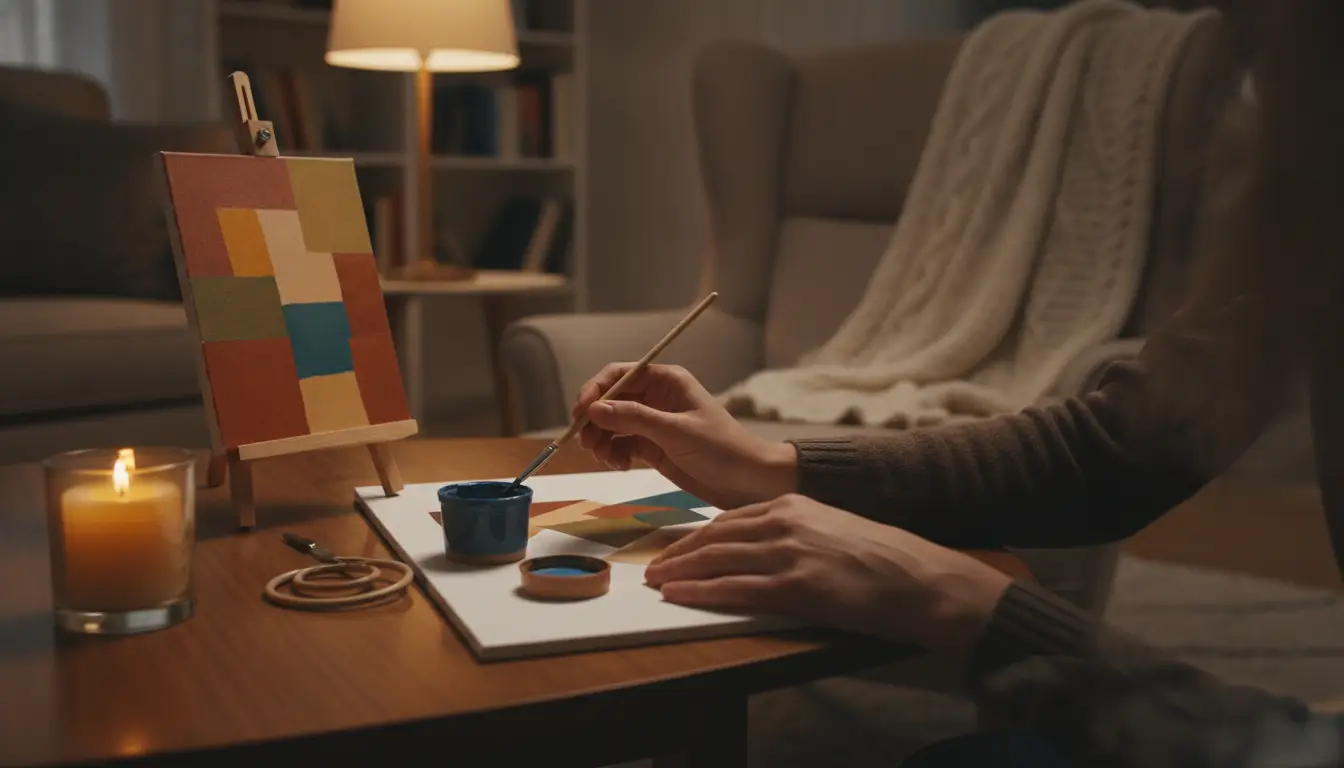
The whole activity is simple. You clear a table, set out a canvas, a brush, water, and tiny pots of paint. You open pot number four, a warm blue, match it to shape number four, and slowly fill it in.
Spending twenty minutes like this does three powerful things for your mind:
• It rests your decision-making. You don’t have to choose what to draw or which colors to pick. The rules are set, so you can just enjoy the process without any pressure.
• It forces physical focus. Watching paint glide across cotton and feeling the brush between your fingers keeps your eyes and hands engaged, making it impossible to check an email or scroll through your phone.
• It creates quiet order. As shapes fill in, you get a subtle sense of completion. It signals to your busy brain that a task is finished and it’s okay to settle down.
You don’t need to be an artist, nor do you need to create a masterpiece. The real value is in those twenty quiet minutes where your hands are busy, your screens are dark, and your mind is finally in the same room as your body.
2. The Paper Dump
Keep a plain paper notepad and a pen right next to your computer or on your kitchen counter. Right when you finish your work or your household chores for the night, sit down for three minutes.
Write down every single thing floating in your head. Write down that you need to buy milk tomorrow. Write down that you forgot to reply to your cousin. Write down that you are worried about your car’s brakes.
Don’t worry about neat handwriting. Just spill it all out. Once those thoughts are sitting on a physical piece of paper, your brain breathes a sigh of relief. It realizes the information is safe. It doesn’t have to spend the next five hours repeating those items over and over so you don’t forget them. You can close the pad, walk away, and handle the paper tomorrow.
3. Setting Up Tomorrow’s Launchpad
Visual clutter causes mental noise. If you wake up in the morning and immediately step over a pile of shoes, search for missing keys, and stare at a messy kitchen counter, your day starts with stress.
Spend five minutes in the evening clearing off just one small spot. It could be the table right by your front door, or a small section of your desk. Put your keys there. Put your bag there. Fill your water bottle and place it right next to them.
This short habit serves two purposes. First, the physical movement of moving items around anchors you in the present. Second, when you wake up the next morning, you see an organized, welcoming spot waiting for you. It builds a gentle bridge between your nights and your mornings.
4. Changing the Air and Light
Lighting is a powerful switch for human biology. For thousands of years, when the sun went down and fires burned low, human bodies knew it was time to rest. Bright overhead lights in modern kitchens and living rooms trick our brains into thinking it is still noon.
Try making a habit of flipping off the main ceiling lights at 7:00 or 8:00 PM. Turn on a small desk lamp instead, or light a candle that smells like pine or cinnamon.
You can pair this with a temperature change. Wash your face with cool water, or take a warm shower. When your skin feels a sudden change in temperature, it forces your attention back to your body. It acts like a soft reset button for your nerves.
Keeping It Gentle
The biggest mistake people make with new habits is getting strict about them. They turn their evening into a giant test. They think, If I don’t paint for twenty minutes, write in my notebook, dim all the lights, and drink tea every single night, I have failed.
Life is unpredictable. Some nights you will be stuck in traffic. Some nights you will be tired, sick, or busy helping a friend. On those nights, you might only have thirty seconds to take one deep breath and blow out a candle.
That is okay.
An evening ritual is not a rule book. It is a gift you give yourself. It is a quiet boundary between the demands of the world and your right to simply exist in your own home.
So tonight, when you notice your mind drifting off into tomorrow’s worries or yesterday’s mistakes, don’t get mad at yourself. Just pick up a pen, light a candle, or dip a brush into a little pot of blue paint. Bring your attention back to your hands. Let the rest of the world wait until morning.