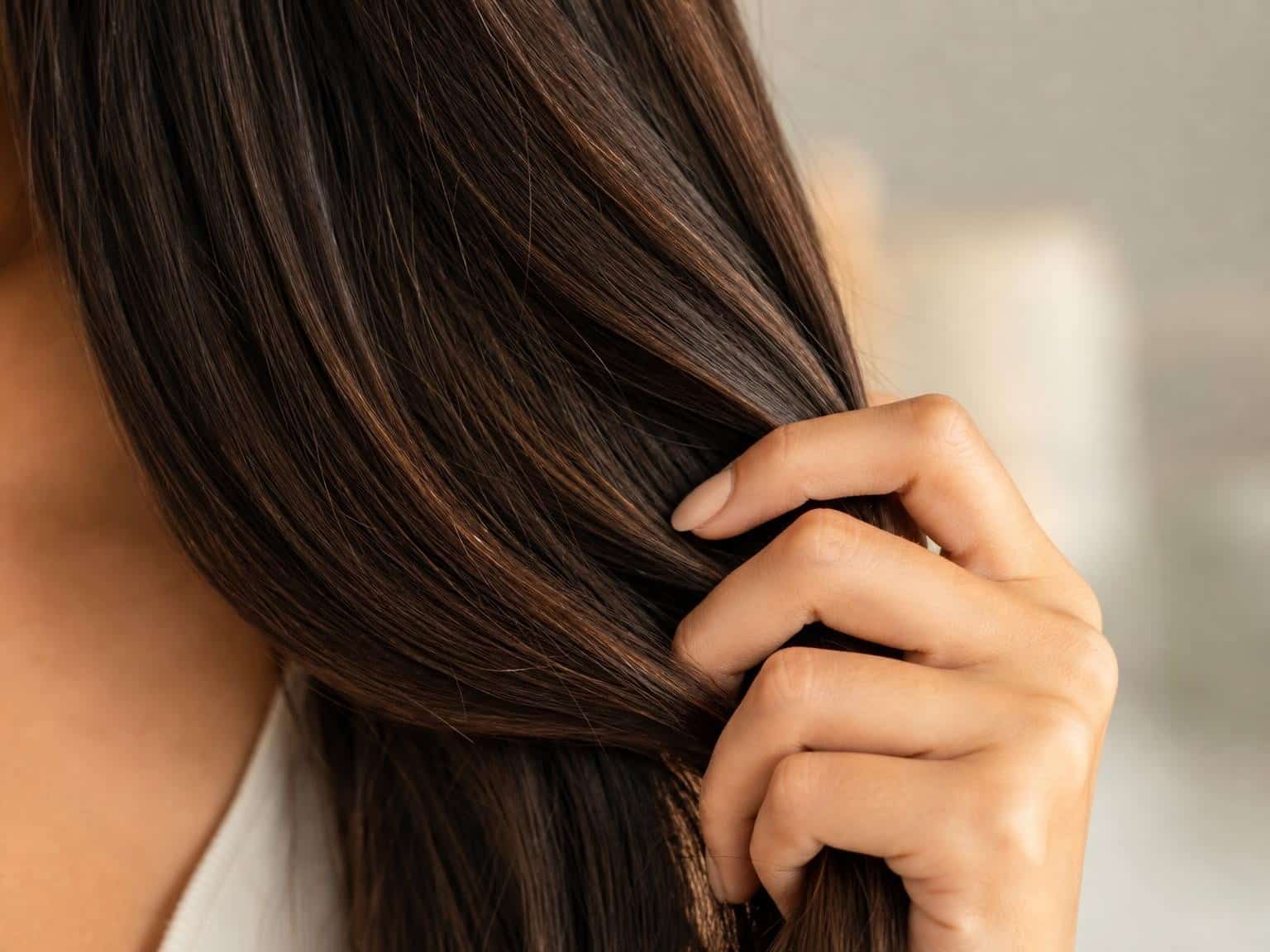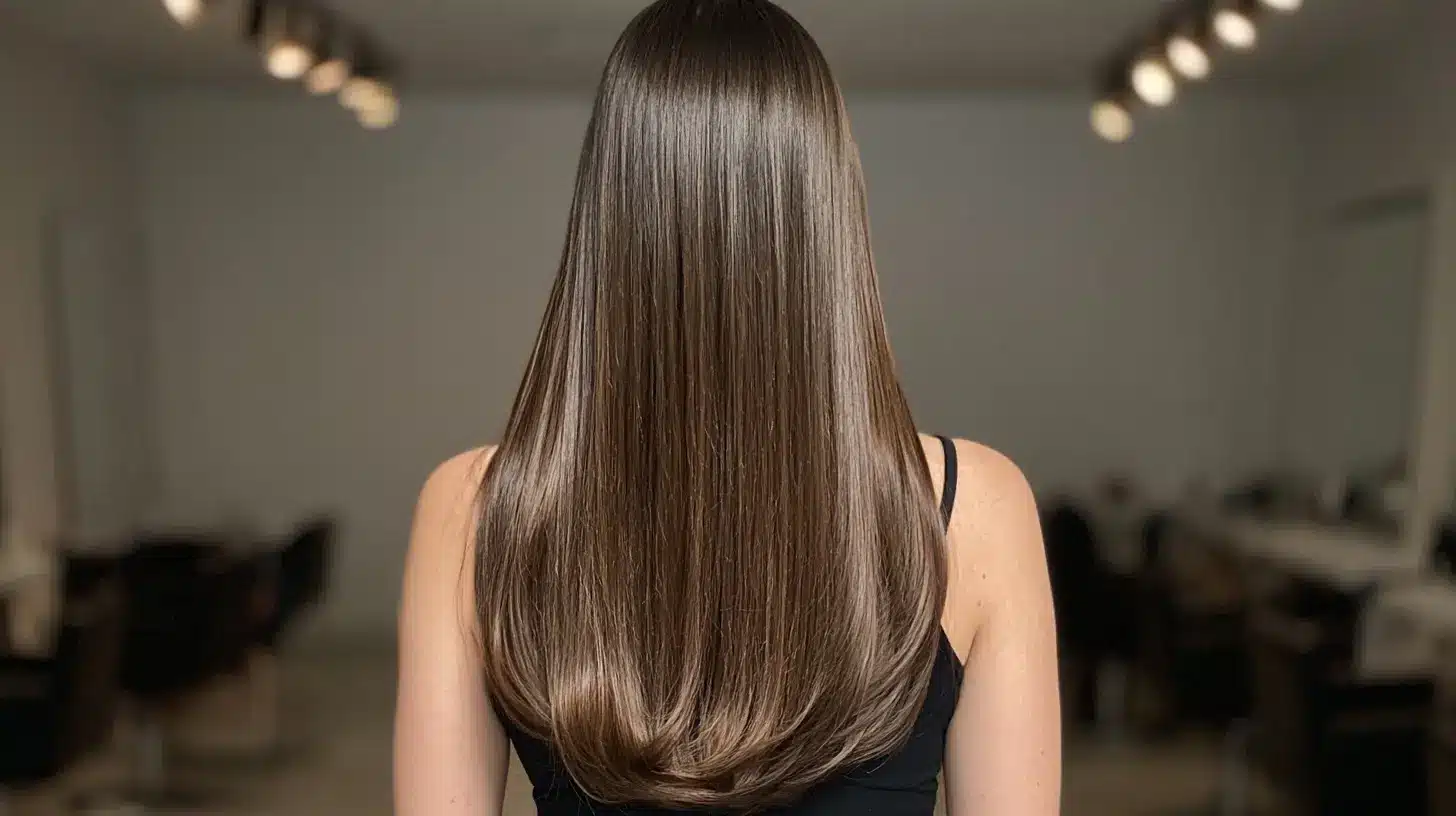
Keratin smoothing treatments coat each strand with a protein-based formula that cuts frizz and leaves hair noticeably smoother to the touch.
They work by adding keratin, a protein your hair already has, back into the hair shaft to soften texture and calm flyaways.
This kind of hair straightening treatment suits people who want hair that is easier to manage day-to-day, without a change they cannot undo later.
You can get a keratin smoothing treatment done at a salon or at home. Salon treatments are stronger because a stylist seals the formula in with professional heat tools, while at-home versions are gentler and cost less.
What is a Keratin Smoothing Treatment?
A keratin smoothing treatment applies keratin, a protein naturally found in your hair, to make strands look smoother and feel softer to the touch.
The treatment coats each strand with a protective layer, which makes the outside of your hair smoother and easier to style. People usually reach for this kind of hair straightening treatment when their hair feels dry, rough, or unmanageable.
Results can last several months with the right aftercare and the right products for keratin-treated hair.
How Does a Keratin Smoothing Treatment Work?
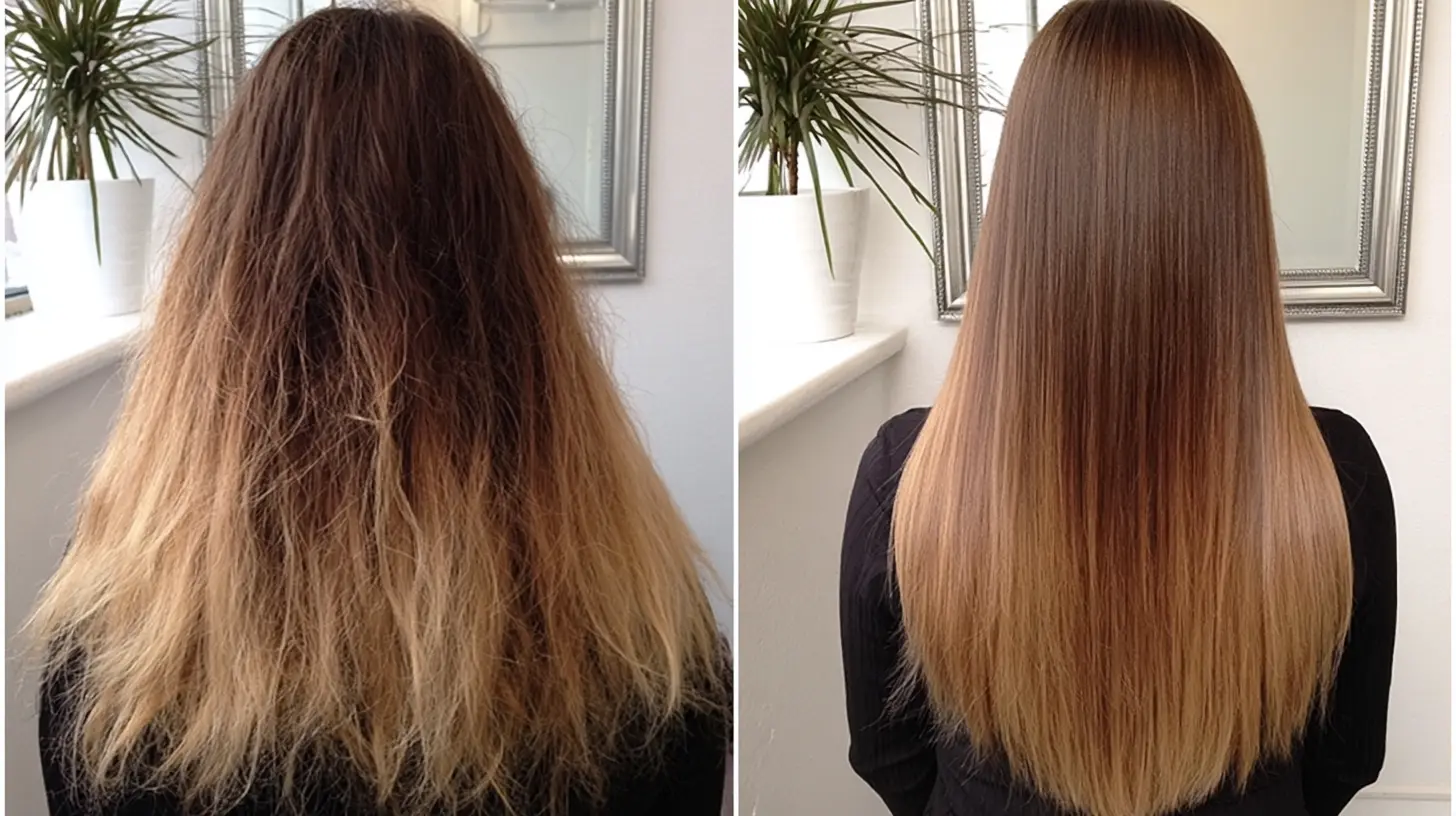
A keratin treatment works by adding a protein-based formula directly onto each hair strand, which is what helps hair feel softer and look smoother once the process is finished.
- Adds keratin to hair: The formula puts keratin, a protein your hair already contains, back into the strand along with a smoothing solution.
- Seals with heat: A flat iron or blow dryer seals the formula into the hair, which is what locks in the smooth, glossy finish.
- Restructures some internal bonds: Beyond just coating the surface, the process also reshapes some of the hair’s internal protein bonds. This is part of why repeated treatments can gradually soften a natural curl pattern over time, not just the outer texture.
- Results vary: Outcomes depend on your hair type, the treatment formula, and how closely the application steps are followed.
- Improves manageability: Frizzy or rough hair typically becomes softer and easier to style once treated.
Knowing how this process works helps you choose the right formula for your hair and set realistic expectations for the results.
Different Types of Keratin Smoothing Treatments
Keratin formulas are not all the same. Results depend on what you want for your hair, your hair type, and how you plan to care for it afterward.
Brazilian Keratin Treatment
This salon treatment is popular for people who want to reduce frizz. A stylist applies the formula, then uses a flat iron to seal it in.
It is worth noting that Brazilian Blowout, the specific branded treatment, uses its own bonding formula rather than pure keratin protein, even though the two are often lumped together as the same thing. True keratin treatments use hydrolyzed keratin directly on the strand.
This treatment can last for months depending on your hair type and how well you care for it afterward.
Smoothing Keratin Treatment
A smoothing keratin treatment focuses on hair texture rather than pin-straight results. It reduces frizz and adds shine while leaving some natural movement in the hair.
This option works well for people who want smoother hair without losing all of their natural texture.
At-Home Keratin Treatment
You can also try at-home keratin options. These come as masks, shampoos, conditioners, and full kits. They suit people who want smoother, softer hair without booking a salon appointment.
At-home application is simple, but results are usually lighter and shorter-lived than what a salon treatment delivers.
Some at-home products marketed under the keratin name do not actually contain keratin protein at all.
Instead, they work by targeting the hair’s existing internal keratin structure to smooth the surface temporarily, so it is worth reading the ingredient list if that distinction matters to you.
Your hair goal and your budget both shape which option makes more sense, since salon treatments generally cost more but last longer than at-home kits.
Keratin Treatment Before and After: What to Expect
Results depend on your hair’s starting condition, the treatment formula used, and the aftercare routine.
| Before Keratin Treatment | After Keratin Treatment |
|---|---|
| Frizzy hair | Smoother appearance |
| Rough texture | Less frizz |
| Difficult styling | Easier maintenance |
Results are temporary, and both your hair’s texture and its starting condition affect how long the smoothing lasts.
How Long Does a Salon or At-Home Treatment Take?
A salon keratin treatment typically takes around three hours from start to finish.
The formula sits on the hair for fifteen to thirty minutes before a stylist blow-dries and flat-irons it to seal everything in, then rinses and finishes with a sealing serum.
At home treatments move much faster. Most kits ask you to leave the product on for ten to fifteen minutes before rinsing, then blow-dry and flat-iron to help the formula set.
How to Apply a Keratin Treatment at Home
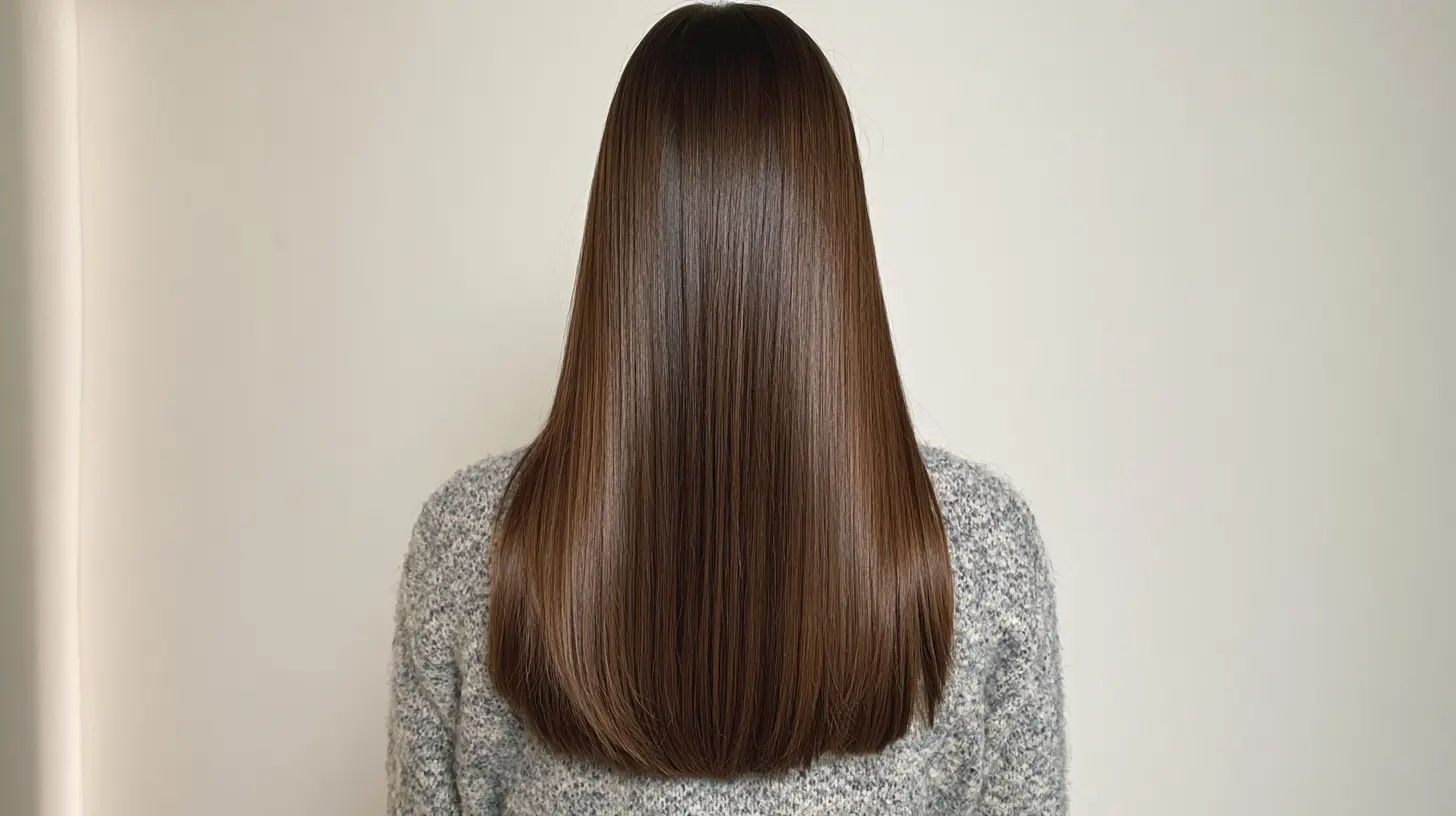
Once you have chosen a product, following the right steps helps you get closer to salon-like results at home.
Step 1: Wash and Prepare Hair
Start by washing with a clarifying shampoo to remove dirt, oil, and product buildup. Clean hair lets the keratin formula coat each strand more evenly and improves the final result.
Step 2: Apply the Treatment
Apply the formula evenly, starting at the roots and working down to the ends. Follow the instructions that come with your specific product closely.
Avoid using too much product, since excess formula can leave hair feeling heavy once styling is finished.
Step 3: Dry and Seal the Product
Dry your hair fully, then use the recommended heat setting with a blow dryer or flat iron. Heat is what locks the formula into each strand and brings out the smooth, glossy finish.
Step 4: Follow Aftercare Instructions
Salon treatments generally need seventy-two hours without water, styling products, or tight hair ties like ponytails and clips, since disturbing the hair before it fully sets can undo some of the smoothing.
At home treatments are lighter by comparison and usually do not require this same waiting window, though it is worth checking your specific product’s instructions.
Using the right products afterward and limiting how often you wash your hair also helps reduce hair breakage and extend how long your results last.
Keratin Treatment for Different Hair Types
Choosing the right approach for your hair type helps you get better results while avoiding unwanted heaviness or dryness.
| Hair Type | Best Keratin Treatment Approach | Expected Results |
|---|---|---|
| Curly Hair | Choose formulas focused on smoothing and frizz control | Reduces frizz while helping maintain the natural curl pattern |
| Wavy Hair | Use lightweight smoothing treatments | Makes waves softer, smoother, and easier to manage |
| Dry or Damaged Hair | Choose moisturizing formulas with conditioning ingredients | Improves hair appearance but does not repair permanent damage |
| Fine Hair | Choose lightweight formulas that avoid heavy buildup |
Helps smooth hair while keeping volume and natural movement |
Matching the treatment to your hair type keeps results smoother while respecting your hair’s natural texture and condition.
Color Treated Hair and Timing
Keratin treatments can lighten hair color by about one to two tones, so timing matters if you also color your hair.
Most stylists recommend waiting at least two weeks between a color service and a keratin treatment in either direction, so the pigment has time to set properly without interference from the keratin bonding process.
Outside of that timing window, keratin treatments generally work well on color-treated hair and can even help lock in pigment with a protective layer around each strand.
How to Make Keratin Treatment Last Longer
Proper aftercare protects the treatment and extends how long the smoothing effects last.
- Use sulfate-free shampoo: A gentler formula helps prevent the keratin coating from washing away too quickly.
- Avoid frequent washing: Washing too often strips the coating faster. Stick to two or three washes a week with a sulfate-free shampoo to help results last.
- Protect hair from heat: Use a heat protectant before styling tools to reduce damage and maintain results.
- Follow product instructions closely: Stick to the aftercare products your stylist recommends to protect your results.
A simple routine goes a long way toward keeping hair smoother for longer after treatment.
Keratin Treatment Pros and Cons
Keratin treatments come with real benefits alongside some limitations worth considering against your budget and hair goals.
| Pros | Cons |
|---|---|
| Reduces frizz | Results are temporary |
| Makes styling easier | Can be expensive |
| Adds shine | Requires maintenance |
| Improves softness | Some formulas contain strong chemicals |
Looking at both sides helps before committing to a keratin smoothing treatment.
Keratin Treatment vs Relaxer vs Brazilian Blowout
Keratin treatments, relaxers, and Brazilian Blowout create different results depending on your hair goals.
| Treatment | Best For | How It Works | Results | How Long It Lasts |
|---|---|---|---|---|
| Keratin Treatment | Frizz control and smoother hair | Adds keratin and smooths the hair surface | Temporary smoothing for months | 2 to 6 months |
| Hair Relaxer | Permanent straightening | Breaks and reforms the hair’s internal bonds | Long-lasting straight texture | Permanent until hair grows out |
| Brazilian Blowout | Smoothing and shine | Uses a bonding formula, not pure keratin, sealed with heat | Smooth, flexible results | About 3 months |
Matching the right treatment to your goal is the first step, and comparing how safe each option is comes next.
For a closer look at how these compare to relaxers and thermal straightening, this guide to chemical hair straightening covers the differences in more depth.
Formaldehyde Exposure and What It Can CauseSome keratin and chemical hair straightening products contain formaldehyde-releasing ingredients rather than formaldehyde itself, such as formalin or methylene glycol, which release formaldehyde gas once heat is applied. The FDA’s formaldehyde exposure notice warns that this gas can cause eye, nose, and throat irritation, along with headaches, dizziness, coughing, and nausea in poorly ventilated salons. A documented case study also linked a formaldehyde-releasing product marketed as formaldehyde-free to a serious kidney injury in a 13-year-old, a reminder that product labeling is not always reliable. |
Do Keratin Treatments Cause Cancer?
A large NIEHS uterine cancer study followed nearly 34,000 women for close to 11 years and found that frequent users of chemical hair straightening products, more than four times a year, were more than twice as likely to develop uterine cancer compared to women who never used them.
Separate research has also linked frequent use of chemical straighteners to a higher risk of breast cancer, alongside studies exploring a possible connection to ovarian cancer.
Findings across all of these studies show an association, not direct proof that keratin treatments cause cancer, and researchers note that uterine cancer itself remains a relatively rare diagnosis overall.
Best Keratin Treatment Products to Try
The right product depends on your hair type, your goals, and if you need light maintenance or a full smoothing treatment.
| Product Type | Recommended Product | Best For | Benefits |
|---|---|---|---|
| Keratin Treatment Mask | TRESemmé Keratin Smooth Mask | Weekly maintenance | Adds softness, shine, and helps reduce frizz. |
| At Home Keratin Kit | ANSWR At Home Keratin Treatment Kit | DIY smoothing | Provides an easy at-home smoothing treatment. |
| At Home Keratin Kit | KT Professional Home Keratin Advanced Straightening Starter Kit | Stronger smoothing results | Offers a complete keratin treatment system. |
| Keratin Shampoo & Conditioner | TRESemmé Keratin Smooth Shampoo + Conditioner | Treated hair care | Helps maintain smoothness and manageability. |
| Keratin Shampoo & Conditioner | Kera Fine Keratin Shampoo & Conditioner Combo | Regular hair care | Supports smoother texture and healthier-looking hair. |
Choosing a product that matches your hair’s needs helps maintain smoother results for longer after your treatment.
Who Should Skip a Keratin Treatment?
Keratin treatments are not the right fit for everyone. The process reshapes some of the hair’s internal bonds, and those reformed bonds end up inherently weaker afterward.
Fine, brittle, or already damaged hair often cannot tolerate that added stress, so the treatment may leave it drier or more prone to breaking.
If you are pregnant or breastfeeding, talk with your doctor before booking a treatment, since the formaldehyde exposure concerns covered above apply here too.
If your hair has been recently bleached or heavily color treated, ask your stylist if it needs time to recover first.
|
How Much Does a Keratin Treatment Cost? A professional keratin treatment typically runs $150 to $600 at a salon, depending on your location, hair length, and the formula used. Longer or thicker hair takes more product and more processing time, which pushes the price toward the higher end. At-home keratin kits cost considerably less, usually between $20 and $120, though results are lighter and don’t last as long as a salon treatment. |
Final Thoughts
Keratin smoothing treatments can make hair noticeably smoother, cut down on frizz, and save time in your daily routine. Results vary by hair type, so what works well for one person may not work the same way for someone else.
Before booking a treatment or buying a kit, weigh the pros and cons, including formaldehyde exposure and overall cost.
Salon treatments tend to last longer thanks to stronger formulas, while at-home kits are gentler and more budget-friendly.
If you are unsure what is right for your hair and health, a hair stylist or doctor can help you choose an option that fits both.
Frequently Asked Questions
What Does a Keratin Treatment Do?
A keratin treatment smooths hair, reduces frizz, adds shine, and improves manageability for several months.
How Long Does a Keratin Treatment Last?
Most treatments last two to six months depending on product quality and hair care habits.
Is a Keratin Treatment Safe During Pregnancy?
Consult your doctor before treatment, especially if the formula contains formaldehyde or other chemical ingredients.
Do Keratin Treatments Cause Cancer?
Researchers have looked at links between chemical straightening products and certain cancer risks, but the studies show an association rather than direct proof, and research is ongoing.
How Long Do I Need to Wait Before Washing My Hair After a Treatment?
Salon treatments generally call for seventy-two hours without water or styling. At home treatments are usually lighter and often do not require the same waiting period, so check your product’s specific instructions.