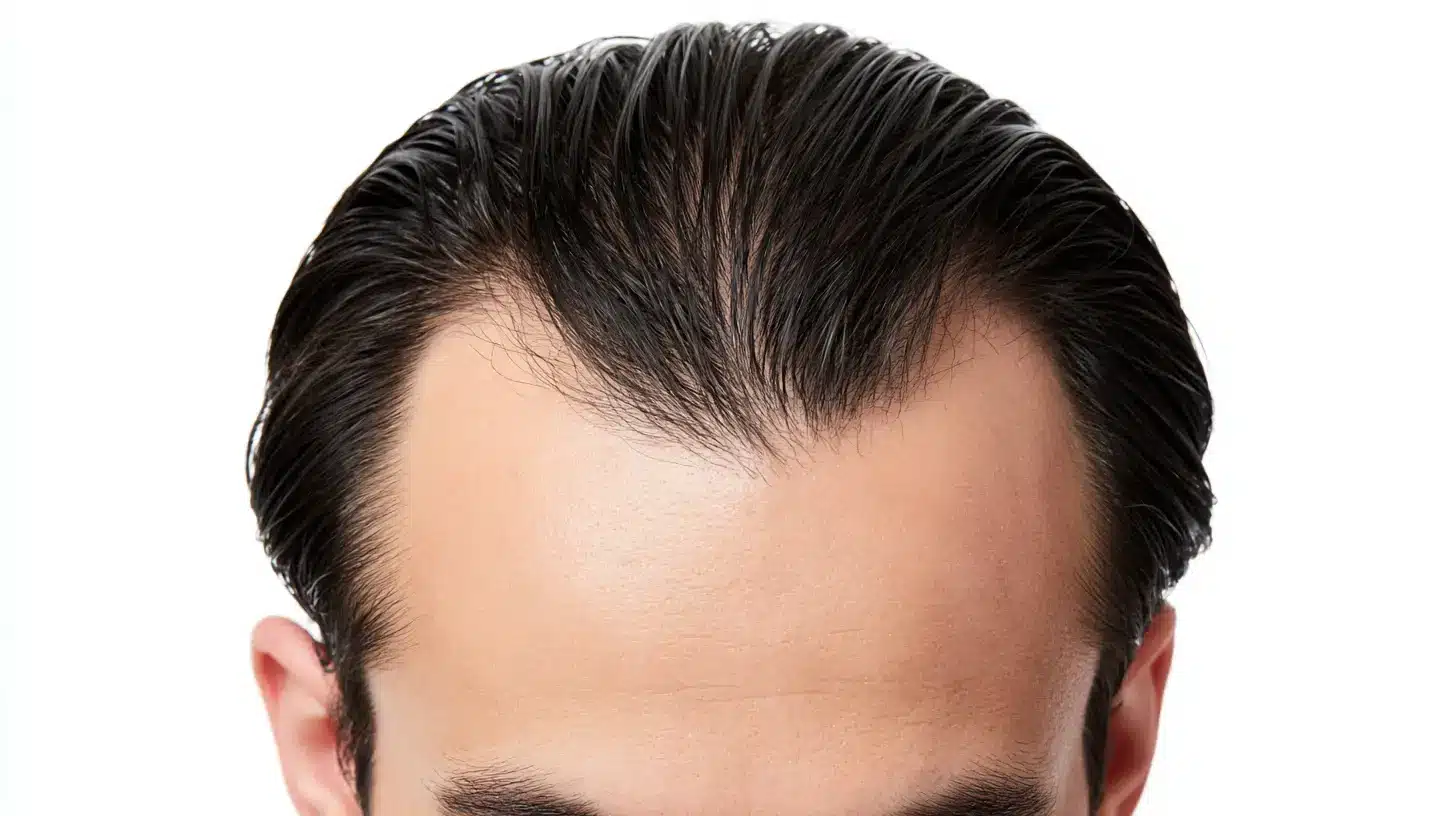
A receding hairline is when the hairline on your head slowly moves back from your forehead. This usually starts at the temples. A receding hairline is one of the common signs of hair loss in men, though women can get it too.
This change doesn’t happen all at once. It moves through several receding hairline stages, and for many people it continues to gradually worsen with age.
What Causes a Receding Hairline?
A thinning hairline is usually caused by a mix of things related to your body and how you live your life. Here are the main reasons why it happens.
- Genetics: If people in your family have had hair loss, you might be more likely to have it
- Hormones (DHT): According to the NIH’s information on pattern hair loss, this hormone gradually shrinks hair follicles, slowing new hair growth over time.
- Aging: As you get older, your hair naturally becomes thinner and grows more slowly.
- Stress: Too much stress can cause hair to fall out for a short time.
- Conditions: Problems with your thyroid or issues with your scalp can also lead to hair loss.
Understanding what is causing your hairline to recede can help you find the treatment, because different treatments work in different ways for different people.
Many people managing early recession also adjust how they style what hair they have; a good stylist can help you achieve a tapered hairline that softens the look of thinning at the sides while you explore treatment.
Stages of a Receding Hairline (Norwood Scale)
Doctors use the Norwood Scale to track how a receding hairline progresses. Here’s a quick overview of all seven stages, followed by what each one actually looks like.
Stage 1: Minimal or No Recession
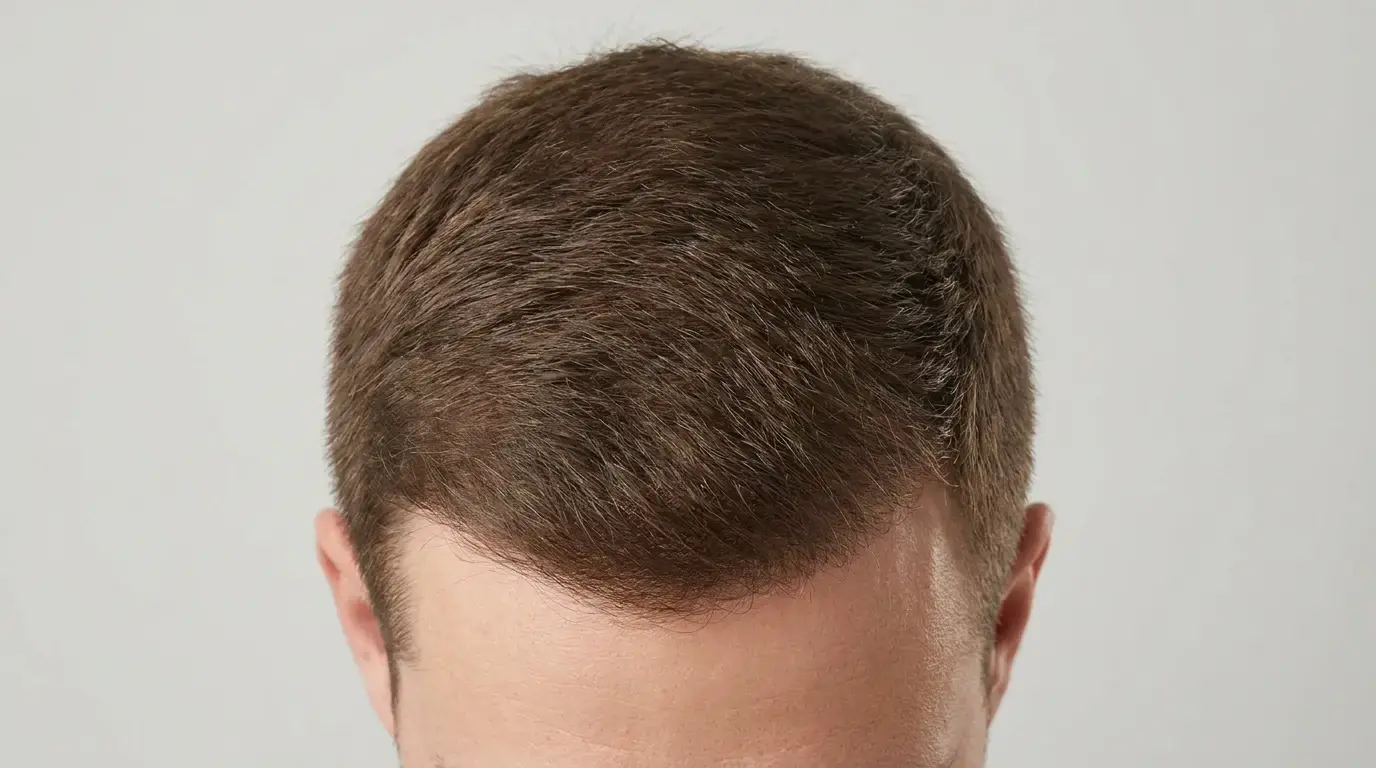
At this stage, your hairline looks almost normal. There are no clear signs of hair loss.
Some people are born with a hairline that’s a little higher than average. This can look like the beginning of a receding hairline, even when it isn’t.
Stage 2: Slight Recession at the Temples
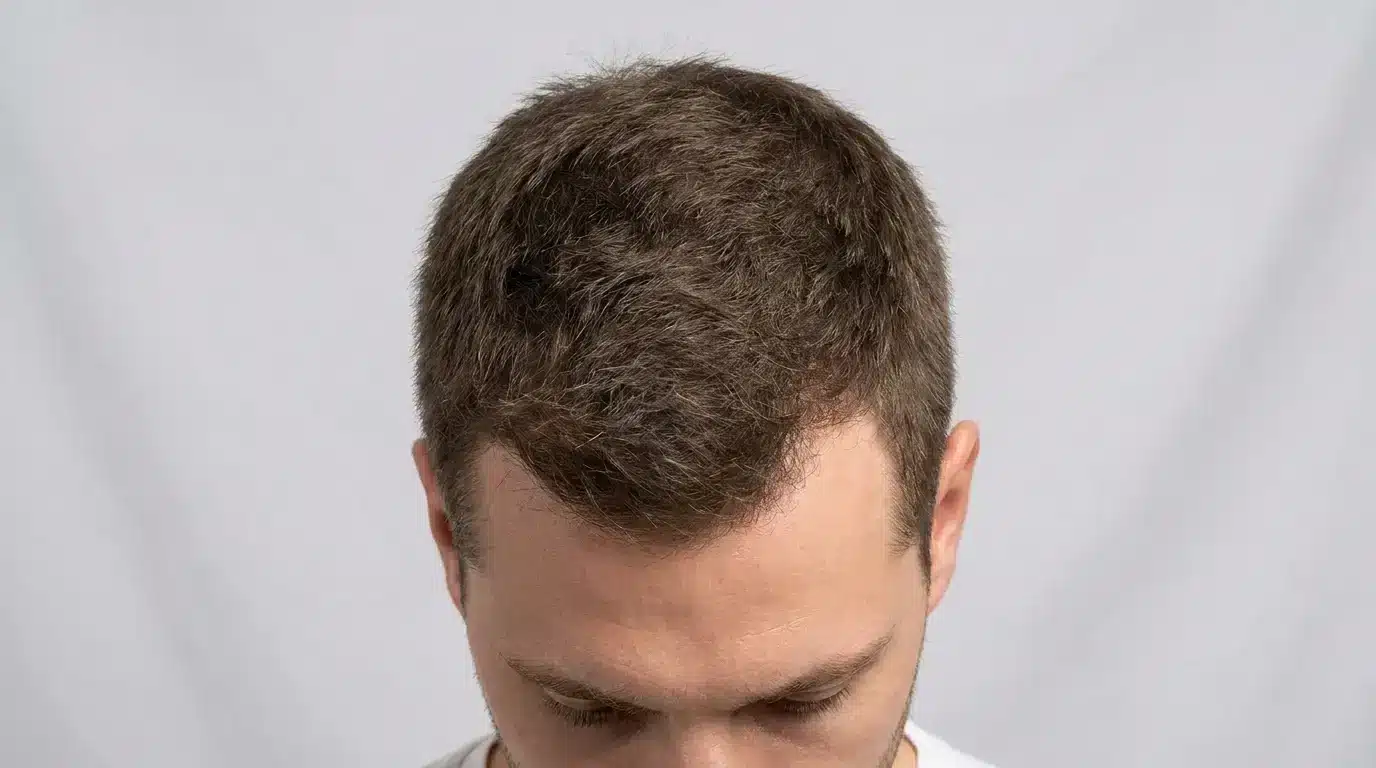
The hairline starts to move slightly at the temples. This makes an M-shape, which you can often only see when you look really closely at the hairline.
Stage 3: Noticeable Temple Recession
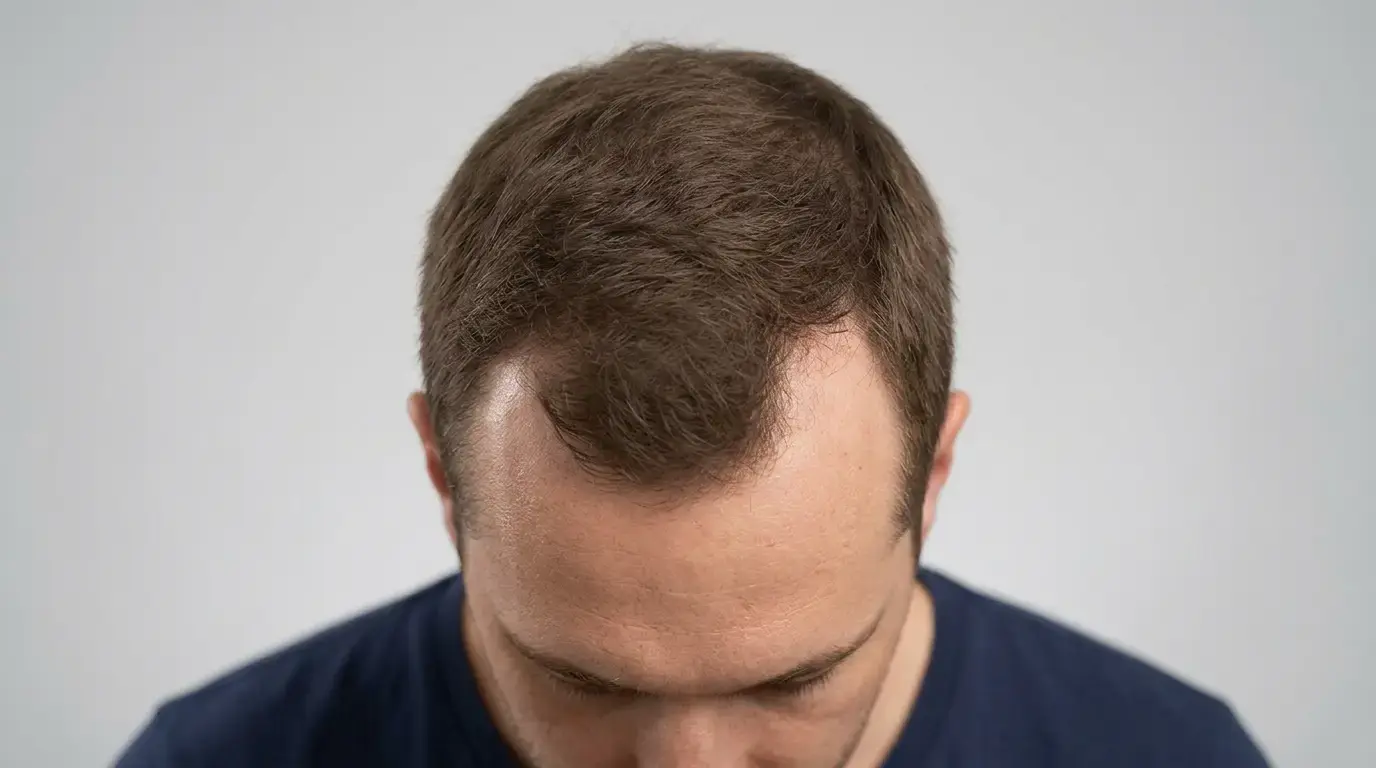
The recession is easier to see from a distance now. The temples stand out more against the rest of the hairline. The M-shape becomes clearer, and you may notice more scalp visible on both sides of the forehead. This is often the point where people start actively looking into treatment options.
Stage 4: Temple and Crown Thinning
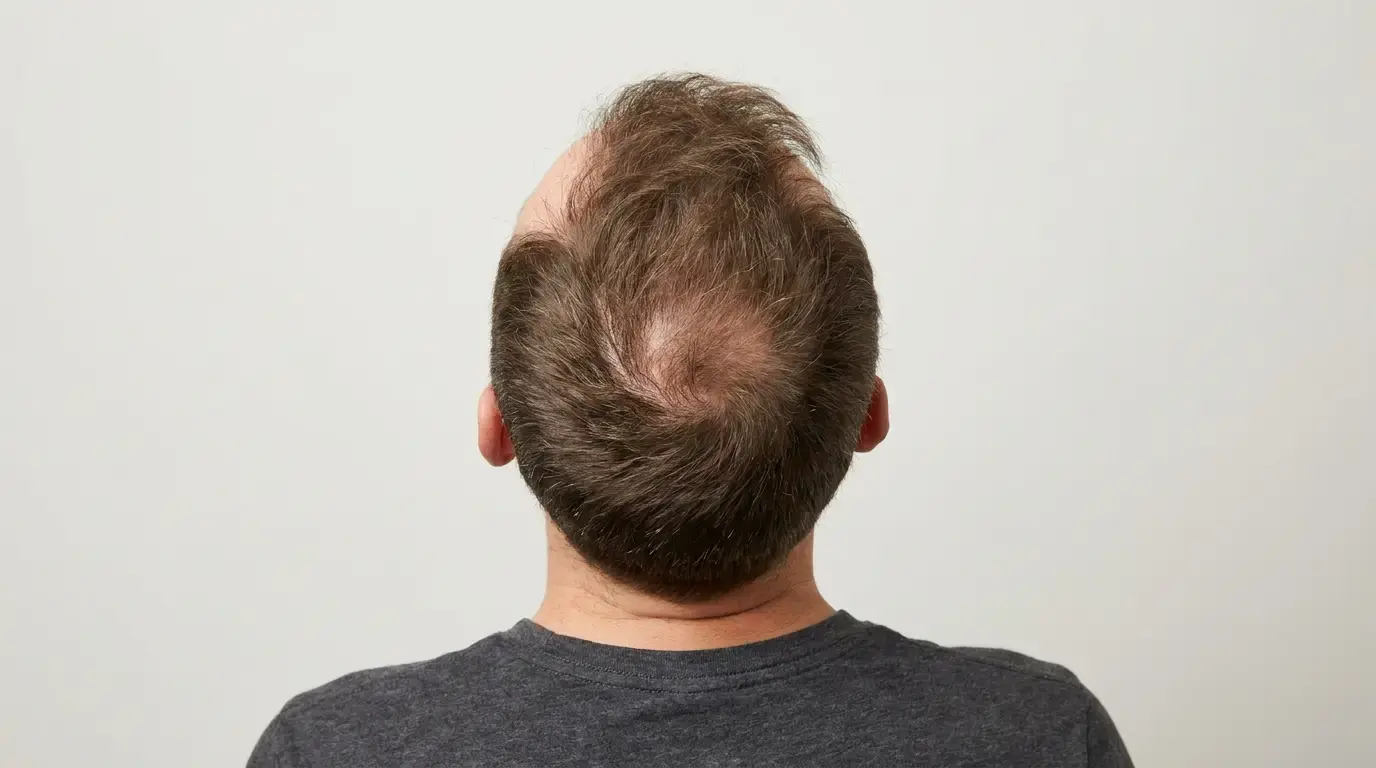
Hair loss now shows up in two spots instead of one. The temples continue to recede, and thinning also starts at the crown, toward the back of the head.
A band of hair still runs between these two areas, keeping them visually separate for now.
Stage 5: Thinning Bridge Between Temples and Crown
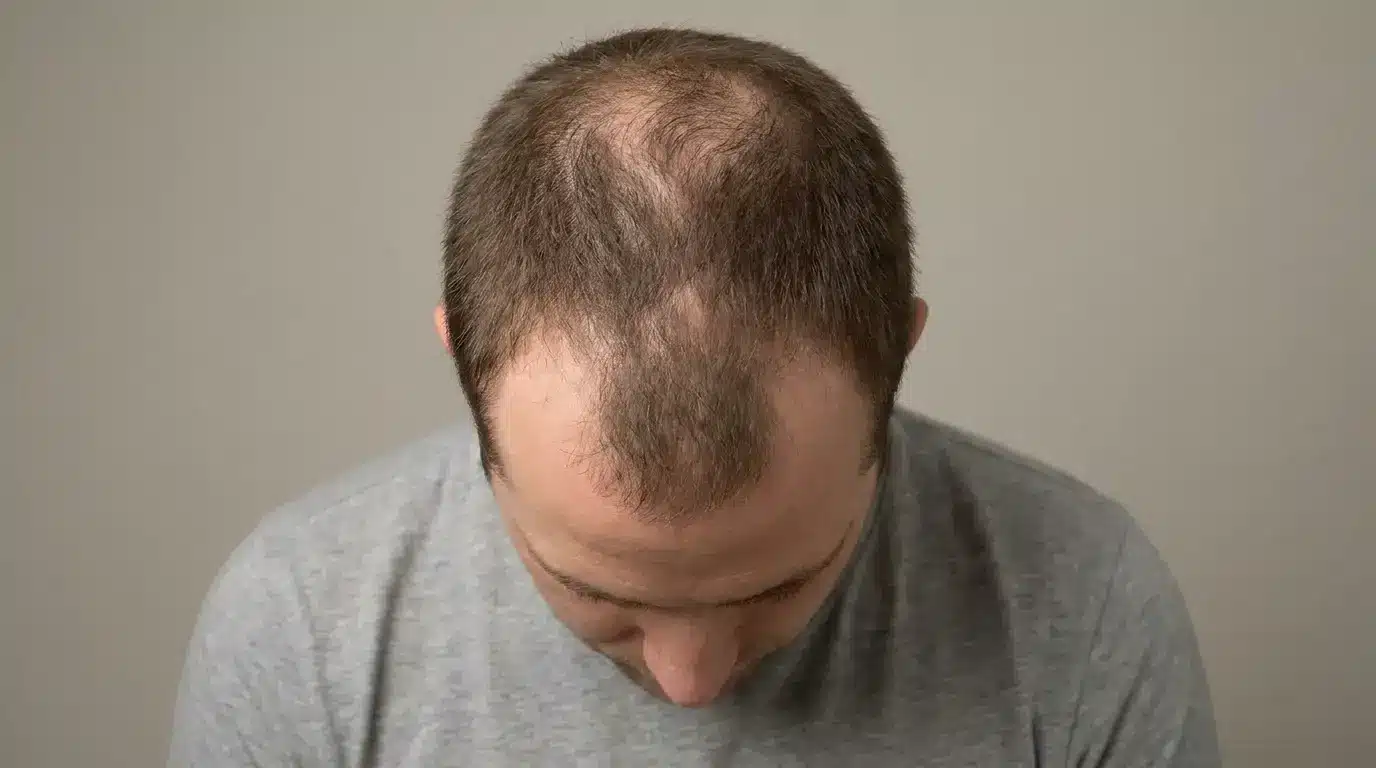
The hair between the temples and the top of the head starts to thin. This area, which used to keep the two spots separate, now looks thinner and less full.
In this stage, the two spots are clearly getting closer to becoming one bald spot.
Stage 6: Connected Balding Areas
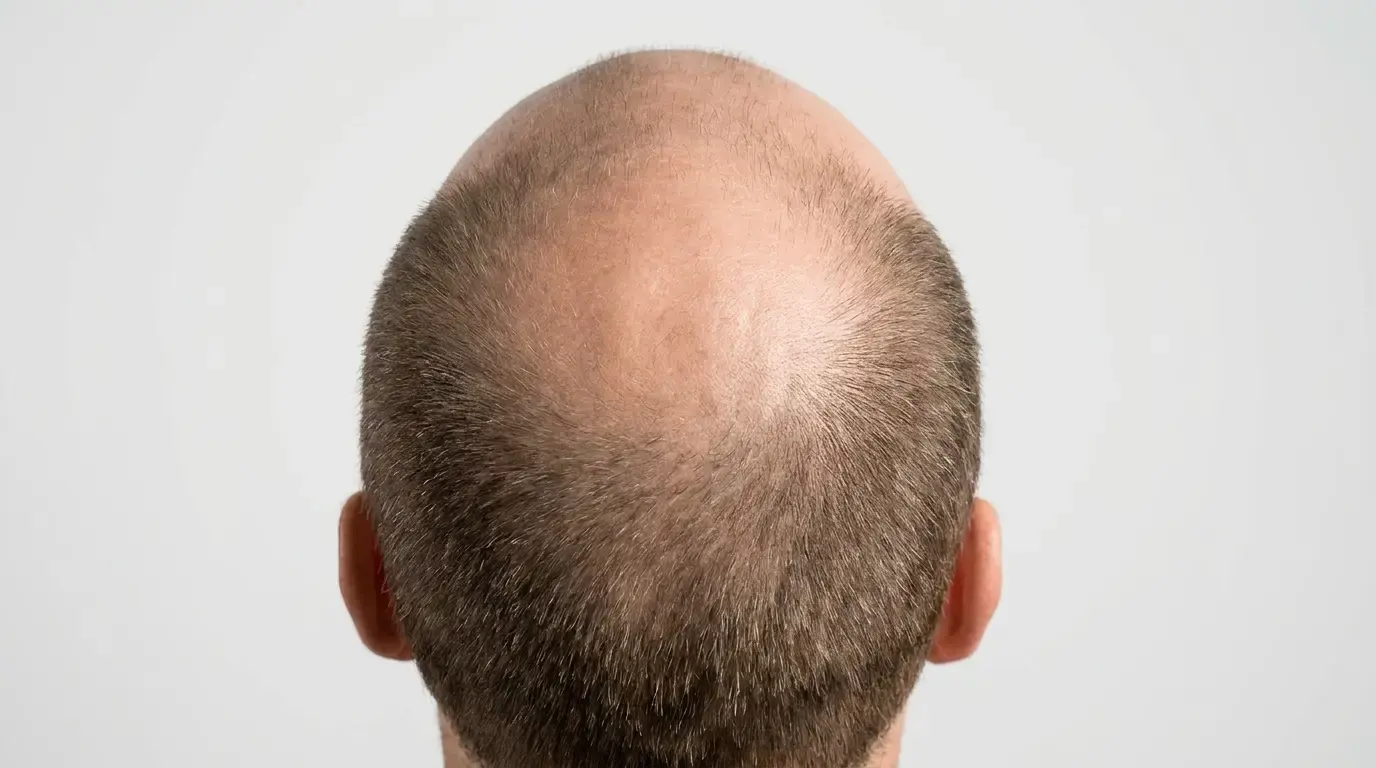
The temple and crown regions are fully connected now. The temple and crown regions have come together to form one bald spot on the top of the head.
You still have hair on the sides and back of your head; the hair remains there.
Stage 7: Extensive Hair Loss
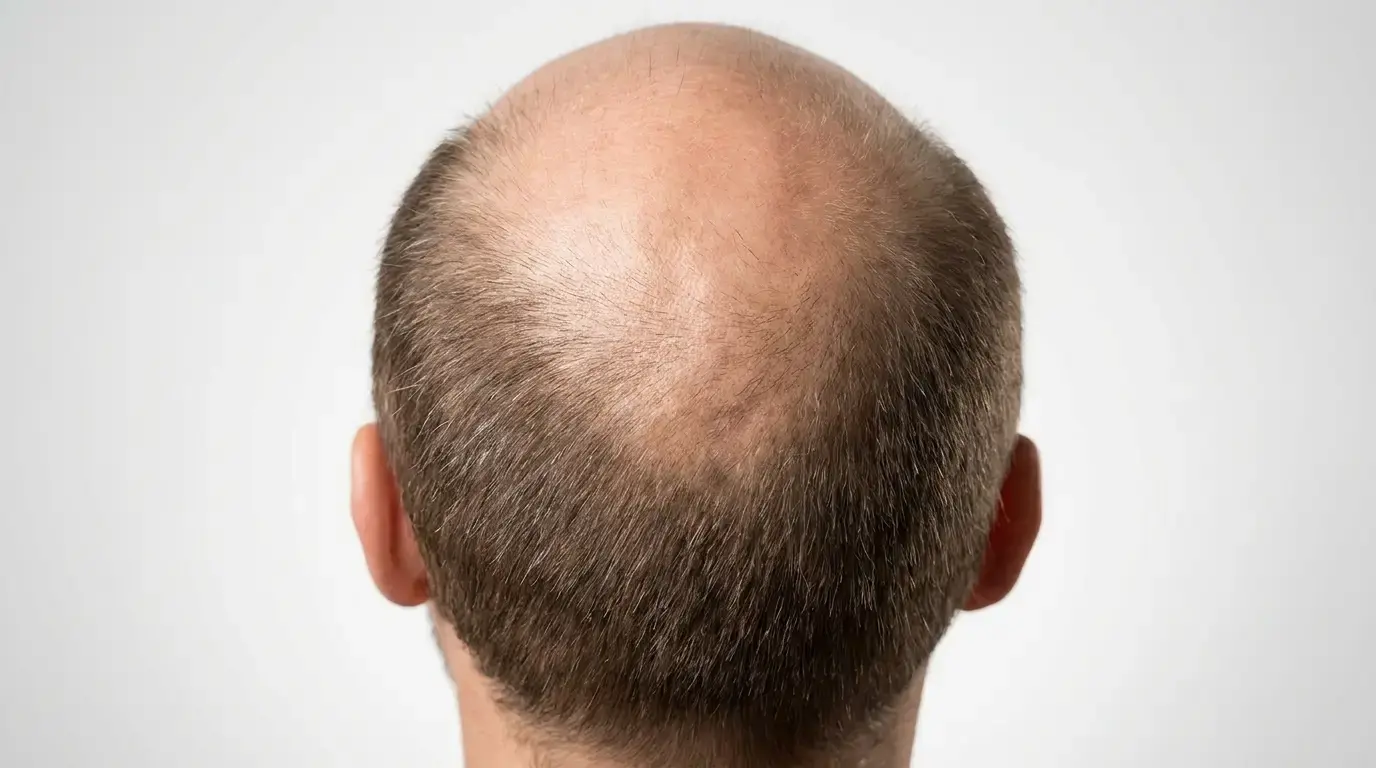
This is the most advanced stage. Only a thin band of hair remains, running along the sides and back of the head. The top of the scalp is mostly or completely bare, with little to no hair regrowth expected without medical intervention.
When you figure out which stage your hairline is at, it becomes a lot easier to see what is going on with your hairline and which treatments will actually work for your hairline.
Can You Prevent a Receding Hairline?
You cannot always prevent a receding hairline, especially when genetics are involved. However, early treatment, a balanced diet, stress management, a gentle hair care routine, and a healthy scalp routine may help slow hair loss and support healthier hair. If you notice rapid changes, consulting a dermatologist early can help identify the cause and suitable treatment options.
Symptoms of a Receding Hairline
Before the hairline visibly moves, there are usually a few earlier signals worth watching for.
- Temple thinning: Hair at the temples becomes noticeably sparser before the rest of the hairline changes
- A widening M-shape: The hairline starts to dip at the sides while staying fuller in the center
- A higher-looking forehead: The overall hairline sits further back than it used to, even before the shape changes much
- Finer, shorter strands up front: Follicles produce weaker hair before they stop producing hair altogether, so texture often changes before density does
- More shedding than usual: Noticeably more hair on your pillow, in the shower drain, or in your brush, especially from the front of the scalp
- A widening part (more common in women): The gap along the part line becomes easier to see as density drops
Itching, burning, scaling, or sudden patchy loss are not typical symptoms of ordinary pattern hair loss. Those signs point to a scalp condition or another underlying cause and are worth having a dermatologist check rather than waiting to see if they resolve on their own.
Men vs. Women: How a Receding Hairline Differs
A receding hairline doesn’t look the same for everyone. Men and women tend to lose hair in different patterns, which is why doctors use different scales to track it.
| Factor | Men | Women |
|---|---|---|
| Pattern | Hairline recedes at temples, moves backward | Overall thinning, especially at the part |
| Scale used | Norwood Scale | Ludwig Scale |
| Common areas affected | Temples and crown | Top of scalp and part line |
| Typical onset | Often starts in 20s or 30s | Often starts around menopause |
Understanding which pattern matches your hair loss can help you and your doctor figure out the most effective treatment plan for your specific situation.
Stages of a Receding Hairline in Women (Ludwig Scale)
Doctors use the Ludwig Scale to grade hair loss in women, which usually shows up as thinning at the top of the scalp rather than recession at the temples.
- Stage I: Mild thinning begins at the top of the head, often first noticed as a wider part
- Stage II: The scalp becomes more visible through the thinning hair
- Stage III: Hair at the crown may be significantly thinned or lost
Because female pattern hair loss rarely affects the frontal hairline the way it does in men, a dermatologist may also use the Sinclair Scale alongside the Ludwig Scale to track more subtle, early-stage changes.
Psychological Impact of a Receding Hairline
For many people, a receding hairline is not just a cosmetic change. Research consistently links visible hair loss to lower self-esteem, body image concerns, and increased social anxiety, and the effect tends to grow stronger at more advanced stages of recession.
A multinational European study of men aged 18 to 45 found that over 70 percent considered hair an important part of their overall image, and 62 percent agreed that hair loss could affect self-esteem.
Men in the study also linked early hair loss to concerns about aging, reduced confidence in social settings, and, for a meaningful share of participants, feelings of low mood.
Women are not exempt from this either. Female hair loss carries its own stigma, partly because it is discussed less openly than male pattern baldness, which can leave women feeling isolated in an experience that is actually fairly common.
A few things tend to soften the psychological impact:
- Understanding that a receding hairline is usually driven by genetics and hormones, not anything the person did wrong
- Starting treatment early, since acting during the earlier stages tends to preserve more options and more confidence along the way
- Talking to a dermatologist or counselor rather than managing the emotional side alone, particularly if the hair loss is affecting mood, social situations, or day-to-day confidence
If a receding hairline is affecting your self-esteem or mental health, that’s a legitimate reason on its own to bring it up with a doctor, separate from any interest in slowing or treating the hair loss itself.
How Is a Receding Hairline Diagnosed?
A doctor who specializes in skin conditions can tell you what is causing your hair loss and how much it has gotten worse.
- During your appointment, they will look at your scalp carefully and ask about whether anyone in your family has had hair loss.
- They might also do a test where they gently pull on some hair to see how easily it comes out.
- This test helps them understand if your hair loss is still happening or if it has stopped.
A correct diagnosis gives you a place to start so you know exactly which options to try next.
Mature Hairline vs. Receding Hairline: What’s the Difference?
A mature hairline is a normal aging change with slight temple recession, while a receding hairline involves progressive hair loss caused by factors like genetics and DHT sensitivity.
| Mature Hairline | Receding Hairline |
|---|---|
| Normal part of aging | Often linked to hair loss |
| Slight movement at the temples | More noticeable temple recession |
| Usually stays stable | May continue progressing |
| Hair density remains mostly the same |
Hair becomes thinner over time |
Knowing the difference can help you understand whether your hairline change is normal or a sign that you should consider treatment.
Treatment Options for a Receding Hairline

There are things you can do to slow down hair loss or help your hair grow back. It really depends on what’s happening with your hair and why you are losing it.
According to the American Academy of Dermatology, treatment works best when it matches the specific stage and cause of your hair loss. Here is a list of the things people usually try.
Minoxidil
An over-the-counter topical treatment applied directly to the scalp. It helps stimulate hair follicles and can slow further thinning over time, though results usually take a few months to show. It’s one of only two FDA-approved hair treatments currently available.
Pro tip: Consistency matters more than the amount you use. Daily application works better than occasional heavy use.
Finasteride
A prescription oral medication that blocks the hormone linked to hair follicle shrinkage. It’s typically used for male pattern hair loss and requires a doctor’s guidance.
Pro tip: Talk to your doctor about potential side effects before starting, since it affects hormone levels.
PRP Therapy
A treatment that uses your own blood plasma, injected into the scalp to encourage follicle activity. It’s often used alongside other treatments for better results, and multiple sessions are usually needed, so ask your provider about a realistic timeline.
Laser Therapy
A low-level light treatment that may stimulate blood flow to hair follicles. It’s non-invasive and can be done at home with certain devices or in-clinic. Results vary by person, so it works best as a supporting treatment rather than a standalone fix.
Hair Transplant Surgery
A surgical procedure that moves healthy hair follicles from denser areas to thinning or bald areas. It’s typically considered for more advanced stages of hair loss.
Pro tip: Choosing an experienced, board-certified surgeon matters more than the specific technique used.
Talk to a dermatologist to figure out which treatment, or combination of treatments, fits your stage and goals best.
Can a Receding Hairline Be Reversed?
People often ask this question, and the truth is, the answer isn’t a simple yes or no. It depends on what’s causing your hair loss and how far along it is.
If you are in the early stages of hair loss, you might be able to use something like minoxidil or finasteride to help your hair. Sometimes these treatments can even make your hair thicker again.
If your hair has been thinning for a long time, it is much harder to make it grow back. At that point, the focus shifts to stopping further hair loss.
See a dermatologist as soon as you can, because the sooner you address hair loss, the more options you will have to try and make it better.
When to See a DoctorSome signs are worth getting checked out rather than waiting. Here’s when it makes sense to book an appointment.
A dermatologist can figure out what is causing your hair loss and help you get the right treatment, so you can stop losing hair. |
Final Thoughts
I think understanding your hairline stage is the first real step toward figuring out what to do next.
Every stage looks different, and every person’s cause is a little different too.
If you’re just noticing slight changes, it’s worth talking to a dermatologist early rather than waiting.
The sooner you understand what’s happening, the more treatment options you’ll have.
Whether it’s minoxidil, finasteride, or something more involved like a hair transplant, there’s no one-size-fits-all answer.
If your hairline has you worried, book a consultation with a dermatologist and get a plan that actually fits your stage.
Frequently Asked Questions
What is the First Sign of a Receding Hairline?
Slight recession at the temples, forming a subtle M-shape, is usually the earliest visible sign.
At What Age Does a Receding Hairline Start?
It can start in your late teens or twenties, though it’s more common in your 30s and beyond.
Is a Receding Hairline the Same as Balding?
Not always. A receding hairline can stay mild for years without progressing to full balding.
Can a Receding Hairline Grow Back Naturally?
Sometimes, especially if it’s caused by stress or temporary shedding rather than genetic hair loss.