
A hospital that works well looks unremarkable from the outside. Medications arrive when they are supposed to. The patient who came in with chest pain reaches the right floor without spending two hours on a gurney in a corridor. Nobody writes press releases about that.
Behind it sits slow, unglamorous work: someone counted how often a delay happened, found out why, changed one step, then counted again. Better outcomes come from that loop, run over and over, in buildings full of people who are already tired.
Where the Work of Fixing a Hospital Begins
Most health systems already collect far more performance data than their managers can act on. The bottleneck is rarely measurement. It is that the nurse manager or department lead handed the improvement project has no training in cost structures, contract negotiation, or operations, and the job one rung above them quietly assumes that training.
Graduate business education built around health systems closes the gap, covering finance, analytics, and organizational behavior in a setting where the end customer is a patient.
Clinicians who want that grounding without stepping away from practice can work through the University of North Carolina Wilmington’s online healthcare management MBA on evenings and days off. Studying online means coursework fits around clinical shifts, with no relocation, no commute, and no gap in employment or seniority while the degree is finished.
Counting Things That Resist Being Counted
Infection rates are easy to record. Whether a discharge conversation actually made sense to the patient is not. Improvement teams spend a surprising amount of time arguing about definitions before they argue about solutions, because a metric that means three things to three departments will produce three incompatible reports.
Take a fall. Does a patient who slides from a chair to the floor with an assistant’s hands on them count the same as one found on the bathroom tile at 3 a.m.? Most hospitals eventually decide yes, both count, because the alternative is a definition loose enough to hide the second kind.
That decision costs the unit its clean numbers for a quarter. It also gives the safety committee something real to work with, and the falls that follow get investigated instead of explained away.
A Readmission Rate Is Never One Number
Thirty-day readmissions get treated as a single figure, usually reported to the board as a percentage with an arrow beside it. Break the figure apart, and the arrow stops meaning much.
Some patients come back because the disease progressed and nothing could have prevented it. Some come back because the discharge summary reached the primary care office four days after the follow-up appointment. Some come back because they filled two of five prescriptions and rationed the rest. Those groups need entirely different responses, and pooling them produces initiatives aimed at nobody in particular.
Hospitals that make progress here do something narrow and stubborn. They pick heart failure, or hip replacement, or chronic obstructive pulmonary disease. They call every patient in that group within 48 hours of discharge and record what they hear.
Then they fix the failures that keep coming up: the missing scale at home, the pharmacy that closed, the daughter who was never told what a two-kilo weight gain in a day means. The pattern only appears when the data is cut thin enough.
Staff Who Solve Problems Without Being Asked
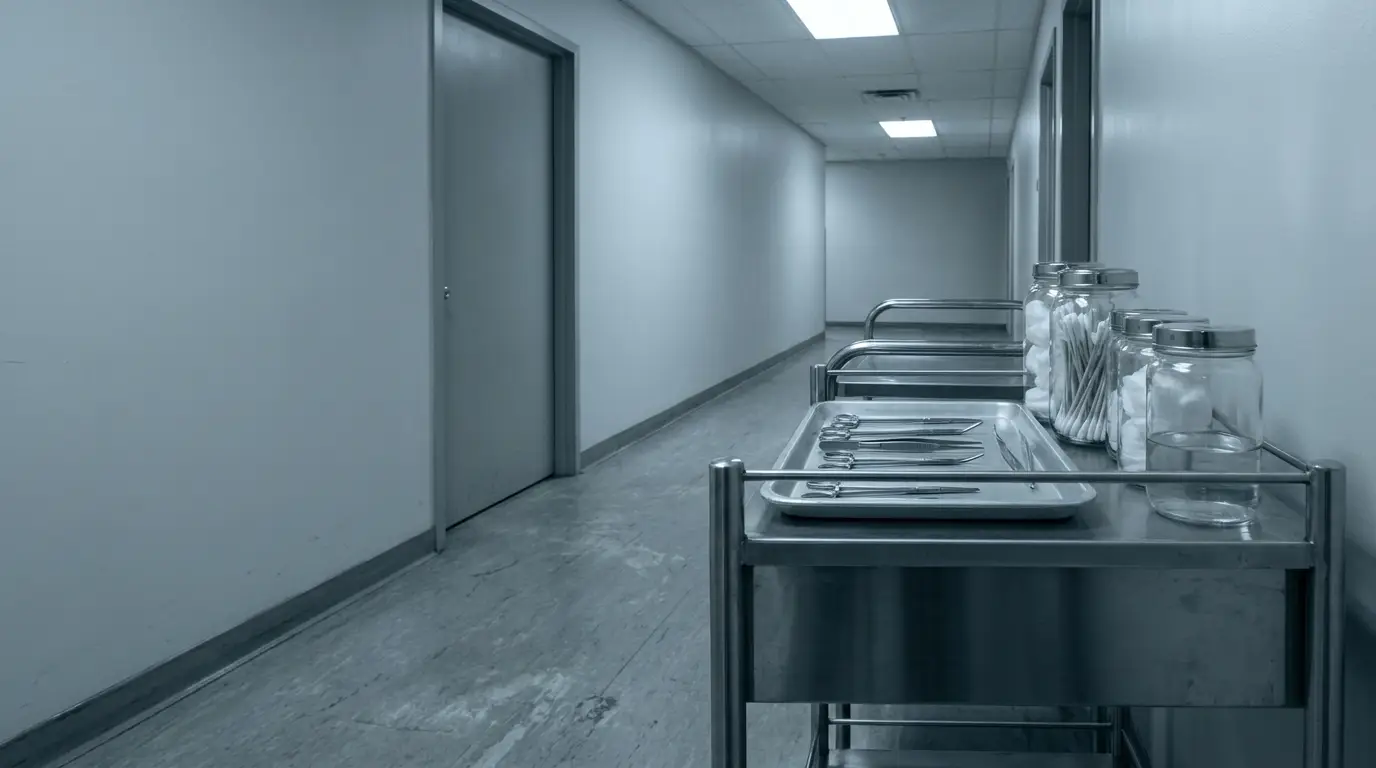
The most reliable improvement engine in any hospital is not the analytics department. It is a ward with enough room for a technician to say out loud that the crash cart on the third floor is stocked differently from the one on the fourth.
That room is built or destroyed by how the last error was handled. If the response to a medication mix-up was a written warning and a name on a list, the next near miss goes unreported, and the cause stays in place.
If the response was a twenty-minute review that ended with two look-alike vials separated on the shelf, reporting goes up. Rising incident reports usually mean a safer unit, which is one of the harder things to explain to a board that reads the same number as a warning sign.
Small Changes That Survive the Night Shift
Plenty of improvements work beautifully for six weeks. A new handoff checklist. A whiteboard. A huddle at 7 a.m. Then the champion transfers, agency staff cover a bad month, and the practice quietly dies.
What survives shares a few traits. It is faster than the thing it replaced, or at least no slower. It lives in a form, a screen, or a physical layout rather than in anyone’s memory. And someone reviews the numbers monthly in a meeting other people attend. A change that depends on enthusiasm has a half-life measured in weeks. A change that depends on the order in which supplies sit on a shelf lasts years.
Antibiotic stewardship makes the point. Programs that hold up do not rely on physicians remembering guidance. They put a 48-hour review into the pharmacy workflow, so someone looks at every broad-spectrum course and asks whether the culture results now justify narrowing it. The prompt is structural. The clinical conversation still happens between two people.
What Patients Notice and Data Misses
Standard measures capture mortality, infection, length of stay, and returns to the operating room. They say almost nothing about whether a patient understood the plan, slept, ate, or felt like a person while they were admitted.
Some of that gap closes with survey work. Some of it only closes by walking the floor at odd hours and looking. A ward can post excellent clinical numbers while patients wait ninety minutes for help getting to the bathroom, and both facts can be true at once.
Hospitals that take recovery seriously treat those observations as data too, because a patient who cannot rest, cannot follow the plan at home, or does not trust the person explaining it will do worse regardless of how good the surgery was.