Leg discomfort often appears alongside visible spider or varicose veins, especially after pregnancy or prolonged strain. Pain, fatigue, and changes in skin color can affect daily movement, while surface veins can also cause cosmetic concerns. Advanced vein therapy addresses these problems by targeting abnormal vessels rather than covering them. Laser treatment and sclerotherapy use different methods, so a consultation helps match the procedure to the vein pattern, location, and severity described below.
Why Leg Discomfort Needs Evaluation
Patients should first identify whether discomfort comes from spider veins, larger varicose veins, or another condition. A clinical review separates cosmetic concerns from aching and leg fatigue. For patients comparing vein therapy in Los Angeles, the treatment page describes laser vein therapy and sclerotherapy for visible leg vessels. That information supports a focused discussion about the appropriate procedure.
Pregnancy often brings new veins to the legs, trunk, or face. Spider veins usually appear as small surface vessels, while varicose veins become larger and more noticeable. These changes can create pain and fatigue, especially when affected veins appear across the thighs, knees, calves, or ankles.
How Laser Therapy Targets Visible Veins
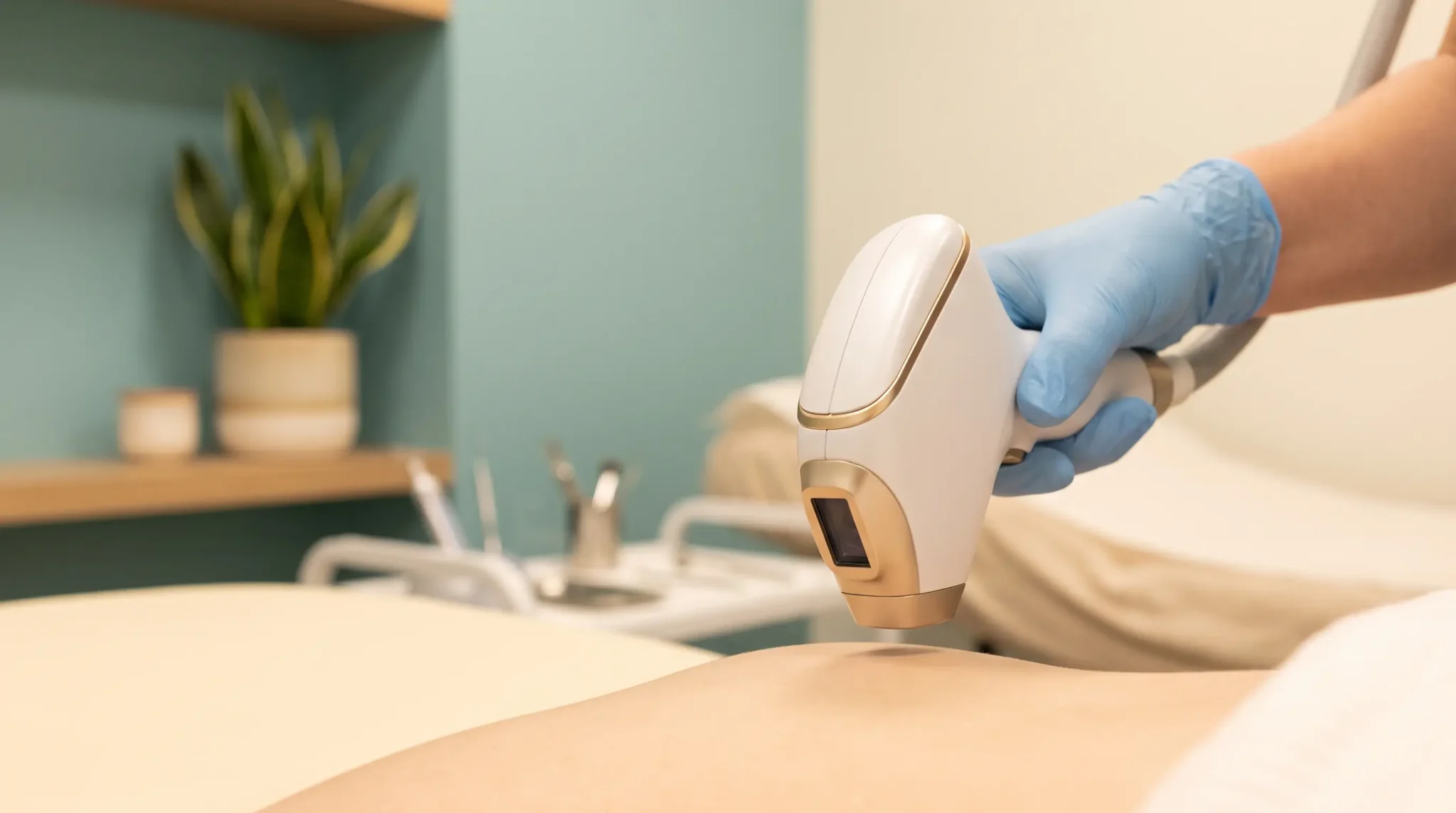
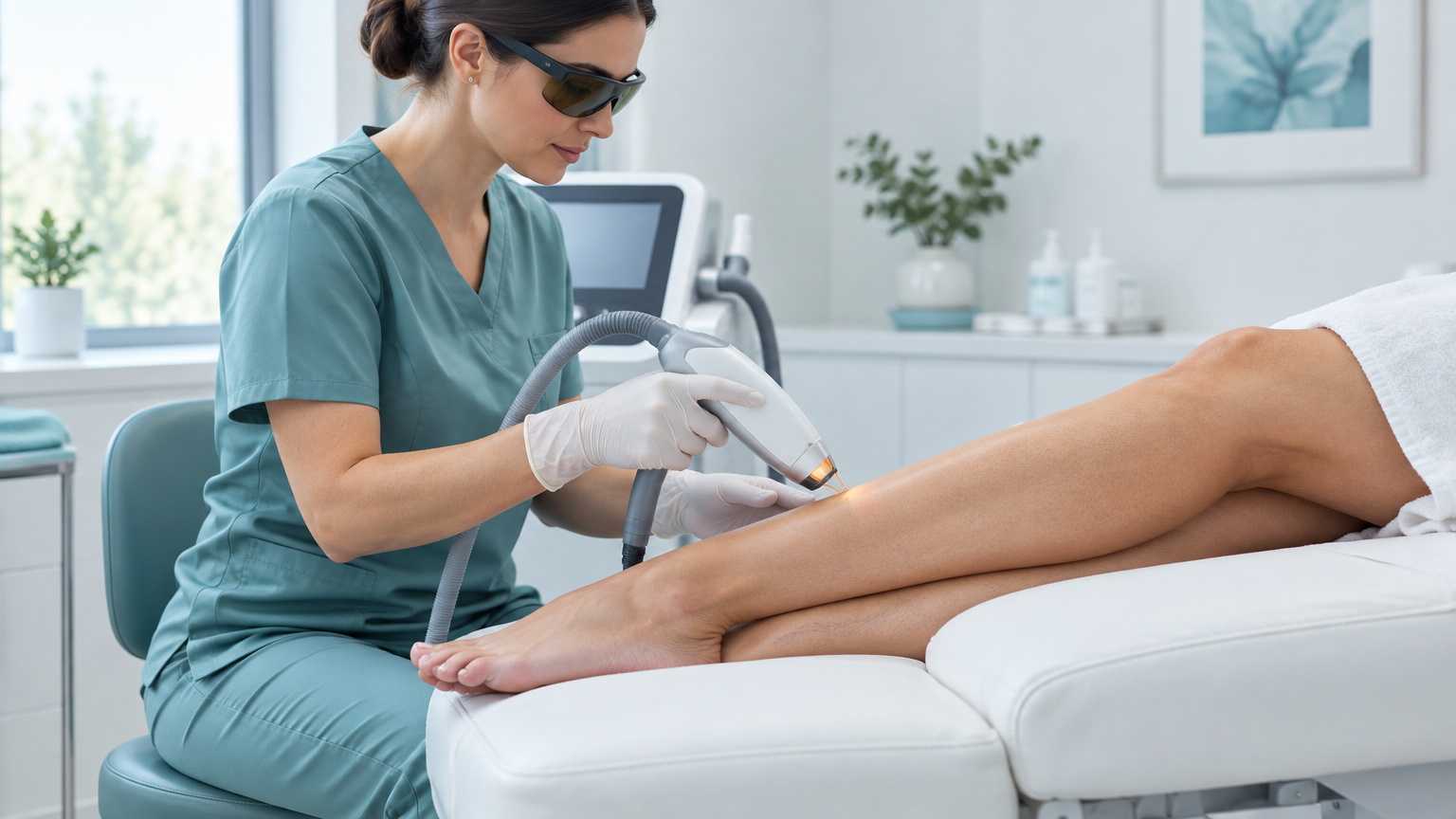
Laser vein therapy uses a high-intensity light beam that reaches targeted blood vessels beneath the skin. The light delivers controlled heat to the vessel, treating the abnormal area without an incision. This approach suits visible broken or dilated vessels in several body areas.
The YAG laser includes a Dynamic Cooling Device, also called DCD. A brief burst of cryogen cools the upper skin layers while the laser applies heat below the surface. This combination protects the skin surface and limits side effects during treatment.
Laser therapy also treats certain vascular lesions beyond leg veins. The listed uses include rosacea, port wine stains, and other vascular birthmarks. A consultation determines whether laser treatment fits the vessel type, depth, and location.
When Sclerotherapy Fits

Sclerotherapy uses repeated injections of a proprietary solution into the affected veins. The solution irritates the blood vessel lining, causing the vessel to swell and stick together. Over time, the body absorbs the remaining vein.
This minimally invasive treatment began as a method for leg veins, but specialists also use it on veins in the chest, arms, back, and face. The method suits spider and varicose veins when injections provide a more direct way to treat the vessel.
Treatment needs vary depending on vein severity. Some patients see satisfactory results after a few sessions, while others need several treatments. Spider and varicose veins begin to disappear within a few weeks, but complete results can take several months.
What Recovery Can Look Like
Temporary skin changes can appear during treatment. The affected leg may develop reddish blotches, pigmentation, or discoloration as the treated vein changes. These effects usually fade, with most discoloration disappearing within 12 months after the procedure.
Patients should discuss expected recovery before selecting laser therapy or sclerotherapy. The treatment area, vein size, and number of affected vessels influence the recommended approach. Clear guidance also helps patients understand why results develop gradually rather than immediately.
Matching Treatment to the Vein Pattern
Laser therapy directs controlled energy into targeted vessels, while sclerotherapy places a solution inside the vein. The difference matters because visible veins vary in size, depth, location, and severity. A specialist can assess these features before recommending a treatment plan.
Leg discomfort also deserves attention beyond appearance. Aching and fatigue can affect walking, standing, exercise, and daily routines. Treating the underlying visible vessels addresses the source identified during evaluation instead of relying on cosmetic coverage.
Conclusion
Advanced vein therapy gives patients a practical way to address visible veins alongside leg aching and fatigue. Laser treatment uses controlled heat with surface cooling, while sclerotherapy closes treated vessels through injections and gradual absorption. The right choice depends on the vein pattern, location, and severity. Anyone with persistent discomfort or changing leg veins should schedule a consultation, describe the symptoms clearly, and ask which treatment provides the safest, most suitable path forward.