Nobody warns you that the hardest part of surgery is in the weeks after. The procedure itself is over in hours. The recovery stretches on, and your bed, which used to feel like a reward, becomes a frustration. You cannot get comfortable. You cannot sleep. And every small task, sitting up, reaching for water, rolling over, feels like a physics problem.
Here is the good news: you do not have to white-knuckle through it. A little planning turns that miserable stretch into something manageable. This guide walks you through the comforts, positioning tricks, and mindset shifts that actually move the needle, so recovery feels less like punishment and more like a slow weekend.
Why Your Bed Is Working Against You
Here is the thing nobody mentions. Standard sleeping arrangements do not care about healing bodies. A flat mattress and a single pillow were designed for a person with no restrictions. After surgery, especially chest or abdominal procedures, lying flat puts tension on incisions. It makes getting up a nightmare. It can even make breathing feel shallow when you are anxious.
Your grandmother’s advice to prop yourself up was right. Elevating your upper body reduces strain along the surgical site and takes pressure off your spine. But a mountain of loose pillows collapses at 2 a.m. It shifts. It slides. You wake up in a position your surgeon would frown at.
I have seen people duct tape pillows to headboards. I have seen people sleep in recliners for a month out of sheer desperation. Neither is a plan.
The Positioning Problem Nobody Solves
Think about how much you move in your sleep. You roll. You shift. You curl. After surgery, every one of those unconscious movements is a small betrayal. Your body wants its old positions, but your incisions demand new ones.
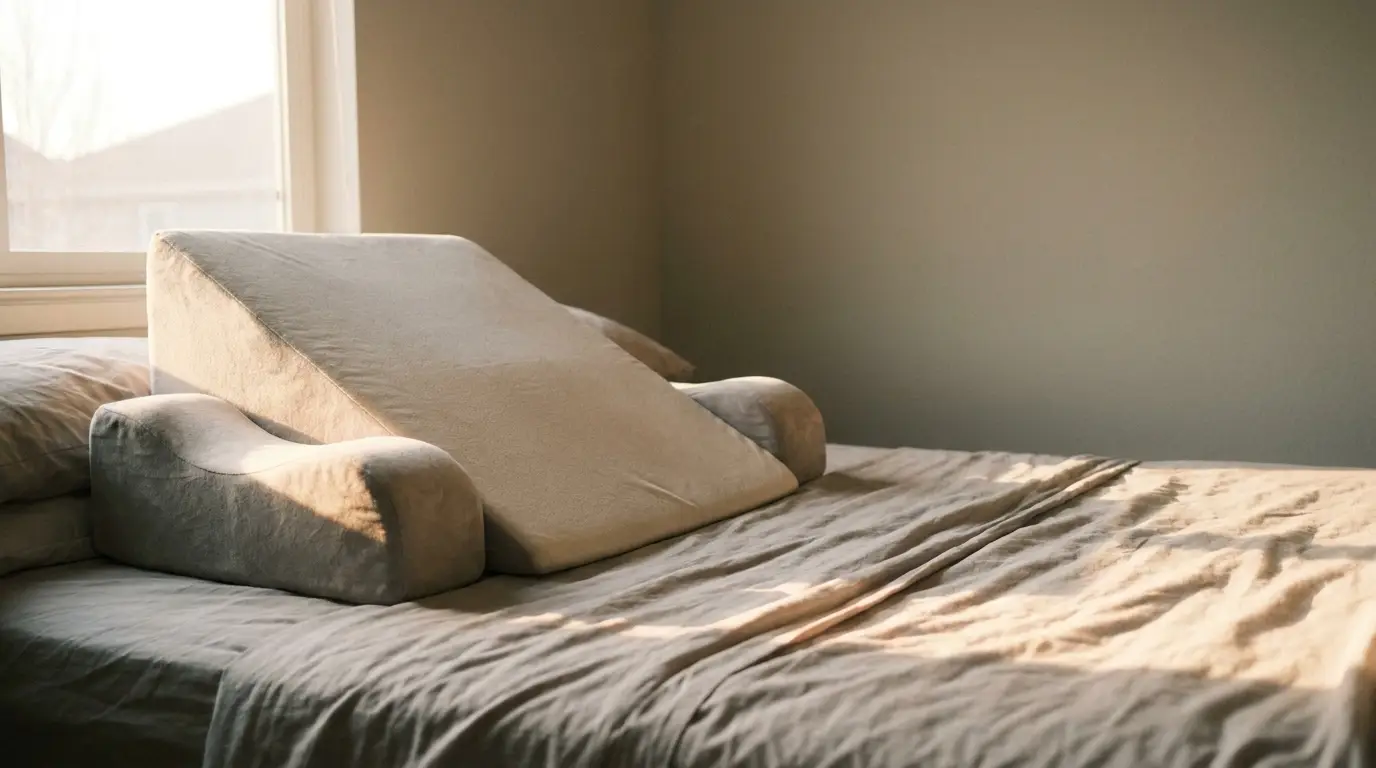
This is where a dedicated pillow system earns its keep. A well-designed setup, like the Mastectomy Pillow, cradles you on multiple sides so you physically cannot roll onto your healing chest. The wedge keeps your torso elevated. The side bolsters keep you put. You stop fighting your bed and start letting it hold you.
The real test is whether it survives the night. Flimsy pillows flatten. Cheap foam compresses. A system with dense, contoured support holds its shape until morning, which is the entire point.
A Practical Guide to Building Your Sleep Setup
You do not need to buy everything at once, but you do need a system. Here is the sequence I recommend, one that I have talked through with more friends than I can count.
Step One: Take Inventory of Your Bed
Start with what you already own. Measure your mattress. Note how much space you have. A king bed gives you options. A twin forces efficiency. Know your constraints before you shop.
Step Two: Prioritize the Wedge
The incline matters more than any other piece. Look for something with a gentle slope, not a cliff. You need enough elevation to ease tension, but not so much that your hips fold into a V shape, which causes lower back pain by morning.
Step Three: Add the Side Support
This is the piece people skip, and it is the one that does the heavy lifting. Bolsters along both sides keep you from rolling. They also give your arms somewhere to rest, which prevents that strange floating feeling when you sleep on your back.
Step Four: Test the Covers
Here is an ugly truth: you will sweat. Post-surgery temperature swings are real. Washable, breathable covers are not a luxury. They are hygiene. Look for removable slipcovers you can toss in the machine.
Step Five: Rehearse the Exit
Before the big day, practice getting out of bed with your setup in place. Roll to your side, push up with your arms, swing your legs down. If you cannot do it smoothly now, you will not manage it when you are sore.
The Little Comforts That Matter More Than You Think
Positioning solves the big problem, but recovery lives in the details. Tiny conveniences stack up into a much smoother week. A few that surprised me:
- A long-handled grabber. Dropping the remote and watching it slide under the bed is a special kind of defeat.
- Loose button-up shirts. You will not want to lift your arms over your head for a while. Plan your wardrobe accordingly.
- A bedside station. Water, medication, phone charger, lip balm, all within arm’s reach. Movement is work. Reduce the trips.
- Pillows for the car. The seat belt sits right across the chest, and that strap will annoy you more than the incision will. A small pillow between belt and body changes the entire ride.
Each of these sounds small on its own. Together, they reduce the friction of every single day. And recovery is, honestly, a game of reducing friction.
Recovery Is Emotional, Not Just Physical
Everyone talks about the incision. Nobody talks about the isolation. You are home, possibly alone, with too much time to think. Your body feels foreign. Your routines are gone. The boredom is real, and so is the quiet anxiety that creeps in at 3 a.m.
Here is what helped me, and what I tell anyone facing this. Build small rituals. A morning stretch, even a gentle one, signals that you are still here. A phone call with a friend at the same time each day gives structure. A show you save only for recovery hours gives you something to look forward to. According to the Centers for Disease Control and Prevention, rest is a cornerstone of healing, and rest includes mental rest, not just physical stillness.
Do not feel guilty about the slow days. Your only job right now is to heal. The laundry can wait.
When To Push Yourself and When To Stop
There is a fine line between resting and stagnating. Too much bed rest weakens your muscles. Too much activity sets you back. The trick is learning to read your own signals.
Light movement, a short walk around the house, a few gentle leg lifts, keeps your circulation going. The National Library of Medicine at MedlinePlus emphasizes that gradual movement supports recovery, but always within your doctor’s guidelines. If something hurts sharply, stop. If you feel dizzy, sit down. Pain is information. Listen to it.
And here is the thing nobody says out loud. You will have good days followed by bad ones. That is normal. Progress is not a straight line. A rough Tuesday does not erase a great Monday.
Questions People Are Afraid to Ask
Let me answer the ones that come up in every single conversation I have about recovery.
How long do I actually need the extra support? Plan for at least two weeks of dedicated positioning. Some people need a month. There is no prize for ditching the setup early. Your body sets the timeline.
Can I sleep on my side eventually? Yes, but only when your surgeon clears it. In the early days, side sleeping puts direct pressure on healing tissue. That is why the side bolsters matter. They train you to stay on your back until it is safe.
What if I am a chronic stomach sleeper? I hear you, and I am sorry. This is the hardest habit to break. The wedge, plus a body pillow hugged against your chest, is the closest workaround. It gives you the sensory comfort of stomach sleeping without the actual position.
Building Your Community Before You Need It
Here is the part that surprised me most. Recovery is lighter when you borrow strength from others. Tell three people, specifically, what you need. Not a vague “let me know if you need anything,” but a real ask. “Can you bring dinner Tuesday?” “Can you call me at 4 p.m. so I do not spiral?”
The National Cancer Institute at cancer.gov publishes openly about the value of social support during treatment and recovery. The research backs what your gut already knows. People who feel connected heal with more grace.
Let them help. It is not weakness. It is strategy.
Give Yourself Permission to Recover Slowly
Here is the truth I wish someone had told me. Recovery is not a race. It is not a test of willpower. Your body is doing demanding work, rebuilding tissue, managing inflammation, redirecting energy. That work deserves your respect, not your impatience.
Set up your space, gather your comforts, and then surrender to the timeline. The dishes can wait. The emails can wait. The world will still be there when you are ready to rejoin it.
The goal is not to recover fast. The goal is to recover well. And that starts with a single comfortable night of sleep.
What is the first thing you will do when you finally feel like yourself again?