Ever noticed how some people’s hair looks naturally healthier? They might be using a simple tool that’s been trusted for generations.
A boar bristle brush looks like a regular hairbrush at first glance, but there’s more to it than meets the eye. These brushes work differently from plastic or metal ones, and they’ve quietly remained popular for good reason.
Hair experts often recommend them, yet many people aren’t quite sure what makes them special. What exactly does a boar brush for hair do that other brushes can’t? And why do so many swear by it once they try it? Let’s find out what all the fuss is about.
What Is a Boar Bristle Brush
A boar bristle brush is a hairbrush made with natural bristles from boar hair. Unlike synthetic brushes, these bristles are soft yet firm enough to glide through hair smoothly.
The bristles have a unique structure with tiny scales that help distribute natural oils from the scalp down to the hair ends. Most boar bristle brushes come in different styles; some have 100% boar bristles, while others mix boar and nylon bristles.
The pure boar versions work best for fine or normal hair, while mixed bristle brushes handle thicker hair more easily. These brushes have been used for centuries because they’re gentle on hair and scalp.
How Boar Bristle Brushes Compare to Other Hair Brushes
Not all hairbrushes work the same way. A boar brush for hair offers different benefits compared to plastic or metal options. Here’s how boar bristle brushes stack up against other common brush types.
| Brush Type | Material | Best For | Key Benefit |
|---|---|---|---|
| Boar Bristle | Natural boar hair | Fine to normal hair | Distributes natural oils, adds shine |
| Nylon/Plastic | Synthetic bristles | Detangling wet hair | Quick detangling, affordable |
| Metal/Wire | Metal pins | Thick, curly hair | Strong grip, heat styling |
| Mixed Bristle | Boar + nylon blend | All hair types | Combines oil distribution with detangling power |
Benefits of Using a Boar Brush for Hair
Using a boar bristle brush comes with several advantages that regular brushes can’t match. These natural bristles work with hair instead of against it. Here’s what makes boar bristle brushes worth trying.
- Adds Natural Shine: The bristles spread oils from roots to ends, giving hair a healthy glow without products. This natural conditioning process works better than most store-bought shine serums.
- Reduces Frizz: Smooth bristles seal the hair cuticle, taming flyaways and static. The natural oils coat each strand evenly, creating a protective barrier. This works exceptionally well in dry or humid weather conditions
- Gentle on Scalp: Soft bristles massage without scratching or irritating sensitive skin. The gentle stimulation actually improves blood flow to hair follicles.
- Prevents Breakage: Less pulling means fewer split ends and healthier strands over time. A boar brush for hair glides through without snagging or tugging.
How to Choose the Right Boar Bristle Brush for Your Hair Type
Not every boar bristle brush works the same for everyone. Hair type makes a big difference in which brush will give the best results. Choosing the right one means understanding what hair needs.
1. Fine or Thin Hair
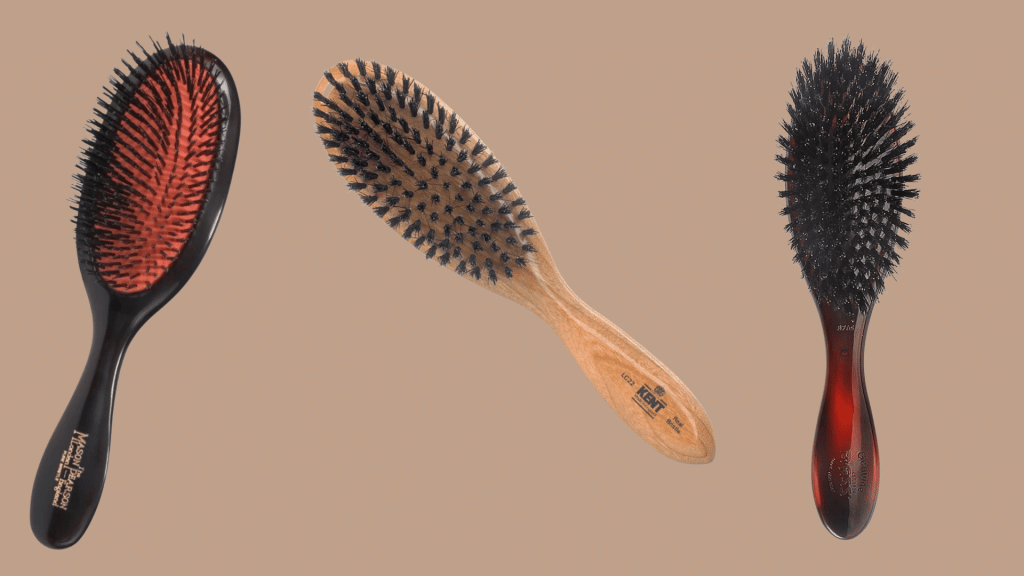
Fine hair needs gentle care to avoid looking flat or greasy. The wrong brush can weigh it down quickly. Strands are more fragile and break easily with rough handling.
- Best Choice for Your Hair:Mason Pearson, Kent Brushes, or Bass Brushes offer 100% pure boar bristles perfect for fragile strands.
- Ideal Brush Shape & Size: Small to medium paddle or oval shape for better control
- Bristle Type That Works Best: Soft, densely packed bristles distribute oils without pulling.
- Results You Can Expect: Added volume, natural shine, and less breakage over time.
2. Thick or Coarse Hair
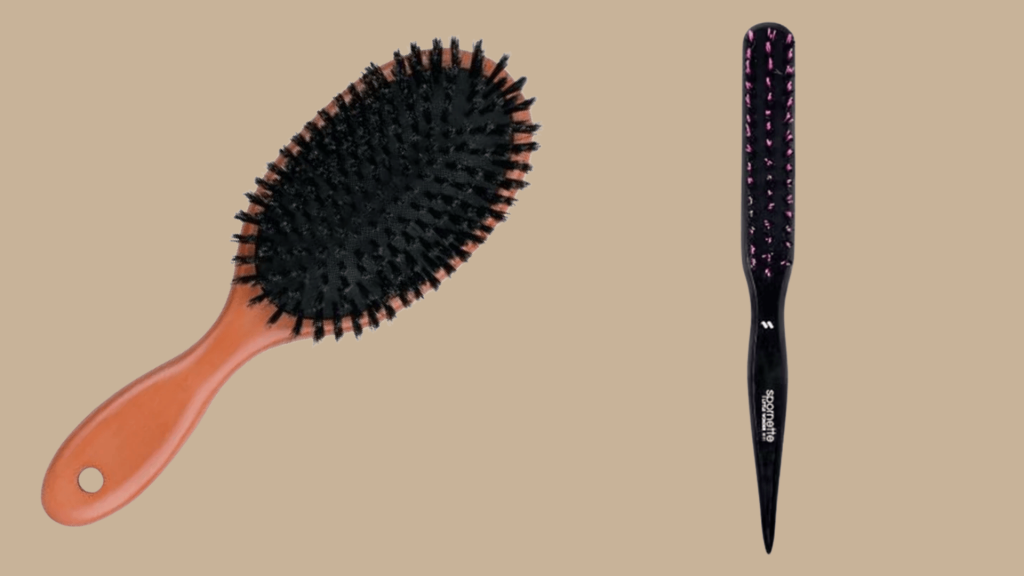
Pure boar bristles alone might not penetrate dense hair effectively. The bristles must push through multiple layers to do their job properly. Without enough strength, the brush just slides over the surface without distributing oils.
- Best Choice for Your Hair:Diane, or Spornette mixed bristle brushes combine boar and nylon for thick textures.
- Ideal Brush Shape & Size: Large paddle brush with widely-spaced bristles
- Bristle Type That Works Best: Longer, firmer nylon pins with boar bristles between them.
- Results You Can Expect: Better detangling, smoother texture, and more manageable hair.
3. Curly or Wavy Hair
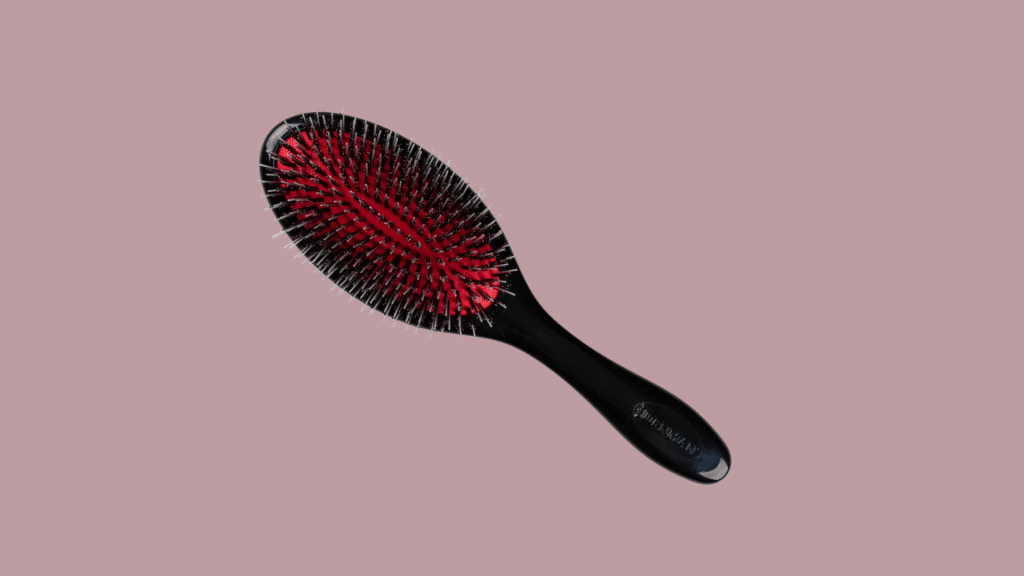
Curly hair tangles easily and needs careful brushing. A boar brush for hair can help define curls without causing frizz. Brushing curls the wrong way disrupts their natural pattern and creates a messy look. The key is finding a brush that works with the curl, not against it.
- Best Choice for Your Hair:Denman brushes work well with wide-spaced mixed bristles.
- Ideal Brush Shape & Size: Round or vented brush for curl definition
- Bristle Type That Works Best: Medium-stiff boar bristles paired with flexible nylon pins.
- Results You Can Expect: Defined curls, reduced frizz, and better shine distribution.
4. Normal Hair
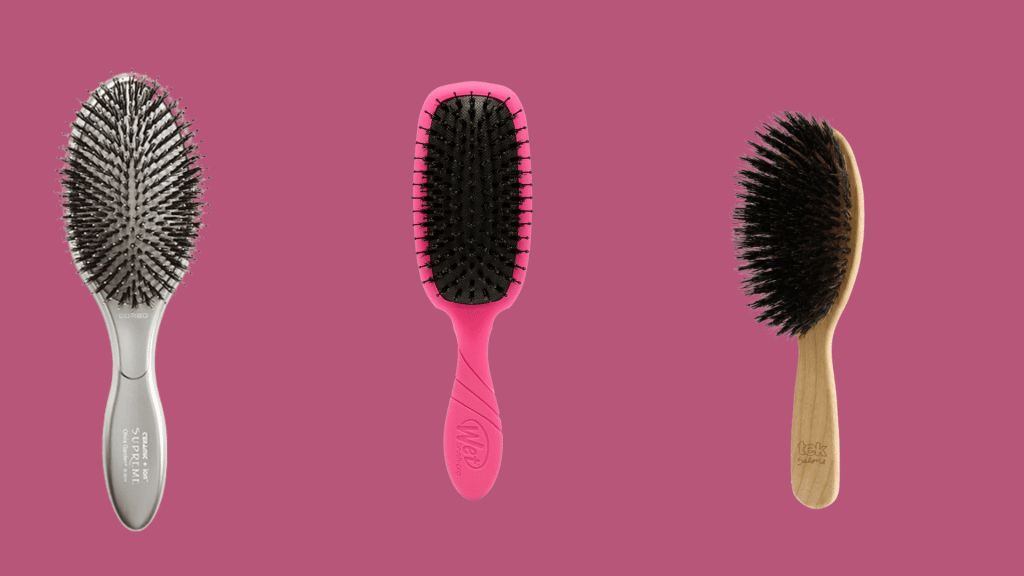
Normal hair has balanced texture and oil production. Most boar bristle brushes will work well for this hair type. It’s not too thick or too thin, not overly oily or dry. This hair type responds well to both pure boar and mixed bristle options.
- Best Choice for Your Hair:Wet Brush, Tek, or Olivia Garden boar bristle brushes all deliver excellent results for normal hair.
- Ideal Brush Shape & Size: Medium oval or cushioned paddle brush
- Bristle Type That Works Best: Medium-density bristles with moderate firmness handle everything easily.
- Results You Can Expect: Enhanced shine, smoother strands, and overall healthier appearance.
5. Long Hair
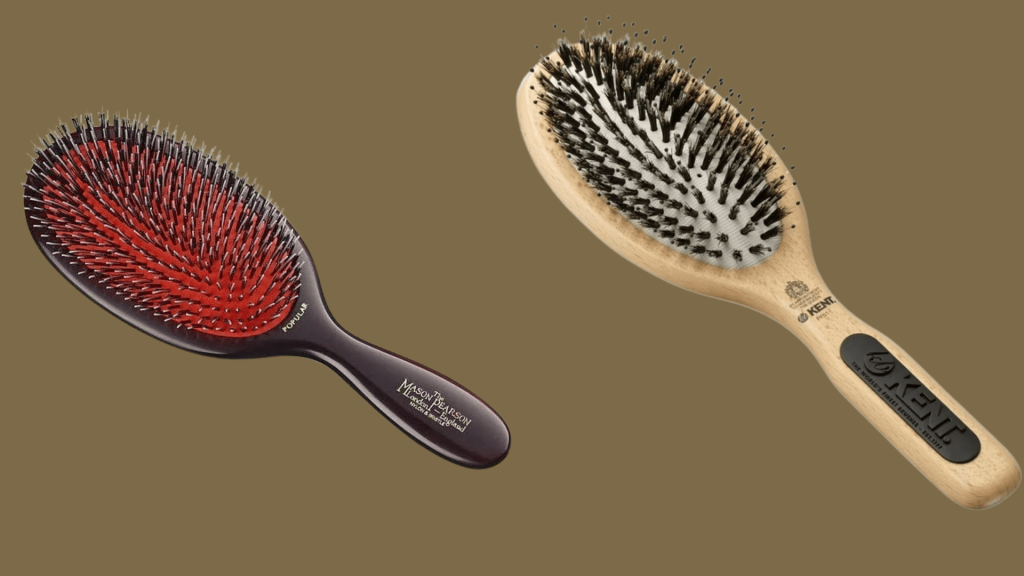
Long hair requires more effort to maintain because oils from the scalp don’t reach the ends naturally. The longer the hair, the drier the ends tend to become over time. Split ends and tangling are common problems for people with lengthy strands.
- Best Choice for Your Hair:Mason Pearson Popular or Kent Brushes with paddle designs cover more surface area efficiently for long lengths
- Ideal Brush Shape & Size: Wide paddle or large oval brush for full coverage
- Bristle Type That Works Best: Medium-length pure boar bristles or mixed bristles, depending on thickness.
- Results You Can Expect: Shinier ends, less tangling, and improved moisture distribution throughout the length.
Finding the right boar bristle brush depends on individual hair needs and texture. Testing different bristle types helps determine what feels most comfortable. The right brush makes all the difference in achieving desired results.
White Bristle vs. Black Bristle: What’s the Difference?
Boar bristle brushes come in different colors, and it’s not just about looks. The color actually indicates how stiff or soft the bristles are. Here’s what each type means.
| Feature | White Bristles | Black Bristles |
|---|---|---|
| Softness | Very soft and gentle | Firmer and stronger |
| Source | Comes from finer boar hair | Comes from coarser boar hair |
| Best For | Fine, thin, delicate hair | Thick, coarse, dense hair |
| Oil Distribution | Excellent for light spreading | Good, but requires more strokes |
| Price | Usually more expensive | Often more affordable |
How to Use a Boar Bristle Brush Properly
Using a boar bristle brush correctly makes all the difference in getting good results. Many people brush too hard or use the wrong technique. Here’s the right way to brush for healthier hair.
- Start with Dry Hair: Boar bristle brushes work best on completely dry hair, not wet strands. Wet hair stretches and breaks easily, so wait until it’s fully dry. This prevents damage and allows the bristles to distribute oils effectively
- Section Hair First: Divide hair into manageable sections before brushing. This ensures every part gets attention and prevents missing spots. Working in sections also reduces tangling and makes the process quicker.
- Brush from Roots to Tips: Begin at the scalp and pull gently down to the ends. Use slow, steady strokes instead of quick jerks. This movement carries natural oils through the entire length of each strand.
- Clean the Brush Weekly: Remove hair and buildup from bristles at least once a week. A dirty boar brush for hair can’t work properly and may transfer dirt back. Use a comb to pull out trapped hair between bristles.
- Brush Daily for Best Results: Aim for 100 strokes per day if possible, though 50 works too. Consistent brushing trains hair to become smoother over time. Regular use shows visible improvements within a few weeks.
Top Boar Bristle Brush Brands
Several brands make quality boar bristle brushes that deliver real results. Some cost more than others, but higher prices don’t always mean better performance.
| Brand | Price Range | Bristle Type | Best For |
|---|---|---|---|
| Mason Pearson | $100-$200 | 100% boar or mixed | Fine to normal hair, luxury quality |
| Kent Brushes | $30-$80 | Pure boar | All hair types, handmade quality |
| Denman | $15-$30 | Mixed bristles | Thick, curly hair, styling |
| Bass Brushes | $10-$25 | Pure boar | Budget-friendly, beginners |
| Spornette | $20-$40 | Mixed bristles | Professional styling, salons |
Common Mistakes to Avoid
Even with the best boar bristle brush, wrong techniques can cause problems. Many beginners make simple errors that prevent good results. Avoiding these mistakes helps hair look better faster.
- Buying Based Only on Price: The cheapest brush isn’t always a bargain if bristles fall out quickly. Fake or low-quality versions often use synthetic bristles labeled as real boar.
- Detangling Knots First: Never use a boar bristle brush to work out tangles or snarls. These brushes aren’t designed for detangling and will get stuck.
- Storing Bristles Down: Leaving the brush face down damages bristle tips and collects more dust. The weight presses the bristles into an unnatural bent position over time.
- Sharing with Others: Using someone else’s brush transfers oils, bacteria, and scalp conditions between people. Each person’s scalp produces different oil levels and may carry issues.
- Not Knowing When to Replace: Worn bristles with split ends or missing patches don’t work effectively anymore. Most quality brushes last one to three years with proper care.
Final Thoughts
Choosing and using the right boar bristle brush changes hair care from a daily chore into an effective routine. The information covered here gives anyone the tools to make smart decisions about bristle types, brands, and techniques.
With proper care and the correct brushing method, healthier hair isn’t just possible, it’s practically guaranteed within weeks.
No expensive treatments or complicated products are needed when natural bristles do the heavy lifting. Hair becomes shinier, smoother, and more manageable through consistent effort.
Ready to see the difference? Pick the right brush, commit to daily brushing, and watch hair improve naturally over the next month.