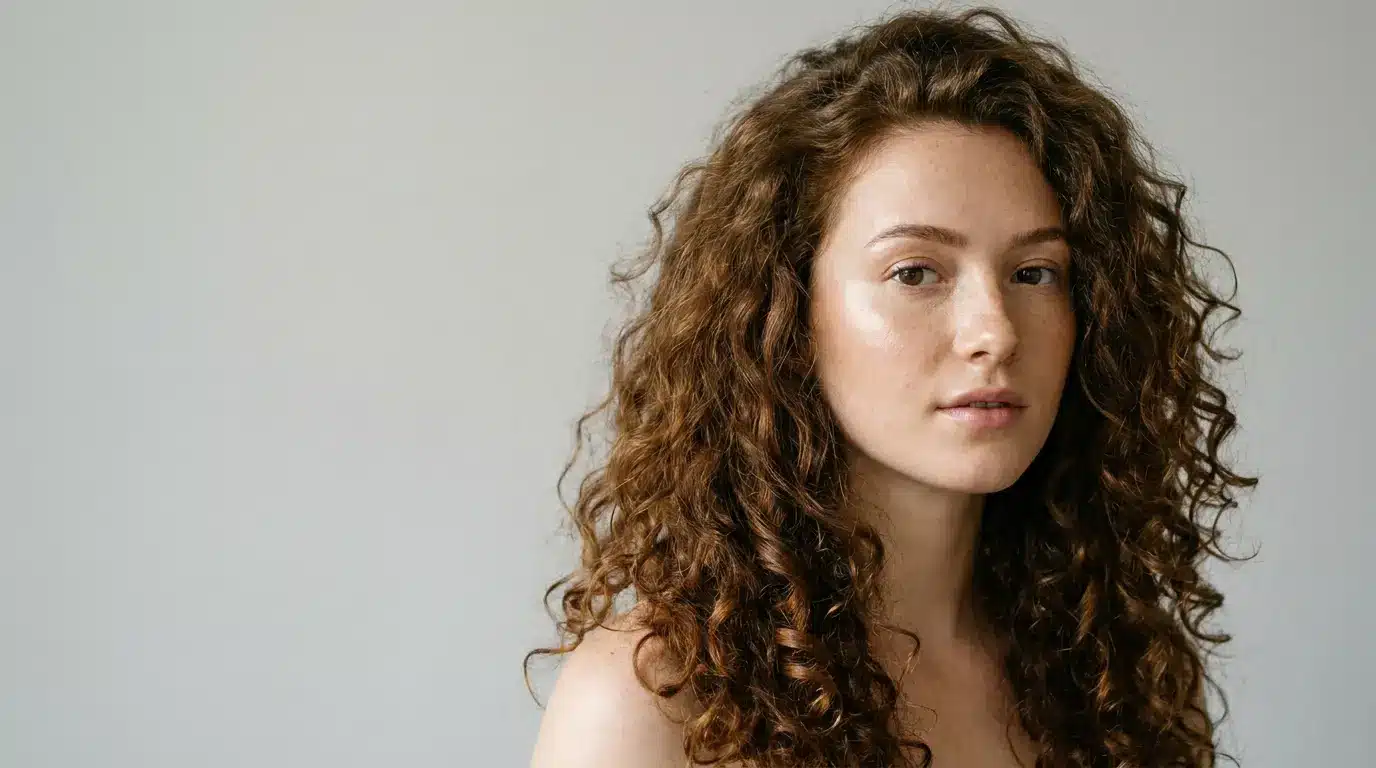
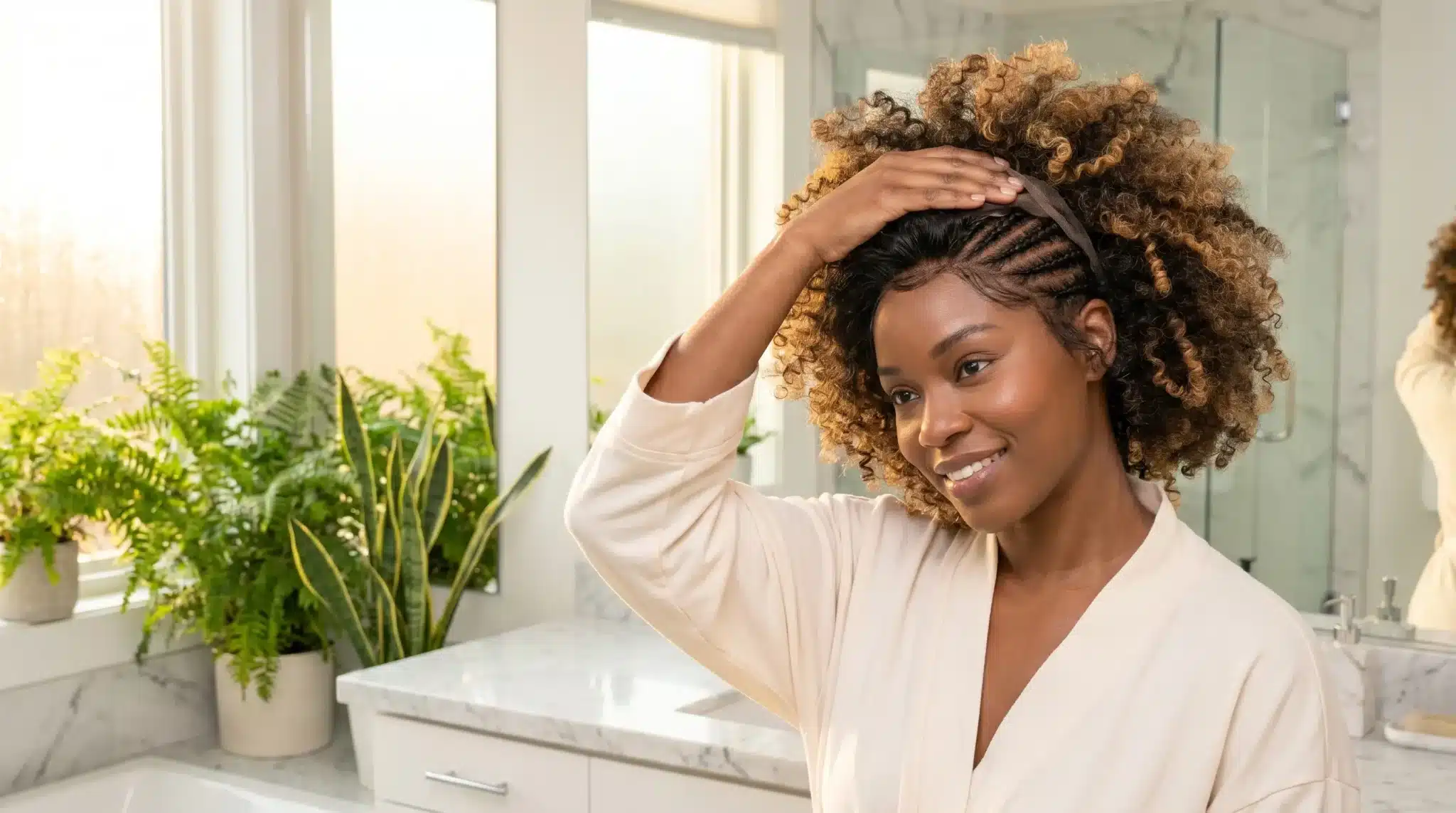
Curly hair is caused by a combination of genetics, follicle shape, protein structure, and moisture retention. Whether you’re choosing products or exploring the best curly haircuts for your texture, understanding the biological roots of your curls is the first step.
Your hair’s curl pattern is determined primarily by the shape of your hair follicles, the angle at which your hair grows from the scalp, and how proteins like keratin form bonds inside each strand.
The Science of Curl Patterns
1. It Starts in the Follicle
Each hair strand grows from a tiny tube in your scalp called a follicle. If your follicle is round, your hair grows straight. If it’s oval or flat, your hair grows curly or coily. The flatter the follicle, the tighter the curl.
2. Growth Angle Affects Curliness
Straight hair grows directly out of the scalp, while curly hair emerges at a sharp angle, creating a bend at the root. The sharper the angle, the more curl formation happens as the hair grows.
3. Keratin Bonds Play a Role
Hair is made of a protein called keratin, and how that protein folds and bonds determines the shape of your hair. In curly hair, keratin bonds form unevenly along the strand, creating tension and curvature. These are called disulfide bonds, and they’re more numerous in curly and coily hair.
Is Curly Hair Genetic?
Yes. Curly hair is inherited and coded in your DNA. One key gene associated with curliness is TCHH (trichohyalin), which helps control follicle shape. However, multiple genes influence curl pattern, density, and thickness.
You can even inherit mixed curl types—looser curls from one parent, tighter from another. Environmental factors like humidity and hair care habits can affect how curls behave daily, but your natural pattern is encoded genetically.
Q: Is curly hair genetic or environmental?
A: Curly hair is primarily genetic, determined by your DNA and follicle shape. Environment only influences how it looks day to day.
Types of Curly Hair (2A to 4C)
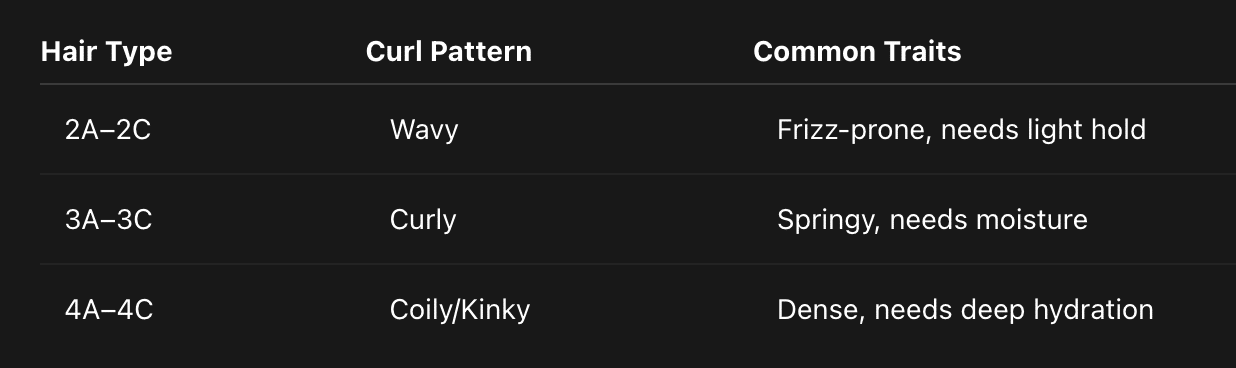
Hair types are typically categorized from Type 1 (straight) to Type 4 (coily). Types 2 to 4 represent various curly textures:
- 2A–2C: Loose waves
- 3A–3C: Defined curls or spirals
- 4A–4C: Tight coils and kinks
Each subtype reflects how compact or stretched the curl pattern is. 2A hair might appear wavy only when damp, while 4C coils can shrink up to 75% in length due to their density.
Why Is Curly Hair Drier Than Straight Hair?
Curly hair is naturally drier because oils produced by the scalp have a harder time traveling down the spiral-shaped strands. Straight hair allows sebum to slide easily to the ends; curly and coily hair doesn’t.
As a result, curly hair needs more moisture and less frequent shampooing, as harsh cleansers can strip essential oils. This dryness is also why curly hair is more prone to breakage, frizz, and split ends if not moisturized properly.
Q: Why does curly hair get dry so easily?
A: Curly hair is drier because natural oils can’t travel down spiral-shaped strands, leaving ends more vulnerable to dryness and breakage.
Hormones, Health & Curl Changes
Sometimes, your curl pattern can shift due to hormonal changes or medical conditions:
- Puberty: May intensify curls or cause straight hair to become wavy
- Pregnancy: Hormonal shifts can temporarily loosen or tighten curls
- Thyroid conditions: Can thin hair and alter texture
- Medications or chemotherapy: May permanently change curl type
Even age affects hair texture. As melanin decreases and gray hairs grow in, they often become wirier, coarser, or even curlier due to changes in follicle behavior.
Environmental Factors That Influence Curls
While your curl pattern is genetic, external factors can impact your hair’s appearance, shape, and manageability:
- Humidity: Causes curls to swell and frizz due to moisture entering the strand
- Heat styling: Can temporarily or permanently loosen curls
- Chemical treatments: Relaxers, perms, or dyes can alter or damage the curl pattern
- Hard water: Mineral buildup weighs curls down and creates dryness
Caring for curls means protecting their structure from these stressors, preserving their natural elasticity and bounce.
Common Myths About Curly Hair Origins
Let’s clear up a few misconceptions:
- ❌ “Curly hair skips generations.” Genetics are complex, but this isn’t a rule.
- ❌ “Your hair can change type on its own.” While texture can shift slightly over time, your curl type is encoded at the follicle level.
- ❌ “Brushing curls makes them straighter.” It actually disrupts curl formation and increases frizz.
Understanding the root causes of your curls helps you care for them more effectively.
Bullet Recap: What Really Causes Curly Hair
- Follicle Shape – Oval or flat follicles grow curls
- Growth Angle – Hair exits scalp at a slanted angle
- Protein Structure – Keratin bonds cause spiral tension
- Genetics – Inherited traits determine curl pattern
- Hormonal Shifts – Life changes can subtly affect texture
- External Stressors – Heat, humidity, and chemicals alter appearance
FAQ: More Curly Hair Questions Answered
Q: Can Stress Cause Your Hair to Become Curly?
A: Not directly. Stress can cause hair loss or thinning, but not change your follicle shape.
Q: Does Diet Affect Curly Hair?
A: Yes! A nutrient-rich diet (iron, zinc, protein) supports healthy follicles and hair growth. Hydration also helps curls stay plump.
Q: Can You “train” Your Hair to Be Curlier?
A: You can enhance your natural curl with styling techniques, but you can’t permanently change your follicle shape without chemicals.
Final Thoughts: Curls Are in Your DNA (and That’s Beautiful)
Whether you’ve always had ringlets or just noticed new waves forming, your curls are a result of biology and individuality. They’re shaped by science—but how you style, protect, and embrace them is up to you.
If you’re ready to understand and celebrate your curls with better care, explore our other guides on styling, hydration, and curl-friendly products.
Love your curls a little more today—start by learning what they need, not just what they look like. 💫