We talk a lot about self-care — face masks, bath soaks, early bedtimes — but some of the most powerful ways to recharge don’t involve a single product. They involve your hands, your imagination, and a little bit of time carved out just for you.
Creative hobbies have a way of doing double duty: they give you something satisfying to focus on while quietly doing the work of stress relief in the background. There’s real science behind it, too — repetitive, focused activities lower cortisol levels and help quiet the mental chatter that builds up through the week. But honestly, you don’t need a study to tell you that making something with your own hands just feels good.
Whether you’re looking to wind down after a long day, find a new weekend ritual, or simply add more joy to your routine, these seven creative hobbies are worth adding to your self-care toolkit.
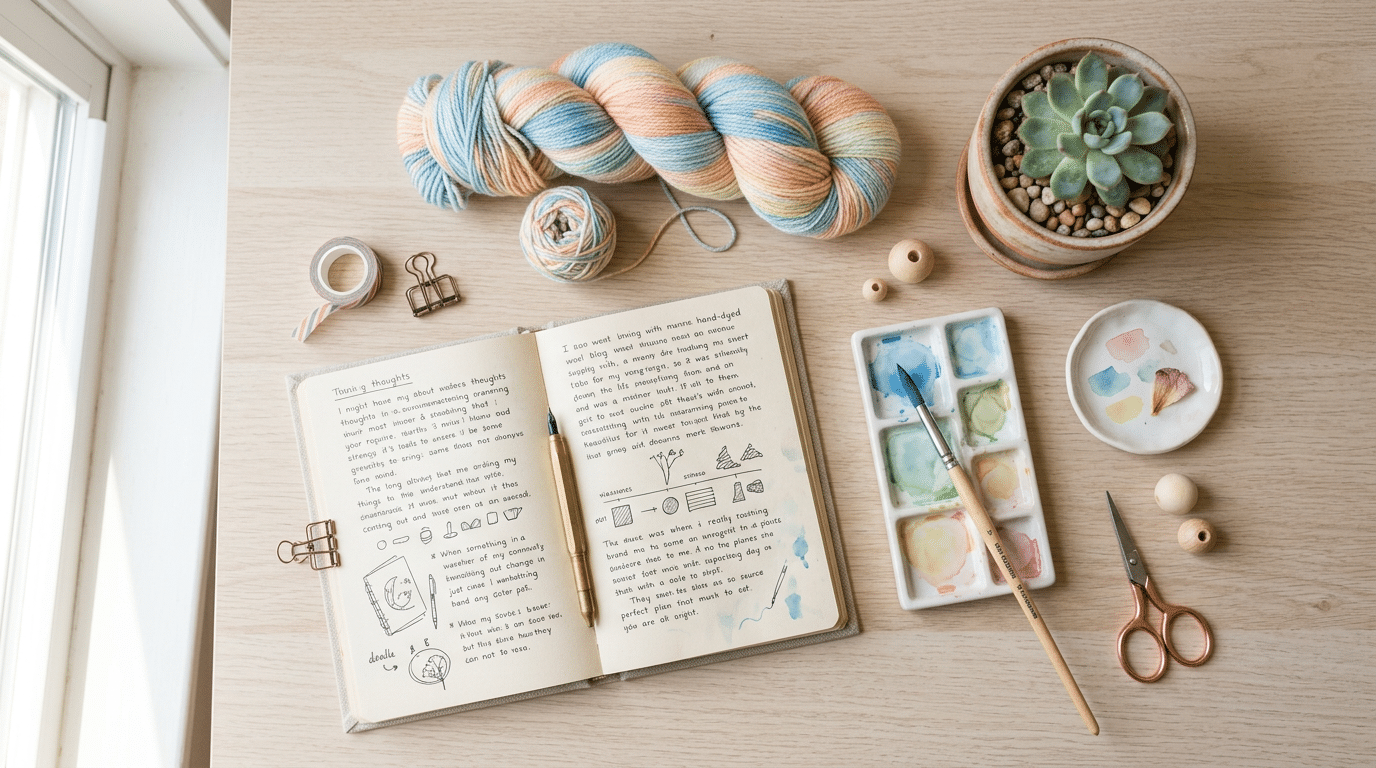
A flat lay of creative hobby supplies, including a journal, watercolor paints, yarn, and a small potted plant, on a light wooden surface
1. Journaling and Creative Writing
Journaling is one of the most accessible creative outlets out there — all you need is a pen and something to write on.
But don’t mistake simple for small: regularly writing down your thoughts has been shown to reduce anxiety, improve emotional clarity, and help you process what you’re going through. You’re not writing for an audience; you’re writing for yourself.
If a blank page feels intimidating, start with prompts. Write three things you’re grateful for, describe your ideal day, or just free-write for five minutes without lifting your pen. Creative writing — short stories, poetry, even fan fiction — takes it a step further by letting you build whole worlds. Either way, you’re giving your inner voice somewhere to go.
2. Drawing or Watercolor Painting
You don’t have to be an artist to benefit from drawing or painting — and that’s kind of the whole point. The act of putting color on paper forces you to slow down and pay attention in a way that everyday life rarely asks of you. It’s meditative without having to call itself meditation.
Watercolor is especially beginner-friendly because the medium is forgiving — happy accidents are part of the charm. Pick up a basic set, some watercolor paper, and start with simple subjects: a flower, a mug, the view from your window. The goal isn’t a masterpiece; it’s an hour spent entirely in your own creative world.
3. Punch Needle Embroidery
Punch needle embroidery might just be the most satisfying craft you haven’t tried yet. Using a needle tool and yarn, you push loops of color through a fabric canvas to build up a textured, rug-like image — and the repetitive in-and-out motion is genuinely calming once you find your rhythm. It’s the kind of activity that empties your head in the best possible way.
The barrier to entry is lower than you’d think. Beginner-friendly brands like Punchora offer complete kits that include pre-printed fabric, yarn, and everything you need to finish a project — no experience required, no complex pattern-reading, just pick it up and go.
Most projects can be completed in a few hours to a couple of days, so you get that deeply satisfying “I made this” moment without a months-long commitment.
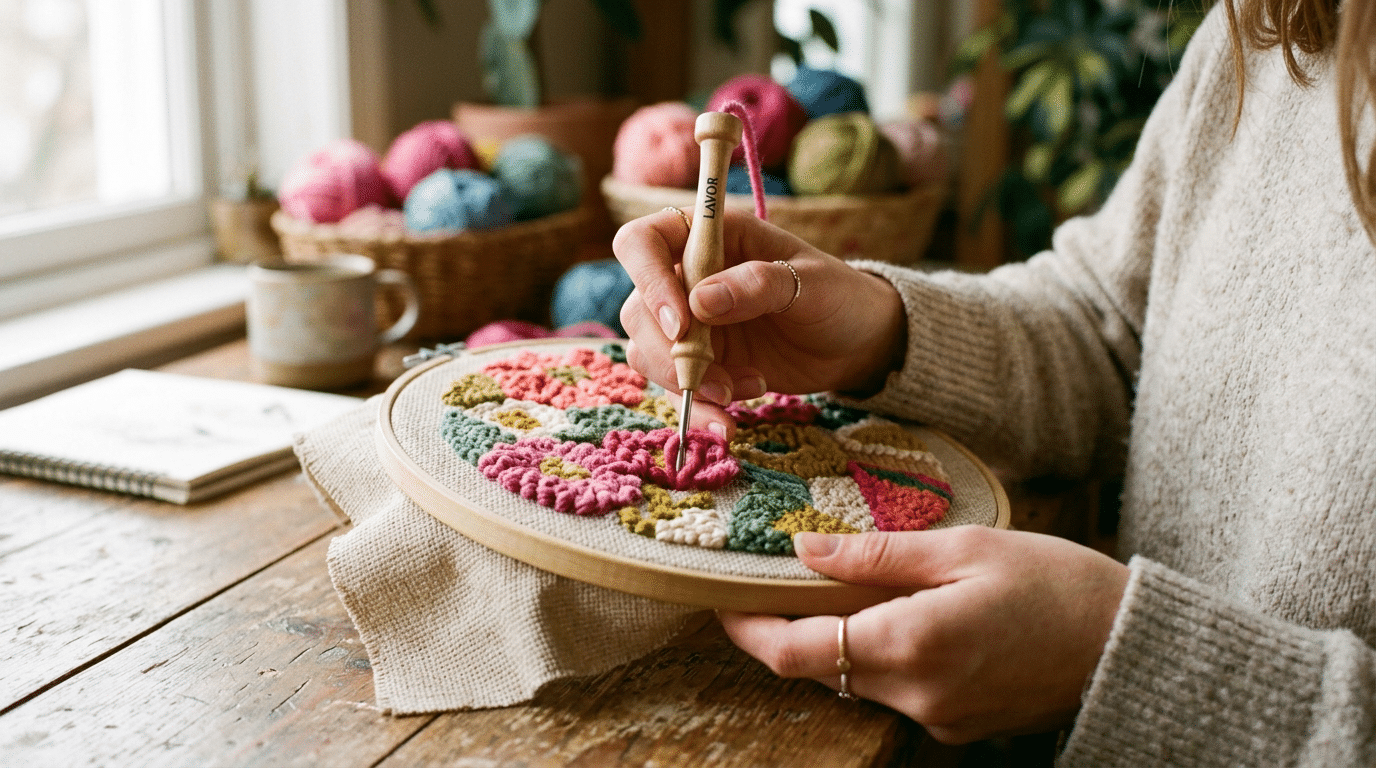
Hands working on a punch needle embroidery project, showing colorful yarn being pushed through fabric canvas with a punch needle tool
4. Candle Making or DIY Skincare
If you love the ritual side of self-care — the scents, the textures, the sensory experience — making your own candles or skincare products takes that pleasure and doubles it.
You’re not just using something that makes you feel good; you’re creating it.
Candle making is surprisingly simple to start with: basic soy wax, fragrance oils, wicks, and a container are all you need. DIY skincare goes in a similar direction — simple recipes for whipped body butters, sugar scrubs, or lip balms use ingredients you can find at most health stores. Both hobbies engage your senses, spark creativity, and leave you with something genuinely useful at the end.
5. Yoga or Mindful Movement
Movement is creative too — especially when you give yourself permission to explore it rather than just exercise. Yoga, in particular, blends physical activity with breath awareness and presence, which makes it one of the most effective tools for stress relief available.
You don’t need a studio or an expensive setup. A mat, a few YouTube classes or even yoga classes online, and a quiet corner of your home are plenty to get started. Over time, you’ll find that the benefits spill out beyond the mat: better sleep, a calmer nervous system, and a stronger sense of what your body actually needs. Even 20 minutes three times a week makes a real difference.
6. Indoor Gardening and Plant Care
There’s something deeply grounding about caring for living things. Indoor gardening — whether you’re growing herbs on a windowsill, propagating succulents, or building a full indoor jungle — connects you to a slower, more patient rhythm that’s a genuine antidote to the speed of everyday life.
Plants are also remarkably forgiving teachers. You’ll learn what each one needs, notice when something’s off, and feel genuine pride when something thrives under your care. Start with low-maintenance picks like pothos, snake plants, or herbs like basil and mint. The routine of checking on them, watering, and watching new growth appear becomes a quiet, nourishing ritual in itself.
7. Learning a Musical Instrument (Even Casually)
You don’t have to be aiming for Carnegie Hall to benefit from picking up an instrument. Learning music — even casually — exercises your brain in ways few other activities do, building focus, pattern recognition, and coordination simultaneously. It’s challenging enough to keep you engaged, and rewarding enough to keep you coming back.
The ukulele is one of the most beginner-friendly starting points: it’s affordable, compact, and you can learn a handful of songs within your first few weeks. Piano apps and guitar tutorials on YouTube have also made self-teaching more accessible than ever. Set a small goal — one song, one chord progression — and let the rest unfold from there.
Start Small, Stay Consistent
The best creative hobby is the one you’ll actually do. You don’t need to master any of these or invest heavily upfront — the value is in the doing, not the end result. Pick one that sounds genuinely appealing and give it a few sessions before deciding if it sticks. Chances are, once you feel the shift that comes from spending time creating something just for yourself, you’ll wonder why you waited so long to start.
Self-care doesn’t always look like relaxation. Sometimes it looks like making something, learning something, or finally picking up that hobby you’ve been curious about for years. Any of these seven is a solid place to begin.