The global beauty and personal care market generates over $640 billion a year.
And you start small. Maybe you’re selling lash clusters to coworkers, mixing body butter in your kitchen, pressing nails at night, or doing brows from a spare room at home. The money is nice, and the compliments feel even better.
But here’s the shift that changes everything. A beauty side hustle makes sales. A real brand earns trust, creates repeat buyers, and can charge higher prices without begging people to “support.”
This post breaks the upgrade into three parts. First, you’ll get clear on your niche and a promise people can repeat. Next, you’ll tighten the foundation (product, pricing, and a few unglamorous basics). Finally, you’ll market and scale in a way that doesn’t eat your weekends.
Pick a Clear Niche and Brand Promise People Can Repeat in One Sentence
If your offer sounds like “I do a little bit of everything,” your customer hears, “I’m not sure what I’m best at.” That’s normal at the start, but it becomes expensive later.
Specialize or Generalize – Niche or Broad – What to do when picking a field
A brand is easier to remember when it stands for one main outcome. Think of it like walking into a party wearing one strong signature scent, not ten at once. People remember the one.
Start with three simple decisions:
- Who you serve: busy moms, teens with acne, fragrance-sensitive shoppers, clients with textured hair, corporate women who want polished nails that last.
- What you help with: quick glam, brow shaping for sparse brows, breakage repair, long-wear base makeup, gentle skincare.
- What “better” looks like: fewer steps, less irritation, longer wear, faster mornings, healthier-looking hair.
When skincare is a $170+ billion category on its own, “I do everything” gets forgotten fast. Your job is to own one clear outcome in your corner of that market.
Clarity also keeps you from chasing every request. You can still say yes sometimes, but your marketing stays focused. As a result, the right people find you faster, and they’re less likely to argue about price.
Use the “who, Problem, Outcome” Test to Stop Sounding Like Everyone Else
Here’s a fast filter that works for services and products.
- Who it’s for
- The problem you solve
- The outcome they can expect
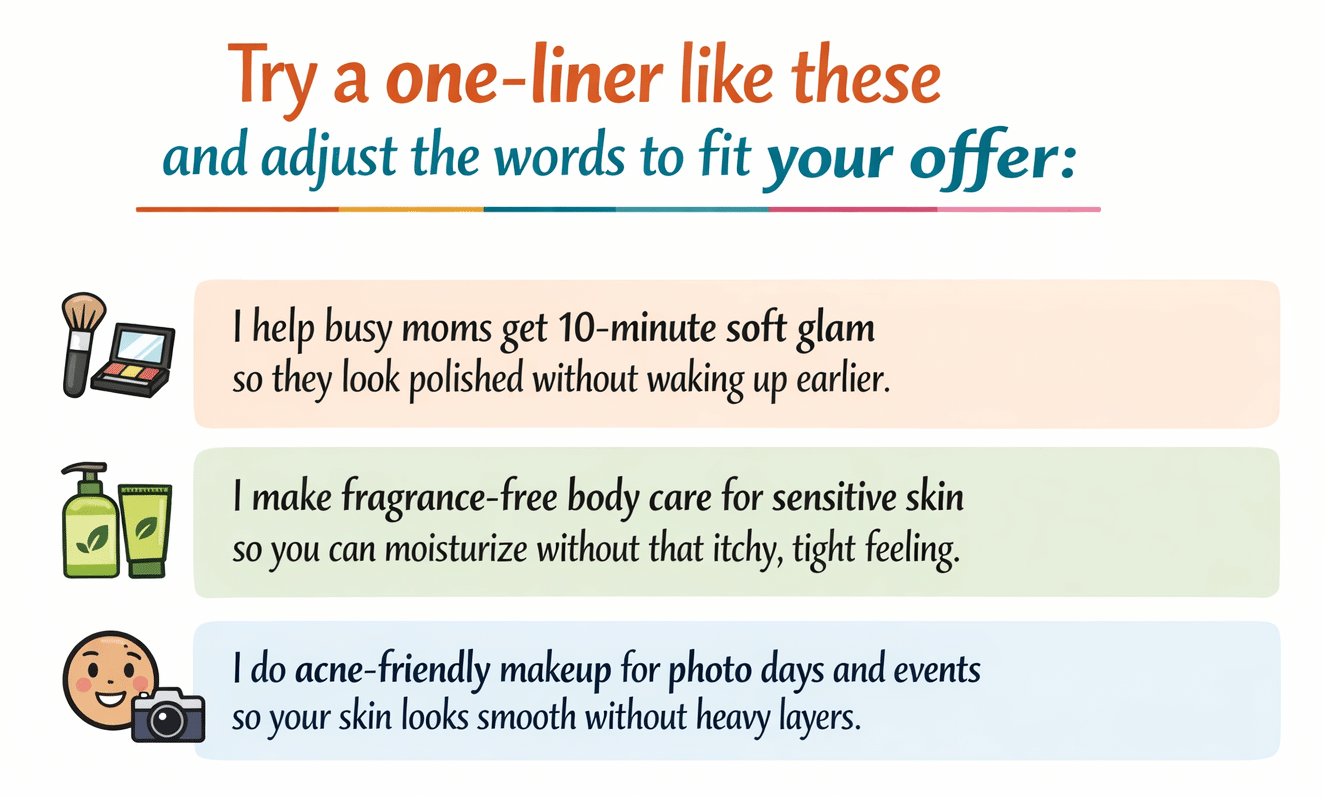
Be careful with broad labels like “clean” or “luxury.” They sound nice, but they don’t explain anything.
Do Fast Market Proof Before You Spend Big Money
Before you buy a thousand labels or book a vendor table every weekend, prove demand cheaply.
At this stage, most founders do not need anything as formal as hiring an accountant yet, but they do need enough basic tracking to know whether the business is actually making money.
A few low-cost options:
- Small-batch drops (20 to 50 units) to see what sells twice
- Pre-orders for a restock, with clear ship dates
- Waitlists for a new scent, shade, or service day
- Pop-ups with a simple best-seller menu
- Service-to-product add-ons, like aftercare oil after nails, or a brow gel add-on at checkout
Pay attention to signals that mean money, not attention:
- Repeat buys within 30 to 45 days
- Referrals and “my friend sent me” messages
- DMs asking for restock, not just heart emojis
- People buying without a discount
Also, collect emails or SMS early. Social posts disappear fast. A list is how you stay in touch when you’re ready to launch.
Build a Real Brand Foundation, Product Quality, Pricing, and Legal Basics
The glow-up isn’t only visual. It’s operational. Customers stay when your quality stays consistent, your pricing makes sense, and your process feels stable.
For product brands, consistency means your formula, scent strength, fill level, and labeling look the same each time. For service brands, it’s your timing, sanitation, consultation, and aftercare.
Small-batch businesses can absolutely feel “big brand” without acting corporate. You just need a few simple systems that reduce mistakes.
Make Your Offer Solid: Hero Product, Signature Service, and Simple Line Extensions
A common trap is launching five things at once. It looks impressive, but it splits your inventory and your attention. Pick one main money-maker.
That could be a hero product (your best-selling gloss) or a signature service (your “45-minute brow sculpt and tint”).
Then build around it with add-ons that make sense:
- Bundles (starter set, event kit)
- Mini sizes for first-time buyers
- Refills if your packaging supports it
- Aftercare kits for nails, brows, or lashes
Before you scale, check the boring stuff that protects your reputation:
- Can you source materials reliably without constant swaps?
- What’s the shelf life, and how will you store it?
- Are directions clear for a first-time customer?
- Does the unboxing or appointment flow feel consistent every time?
Price Like a Brand (not a Favor): Costs, Profit, and Capacity
Pricing isn’t a vibe. It’s math plus boundaries.
For products, add up materials, packaging, labels, shipping supplies, platform fees, and the time it takes to make and pack each order. For services, your time is the inventory. You only have so many bookable hours.
Here’s a simple way to see your real product costs:
|
Cost area |
What to include |
|---|---|
|
Product |
ingredients, base products, disposables |
|
Packaging |
jars, tubes, caps, boxes, inserts |
|
Labels |
printing, waterproof labels, batch stickers |
|
Selling costs |
payment fees, website fees, promo samples |
|
Labor |
making, filling, cleaning, packing, admin |
Two mistakes show up everywhere:
- Copying competitor pricing without knowing their costs or volume.
- Undercharging for custom work, then resenting every order.
If you’re nervous, test two options for a month, like a single item price versus a bundle. Let customers show you what they value.