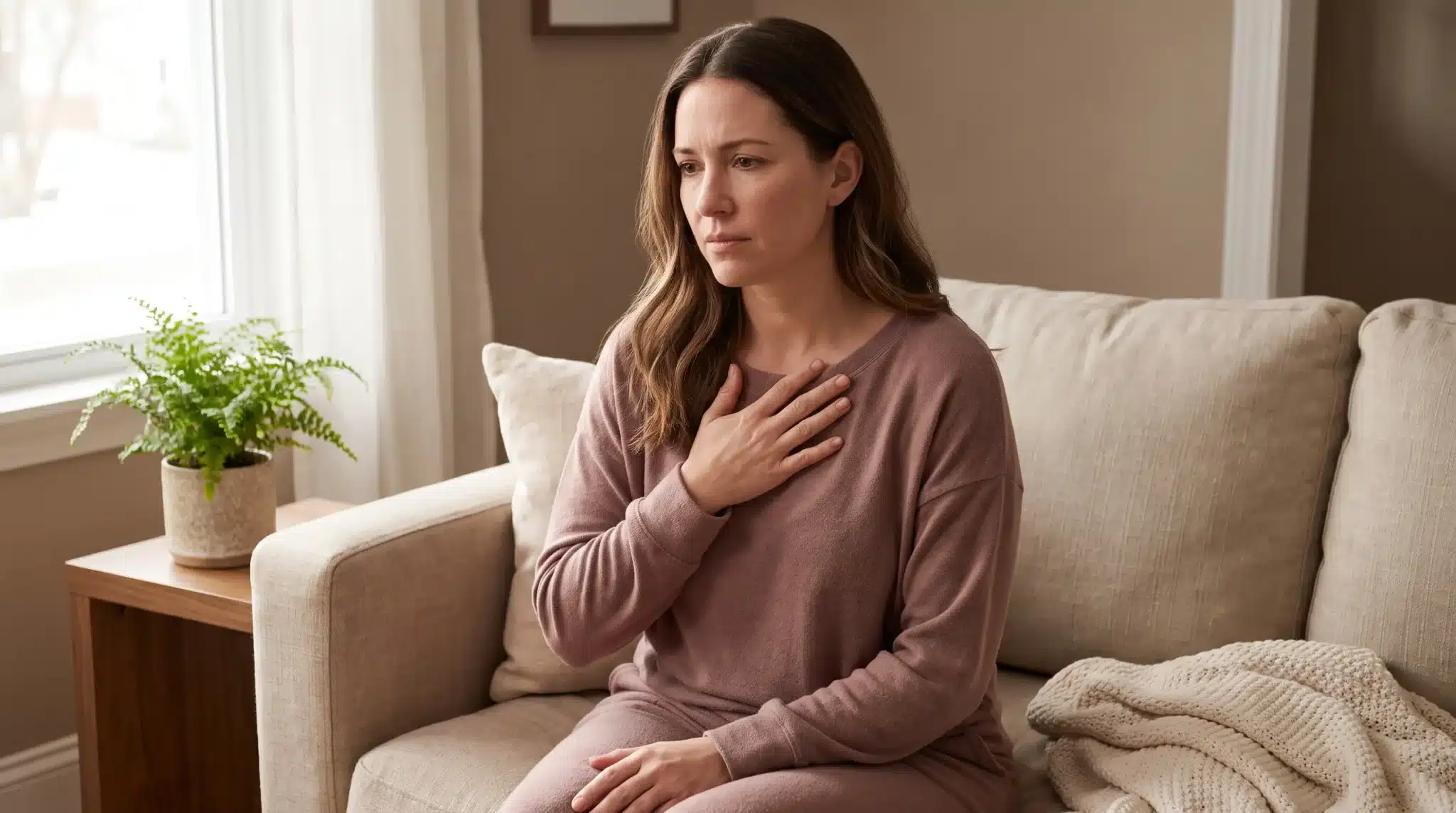
Sometimes anxiety shows up in the body before your thoughts can catch up. Your chest feels tight. Your hands want to do something. Sitting still makes it worse, not better. In moments like that, it can help to have a few simple things you can reach for without needing to think too hard.
Some physical tools for anxiety work by giving your body a steadier signal: pressure, movement, temperature, texture, or rhythm. They do not treat the cause of anxiety on their own, and they are not a replacement for therapy or medical care when symptoms are ongoing. But for everyday overwhelm, they can make the moment feel more manageable.
What These Tools Are Really Doing
Anxiety often changes breathing, muscle tension, heart rate, and attention. That is part of why “just calm down” rarely helps. Your nervous system is already reacting.
Physical coping aids can support regulation, meaning they may help your body shift from high alert toward a more settled state. The effect is often modest and personal rather than dramatic. Some people respond best to movement. Others do better with touch, pressure, or something cold in their hands.
Research on anxiety points to a broad body-mind connection. Studies on physical activity, mindfulness-based practices, and sensory or environmental supports suggest that body-based strategies can help reduce anxiety symptoms for some people, though results vary and the evidence is stronger for some approaches than for others.
Tools that Use Touch and Texture
When your mind is racing, texture can give your attention something real to land on.
A smooth stone, textured fabric, stress ball, putty, or fidget item can help by pulling focus toward sensation instead of spiraling thoughts. The goal is not to force yourself to “stop thinking.” It is to give your brain one simple, concrete job.
You might notice:
- the temperature of the object
- whether it feels rough, smooth, soft, or firm
- how it changes shape in your hand
- whether squeezing or rubbing it changes your tension
This works best when the object is easy to keep nearby. A tool you actually use is more helpful than one that seems ideal in theory.
Tools that Use Pressure and Weight
Some people feel calmer with steady physical pressure. That can come from wrapping up in a blanket, holding a pillow against the chest, pressing your feet into the floor, or resting your hands firmly on your arms or legs.
Weighted items are often discussed here too. Some people find weighted blankets or lap pads comforting, especially at the end of the day. The evidence is still limited, so it is better to think of these as possible supports rather than proven treatment tools for anxiety itself.
What matters most is how your body responds. Pressure should feel grounding, not restrictive or uncomfortable. If you have breathing problems, circulation issues, pain conditions, or mobility concerns, it is wise to check with a healthcare professional before using heavier weighted products.
Tools that Use Movement
An anxious body often wants action. Gentle movement can help discharge some of that physical activation.
That does not have to mean a full workout. It can look like:
- walking around the room
- stretching your shoulders and jaw
- shaking out your hands
- marching in place
- doing slow wall push-offs
- rolling your neck gently
Physical activity has been linked with improved anxiety symptoms in several populations, and even light movement may help some people feel more in control in the moment. The important part is keeping it simple enough that it feels possible when you are already overwhelmed.
To keep this grounded, start smaller than you think you need. Thirty seconds of pacing or stretching still counts.
Tools that Use Breath and Rhythm
Breathing exercises can help, but they are not soothing for everyone right away. For some people, paying close attention to breathing can make anxiety feel louder. That does not mean you are doing it wrong.
A gentler option is to focus on rhythm first. Try:
- exhaling longer than you inhale
- tapping your fingers in a steady pattern
- rocking slightly in a chair
- walking in slow, even steps
- humming quietly on the exhale
Longer exhales may support a calmer physical state. Humming and slow rhythmic movement can also feel regulating because they add repetition and structure. Keep the pace easy. There is no prize for the deepest breath.
You are allowed to stop a breathing exercise that makes you feel more tense and switch to a different kind of tool.
Tools that Use Temperature
Cold sensation can interrupt the loop of panic and overactivation for some people. Holding a cool drink, washing your hands with cool water, placing a cool cloth on your face, or stepping into cooler air may help shift attention and lower intensity.
This is less about “snapping out of it” and more about giving your nervous system a strong, clear sensory cue.
Go gently here too. Extreme cold is not necessary, and comfort matters. Mild temperature change is often enough.
Tools that Change Your Environment
Sometimes the tool is not an object at all. It is the room.
Lower lights, less noise, looser clothing, a fan, a different chair, or stepping outside for a minute can reduce sensory load. That matters because overwhelm is not always coming from thoughts alone. Noise, crowding, heat, and visual clutter can all add strain to an already activated system.
Nature exposure may also help some people feel calmer. Research on time in forest environments and other green spaces suggests possible mental and physical benefits, though the quality of evidence varies. A short walk outside is not a cure, but it can be a meaningful reset.
How to Choose the Right Tool for The Moment
Different anxious states often respond to different kinds of input.
When anxiety feels buzzy or restless, movement or squeezing something may help.
When it feels floaty, unreal, or hard to focus, pressure, texture, and naming what you can physically feel may work better.
When your body feels hot and flooded, cool temperature and less sensory input can be useful.
That is why it helps to build a short list instead of relying on one perfect strategy. Many people do better with a small “menu” they can rotate through depending on what their body is doing.
Signs a Tool Is Helping
A helpful tool does not need to erase anxiety. More often, it creates a little more space.
You may notice:
- your breathing slows a bit
- your muscles unclench
- your thoughts feel less crowded
- you feel more present in the room
- the urge to escape drops slightly
- you can make the next small decision
Those quieter changes matter. They are often the first sign that your body is coming down from overload.
When Self-Help Tools Are Not Enough
Body-based coping tools can be useful for everyday anxiety, but they have limits. When symptoms are frequent, intense, hard to predict, or interfering with sleep, work, relationships, or daily functioning, it may be time for a fuller conversation with a healthcare or mental health professional.
Anxiety can also overlap with other concerns, including pain conditions, breathing problems, heart symptoms, trauma responses, medication effects, or depression. That is one reason self-diagnosis can be misleading. Support is not only for crisis. It is also for clarity.
A Steady Place to Start
You do not need a perfect routine or a drawer full of products. Most people start with one or two simple supports that feel tolerable and easy to repeat.
A textured object in your pocket. A cool washcloth. A short walk down the hall. Your feet pressing into the floor while you lengthen the exhale a little. Small things, yes. Still real.
The point is not to control every anxious moment. It is to give your body a few reliable ways to come back toward center when life feels like too much.
Safety Disclaimer
If you or someone you love is in crisis, call 911 or go to the nearest emergency room. You can also call or text 988, or chat via 988lifeline.org to reach the Suicide & Crisis Lifeline. Support is free, confidential, and available 24/7.