Hair loss is personal. For many people, it quietly chips away at confidence, in meetings, on camera, and even in the mirror first thing in the morning. A hair transplant procedure can change that. And more people than ever are finding that the most practical path leads them to Turkey.
The Turkey hair transplant cost is one part of the story, but it’s far from the only reason Istanbul has become the global hub for hair restoration. This guide breaks down what you actually need to know: prices, techniques, what the trip looks like, and what to expect long-term.
Why Does Hair Restoration Offer an Emotional Return on Investment?
Hair loss hits differently for everyone. For some, it’s barely a thought. For others, it quietly chips away at confidence, in meetings, on camera, or just catching a glimpse in the mirror.
Most discussions about hair transplant costs always focus on money. Yet many patients describe the biggest benefit as increased confidence rather than financial value.
As Dr. Acar, a hair transplant surgeon at Cosmedica, puts it: “When people look at a face, the density and hairline are immediately connected with youthfulness and health.”
Today, appearance often plays a role in personal branding. Whether someone spends hours on video calls, meets clients regularly, or simply wants to feel more comfortable with their reflection, hair restoration has become part of modern self-care, right alongside fitness, skincare, and how they dress.
This emotional return is difficult to calculate. But for most patients, that’s exactly what makes it worth it.
How Does Turkey Hair Transplant Cost Compare to Western Countries?
When analyzing hair transplant costs, the financial difference between Western clinics and those in Turkey is clear.
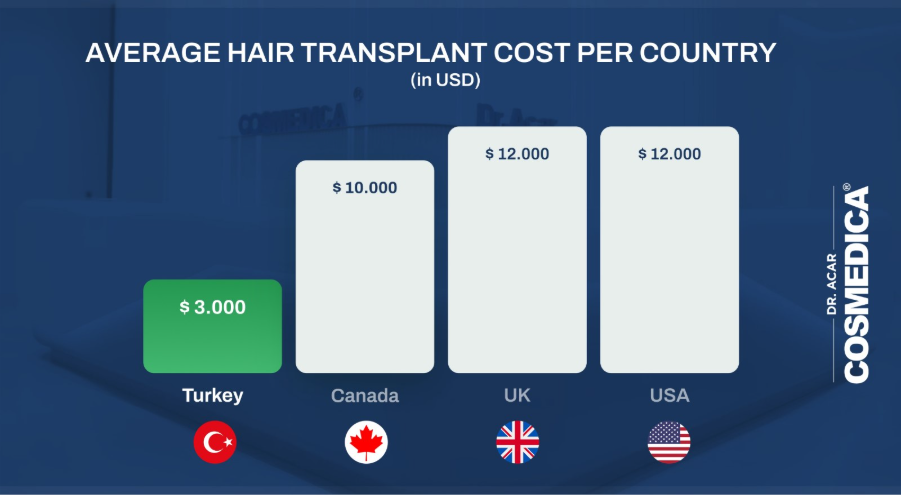
In the US or UK, hair transplant clinics usually calculate the cost per graft. That means the more grafts you need, the higher the bill climbs, and it climbs fast. Total costs, based on the number of grafts needed, regularly land between $8,000 and $25,000, and that’s before you factor in travel, accommodation, or aftercare.
Turkey works differently. Most Turkish clinics use a flat, all-inclusive rate instead of charging per graft. You know the price upfront, and it covers everything, no surprises when you check out.
Here’s a Comparison of Hair Transplant Cost in Turkey and in Western Countries:
Beyond the numbers, it’s worth noting that many hair transplant clinics in Turkey operate under rigorous safety standards and are aligned with international bodies, such as the International Society of Hair Restoration Surgery. Price differences are driven by operating costs and currency, not by a drop in clinical quality.
What Does an All-Inclusive Package Actually Include?
The all-inclusive model is one of the things that makes hair transplant in Turkey genuinely different from a typical Western clinic offering hair restoration. Instead of booking a surgery and then figuring out everything else yourself, the package handles the full experience end to end.
A typical package covers:
- VIP airport pickup and drop-off
- Five-star hotel accommodation throughout the stay
- The full hair transplant procedure
- All post-op medications and specialist aftercare products
- English-speaking patient coordinator from arrival to departure
- Ongoing follow-up support after returning home
As Dr. Levent Acar puts it: “Many patients used to come only for the price. Now, even wealthy patients come because of the quality. Our prices are fair because we want everyone to have access, but quality is always our focus.”
Why Is the DHI Sapphire Method Considered a Premium Option?
The technique used in your procedure significantly affects results, recovery time, and the final look. The DHI Sapphire method is widely considered among the most advanced approaches available today. It combines Direct Hair Implantation (DHI) with sapphire-tipped blades, which create more precise incisions at the follicular unit level, reduce tissue trauma, and support faster healing.
More importantly, it leaves no linear scar, a major advantage over older strip-harvesting techniques. For people who like short haircuts or simply don’t want visible signs of a hair transplant procedure, this is a significant benefit.
It’s also well-suited to transplant repair cases, where precision and minimal additional trauma are especially important.
Why Is Hairline Design Just as Important as the Procedure?
A successful transplant is not simply about moving hair from one area to another. A technically successful procedure is only half the equation. The other half is artistry, specifically, how the surgeon designs the new hairline. At Cosmedica, Dr. Levent Acar treats hairline design as an aesthetic discipline, not just a medical one. The goal is to create a result that looks completely natural and is proportionate to the individual’s face shape, age, and features.
The focus is always on delivering a result that complements the patient as an individual, not just filling in gaps.
“When people look at a face, the density and hairline are immediately connected with youthfulness and health,” says Dr. Levent Acar.
What Does the Medical Vacation Experience Look Like?
Traveling abroad for surgery sounds like a lot to organize. In practice, it’s far simpler than most people expect, especially when the clinic handles everything from the moment you land. The experience is designed to feel less like a strict hospital visit and more like a restful getaway.
Most patients stay in Istanbul for around three days.
- Day 1: Arrive and consult. Your coordinator meets you at the airport. You check into the hotel, get settled, and then meet Dr. Acar for a full consultation. He walks you through the plan and what to expect.
- Day 2: The procedure. This is the main day. The procedure takes about 6 to 8 hours. By evening, it’s done. You head back to the hotel, and your coordinator checks in to make sure you’re comfortable.
- Day 3: Follow-up and head home. A morning visit to the clinic for a post-op check. The team reviews the transplanted area, answers any questions, and sends you home with a clear aftercare kit.
Turkish clinics have refined this system over the years of working with overseas visitors. It runs smoothly because they’ve done it thousands of times.
What Should You Expect from Recovery and Long-Term Results?
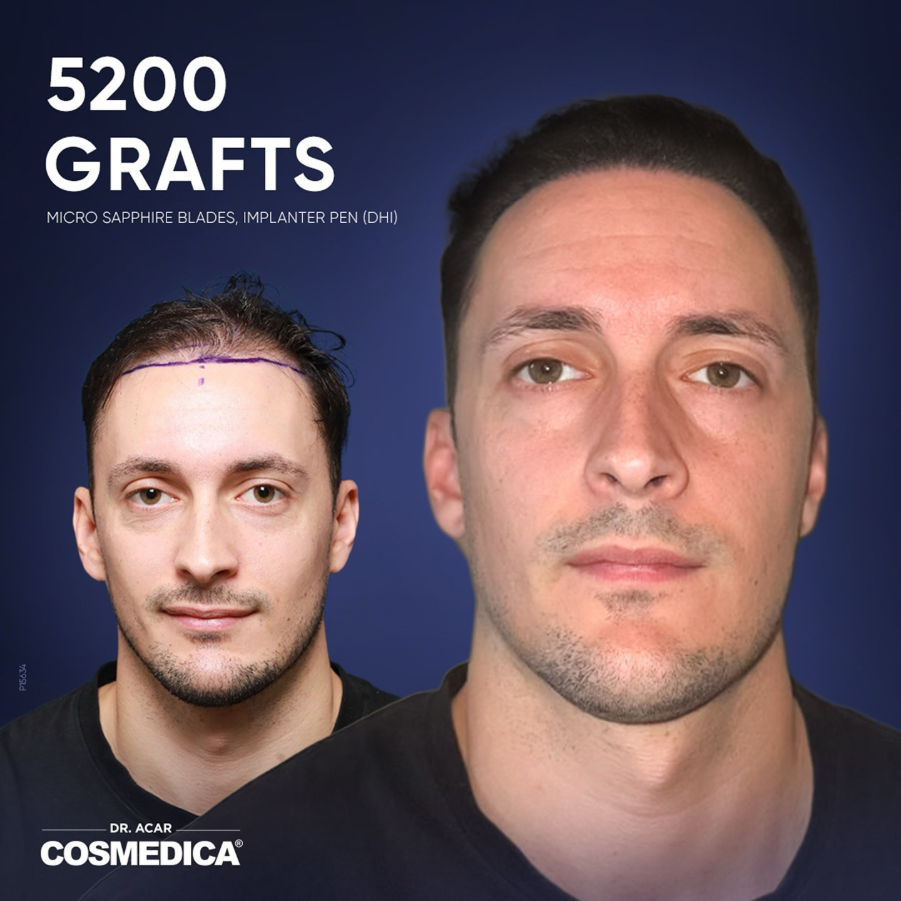
Recovery from a hair transplant is more straightforward than many people expect. The procedure itself is pain-free (performed under local anesthesia), and flying home the next day is considered safe. The initial recovery period involves some scabbing around the transplanted area, which typically clears within two weeks. For a clearer picture of realistic outcomes, browsing hair transplant before and after galleries can be genuinely helpful.
The real transformation, however, takes time. Transplanted grafts shed in the first few weeks — this is normal and expected. New growth begins to appear around three to four months, and the final result typically takes eight to twelve months to fully develop. Patience is a core part of the process.
Dr. Acar emphasizes the importance of managing expectations: “The real results come after eight to 12 months. Patience is important.”
One of the most reassuring aspects of the procedure is its long-term permanence. Because donor follicles are taken from areas of the scalp that aren’t affected by DHT (the hormone responsible for genetic hair loss), the transplanted hair is not subject to the same loss pattern. For most patients, the results are designed to last a lifetime, which makes the upfront cost a worthwhile long-term investment.
Conclusion
The true Turkey hair transplant cost includes far more than the procedure itself. It reflects medical expertise, planning, technique, patient support, and the overall treatment experience. While pricing remains an important advantage, many patients choose Istanbul for its specialization and infrastructure in hair restoration.
To learn more about treatment options, schedule a free consultation and speak with a qualified specialist about your goals and expectations.