The clothing industry has spent the last two decades trying to convince us that a jumper is something you replace every November. We have been sold acrylics that pill before they are even washed, and blended fibres that offer the illusion of warmth without any of the substance.
But something shifts when the weather genuinely turns. You cannot cheat the cold with a synthetic blend. The most visible shift in women’s knitwear for AW26 is not a new silhouette or a sudden colour shift. It is a return to consequence. It is the collective realisation that a knitted garment should possess profound structural integrity.
The fabrics that matter are treated with the reverence usually reserved for precision engineering. They are the absolute benchmark — the standard by which all other garments must be measured. When we examine the ladies’ knitwear trends dictating the coming season, we are actually looking at a wholesale restoration of standards. We are looking at garments that are knitted to endure, rather than manufactured to expire.
The Eradication of the Flimsy
Fashion knitwear has historically suffered from a misguided desire to be weightless. The result was: a generation of garments that draped poorly and offered zero resistance to the elements. Autumn and Winter 2026 decisively ends this compromise. The focus has returned strictly to the raw material.
Consider pure lambswool. Consider Shetland wool. Consider cashmere that has not been over-processed into sheer fragility. These are yarns with memory. When spun and knitted correctly, they do not sag. They retain the shape the maker intended and the shape the wearer requires. They also possess an inherent, evolutionary advantage. Natural wool retains a degree of its original oil — meaning it manages moisture and breathes in a manner that laboratory-designed synthetics fundamentally cannot replicate.
The trend is weight. Midweight and heavyweight knits are taking precedence over the sheer and the delicate. A proper piece of winter knitwear for women must function as a reliable barrier against the weather. It is outerwear in its own right, before a coat is even considered. This is not about bulk; it is about density. A tightly knitted lambswool crew neck presents a formidable defence against a bitter wind, doing so with an unbothered authority.
The Classic Roll Neck: The Foundation of a Winter Wardrobe
If there is a singular archetype for the upcoming season, it is the uncompromising roll neck. The roll neck does not forgive poor craftsmanship. If the tension in the yarn is incorrect, the neck collapses. If the material is cheap, it irritates the skin.
For 2026, the roll neck is presented without apology. It is worn high and it is worn close. It forms the foundation of any serious winter wardrobe. Pieces executed in ecru, charcoal, or dark moss are not merely styling choices… they are structural necessities. They are designed to sit perfectly under heavy tailoring — providing a seamless transition from the collar to the jawline.
This season demands a stark rejection of the casual slouch. The best roll necks currently being produced hold their shape with architectural precision. They demand a certain posture from the wearer. When executed in pure, unblended wool, they perform their primary function—insulation—without requiring the wearer to sacrifice their silhouette. They are the absolute antithesis of disposable clothing.
Traditional Patterns With a Purpose: Cable Knits and Fairisle
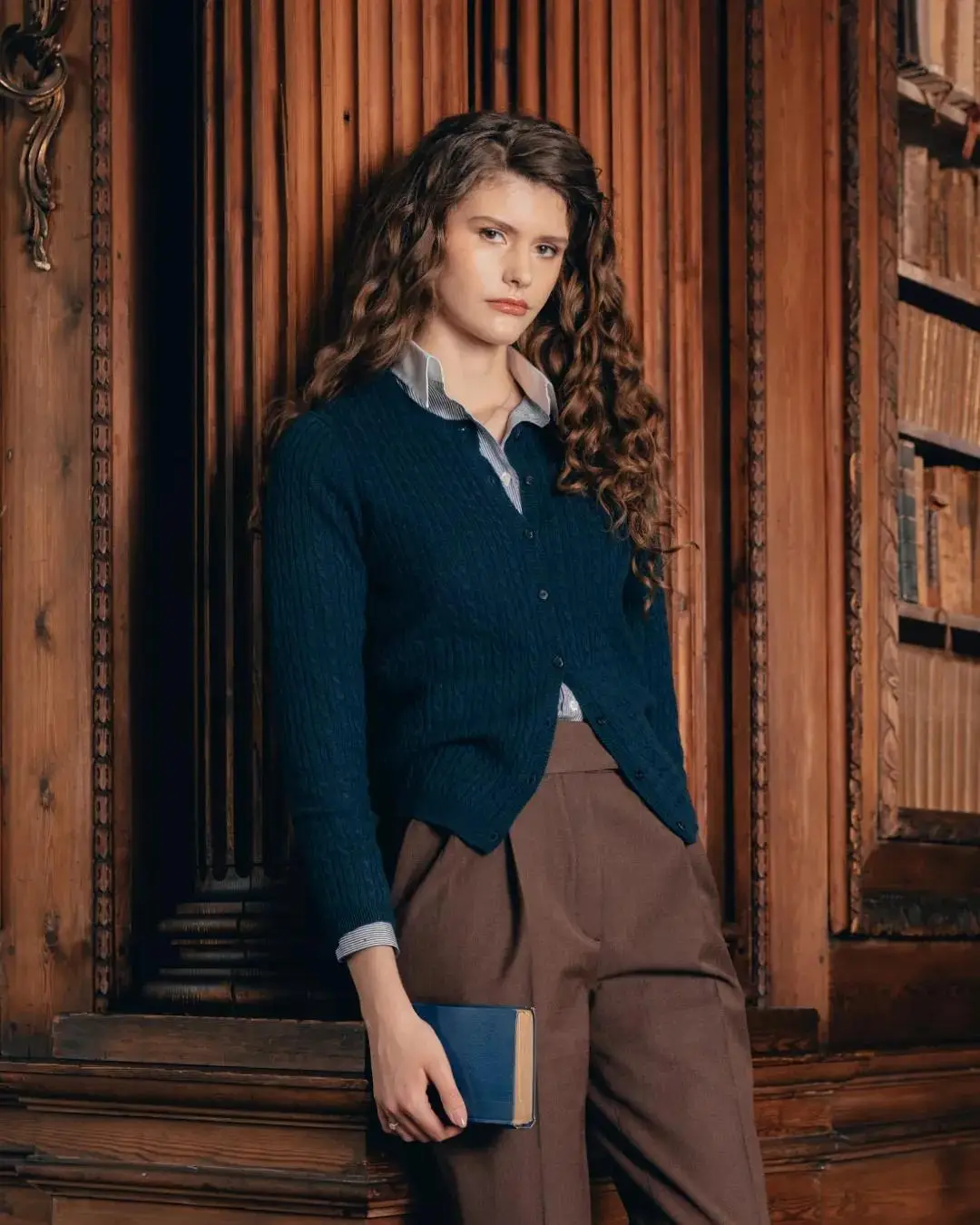
We are also seeing a deliberate revival of specific… historically grounded patterns. Cable knits and Fairisle designs are central to the current ladies’ knitwear trends. But they are not making a comeback as a mere novelty. They are being used precisely as they were originally intended: to add physical thickness, trap air, and keep you warm.
A traditional cable knit is essentially a structural reinforcement. By crossing and twisting the yarns… the maker increases the density and weight of the wool. The resurgence of these techniques in 2026 fashion knitwear is an unspoken acknowledgement that our ancestors understood the mechanics of warmth better than modern fast-fashion executives do.
Perhaps that is the real appeal of traditional knitwear. These patterns were never created purely for decoration. They emerged from practical knitting traditions where garments were expected to provide warmth, comfort and durability through long winters.
That sense of authenticity continues to resonate today. A Fair Isle jumper is not just a seasonal pattern or passing trend. It represents a design tradition that has remained relevant because it continues to do exactly what it was created to do.
Pairing Knitwear With Tweed
A substantial knit needs a substantial companion. That companion is tweed.
Sometimes you layer a couple of knits under your tweed jacket — not as a fashion statement, just because it’s January and it’s cold. A pure wool jumper under a women’s tweed jacket works because both are made with the same priorities. Raw materials matter. Nothing is there to look good and fall apart. Both are built to get better with wear rather than wear out.
Walker Slater’s women’s knitwear is made the same way the tailoring is made. Cardigans, jumpers, and twin sets — including the Elle Lambswool Roll Neck and the Erica Crew — are pure lambswool, cashmere, or Shetland wool, dyed in colours pulled from the Scottish landscape.
These aren’t seasonal purchases. They’re things you keep. Worn, washed, relied on for years. For women’s winter knitwear that holds up without chasing whatever the trend cycle is doing this month, the full collection is at Walker Slater.