A friend of a friend swore off box dye for two years. A stylist once told her it was “basically bleach.”
It isn’t, not really, though it’s easy to see why she believed it. Hair that feels like hay after a home color job makes people assume the worst.
Does Box Dye Have Bleach?
No, box dye does not contain bleach. What’s actually in most permanent formulas is hydrogen peroxide, and the two get confused constantly because both can lighten strands to some degree.
Open a box of permanent dye, and you’ll usually find two things: a color base and a developer.
That second bottle does more of the chemistry than the label lets on, and it plays a big part in how long your color actually holds, yet it barely gets a mention on the packaging.
The people asking this question usually fall into two camps: someone nursing straw-like hair after a home color job, and someone in the drugstore aisle wondering if it’s worth the risk. Either way, the short version is that box dye and bleach are different products, even though the aisle they sit in doesn’t make that obvious.
Permanent vs. Semi-Permanent and Demi-Permanent Box Dye
“Box dye” isn’t one product, and the bleach question has a slightly different answer depending on which type is in the box.
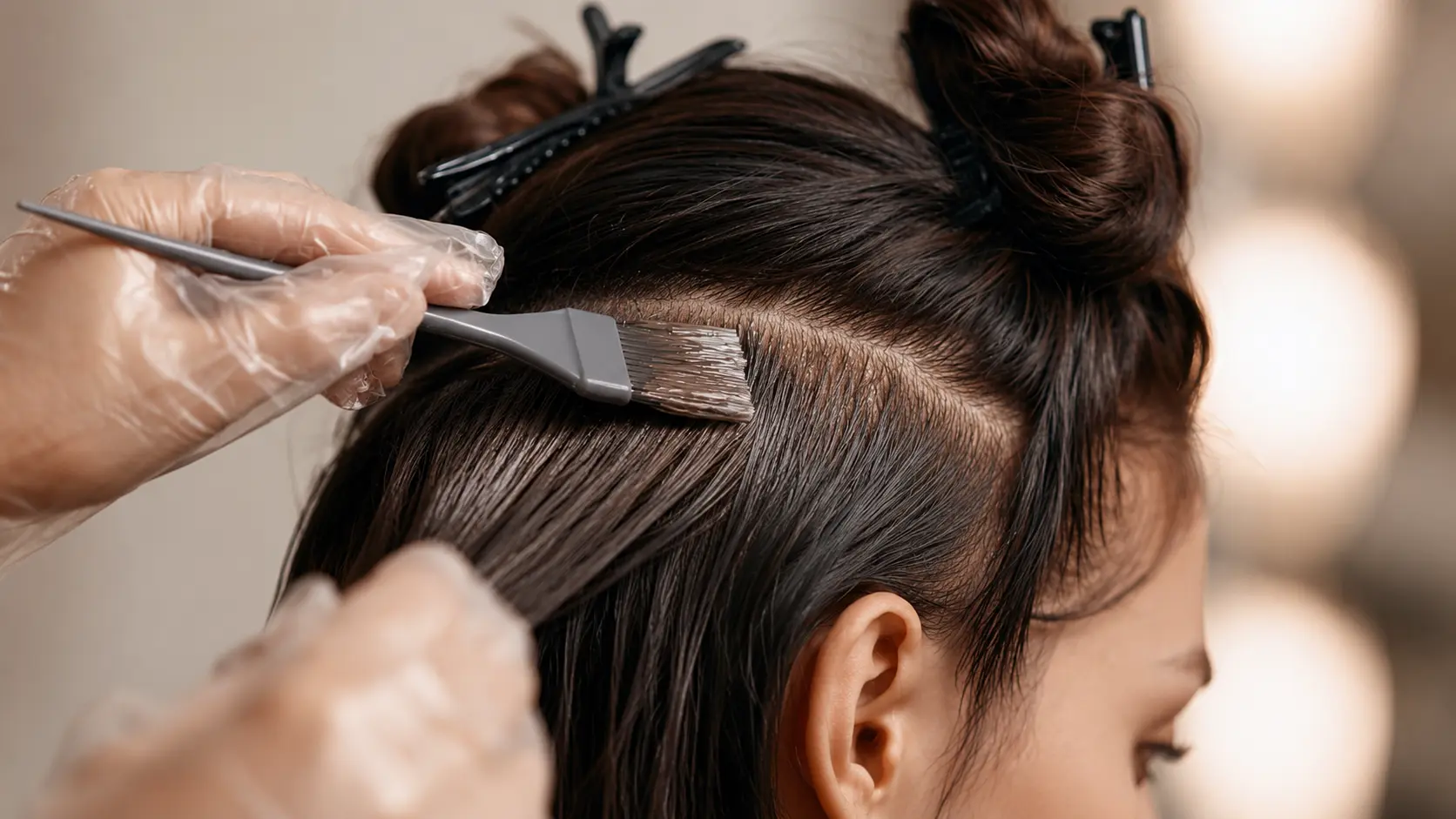
Permanent box dye is the one built around ammonia and a peroxide developer, since it needs to open the cuticle enough to change your natural pigment for good.
Semi-permanent dye typically skips both. It sits on top of the hair shaft with little to no developer, which is why it washes out over several weeks instead of growing out.
Demi-permanent falls in between: it typically uses a low-volume developer and little or no ammonia, enough to help color deposit evenly without lifting your natural shade.
None of the three contain bleach. But if dryness or breakage is the concern behind the question, permanent formulas are the ones doing the most chemical work, and the ones worth being most careful with.
What Is the Difference Between Bleach and Box Dye?
Bleach and box dye both change your hair color, but they work in very different ways. Understanding how they affect your hair can help you choose the right option for your coloring goals.
| Bleach | Box dye |
|---|---|
| Focuses on removing natural pigment from hair | Focuses on adding color to hair |
| Can lift hair several shades lighter | Mainly deposits color, with some lightening in permanent formulas |
| Does not replace the pigment it removes | Adds new color while changing the existing shade |
| Uses stronger lifting agents | Uses color developers to process the dye |
| Can be more damaging, especially when overprocessed | Can still cause dryness and damage with repeated use |
The main difference comes down to their purpose. Bleach removes pigment, while box dye mainly adds color with some lightening ability in permanent formulas.
Does Box Dye Contain Hydrogen Peroxide?
Nearly every time. Grab a permanent box dye off any shelf, and there’s peroxide in the mix somewhere, usually around 3 percent in home formulas, compared with much higher concentrations used in professional bleach.
It forces the cuticle open just enough for color to actually get inside the strand rather than washing straight back out in the shower.
That peroxide concentration is also measured in “volume,” which describes how much lightening power the developer has.
A 10 volume developer mostly deposits color with little lift, while 20 volume can lift natural hair a shade or two. The higher the number, the more aggressive the process, and the more it dries hair out along the way.
That prying-open action is also why even dark shades can shift a little lighter than expected. None of this is a big deal in moderation. Color every couple of months, no real issue.
Color every two or three weeks, and moisture starts leaving faster than your hair can restock it, which is usually where people start noticing the dryness.
None of it makes bleach and box dye interchangeable, but that unassuming developer bottle does more damage-related work than the color itself ever will.
Quick tip: If your hair already runs dry, a lower-volume developer (10 or 20 vol) does the job with noticeably less strain on your strands.
| What actually matters is a combination of things: any past chemical treatments, the shape your hair is in right now, how big a leap you’re making from your current shade, and how often you’re doing this. |
Can Box Dye Cause Hair Breakage?

Weakened strands snap more easily, and repeated coloring is one of the fastest ways to weaken hair. Watch for a few warning signs of overprocessing:
- Split ends that appear soon after coloring
- A rough or straw-like texture
- Breakage when brushing or styling
- Hair that has lost its natural bounce and elasticity
Quick tip: A weekly protein treatment between color sessions helps rebuild some of the strength lost during processing.
If several of these show up at once, it’s usually a sign to pause coloring and focus on repair instead.
Box Dye vs. Salon Color: Which Causes Less Damage?
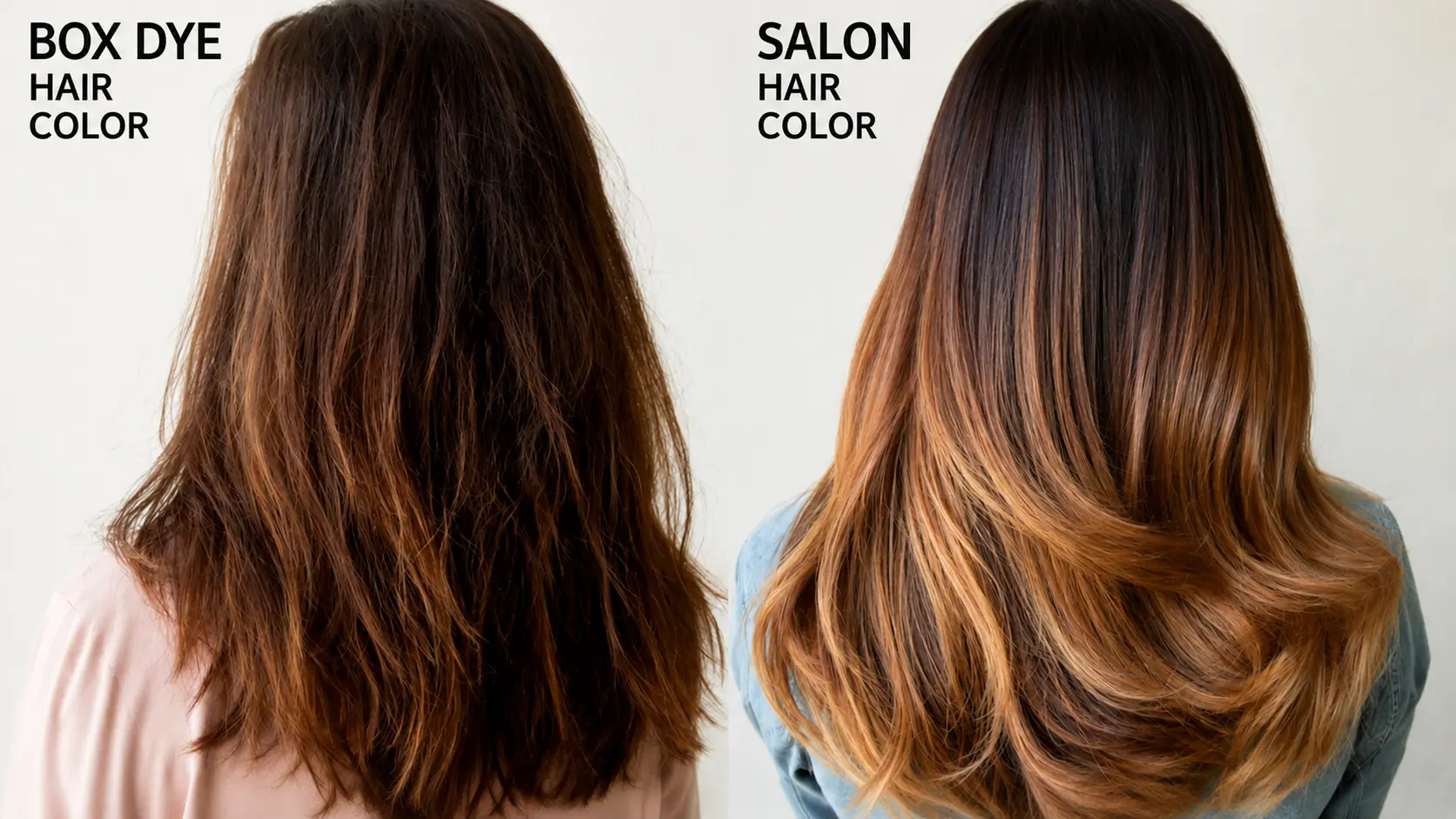
It’s not really about box versus salon. It’s about what the chemical process is doing to your hair, no matter whose bottle it came out of.
Going a couple shades darker is fairly low stress either way. Lifting hair several levels lighter is where things get rough, whether a stylist does it or you do it at home.
The salon advantage is control. A colorist can adjust the formula, developer strength, and application method to match your hair’s actual condition, while a box dye ships with one formula meant to work for everyone.
| Factor | Box Dye | Salon Color |
|---|---|---|
| Formula | Pre-Made Formula | Adjusted for Your Hair |
| Developer Control | Limited Options | Chosen Based on Hair Needs |
| Color Correction | More Difficult | More Controlled |
| Application | DIY | Professional Application |
None of this means box dye is automatically unsafe. It just means salon color has more room to adapt to what your hair can actually handle, and a colorist can catch a mismatch between your hair’s condition and the formula before damage happens instead of after.
Quick tip: Even if you’ve used the same box dye brand before, patch test again. Formulas change, and so can your skin’s reaction to them.
What Ingredients in Box Dye Can Affect Hair Health?
Most horror stories about hair dye trace back to one of three ingredients. It’s rarely the whole formula, just a specific piece of it doing something your hair didn’t sign up for.
How Does Hydrogen Peroxide Affect Hair?
This is the ingredient responsible for actually changing your natural pigment, not just depositing color on top of it. Crank up the concentration, and you get more lightening, but also a lot more dryness once the process is done.
There’s a meaningful gap between a dye that just deposits color and one that’s actively lifting your natural shade underneath, and peroxide level is usually what separates the two.
Can Ammonia in Box Dye Damage Hair?
Ammonia’s job is to swell the hair shaft open so pigment can settle in more evenly, rather than sitting unevenly near the surface. It’s effective, which is part of why it’s been used for decades.
But it’s also the reason box dye has that sharp smell people complain about. Some newer formulas swap it for gentler alternatives, mostly to cut down on both the odor and some of the resulting dryness.
Can PPD in Box Dye Cause Scalp Reactions?
PPD shows up a lot in dark permanent shades, and for the average person it’s not an issue. For a smaller group, it can trigger anything from mild itching to more serious swelling around the scalp or hairline.
That’s the entire reason patch tests exist. Apply a small amount 48 hours before your full color and wait, rather than finding out mid-application that your scalp disagrees with the formula.
If ammonia and strong peroxide are the main concern, a few gentler formulas are worth a look before committing to a full permanent box dye:
Suggested products: Madison Reed Radiant Hair Color Kit | Herbatint Permanent Gel | Garnier Olia Oil Powered Permanent Haircolor
What are the Long-Term Effects of Box Dye?
Dyed hair doesn’t repair itself the way skin does. Once a strand is processed, any damage stays in place until that section of hair grows out or gets trimmed away. Coloring repeatedly, especially without breaks, tends to compound the following over time:
- Dryness that doesn’t respond to regular conditioner
- Weaker strands prone to snapping
- Increased breakage near the ends
- A rougher overall texture
Spacing out coloring sessions and adding moisture-focused treatments in between can help slow this pattern down.
Can You Bleach Over Box-Dyed Hair?
This is a different question from the one this article opened with, but it’s the question readers actually land on next: can bleach lift a box dye job the same way it lifts virgin hair?
Usually not cleanly. Box dye can build up unevenly on the hair, especially after more than one application, and bleach doesn’t correct unevenness; it just lightens whatever pigment is already there.
That tends to make patchy areas more obvious, not less. Some box dye formulas can also react unpredictably when bleach goes on top, which raises the risk of real damage rather than a clean lift.
In most salons, this gets treated as a color correction service rather than a standard bleach appointment.
That usually means removing the box color gradually, sometimes across more than one visit, before any new color or lightening goes on.
It’s slower, and it costs more than a single box of dye, but it’s also the difference between an even result and a preventable trip back to the salon for repair work later.
Can You Dye Over Box-Dyed Hair Without Bleach?
This is the more common scenario, and it’s far more forgiving. Going darker or refreshing the same shade over already box-dyed hair usually processes evenly, since you’re adding pigment rather than trying to strip it back out.
The one thing worth watching is buildup near the ends, since hair that’s been colored multiple times can absorb pigment differently than the newer growth closer to the root.
A slightly shorter processing time near the ends can help even things out.
Is Box Dye Worse for Lightening Hair than Darkening Hair?
Yes, and it’s not really a close call. Going lighter means removing pigment from hair that hasn’t had it removed before, and the bigger the jump, the more processing that requires.
That’s the actual reason blonde and high-lift shades get such a bad reputation for leaving hair fried. Darkening is the opposite job.
You’re layering pigment on top instead of tearing anything out, so hair usually comes through that process in noticeably better shape.
How to Use Box Dye Without Causing Too Much Damage
None of this is an argument against ever using box dye again. It just takes a few adjustments to keep the results from turning into a bad haircare month.
- Choose a shade close to your current hair color: Small jumps mean less chemical work. Going from dark brown to platinum in one afternoon is much riskier and usually goes smoother with a professional.
- Avoid applying box dye over already damaged hair: Dry, brittle, or recently treated hair isn’t in great shape for more processing. Adding more color can speed up breakage.
- Follow box dye instructions carefully: Leaving dye on too long can backfire. A patch test and strand test can catch allergic reactions and unexpected color results.
I’ve learned to set a timer the second I mix the formula, since even five extra minutes on the clock can be the difference between a rich color and a section of hair that feels rougher for weeks afterward.
A little care before and during coloring makes a real difference.
Choosing a manageable shade, checking your hair’s condition, and following the instructions can help limit unnecessary damage.
|
Who Should Avoid Using Box Dye? Certain situations call for extra caution, or professional help instead of a home kit: Box dye may not be the right choice for severely damaged or overprocessed hair. Anyone trying to correct a previous color mistake, or people planning a major shade change, especially when lightening several levels. It’s also worth caution if you have a history of scalp reactions or sensitivity. |
Final Thoughts
So no, box dye isn’t bleach in disguise. But the peroxide in most permanent formulas still has a lot to say in how your hair looks afterward.
None of it comes down to luck. It’s the product you pick, how big a shade change you’re chasing, and how often you’re willing to repeat the whole thing.
Reading the box front to back, testing a strand first, and spacing out your appointments does more for your hair than many people assume.
A shade close to your own will almost always treat your hair better than a dramatic overhaul. If you’re not sure your hair’s ready for another round, book a patch test or run it by a professional colorist before your next dye job.
Frequently Asked Questions
What is the Main Ingredient that People Mistake for Bleach in Box Dye?
Hydrogen peroxide. It sits inside the developer bottle rather than the color itself, and it’s the part doing the actual lightening, which is why people assume box dye and bleach are the same thing.
Can Box Dye Ruin Your Hair?
It’s not off the table. Coloring too often, jumping several shades at once, or ignoring the timing on the box all stack the odds against you, though none of it happens by accident.
Is Salon Dye Better than Box Dye?
Depends what “better” means here. A colorist can build a formula around your specific hair rather than the one-size-fits-all mix in a box, and that usually means less unnecessary processing.
How Often Can You Use Box Dye?
Most colorists point to roughly every four to six weeks as a reasonable gap for permanent formulas, though it still depends on the product, your hair’s current condition, and everything it’s already been through.