Designing a small outdoor patio requires intentional decision-making. Every material, surface, and proportion directly impacts whether the space feels confined or quietly luxurious.
From color palettes to layout choices, compact patios demand smart design strategies that visually expand the footprint.
One of the most effective and often overlooked solutions is the use of large-format outdoor tiles; a design choice that challenges conventional thinking while delivering remarkable spatial and aesthetic results.
In contemporary patio design, large-format tiles are increasingly recognized as a luxury-forward solution that maximizes visual flow, simplifies maintenance, and elevates the overall architectural presence of small outdoor spaces.
The Counterintuitive Choice that Works
Traditional patio design advice often suggests smaller tiles for smaller areas, assuming proportional scaling creates balance.
In practice, this approach frequently has the opposite effect. Small tiles introduce numerous grout lines, visually fragmenting the surface and making compact patios feel busy and constrained.
Large-format patio tiles, typically 24×24 inches or larger, reduce visual interruptions.
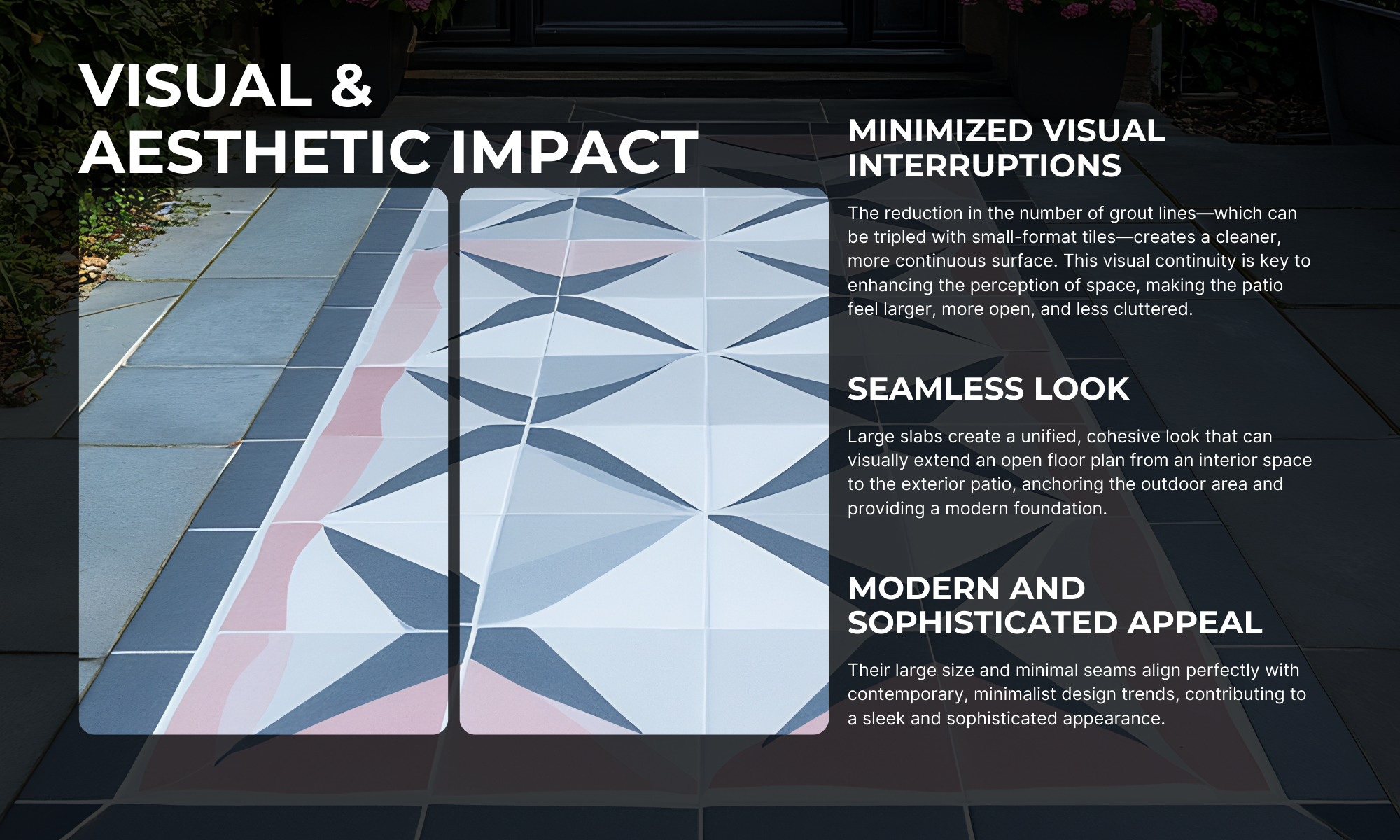
Fewer grout joints allow the eye to move uninterrupted across the surface, creating the illusion of a larger, more open outdoor space. This principle is rooted in visual perception: the fewer breaks the eye encounters, the more expansive a surface appears.
What initially seems like an impractical choice for a small patio becomes a defining design feature, transforming limited square footage into a space that feels deliberate, refined, and architecturally confident.
Creating Visual Continuity in Small Outdoor Spaces
Visual continuity is one of the most powerful benefits of large-format outdoor tiles. In compact patios, uninterrupted surfaces establish cohesion and soften hard boundaries, making the space feel less enclosed.
This effect is amplified when the same large-format tile is used indoors and outdoors. Extending tile from interior living areas onto the patio blurs the transition between inside and out, visually borrowing square footage from the home itself. The patio becomes an extension of the living space rather than a separate zone.
Outdoor-rated porcelain tiles now replicate natural stone, concrete, and wood with remarkable accuracy while offering superior durability, slip resistance, and weather performance. This allows homeowners and designers to maintain a consistent architectural language throughout the property without compromising on performance.
Why Large-Format Tiles Signal Luxury
Luxury in outdoor design is often defined by restraint, scale, and material confidence rather than ornamentation.
Large-format tiles inherently convey a sense of generosity and intentionality. Their expansive surfaces suggest architectural planning rather than decorative afterthought. Elements that contribute to a high-end aesthetic:
- Expansive tile surfaces suggest material abundance
- Minimal grout keeps focus on texture and finish quality
- Architectural scale mirrors resort and hospitality design language
- Neutral palettes age better than trend-driven patterns
Practical Benefits Beyond Visual Appeal
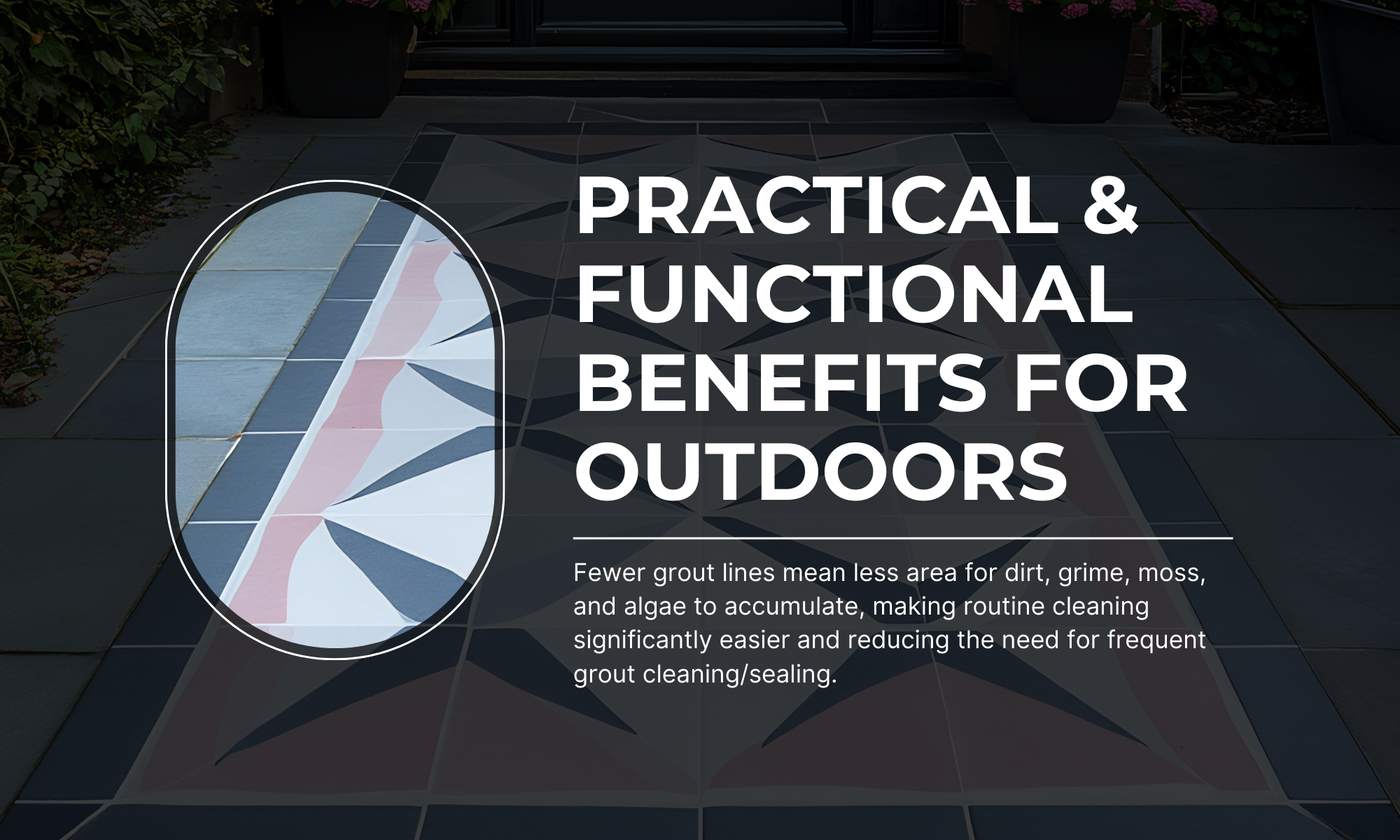
The advantages of large-format tiles extend well beyond aesthetics. Fewer grout lines significantly reduce maintenance requirements, particularly in outdoor environments exposed to moisture, temperature changes, and debris. Grout is often the weakest link in tiled surfaces, and minimizing it improves long-term durability.
Large-format porcelain tiles also enhance water resistance when properly installed. With fewer joints for moisture penetration, the substrate beneath the patio is better protected. This makes the tile format especially suitable for patios in regions with heavy rainfall or freeze-thaw cycles.
While large-format tiles require experienced installation due to their size and weight, they cover more surface area per piece. On small patios, this can streamline installation timelines and reduce overall labor complexity when handled by skilled professionals.
Color and Pattern Strategies for Small Patios
Large-format tiles provide flexibility in color and pattern selection without overwhelming a compact patio. Light-toned outdoor tiles reflect natural light, making small patios feel brighter and more open. Soft greys, warm neutrals, and limestone-inspired hues work particularly well in confined outdoor settings.
Darker tiles can also be effective when used intentionally. Charcoal or deep concrete-look tiles create a modern, architectural feel and allow greenery and lighter furnishings to stand out. Adequate lighting is essential to maintain balance and prevent the space from feeling enclosed.
Surface texture is critical for outdoor applications. While polished finishes may appear refined, they are rarely suitable for exterior use. Selecting slip-resistant tiles for outdoor spaces ensures safety during rain, humidity, or temperature changes while still maintaining a clean, sophisticated aesthetic.
In rain, humidity, and temperature swings, the surface finish, firing consistency, and edge precision determine whether a patio stays elegant and dependable or turns into a maintenance headache. That’s why it’s worth sourcing from mindful makers like OUTERclè, where the focus is not only on the look of the tile, but on how it is produced and how it performs over time.
With brands that prioritize controlled production, you tend to see better surface stability, more consistent texture across batches, and finishes engineered to grip underfoot without looking gritty or overly “anti-slip.”
OUTERclè’s outdoor-ready collections lean into this balance: refined, architectural surfaces with matte and lightly textured finishes that still read clean and high-end. The result is a patio floor that feels calm and sophisticated in daylight, and safer to walk on when the tiles are wet from monsoon mist, evening watering, or winter condensation.
Choosing the Right Tile Material
Porcelain tiles dominate the outdoor tile market for good reason. They offer low water absorption, resistance to staining and fading, and exceptional durability in fluctuating climates. Advanced manufacturing techniques allow porcelain to closely replicate natural materials while outperforming them in outdoor conditions.
Natural stone tiles such as limestone, slate, or granite offer unmatched authenticity and organic variation. Each piece is unique, contributing character and depth. However, stone typically requires sealing and ongoing maintenance to protect against weathering and staining.
Concrete-look porcelain tiles provide a popular middle ground. They deliver the minimalist appeal of poured concrete without the cracking, discoloration, or long-term maintenance challenges associated with true concrete surfaces.
Installation Considerations for Compact Outdoor Areas
Precision is critical when installing large-format tiles on small patios. The substrate must be perfectly level to prevent lippage, which is more noticeable with larger tiles and can impact both aesthetics and safety.
Proper drainage is equally important. Outdoor patios should slope away from the structure, approximately one-quarter inch per foot, to prevent water pooling. Achieving this with large-format tiles requires careful planning but is entirely achievable with skilled installation techniques.
Joint spacing must balance minimal visual interruption with structural movement. Most outdoor large-format installations use grout joints between one-eighth and one-quarter inch to accommodate thermal expansion.
Furnishing a Large-Format Tile Patio
Once installed, large-format tiles provide a clean, architectural canvas. Furnishings should complement this simplicity. Multi-functional furniture such as storage seating or nesting tables helps maintain openness in compact patios.
Because the tile surface remains visually calm, furniture with bold forms or contrasting materials can stand out without overwhelming the space. Glass, metal, or slim-profile wood pieces add function without visual heaviness.
Vertical design elements enhance spatial perception. Wall-mounted planters, trellises, or climbing greenery draw the eye upward, reinforcing height and balance against the expansive floor plane.
Lighting that Enhances Space and Texture
Lighting plays a critical role in reinforcing the space-enhancing qualities of large-format tiles. Low-level perimeter lighting grazes tile surfaces, emphasizing texture and continuity. Wall uplights create vertical emphasis and soften boundaries.
Layered lighting, combining ambient, task, and accent sources, adds depth and sophistication. String lights, pendants, or recessed floor lighting create an atmosphere without clutter.
When indoor and outdoor tiles align, coordinated lighting across both spaces strengthens the seamless connection and enhances nighttime usability.
Maintaining Large-Format Outdoor Tiles
Maintenance is straightforward with large-format outdoor tiles. Regular sweeping and occasional washing with mild detergent keep surfaces clean. Avoid abrasive cleaners that may dull finishes over time.
Porcelain tiles typically require little to no sealing, while natural stone should be sealed periodically depending on exposure. Grout lines should always be sealed to protect against moisture intrusion and staining.
Routine inspections help catch minor issues early, preserving both performance and appearance for the long term.
Budget and Long-Term Value
While large-format tiles may have a higher per-square-foot cost, small patios require less material overall, keeping total investment reasonable. Professional installation is essential and represents a significant portion of the budget, but it ensures longevity and performance.
From a value perspective, high-quality outdoor tiles offer strong returns. They reduce maintenance costs, extend lifespan, and significantly enhance property appeal, making them a smart long-term investment for compact outdoor spaces.
Final Thoughts
Large-format tiles redefine what small outdoor patios can become. By minimizing visual breaks, enhancing continuity, and introducing a refined architectural presence, they transform limited square footage into elegant, functional outdoor living spaces.
With thoughtful material selection, expert installation, and complementary lighting and furnishings, even the smallest patio can achieve a sense of luxury and openness. Choosing large-format outdoor tiles is not just a surface decision. It is a design strategy that maximizes every inch of space and elevates the entire outdoor experience.