Skin that’s dehydrated doesn’t always come from forgetting to use face cream. The culprit is more likely to be everyday patterns that saps water from skin daily. Knowing exactly how these bad habits work is all you need to put your skin back on track.
Washing With Hot Water and the Wrong Cleanser
While hot showers can feel good, especially during colder months, you might want to think twice before using hot water to wash your face. Hot water can strip your skin of its natural oils, which can cause transepidermal water loss, that is the loss of water through the skin. This makes the water evaporate directly from your skin’s surface at a faster rate. The skin’s barrier, known as the stratum corneum, is made up of skin cells and lipids. The lipids help to seal moisture in and keep irritants out. Hot water can dissolve the lipids more quickly than warm water, leaving your skin exposed to moisture loss.
When you add a harsh cleanser that strips away the acid mantle on your skin as well, you’re setting your skin up for moisture loss. The acid mantle is a thin, slightly acidic film on the surface of your skin that helps protect your skin’s barrier and keeps bacteria and other environmental factors out. If you’re using hot water to wash your face and a harsh cleanser, you’re effectively stripping your skin of its protections against moisture loss. That can lead to your skin feeling tight and itchy, and causing redness and inflammation. The solution is simple: keep your water lukewarm and use a gentle, low-pH cleanser to wash your face.
Confusing Dry Skin With Dehydrated Skin
These two conditions feel similar but need different solutions. Dry skin lacks oil. Dehydrated skin lacks water. If you treat dehydration with a heavy, oil-rich cream and nothing else, you may reduce that tight, uncomfortable feeling temporarily, but the skin’s water content stays low.
Dehydrated skin needs humectants, ingredients like glycerin or hyaluronic acid that attract water molecules and bind them to the skin. Reaching for a thick balm when what your skin actually needs is water-binding hydration means you’re solving the wrong problem.
Applying Humectants to Completely Dry Skin
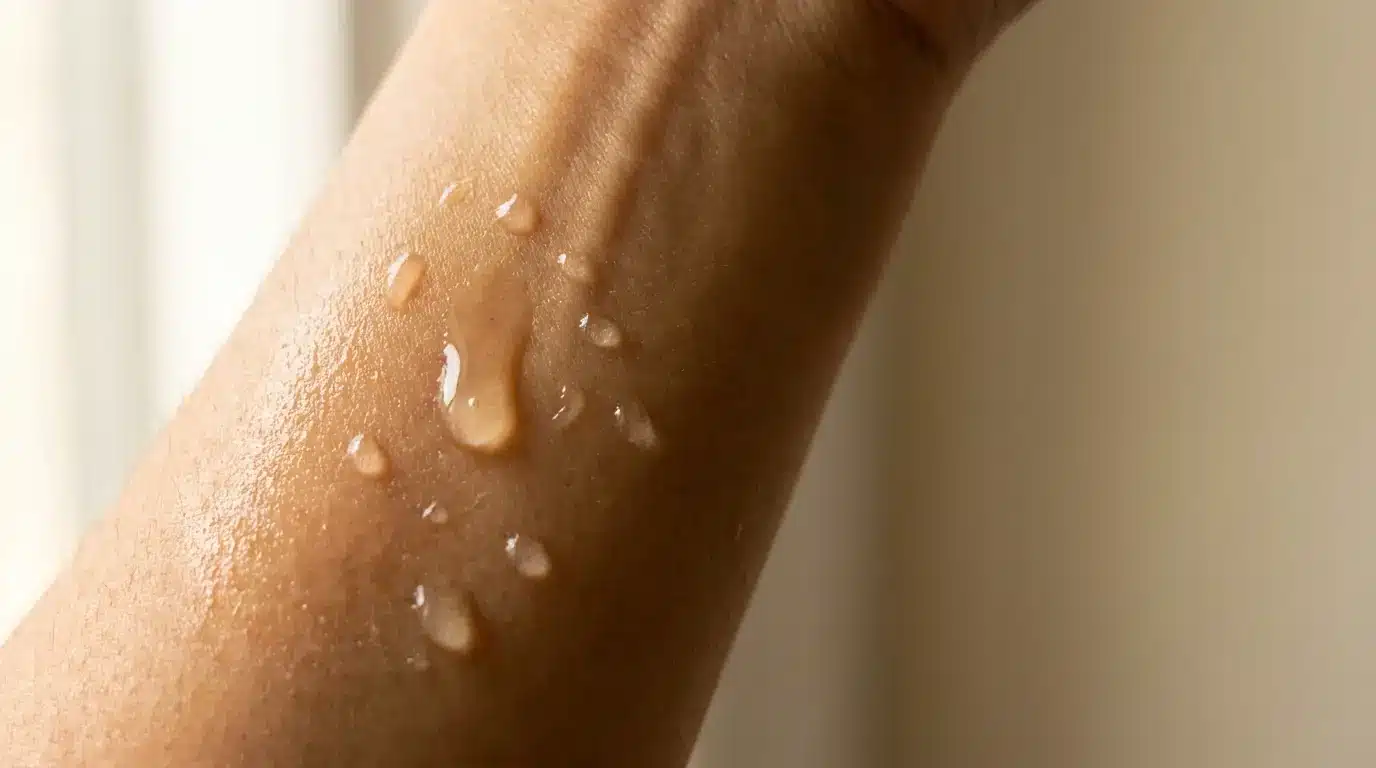
This one is probably not what you would expect. Humectants function by drawing moisture from whatever source is closest. In a humid atmosphere, that is the air. But on dehydrated skin, in a arid space, it draws from the deep tissue of the skin instead, which leaves surface dehydration even more dehydrated.
A Hyaluronic Acid Serum should consistently be applied to damp skin so put it on right after you wash your face, before the face is completely dry. The water left on your skin’s surface provides the humectant with a source of moisture to draw from. Then you apply an emollient or occlusive moisturizer right away. If you skip that stage, all the moisture the HA has drawn will simply evaporate.
Over-Exfoliating and Compromising Your Barrier
Although effective, chemical exfoliants like AHAs, BHAs, and retinoids can be quite harmful to the stratum corneum if overused. For the skin’s uppermost layer to function properly, it must keep a water content of at least 10% to 30% ; if it doesn’t, you’ll experience flaking, fine lines, and a damaged barrier (National Institutes of Health).
Applying a potent acid every day and/or layering multiple actives without allowing your complexion to recuperate doesn’t give skin the time it needs to rebuild that protective lipid matrix. If the barrier is constantly being broken down, it won’t be able to retain moisture. Reducing to two or three exfoliation sessions a week, or even less, depending on what your skin can handle, will hopefully allow the barrier to re-establish itself between treatments.
Skipping the Seal
Many people think that by applying a hydrating serum their job is done. However, that’s not the case. Water-based serums will evaporate. If you don’t apply an occlusive or emollient on top of it, you’re basically applying moisture to your face and letting it walk out the door.
Occlusives such as squalane, shea butter, or petrolatum create a physical barrier on the skin that decreases water loss. Emollients help fill the little gaps in the skin barrier, while also creating a soft and smooth finish. But they don’t replace the humectant properties of a serum. These guys go in order: humectant to attract, occlusive to lock. It’s this layering concept that distinguishes a hydrating skincare regimen from one that isn’t.
Getting the Order Right Matters More Than the Products
The majority of dehydration cases are not formulation-related; they’re due to poor sequencing and usage. An excellent serum will underperform on improperly dried skin. A good, barrier-respecting low pH cleanser is just as affordable as a harsh soap. Lowering tap water’s temperature is free.
The barrier is resilient instead of delicate, but it reacts to what you expose it to. Moderate alterations in how you wash, treat, and buffer usually render the most noticeable changes, rather than frequent product switches. Fix the causes of your dehydration first, before you start looking for an instant cure.
Application technique is another overlooked factor. Patting products in gently rather than rubbing encourages better absorption and avoids unnecessary friction on a compromised barrier. Waiting 20 to 30 seconds between layers, especially between a toner and a serum, gives each product a chance to absorb rather than sit on top of one another. Rushing through a routine reduces the effectiveness of every step in it.
Timing matters too. Applying a moisturiser within a minute or two of cleansing, while the skin still holds some moisture, helps seal hydration in rather than applying it to a surface that has already started to dry out. This is a small habit shift that costs nothing but makes a measurable difference in how well products perform.
It’s also worth considering how often you’re cleansing. Over-washing, even with a gentle cleanser, strips the skin repeatedly before it has a chance to recover. For many people, skipping the morning cleanse entirely in favour of a simple rinse is enough to reduce baseline dryness without changing a single product.