A hair transplant is a big decision. Months of research, consultation, and courage culminated in that one procedure. So the last thing anyone wants is a complication during recovery.
But sometimes, despite doing everything right, the scalp does not heal the way it should. A hair transplant infection, although rare, can catch patients completely off guard.
The redness looks different. The pain does not fade. Something just feels off.
The problem is, most people cannot tell whether what they are seeing is normal healing or an early warning sign. That confusion can cost valuable time.
Knowing the symptoms early, understanding what causes them, and recognizing when to call a doctor can make all the difference between a smooth recovery and a serious complication.
Everything needed to stay informed is covered right here.
What is a Hair Transplant Infection?
After a hair transplant, your scalp goes through a natural healing process, and proper aftercare support can help the scalp recover more comfortably during the early healing stage.
Some redness, mild swelling, and light scabbing in the first few days are completely expected.
Your body is simply responding to the small wounds created during the procedure. This is normal, and it gradually improves on its own.
A hair transplant infection is something different. It happens when bacteria enter the open donor or recipient sites and begin to multiply, causing the healing tissue to break down rather than repair itself.
Instead of improving day by day, the symptoms start getting worse. The redness spreads, the pain increases, and discharge may develop around the grafts.
The key difference between normal healing and an infection comes down to one thing: direction. Normal healing gets better with time.
An infection gets worse. Knowing this distinction early can protect both your health and your results.
7 Signs of an Infected Hair Transplant
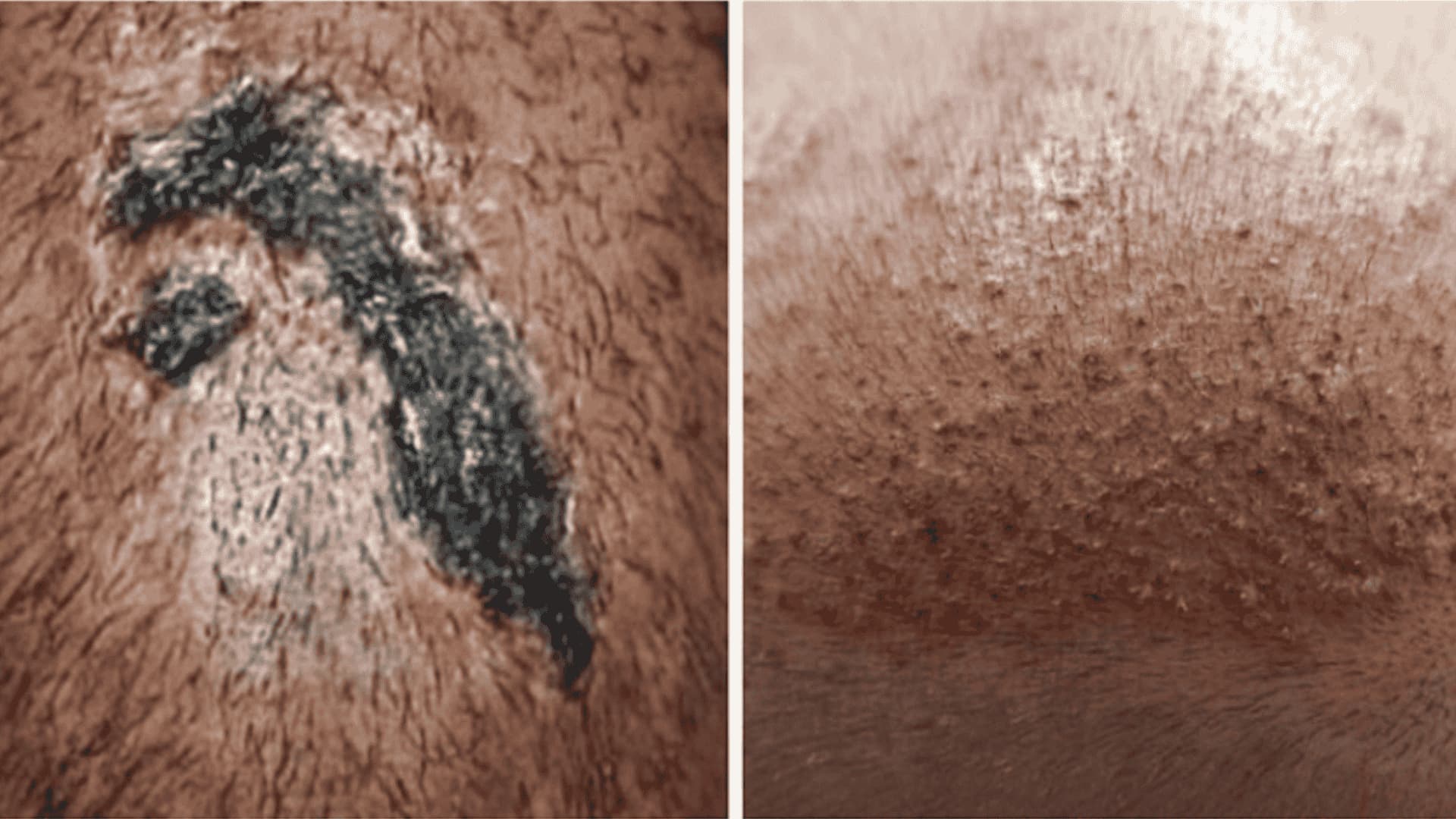
After a hair transplant, mild redness, swelling, and scabbing are expected during the healing process. However, when symptoms become more severe, last longer, or worsen over time, they may indicate an infected hair transplant.
1. Persistent Redness
Some redness is normal after surgery, but it should gradually fade as the scalp heals.
If the redness spreads, deepens, or persists beyond the expected recovery period, it may indicate irritation or infection developing around the transplanted grafts.
2. Ongoing Swelling
Swelling often appears in the first few days after a hair transplant, especially around the forehead and scalp.
However, if the swelling increases, feels warm, or does not improve with time, it may suggest that the scalp is reacting to an underlying infection.
3. Pain or Tenderness
Mild discomfort is common after the procedure, but sharp pain, throbbing, or increasing tenderness around the graft area is not typical.
When the scalp becomes more painful rather than less, it can be a warning sign that healing is not progressing properly.
4. Pus or Discharge
One of the clearest signs of infection is pus or abnormal discharge from the transplant site.
Yellow or white fluid, especially when accompanied by pain or redness, usually indicates the presence of bacteria and requires medical evaluation as soon as possible.
5. Foul Odor
A healthy healing scalp should not produce a strong or unpleasant smell.
If there is a foul odor coming from the transplant area, it may indicate bacterial growth, a buildup of infected discharge, or poor wound healing, all of which require prompt medical care.
6. Fever or Chills
As an infection becomes more serious, symptoms may affect the whole body.
Fever, chills, or feeling generally unwell can mean the infection is spreading beyond the scalp and should never be ignored after surgery.
7. Delayed Healing
Normal recovery after a hair transplant follows a steady pattern of improvement.
If scabs persist for too long, soreness persists, or the scalp remains inflamed and does not improve, delayed healing may indicate that an infection is interfering with recovery.
Causes of Hair Transplant Infections
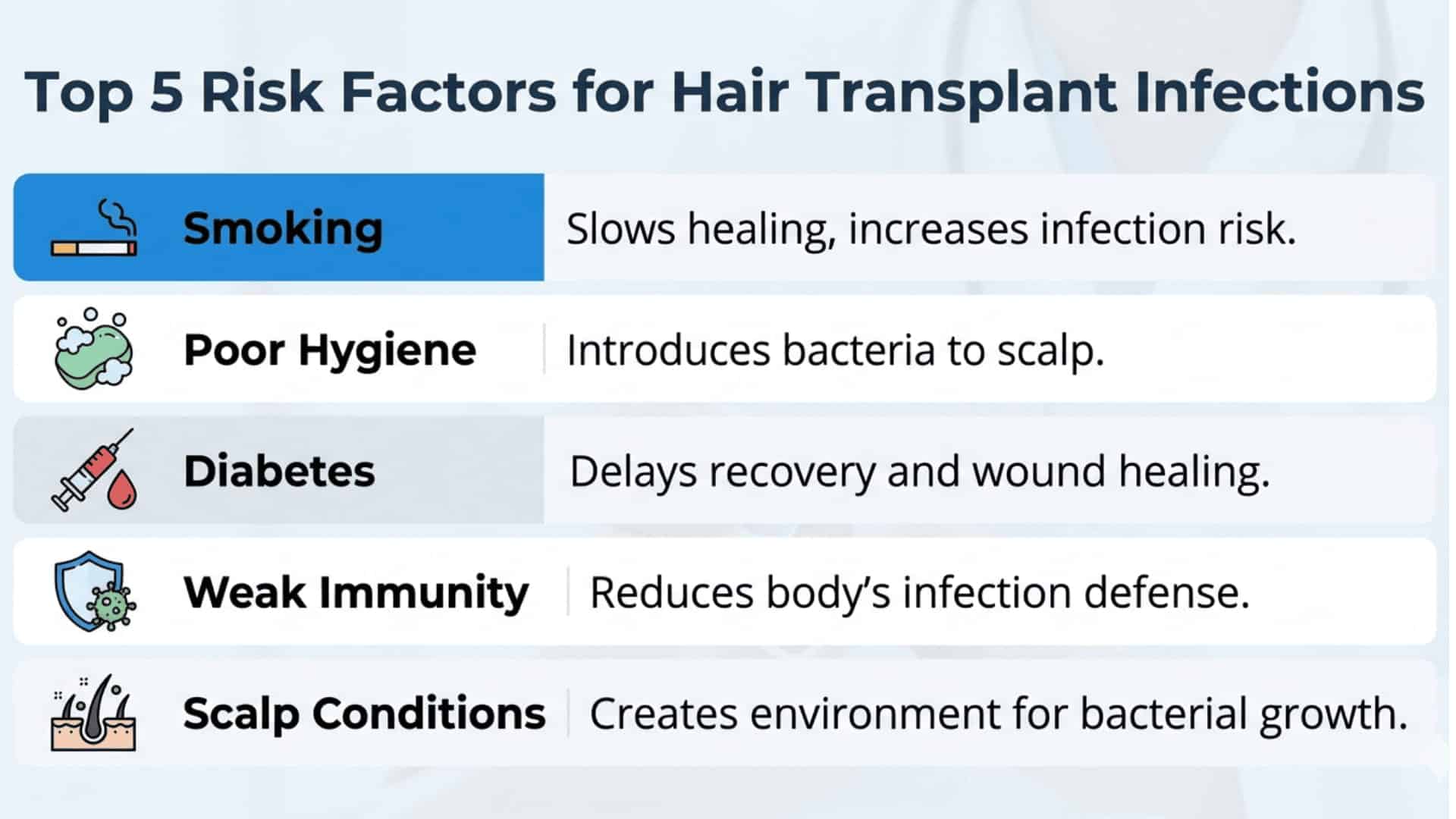
Hair transplant infections usually occur when bacteria enter the scalp during or after surgery. Understanding the causes can help you take the right precautions and ensure a smooth recovery.
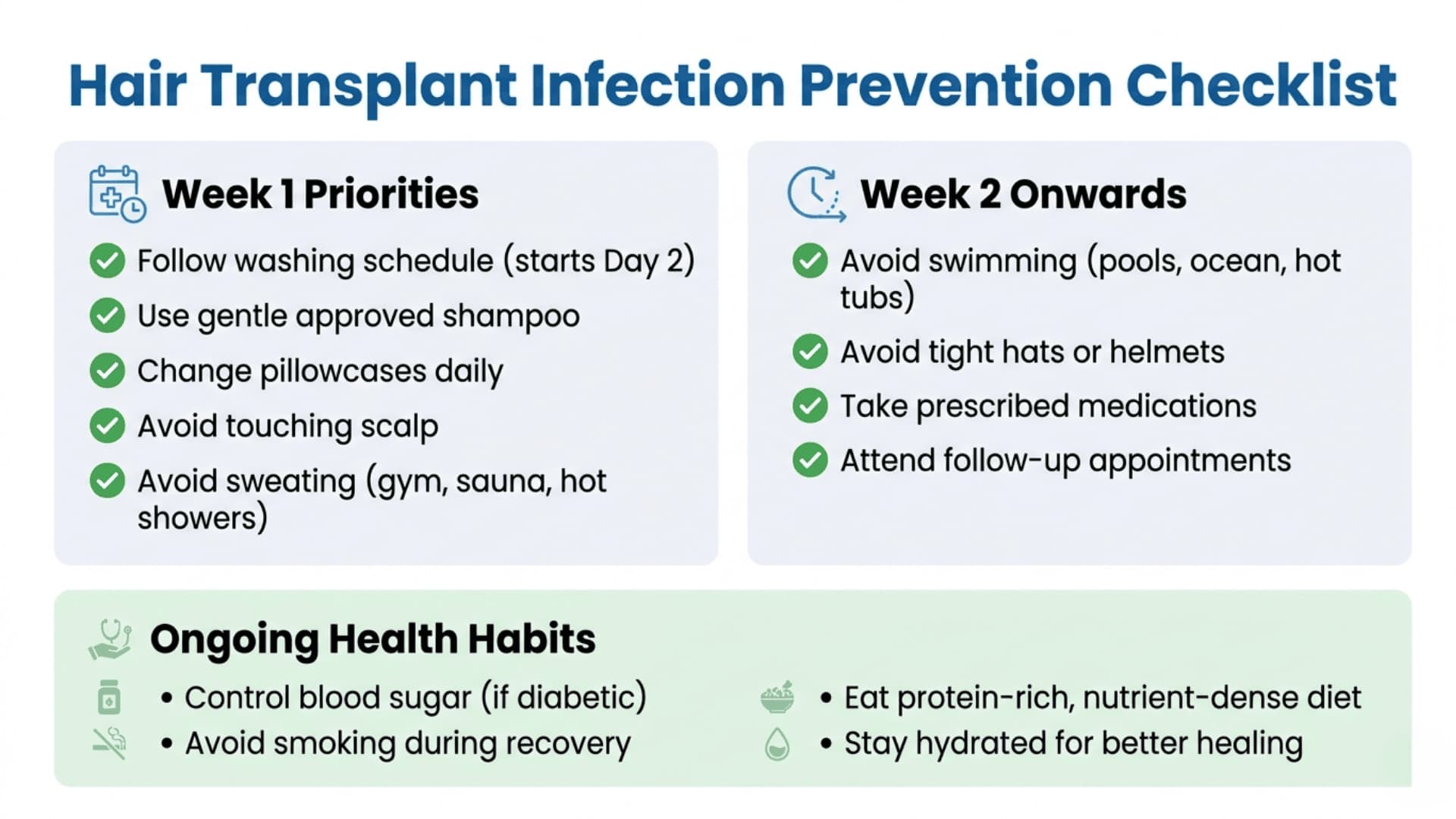
- Poor post-operative care: Not following aftercare instructions, such as improper washing or skipping medications, can allow bacteria to grow on the scalp.
- Unsterile surgical environment: Clinics with poor hygiene standards or unsterilized tools increase the risk of infection during the procedure.
- Touching or scratching the scalp: Frequent touching with unclean hands can introduce bacteria into healing graft sites.
- Excessive sweating or exposure to dirt: Sweat and environmental pollutants can irritate the scalp, creating conditions for infection.
- Pre-existing medical conditions: Conditions such as diabetes or a weakened immune system can slow healing and increase the risk of infections.
- Incorrect use of hair products: Using harsh or unapproved products too soon after surgery can irritate the scalp and trigger infection.
By identifying these causes, patients can take proactive steps to minimize risks. Proper hygiene, choosing a reputable clinic, and following aftercare instructions are key to preventing infections.
How is a Hair Transplant Infection Diagnosed?
Diagnosing a hair transplant infection usually begins with a straightforward visual examination.
Your surgeon will look for the classic signs of infection, such as spreading redness, unusual discharge, swelling, and changes in the scab texture around the donor and recipient sites.
If the infection appears moderate or severe, your doctor may take a small sample of the discharge for bacterial culture testing.
This helps identify the exact pathogen causing the infection, which allows the doctor to prescribe the most effective antibiotic rather than relying on a general one.
If you develop a fever or feel generally unwell, blood tests may also be recommended to check whether the infection has spread beyond the scalp.
For patients doing remote follow-ups, sending clear, well-lit photographs to your clinic from the same angle each day can help your surgical team track changes accurately and respond quickly.
Treating the Infected Area
Treating a hair transplant infection quickly is essential to protect healing grafts and avoid serious complications. The right treatment depends on symptom severity, medical advice, and timely intervention.
| Treatment Step | Why It Matters |
|---|---|
| Consult your surgeon | Ensures proper diagnosis and timely treatment before the infection worsens. |
| Use prescribed antibiotics | Helps control bacterial growth and prevents the infection from spreading further. |
| Keep the scalp clean | Supports healing by reducing buildup, bacteria, and irritation around grafts. |
| Avoid touching or scratching | Prevents the introduction of additional bacteria, scalp trauma, and possible graft damage. |
| Follow medication instructions | Improves recovery and lowers the risk of infection returning. |
| Monitor worsening symptoms | Helps identify serious warning signs that need urgent medical care. |
Most infected hair transplant cases improve with early treatment and proper aftercare. Acting quickly can reduce complications, support scalp healing, and improve the chances of protecting transplant results.
When Should You See a Doctor After a Hair Transplant?
Most patients recover from a hair transplant without any major complications. However, knowing when to pick up the phone and call your clinic can make a real difference in protecting your results.
If your pain is getting worse after Day 3 rather than improving, that is a sign worth taking seriously. Similarly, if you notice redness spreading beyond the treated area or spot any pus, foul odor, or unusual discharge around the grafts, do not wait.
Contact your clinic immediately and send clear photographs so your surgeon can assess the situation quickly and recommend the right next step.
When it Becomes an EmergencyIf you develop a high fever with chills, experience rapidly spreading redness across your scalp, or feel confused and short of breath, skip the clinic call and go to the emergency room straight away. These are signs of a serious systemic infection. |
Final Thoughts
A hair transplant infection is rare, but it is not to be taken lightly.
The difference between a smooth recovery and a complicated one often comes down to two things: how well you follow your aftercare instructions and how quickly you act when something feels wrong.
Recognizing early warning signs, understanding your personal risk factors, and knowing exactly when to call your clinic can protect both your health and your results.
Most infections, when caught early, resolve completely without affecting your final outcome.
Your recovery deserves the same attention and care you put into choosing the procedure itself.
Have you recently had a hair transplant, or are you currently in your recovery phase? Share your experience in the comments below. It might be exactly what someone else needs to read right now.
Frequently Asked Questions
How Do You Know if You Have an Infection After a Hair Transplant?
Watch for spreading redness, increasing pain after Day 3, pus, foul odor, or fever that does not improve.
How Do You Treat an Infected Hair Transplant?
Contact your surgeon immediately. Treatment typically involves prescribed antibiotics, gentle scalp cleaning, and closely monitoring symptoms until fully resolved.
Can You Get Sepsis from A Hair Transplant?
Sepsis is extremely rare but possible if a severe infection goes untreated. Seek emergency care if you develop a fever with chills, confusion, or a rapid heartbeat.