You leave the salon with the exact tone you asked for, and for a week or two, it looks perfect.
Then something shifts. Blonde turns buttery yellow, brunette highlights lean orange, and even black hair starts pulling red under bright light.
That shift is brassy hair, and it catches almost everyone who colors or lightens their hair off guard at some point.
Once you understand what causes it, correcting and preventing it no longer feels like guesswork.
What is Brass Hair?
Before fixing anything, it helps to know exactly what you’re looking at.
Brassy hair refers to the unwanted warm tones, yellow, orange, or copper, that surface once cool or neutral pigment fades faster than the warm pigment sitting underneath.
It’s not the same as warm-toned hair, which colorists create intentionally; brassiness is unplanned.
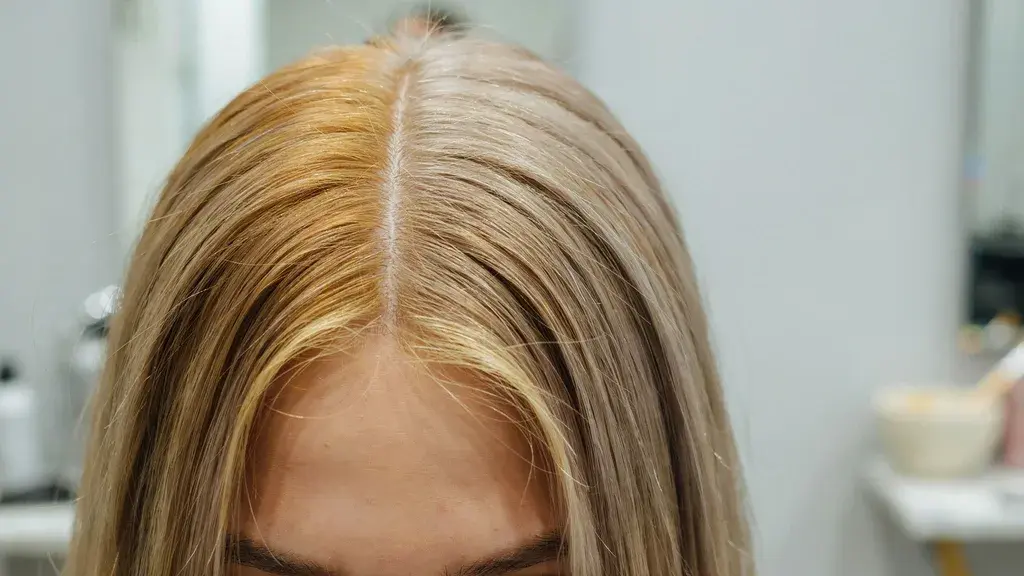
Depending on your base shade, it can look like a yellow cast on blonde hair, a coppery tint on brunette hair, or a red undertone on black hair.
Hot roots happen when hair lifts during color service but doesn’t fully process, leaving warmth near the scalp.
Dry or damaged hair also reflects light unevenly, making warmth more obvious even when color hasn’t actually changed.
Why Does it Happen?
Brassiness rarely comes from a single cause.
Brassiness in hair usually builds from a mix of what happens during your color service and what happens afterward, in the shower and out in the sun.
Lightening or bleaching removes your natural pigment, but it rarely removes all of it, leaving warm undertones exposed underneath whatever shade you applied.
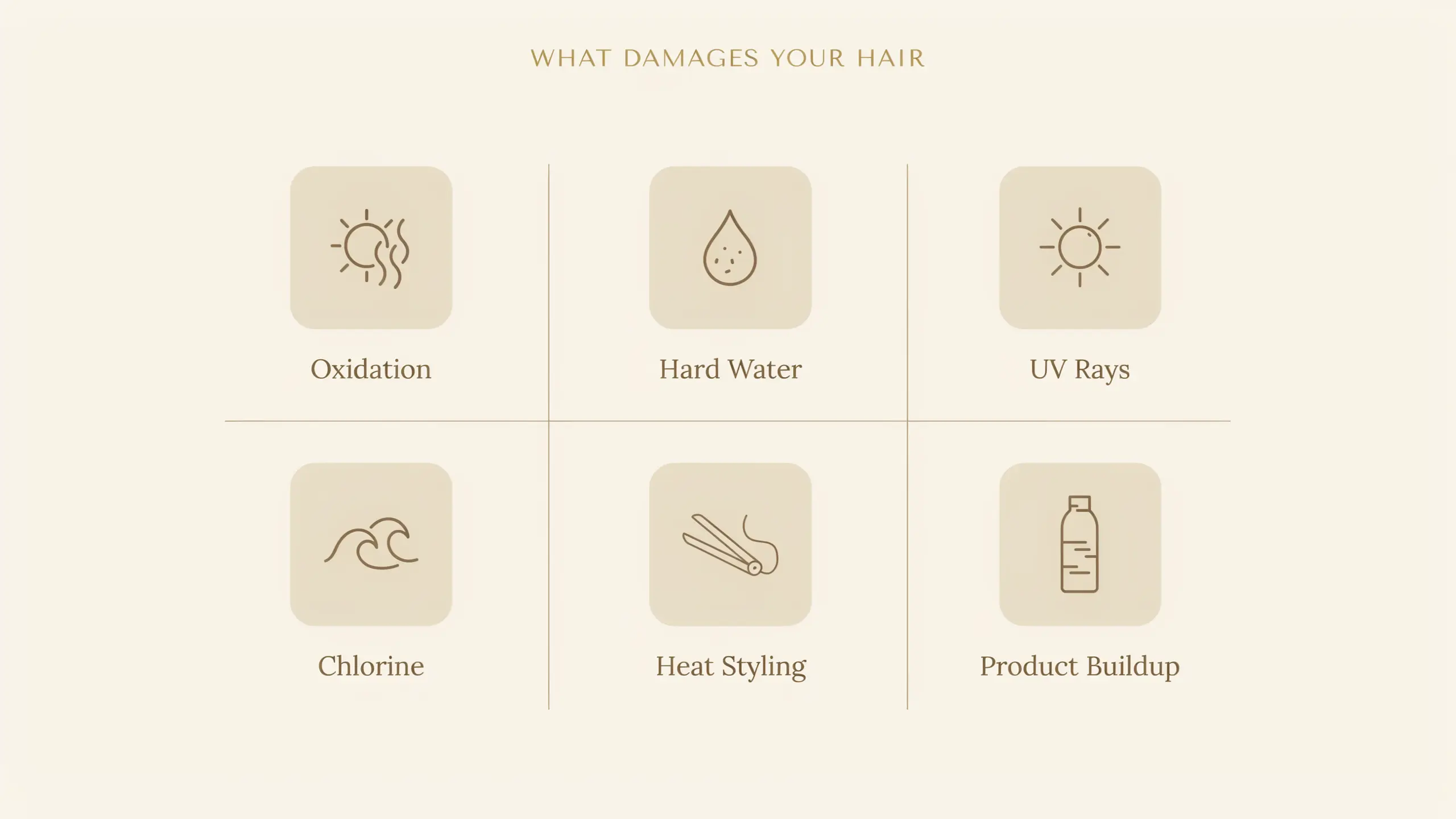
From there, a few everyday factors speed up how fast those tones resurface:
- Oxidation: Color pigment breaks down when exposed to air and light.
- Hard water: Minerals like iron and copper build up on the hair shaft and shift its tone.
- UV rays: Sun exposure fades toner and lightens strands left uncovered, and the American Academy of Dermatology notes that lighter hair is more vulnerable because it lacks the melanin that protects darker hair.
- Chlorine: Strips color and can pull a greenish or brassy cast in light hair.
- Heat styling: Dries hair out and speeds up color fade.
- Product buildup: Dulls shine and makes warm tones more noticeable.
- Sulfates and overwashing: Frequent washing with sulfate shampoos strips pigment faster, exposing warm undertones sooner.
- Pollution: Airborne residue and smoke particles settle on the hair shaft, dulling cool tones and making warmth more visible.
How to Get Rid of Brassy Hair
Fixing brass at home comes down to matching the right product to the tone you’re actually seeing.
Use a Toning Shampoo or Conditioner
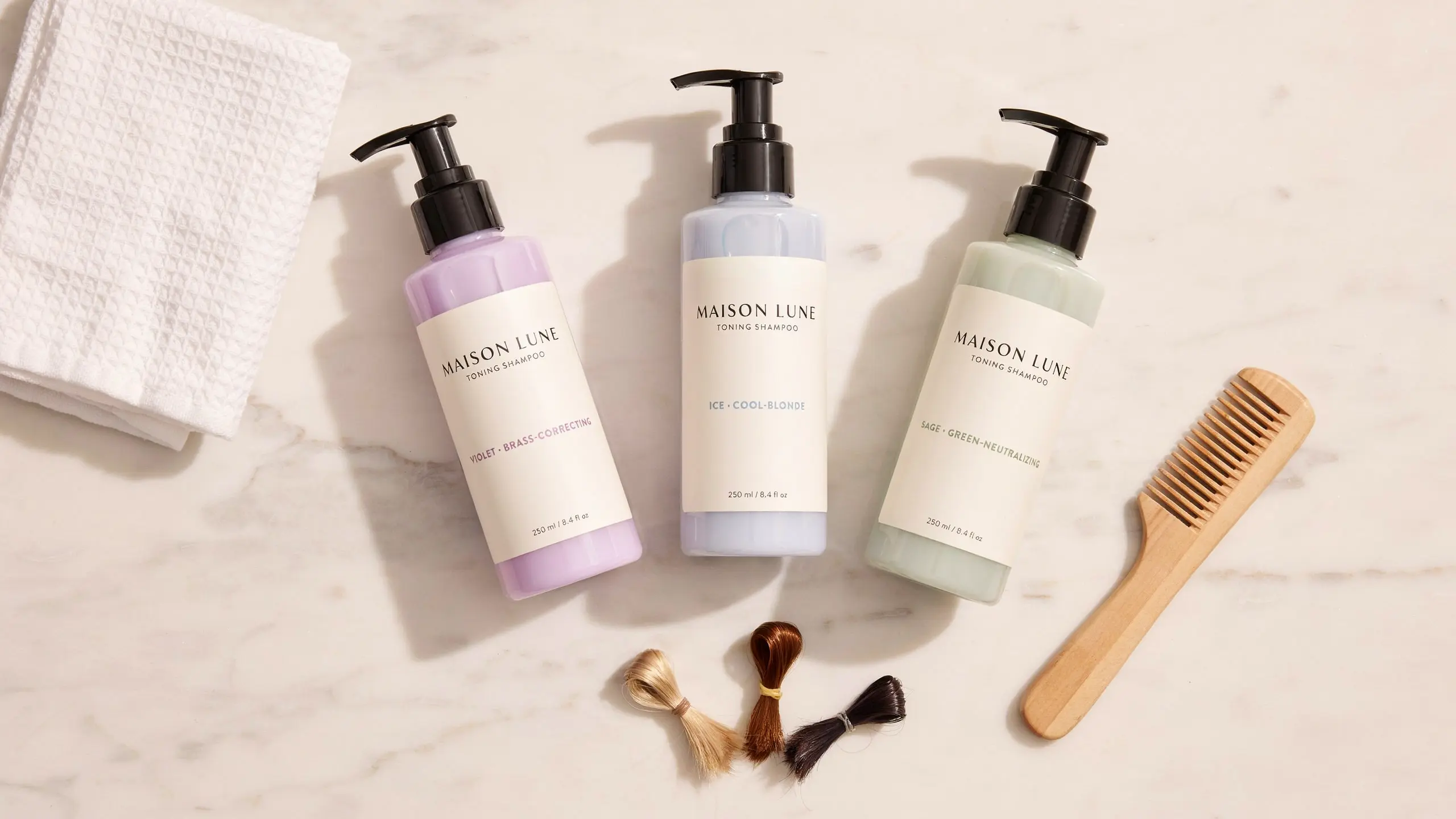
A toning shampoo or conditioner in purple, blue, or green works by depositing a small amount of pigment that cancels out warmth on contact. Leave it on for a few minutes longer than a regular wash to allow the pigment to fully deposit, then rinse until the water runs clear.
Strip Mineral Buildup Before You Tone
A regular clarifying shampoo cleans the hair, but it doesn’t always pull out the iron and copper that hard water leaves behind.
A dedicated mineral-removing pre-shampoo treatment targets that buildup specifically, so the toner underneath has a clean surface to work with instead of fighting through a mineral film.
Clarify Before You Tone
If buildup from hard water or products is part of the problem, a clarifying shampoo beforehand strips that residue so the toner can actually do its job.
Skipping this step is one of the most common reasons toning shampoo seems like it’s not working.
If brass keeps showing up even after a normal wash, try double washing with your regular shampoo first. A second lather removes leftover oil and product that a single wash tends to miss, and it’s often enough on its own before you even reach for a toner.
Book a Professional Toning or Glossing Service
For brass that won’t budge, a professional toning or glossing service resets the color from the inside rather than masking it for a wash or two.
A colorist can also match the tone more precisely than an at-home product, especially if the brassiness is uneven across your hair.
These products work because of a simple rule in color theory, and once you understand it, choosing the right one stops being a guessing game.
What Color Cancels Out Brass in Hair?
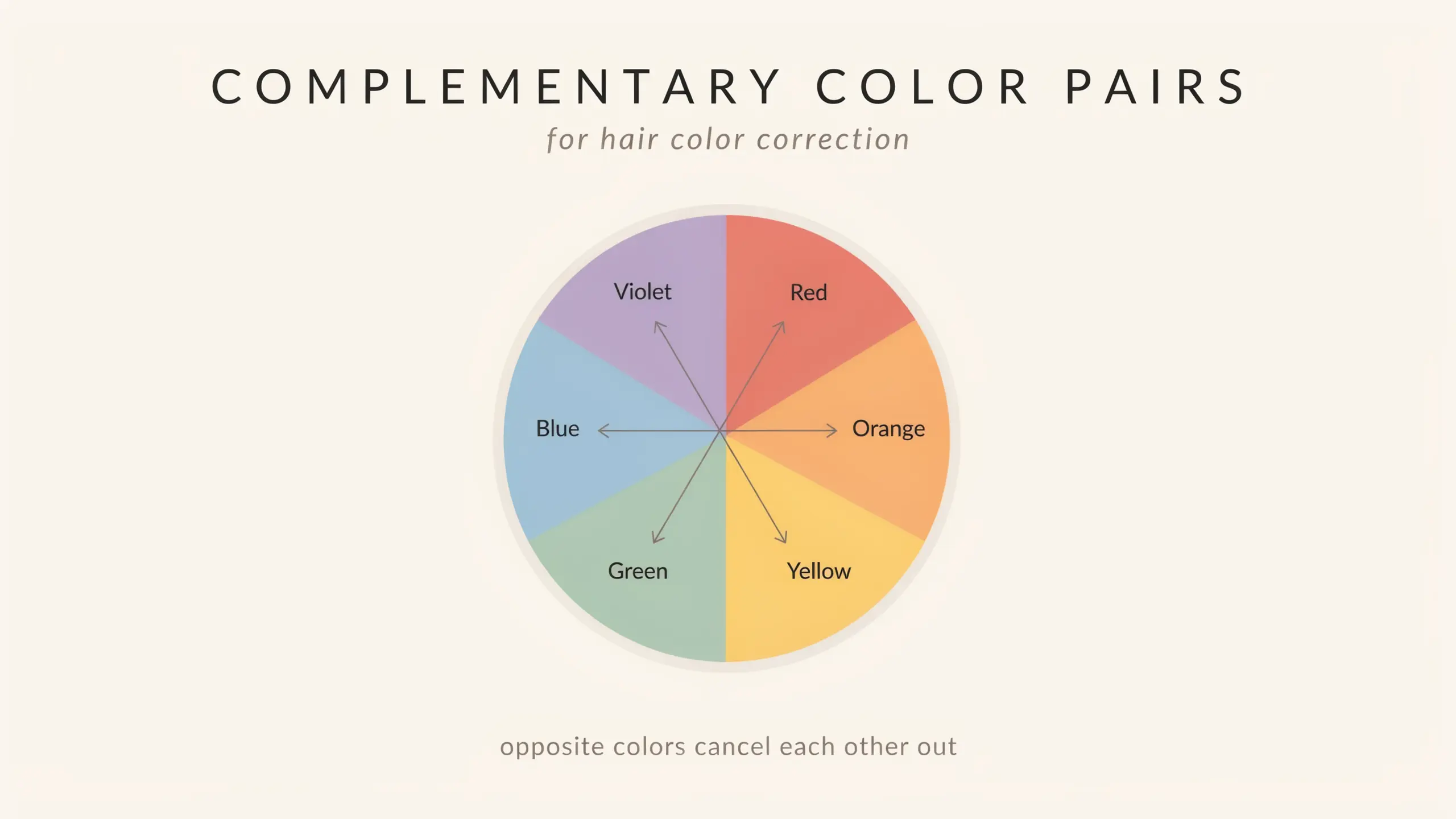
Color correction always comes back to the color wheel.
Every warm tone has a cool opposite that neutralizes it:
- Violet cancels yellow
- Blue cancels orange
- Green cancels red
That’s why purple shampoo works on blonde and gray hair, blue formulas target orange tones on brunette hair, and green-based products correct red cast on very dark or black hair.
Pick the wrong one, and hair can end up looking muddy instead of corrected.
Understanding which color neutralizes which tone is only half the job.
The other half is applying it to your specific hair color, since brass shows up differently depending on where you’re starting from.
How to Remove Brassy Tones by Hair Color
Brass doesn’t look the same on every head, so the fix shifts depending on your base color.
1. Blonde Hair
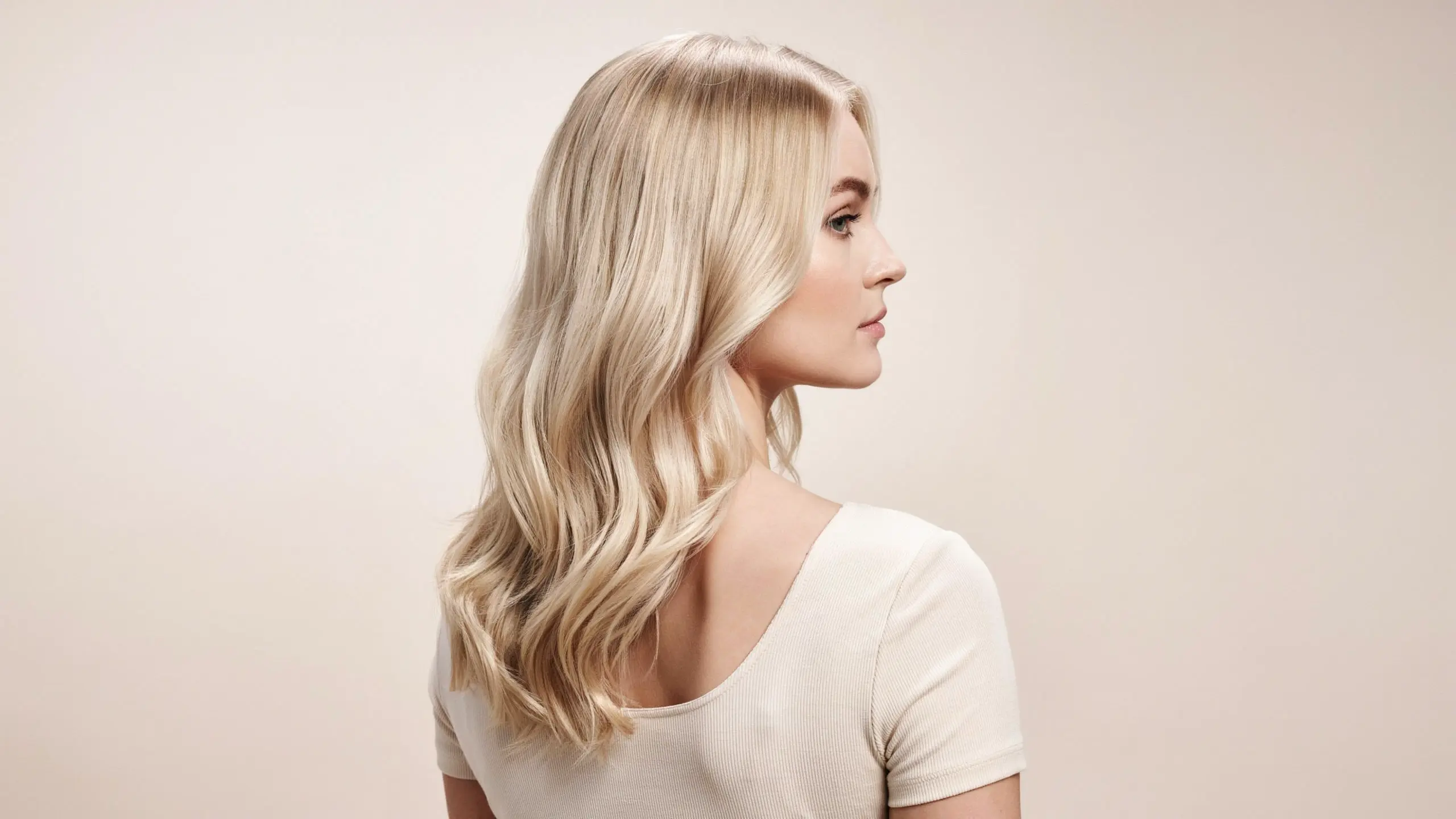
Blonde brassiness usually leans yellow, especially in highlighted or bleached strands where the underlying warmth has nowhere left to hide.
A weekly purple shampoo or mask keeps it in check, and a violet-based gloss refreshes cooler tones between salon visits without over-processing the hair
2. Brunette and Brown Hair
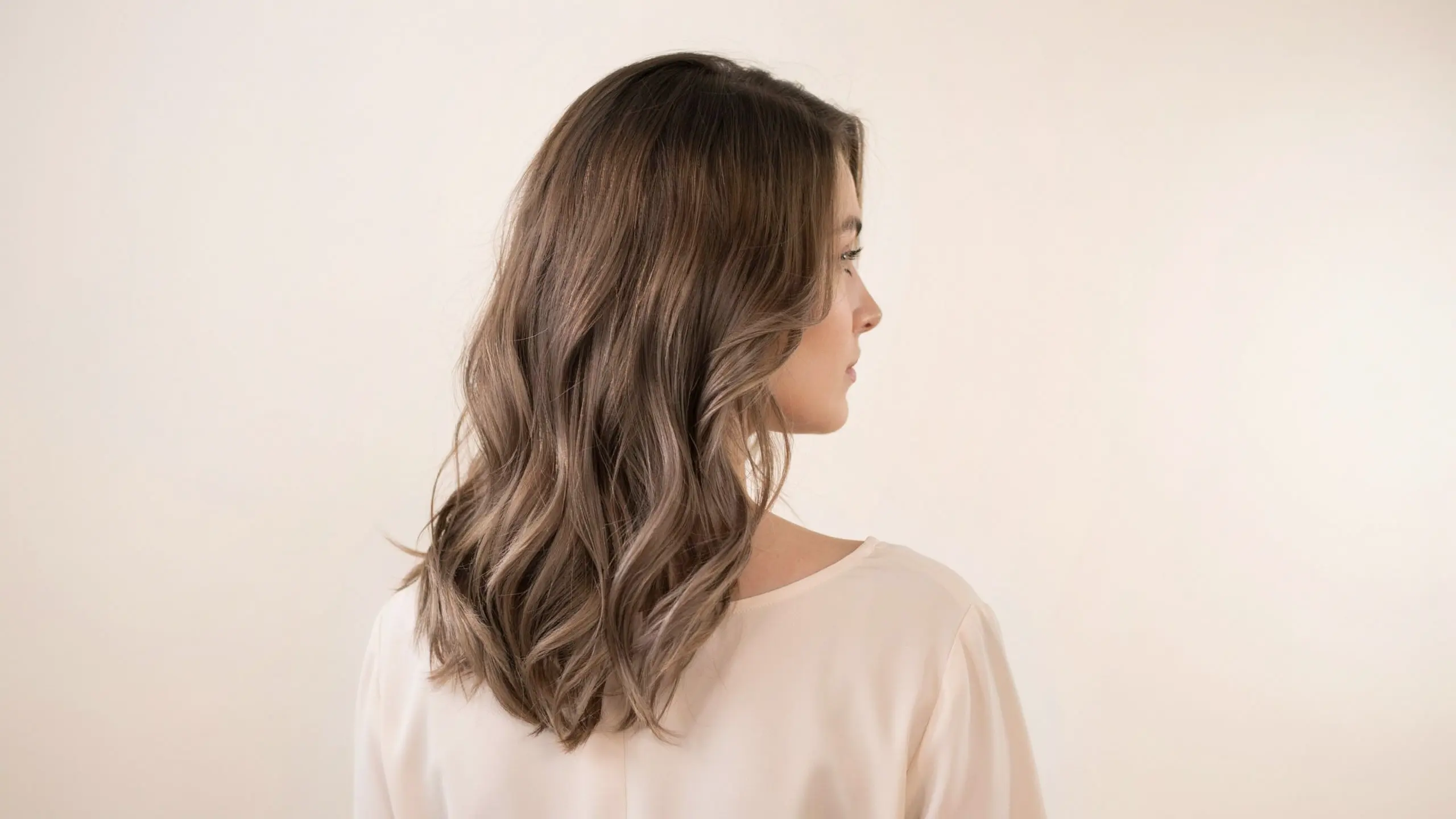
Highlighted or balayage brown hair tends to pull orange or copper as it fades, particularly along the lightened pieces where less natural pigment remains to balance the warmth.
Blue-based shampoos and toners work best here, and a gloss service helps even out patchy or uneven brassiness.
3. Black Hair
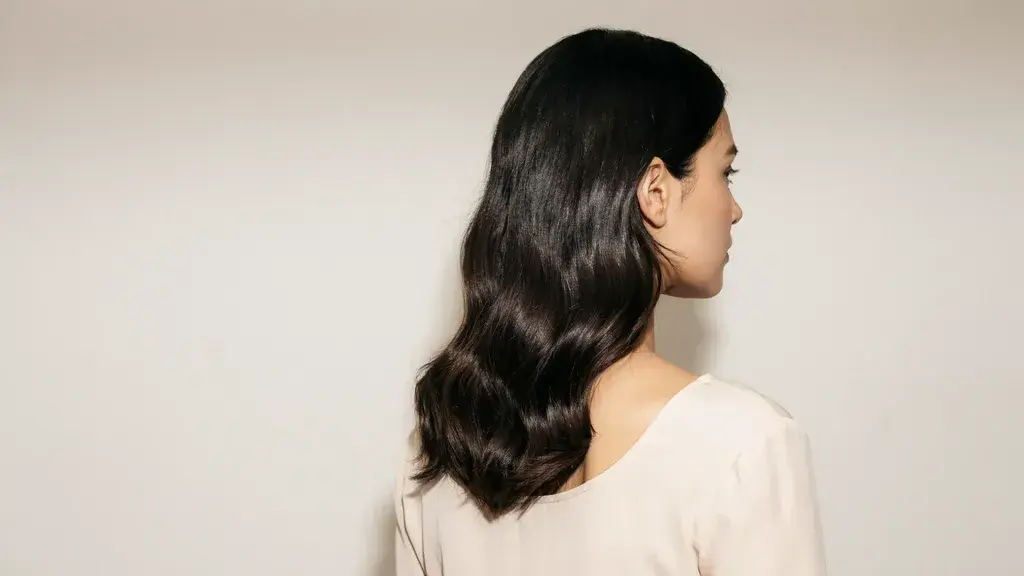
Black hair that’s been lightened, color-treated, or exposed to a lot of sun can develop a reddish tint that shows up most in bright light or direct sunlight.
A green-tinted toner corrects this without requiring a full color change, and it keeps the depth of black hair intact.
4. Gray and Silver Hair
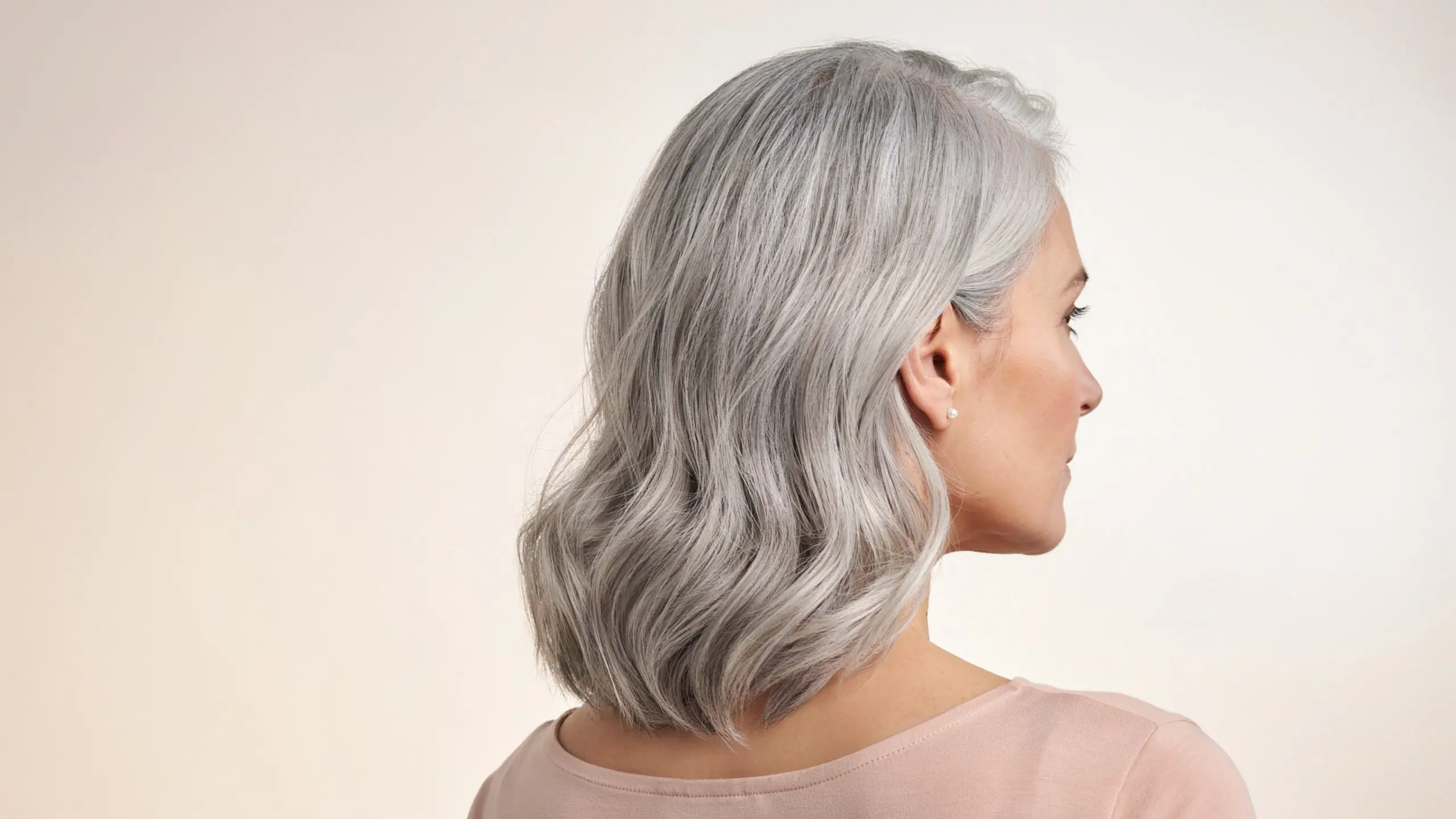
Gray strands often pick up yellow from minerals in water or product residue, and sun exposure can push that tone further toward brass over time.
A silver-toning shampoo used once or twice a week keeps it bright and cool, without leaving hair looking flat or overly cool-toned.
How to Prevent Brassy Hair From Coming Back
Prevention takes less effort than correction and protects the money you’ve already invested in your color. Space out toning treatments every few weeks rather than waiting until brassiness is obvious.
- Ask your colorist about highlights or lowlights instead of an all-over color, and avoid lifting more than a couple of shades from your natural color. The closer the finished shade sits to your starting point, the less room brass has to show through as it fades.
- Swap your regular shampoo and conditioner for color-safe formulas, which are gentler on pigment.
- Cut back on heat styling where you can, and always use a heat protectant when you do reach for hot tools.
- Use a hat or UV-protectant spray on days spent outdoors.
- Wear a swim cap or use a clarifying rinse after the pool to keep chlorine from doing damage
- Rinse with cool or lukewarm water instead of hot. Heat opens the hair cuticle and lets color slip out faster, while cool water keeps the cuticle flatter so pigment stays put longer.
Tips for Maintaining Your Color
Beyond toning and protecting your hair from the elements, a handful of daily habits keep color looking fresh longer.
| Habit | Why It Helps |
|---|---|
| Wash less often | Every wash fades pigment a little more |
| Use cool or lukewarm water | Heat opens the cuticle and lets color slip out faster |
| Book toning or gloss appointments every 4–6 weeks | Stays ahead of fading instead of reacting to it |
| Deep condition if hair is porous | Porous hair loses tone and moisture faster than healthy strands |
Small changes like these add up, and they’re often the difference between color that holds and color that turns brassy within weeks.
Conclusion
Brassy hair is rarely bad luck. It usually means your color needs a bit more support between appointments.
Once you know what’s pulling those warm tones through, whether it’s hard water, sun exposure, or one too many hot styling days, fixing it stops feeling like guesswork.
A well-matched toner, a color-safe routine, and regular gloss appointments make the biggest difference over time.
Small habits, like rinsing after the pool or turning down your water temperature, add up too.
Stay ahead of it with the right products, and your color can stay fresh for weeks longer.
Frequently Asked Questions
Can I Fix Brassy Hair Without Dyeing It Again?
Yes. Toning shampoo, glossing treatments, or a clarifying wash often correct brass without a full recolor.
How Often Should I Use Purple Shampoo?
Once or twice a week is usually enough. Using it every wash can leave hair with a dull, purple-tinted cast, unevenly stain porous hair, or even tint your hands and towels, so it works best as an occasional treatment rather than a daily habit.
Is Brassy Hair a Sign of Damage?
Not always. Damage can worsen brassiness, but healthy hair can still turn brassy due to sun exposure or hard water.