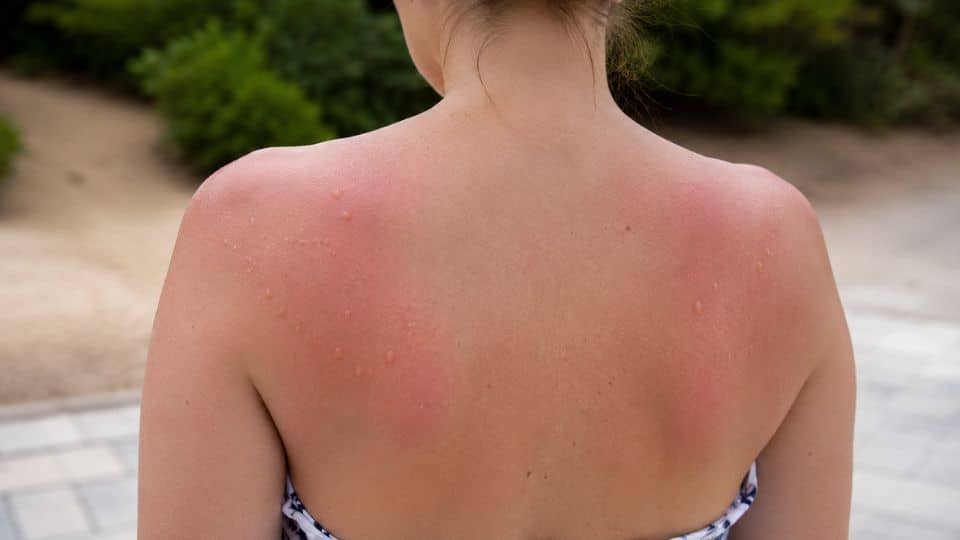
You spent one afternoon at the beach. Told yourself, “just ten more minutes.” By evening, your skin was glowing like a stop sign. That sting under a warm shower is a memory most people know too well.
A mild sunburn clears up in three to five days. Moderate burns take about a week. Severe ones, especially with blistering, can last up to two weeks.
That redness fades fast. The damage happening underneath your skin does not disappear at the same speed. That part matters more than the sting ever will.
What is Sunburn?
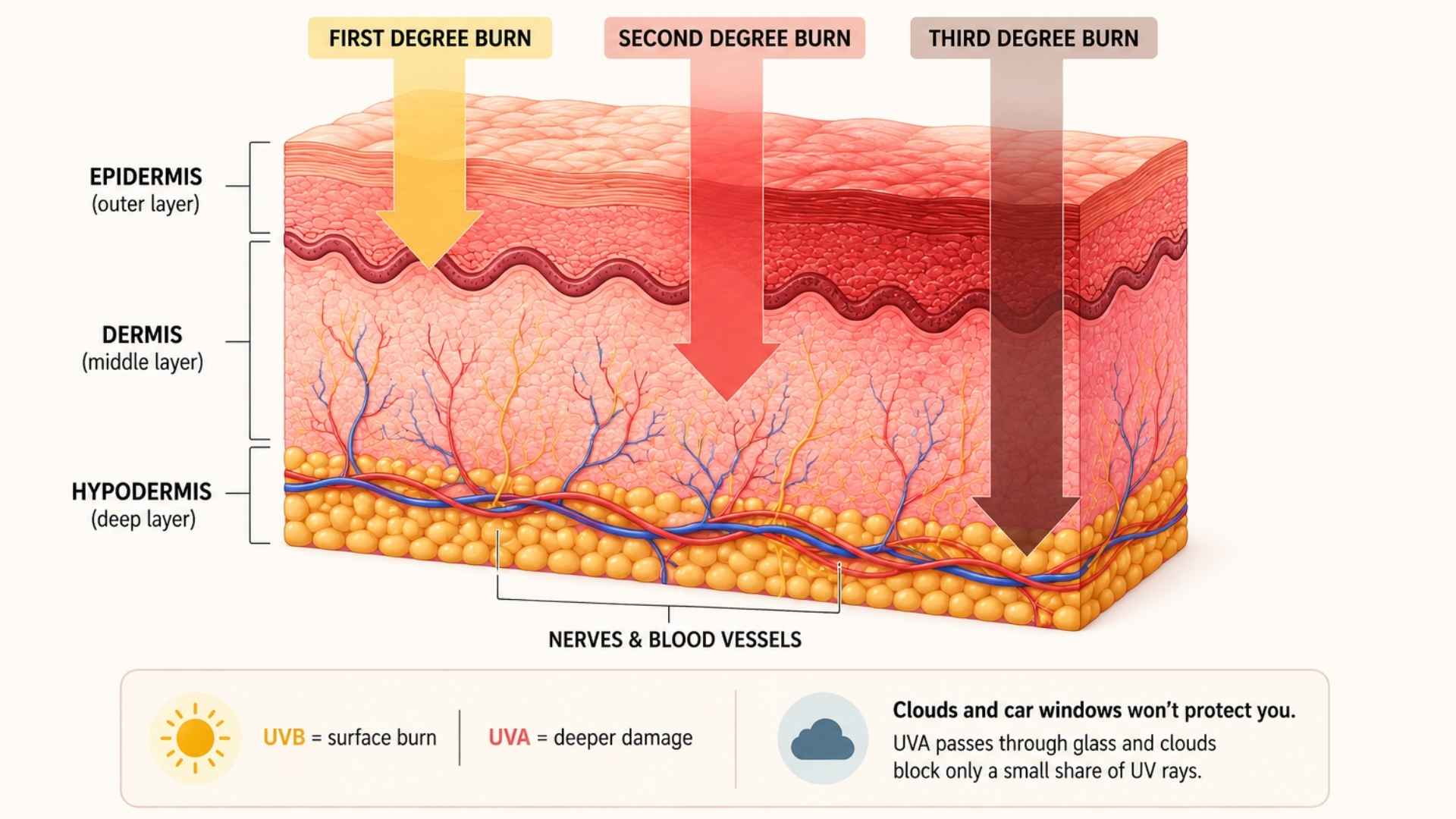
Sunburn is your skin’s reaction to too much ultraviolet light. When UV rays hit skin faster than its natural defenses can handle, cells at the surface get damaged, and the body responds with inflammation.
That’s why skin turns red, feels warm, and sometimes swells within hours of overexposure. It’s not just surface irritation; the damage reaches into deeper layers of skin, affecting cells that would otherwise protect against future exposure.
Anyone can get sunburned, regardless of skin tone, though how quickly and how severely it happens varies from person to person. Mild cases fade within days. More serious ones signal that skin has taken on real injury, not just a temporary flush of color.
Myth-bust worth remembering: a cloudy sky won’t save you, and neither will your car window. UVA rays pass straight through glass, and clouds block only a small share of UV rays. Skin can burn on a gray day just as easily as a sunny one.
Sunburn Healing Timeline: What Happens Day by Day
Sunburn doesn’t heal all at once. Your skin moves through clear stages, and knowing what’s normal at each point makes the wait a lot less confusing.
| Timeframe | What’s Happening |
|---|---|
| 0-6 hours | Redness starts, skin feels hot |
| 6-24 hours | Pain and redness peak |
| Day 2-3 | Skin tightens, swelling settles |
| Day 4-7 | Peeling begins |
| Day 7-14+ | Blisters (if any) heal, deeper skin regenerates |
Past day 14 and still in pain? That’s not normal healing anymore. It’s a signal worth taking seriously, and exactly when to call a doctor is next.
How Long Does Each Type of Sunburn Last?
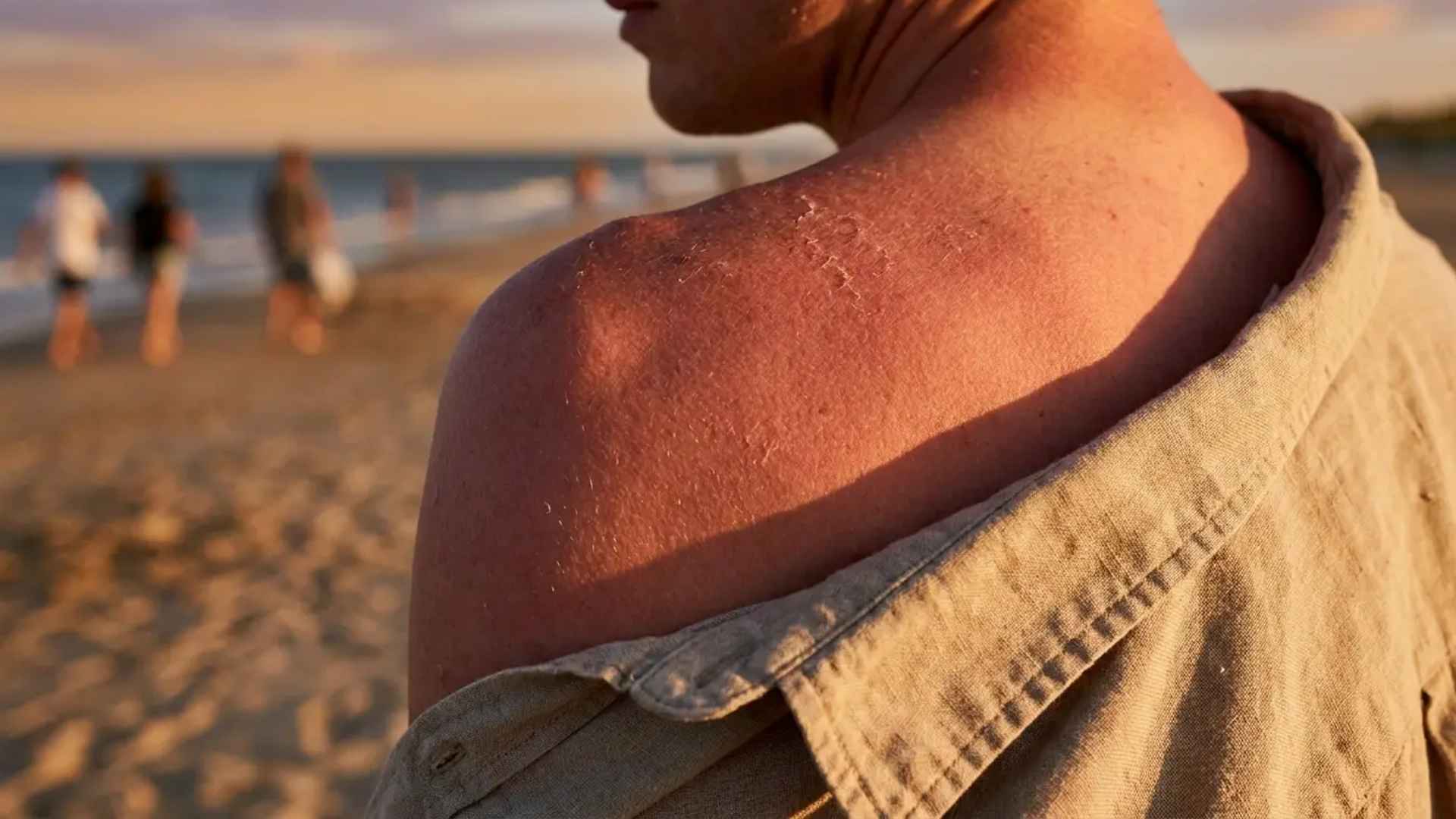
Not all sunburns are equal. How long yours sticks around depends on how deep it goes, not just how red it looks on day one.
1. Mild Sunburn: 3 to 5 Days
This is the most common type. Skin turns red, feels warm, and stays tender to the touch. No blisters show up. The discomfort usually eases within a couple of days.
Near the end, light peeling kicks in as your skin sheds the damaged top layer and starts fresh underneath.
2. Moderate Sunburn: About a Week
This one goes a level deeper. Redness looks darker and more widespread. Swelling sets in, and skin feels hot even hours after you’ve left the sun.
Simple things like putting on a t-shirt can feel uncomfortable against sore skin. Peeling shows up more noticeably here, sometimes in larger patches rather than small flakes.
3. Severe Sunburn: 1 to 2 Weeks (or Longer)
Severe sunburn brings blistering, sharp pain, and skin that’s hot and swollen over a large area. Some people also get fever, chills, or nausea. These are signs the body is treating the burn as a serious injury, not just surface irritation.
Severe sunburn often needs a doctor’s care, especially if blisters cover a large stretch of skin or symptoms like fever don’t ease up. More on exactly when to make that call is coming up shortly.
Severity tells part of the story. What happens hour by hour after sun exposure tells the rest, and that timeline is worth knowing so you’re not caught off guard.
How to Treat a Sunburn at Home
The first 24 to 48 hours matter most. What you do during this window can ease pain, speed healing, and keep your skin from getting worse.
- Cool compresses or baths: Cool water calms heat and reduces inflammation without shocking already-sensitive skin.
- Fragrance-free aloe vera: Soothes burning skin and adds hydration without irritating chemicals or added scents.
- Extra hydration: Sunburn pulls moisture to your skin’s surface, so drinking more water supports internal repair.
- Ibuprofen early on: Taking it within the first day helps reduce swelling, redness, and overall discomfort.
- Loose, breathable clothing: Reduces friction on sore skin and prevents further irritation while you heal.
- Staying out of the sun: Re-exposure deepens damage and stretches out your entire recovery timeline.
What not to do: Skip butter, oils, or toothpaste; they trap heat instead of releasing it. Don’t pop blisters; they protect healing skin underneath.
Avoid direct ice; it can harm already-damaged tissue. And resist scrubbing or peeling skin manually; let it shed on its own.
Does Sunburn Damage Last After the Redness Fades?
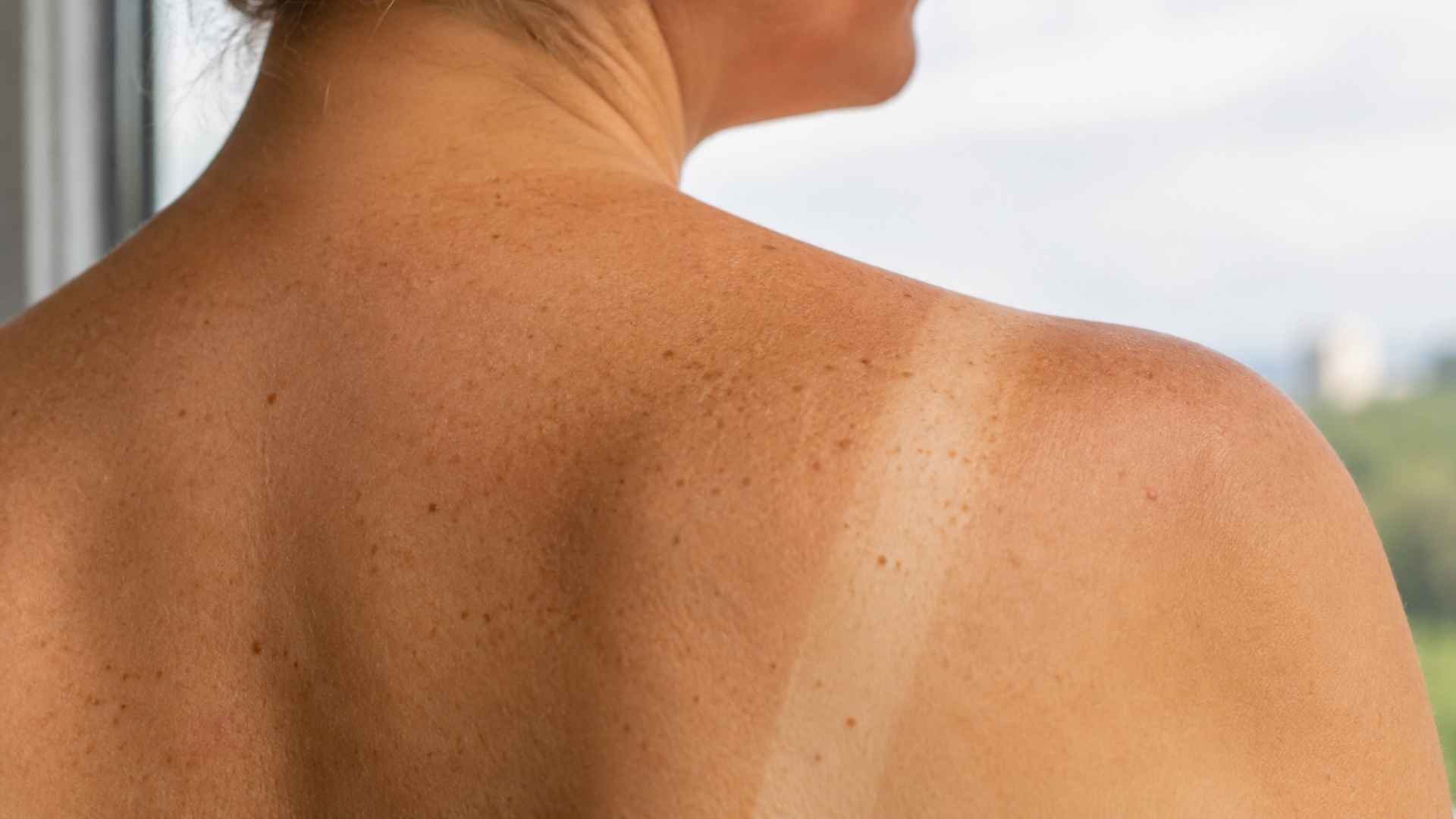
The redness fading doesn’t mean your skin bounced back untouched. Underneath, UV rays damage the DNA inside skin cells.
Some of those cells repair themselves. Some don’t, and that unrepaired damage stays in your skin long after the pain is gone.
This isn’t about one bad day at the beach. It’s about what adds up over years. Each sunburn leaves a small mark, and those marks build on each other over time:
- Premature aging: Wrinkles, sunspots, and looser skin show up earlier than they should, all tied back to accumulated sun damage.
- Precancerous patches: Rough, scaly spots called actinic keratoses can form after years of UV exposure. They’re worth mentioning to a dermatologist, not ignoring.
- Higher skin cancer risk: This risk climbs with every sunburn, and burns before age 20 carry extra weight for lifetime risk.
None of this means one sunburn ruins your skin forever. It means your skin keeps a quiet record of every sun exposure you’ve had, and that record shapes how it looks and behaves for years to come.
What Makes a Sunburn Last Longer?
Not everyone heals at the same speed. Some people bounce back in days, while others deal with soreness and peeling for much longer. A few key factors explain that difference.
| Factor | Why It Matters |
|---|---|
| Skin tone and type | Fair skin has less natural protection, so burns go deeper and heal slower |
| Length of sun exposure | More time under direct sun means more damage and a longer recovery |
| Location and altitude | UV rays grow stronger near the equator and at higher altitudes |
| Certain medications | Some antibiotics and NSAIDs raise sun sensitivity and slow healing |
| Reflective surfaces | Sand, snow, and water bounce UV rays back, adding extra exposure |
Genetics, habits, and surroundings all shape how long a sunburn sticks around. Knowing your own risk factors helps you plan ahead, so your next home care routine actually works.
When Should You See a Dermatologist?
Most sunburns heal just fine with home care and a little patience. But a few warning signs mean it’s time to stop treating it yourself and call a professional instead. Watch for large-area blistering, fever, chills, signs of infection, dehydration symptoms, or sunburn on an infant.
How to Prevent Sunburn Before It Starts
Healing is reactive. Prevention is the real win here, and it takes far less effort than dealing with a week of soreness and peeling skin afterward.
- Sunscreen: Use a broad-spectrum SPF 30+ (SPF 50+ for long days outdoors), and reapply every 2 hours or right after swimming or sweating.
- Sun-smart habits: Avoid direct sun between 10 am and 4 pm, check the daily UV index before heading out, and seek shade whenever you can.
- Seek shade: Trees, umbrellas, or covered spots cut down direct exposure without extra effort.
- Protective layers: UPF-rated clothing, a wide-brim hat, and UV-blocking sunglasses add protection that never wears off mid-day.
A little prevention goes a long way. These habits take seconds to build in, and they save you days of discomfort every single time you’re out in the sun.
It’s Healing Time
A mild sunburn clears up in a few days. A severe one can take two weeks and needs real care along the way. But healing time is only half the picture. What happens underneath your skin sticks around far longer than the redness ever does.
That’s the real reason sunscreen matters every single day, not just on beach trips. A little SPF now protects the skin you’ll have years from now.
Next time you step outside, take those two extra minutes for sunscreen. Your future skin will thank you.
Found this helpful? Save this page for your next sunny day, and share it with someone who always “forgets” their SPF.
Frequently Asked Questions
Can a Sunburn Turn Into a Tan?
No. A tan may follow as skin repairs itself, but sunburn itself is damage, not a tanning stage.
Is It Safe to Shower With a Sunburn?
Yes, use lukewarm water instead of hot, and avoid scrubbing. Pat skin dry gently afterward.
Can You Get Sunburned Twice in the Same Spot Quickly?
Yes. Re-exposing healing skin causes more serious damage and significantly extends recovery time compared to a fresh burn.
Does Sunburn Get Worse Before It Gets Better?
Often, yes. Pain typically peaks within 24 hours before gradually easing over the following days.
How Do I Know if My Peeling Skin Is Infected?
Watch for increasing pain, pus, warmth, swelling, or red streaking spreading from the area. See a doctor if these appear.
Is It Safe to Shower or Bathe While My Skin Is Peeling?
Yes, use lukewarm water and mild soap. Avoid scrubbing peeling areas, and pat skin dry gently afterward.