Choosing a belt sounds simple. Pick a colour, pick a size, done. But anyone who’s had a belt crack, peel, or shrink within a year knows that the wrong choice shows fast. When it comes to vegan belts, the stakes are even higher, because the material landscape is wider and the quality gap between brands is significant.
The good news: a well-made vegan belt doesn’t just match real leather on durability. It can surpass it. You just need to know what to look for.
Why Material Is Everything
Not all vegan leather is created equal. The category covers everything from cheap PU bonded to a fabric backing, to high-grade microfibre composites engineered specifically for long wear. The difference matters the moment you start wearing the belt daily.
Low-grade PU tends to peel and crack within months, especially at flex points near the buckle. High-quality microfiber leather holds its shape, resists moisture, and develops none of that surface cracking. When you’re shopping, check whether the brand specifies the material grade. Vague terms like “faux leather” or “PU leather” without further detail are a warning sign.
Look at the Construction, Not Just the Surface
The outside of a belt tells you half the story. The inside tells you the rest.
Quality construction shows in the stitching. It should be tight, even, and reinforced at stress points. The edges should be finished cleanly, not raw or flaking. The holes should be punched neatly, with no fraying around them. And the lining, if there is one, should be bonded properly to the outer material rather than peeling away after the first wash.
One feature worth looking for specifically in men’s vegan belts is a ratchet or cut-to-fit system. These eliminate the standard punch holes entirely, letting the belt adjust to your exact waist size with no compromises. They tend to last longer too, since the typical points of wear, overstretched holes, are removed from the equation.
Buckle and Hardware Quality
A vegan leather belt is only as durable as its weakest component, and that’s often the hardware. A stainless steel buckle is the benchmark to look for: it holds up to daily use without tarnishing, corroding, or loosening over time. Avoid anything described simply as “metal” with no further specification. Low-grade alloys corrode, and the clasp mechanism on cheaper ratchet belts tends to fail within months.
The attachment between the buckle and the strap deserves attention too. Riveted attachments are more secure than stitched-only attachments over time. On dress belts, a removable buckle system adds versatility, letting you swap the frame across straps.
Fit and Sizing: Get It Right First Time
Sizing is where many buyers go wrong. Standard belt sizing runs approximately 2 inches above your trouser waist. So if your trousers are 32 inches, you’d typically order a 34-inch belt. But this varies by brand, and it’s worth checking the sizing guide before ordering rather than guessing.
The vegan belts range at Doshi addresses this directly with a cut-to-fit option: the strap arrives slightly long and you trim it to your exact measurement at home, ensuring a precise fit from day one. For anyone between standard sizes, or simply tired of belts that don’t sit quite right, it’s a practical solution.
Matching Your Belt to Your Wardrobe
A quality belt is a long-term wardrobe investment, so it should work across multiple contexts rather than just one.
A few guidelines:
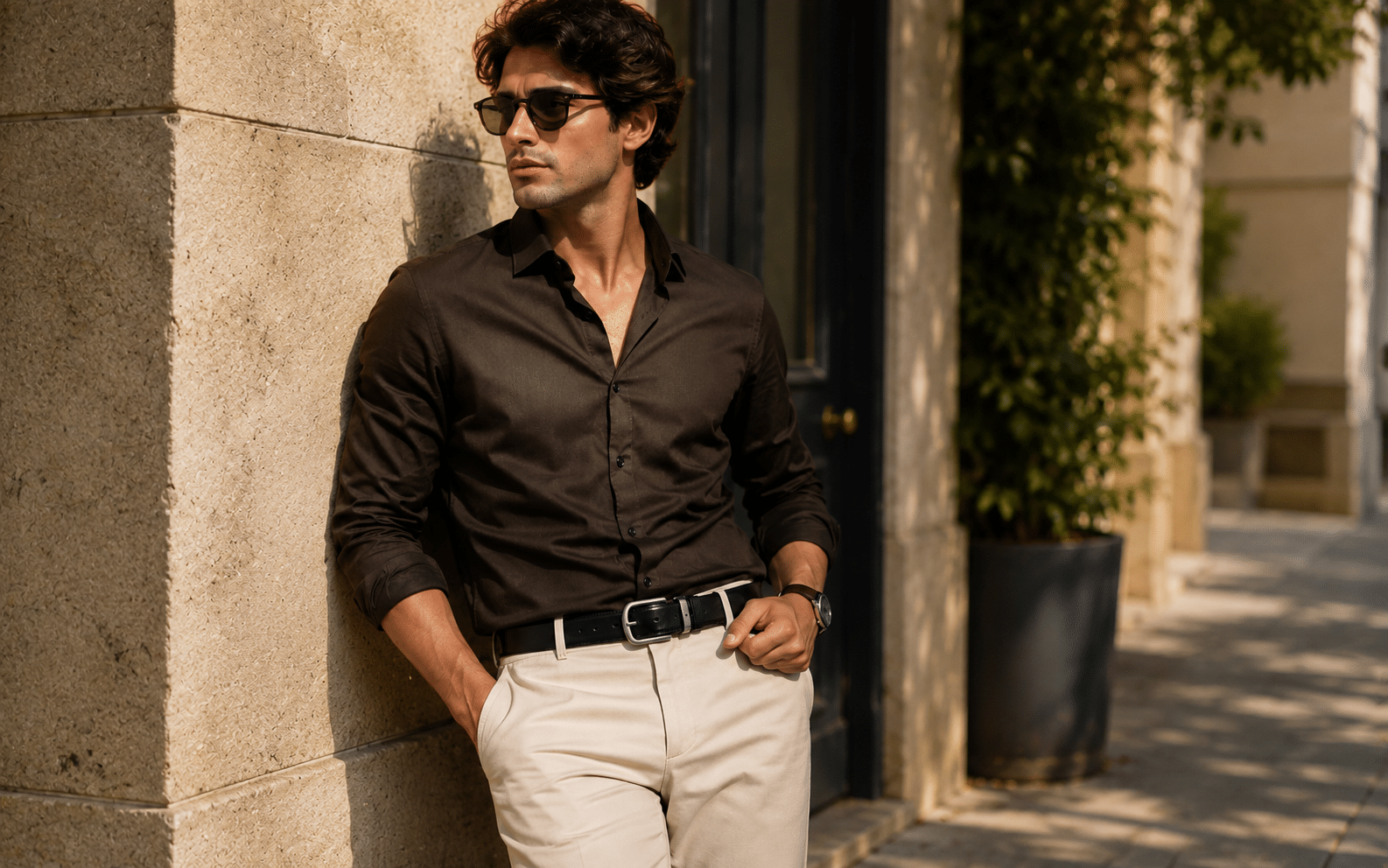
- Dress belts are narrow, smooth-finish, and pair with formal trousers and chinos. Black or dark brown are the most versatile colourways.
- Casual belts run wider, suit jeans and relaxed trousers, and allow for more texture and colour variation.
- Ratchet and golf belts offer a cleaner silhouette with a stretch or slide-adjust mechanism, ideal for activewear or travel where a fixed buckle can feel restrictive.
If you’re starting from scratch, a professional dress belt and a standard casual belt will cover the majority of everyday and formal occasions between them.
The Ethics Argument (and Why It’s Also Practical)
For many buyers, going vegan with their accessories starts with an ethical position: no animal products. But there’s a practical argument running alongside it. PETA-approved vegan accessories brands are held to verifiable material standards, which filters out lower-quality suppliers.
Brands working within that framework tend to be more transparent about what goes into their products, and that transparency usually correlates with better construction overall.
Doshi is a PETA-approved brand built around this philosophy, using premium microfiber leather and stainless steel hardware to produce accessories that are cruelty-free without sacrificing the durability and finish you’d expect from conventional leather goods.
The Bottom Line
A vegan belt that lasts isn’t a compromise. It’s a deliberate choice. Focus on material density, construction quality, hardware grade, and correct sizing. Get those four things right and you’ll have a belt that holds up for years, looks clean across every occasion, and doesn’t cost the earth.