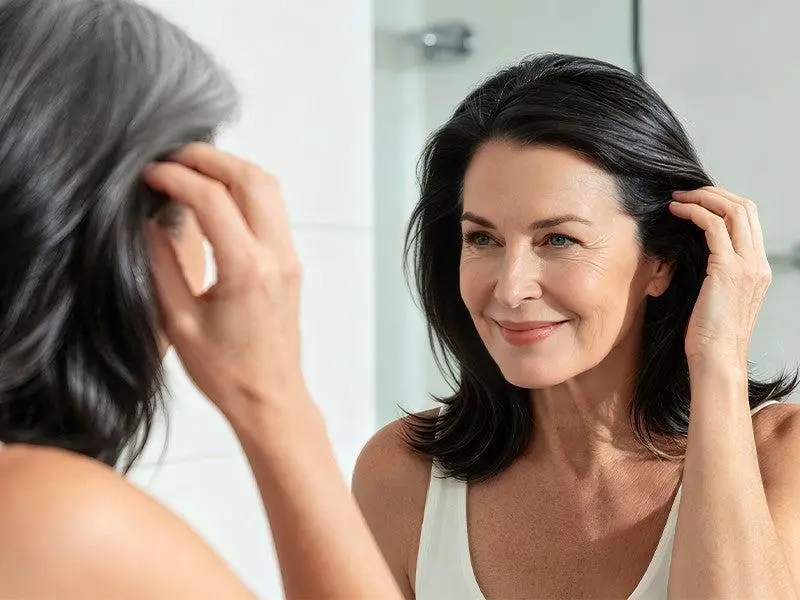
Yes, the short answer is – definitely. Hair dye shampoo can cover gray hair, but the end result depends on a few crucial things like how much gray you have, your hair texture, the color you picked, the duration you are keeping it on, and your application technique. So now you know more about how hair dye shampoo works, why gray hair can be more difficult to cover sometimes, and how to achieve better, more natural results at home.
Quick Answer: Yes – But There Are Several Factors That Will Affect Your Results.
Hair dye shampoos can cover gray hair; they work best when you apply a generous amount of shampoo to coat the hair you are dyeing instead of simply washing it. By integrating the hair-coloring process with shampooing, they provide a more straightforward and convenient alternative to traditional boxed hair dyes. Nevertheless, individual experiences may differ. The results of gray hair coverage vary from person to person.
Amount of Gray Hair With more gray hair, you probably have a little more work cut out for you and will certainly require more product and time on application. Full coverage of gray or white hair may require additional product, longer processing time, or more applications. If you have very thick gray hair, there is a chance the color will be a little bit softer or lighter than anticipated on the first application.
Hair Texture Gray hair is usually a different texture than hair with natural pigment. It could be:
- Coarser
- Drier
- Wirier
- More resistant to color
Because of this uneven texture, some gray strands may take more time to take up the dye evenly.
Shade Choice Choosing the right shade is very important for natural gray coverage.
|
Goal |
Recommended Shade Choice |
|
Natural black hair |
Black or dark brown |
|
Soft mature look |
Dark brown or brown |
|
Less obvious regrowth |
A shade close to your natural hair color |
|
Strong gray coverage |
A darker shade may work better |
A shade that is too light may not fully cover resistant gray hair. A colour on the dark side can accentuate the contrast when fresh grey roots begin to show.
Application Time It takes time for a hair dye shampoo to color the hair. Washing it off too soon may cause patchy or thin coverage.
Always read and follow the instructions on the product. For silver/grey hair, it is highly important to allow the shampoo to sit on the hair for a little longer.
Product Quantity Not using enough product is the biggest cause of poor coverage of grey.
Gray areas are supposed to be soaked through. If the product doesn’t provide uniform coverage of the hair, some grey strands may be visible even after rinsing.
Why Gray Hair Can Be Harder to Cover
Gray hair is not just “hair without color.” Gray hair can sometimes act differently than colored hair, and that’s part of why it can be more difficult to dye. There are times when it looks purple, green, or a whole bunch of other colors after dyeing because it didn’t work out well.
Coarse Texture
Graying hair is typically thicker and coarser. This rough texture makes it difficult for dye to adhere uniformly to the hair’s surface.
If your gray hair is hard and coarse, it’s probably because you didn’t get the solution deep enough into it at the start.
Resistant Roots
Gray roots are the most visible part of aging hair. They are also some of the most resilient ones, given that fresh hair growth can be firm and less porous. This is why the roots often require a little more time to process during application.
Hairline and Temples
The hairline and temples are also the first places where grey hair tends to grow. These can be difficult areas as well, since the hair tends to be shorter, finer, or more exposed. If the formula isn’t applied thoroughly at the temples during application, the grey can show through after washing it off.
Uneven Application
Hair dye shampoo is simple to use, but there is an aspect of it that needs attention. Just smearing it rapidly over the hair surface isn’t enough, as covering grey is different. For best results, the product needs to get to the roots as well as the inner layers and even the hard-to-access, rear-of-the-head areas.
How Hair Dye Shampoo Covers Gray Hair
Hair dye shampoo offers the convenience of a shampoo while covering gray hair. Say goodbye to the hassle of mixing multiple bottles or tools and say hello to applying the product directly to your hair and massaging it in.
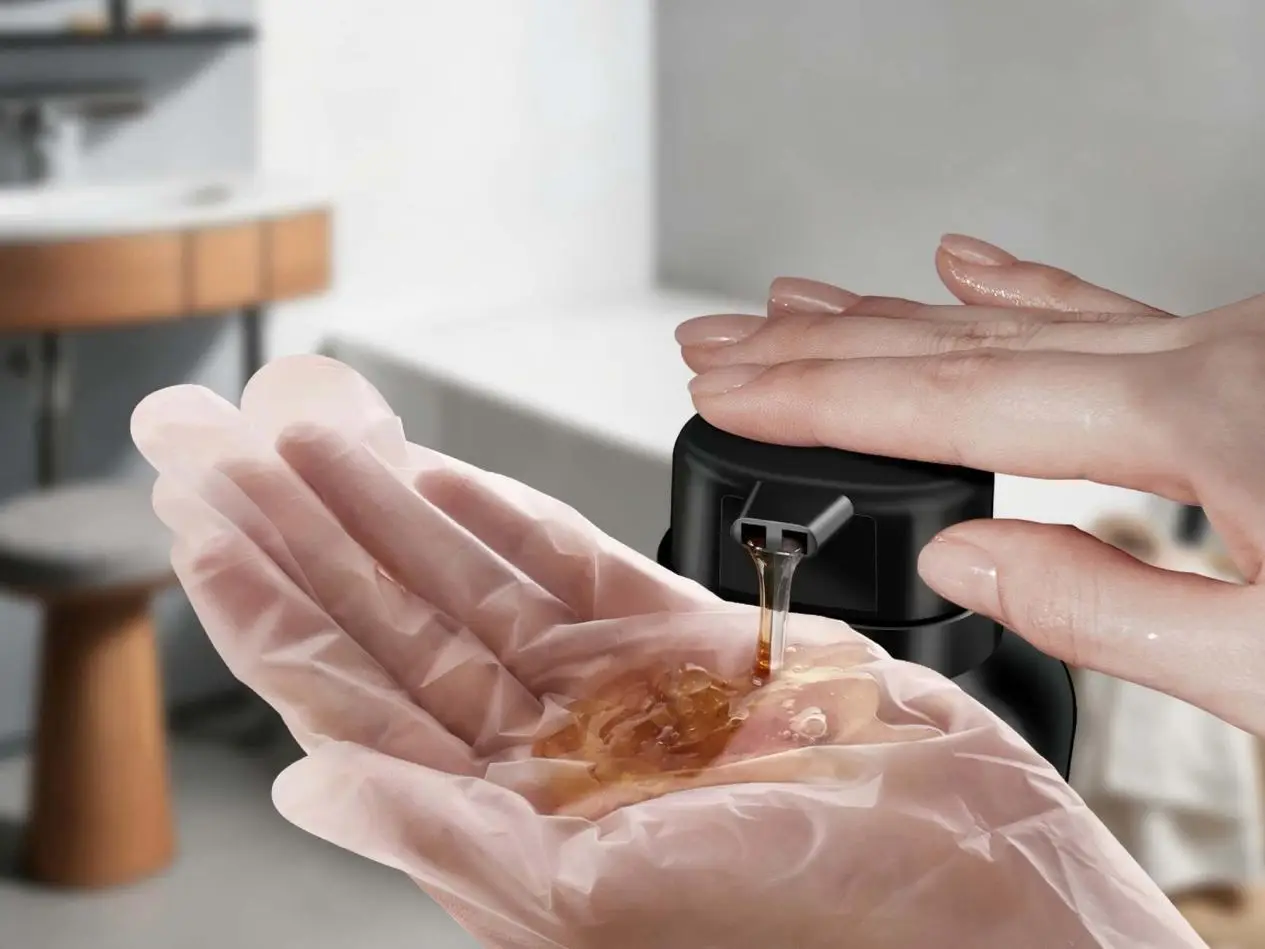
Shampoo-Style Application
The product is generally used like a shampoo. You apply it to the hair, work it into your roots and hair strands, and then make sure nothing is missed. It’s an easy step for a not-so-fancy routine — great for those who don’t want a complicated salon-style routine at home.
Color Contact Time
Hair dye shampoo is different from regular shampoo. After processing, rinse the color off thoroughly. This allows the color ingredients to do their job and helps the hair retain more of the pigment.
If you already have gray hair, the contact time matters. If you rinse the product too early, your gray strands may not be fully covered with color.
Massage and Saturate
Massaging the product in aids in even application and better contact with the hair.
Focus on:
- Roots
- Hairline
- Temples
- Crown area
- Back of the head
- Any exposed gray spots
The more uniformly the product comes in contact with the hair, the more evenly it will be colored.
Rinsing Process
Rinse the hair well after the recommended wait time. Proper rinsing facilitates the removal of surplus product while leaving an adequate deposit of color on the hair.
Do not immediately use a harsh shampoo after coloring unless otherwise specified in the product directions.
Which Types of Gray Hair Can Be Covered With Hair Dye Shampoo?
Hair dye shampoo is also great for those who just want to keep their grays covered up here and there and don’t want to commit to frequent salon visits.
Gray Roots Showing
If gray roots are your main issue, hair dye shampoo may be for you. You can refresh your color at home and help bridge the gap between your gray regrowth and your color.
Mixed in With White Hair
Those with patchy greys find they can achieve a very natural look. The color can also be used to blend gray hairs to make them less noticeable.
Common Maintenance Requirements
Because gray hair regrows constantly, maintenance is key. Hair dye shampoo is for those who wish to have an easier time keeping their colour looking fresh in between salon visits – or for those who just don’t want to visit the salon as frequently as they otherwise might.
People Trying to Avoid Frequent Salon Appointments
Getting your roots done at the salon can be costly and time-consuming. Hair dye shampoo provides a less rigid alternative for those who enjoy home care and at the same time want color. It is particularly useful for:
- Busy professionals
- Older people
- People with quickly growing gray roots
- Anyone looking for a simpler color routine
 Why the 460ML 3-in-1 Shampoo Is a Good Choice for Gray Coverage
 Why the
 When it comes to covering gray hair, the amount of product you get, the shade options available, and the ease of use are all factors you need to consider. The 460ML 3-in-1 Hair Dye Shampoo is a convenient solution for individuals who require gray coverage on a regular basis and also need to cover the whole head.
Large Size for Multiple Applications
The 460ML size is suitable for regular use. Since gray roots do grow back, a bigger bottle makes it easier for you to touch up your color as often as you want.
This is particularly beneficial for those with:
- Thick hair
- Long hair
- Frequent grey regrowth
- Full head coloring needs
Also, a larger bottle means you can use more product rather than squeezing out of a smaller bottle.
Multiple Color Options
Different individuals require different shades to achieve a natural-looking result. Multiple color options provide a wider range to help you find the one that best matches your natural hair or desired look.
Typical shade selections include:
- Natrual Black
- Dark brown
- Coffee
- Chestnut Brown
- Dark Ash Brown
- Deep Honey Brown
If you select the appropriate shade, your gray coverage will look smoother and more natural.
3-in-1 Convenience
The 3-in-1 formula is more than just a single-purpose product. It can be categorized as a multi-benefit product offering many functions in one step, such as cleansing, coloring, and conditioning.
This does wonders for gray hair, as it’s often dry and rough. The coloring process can be simplified and made more comfortable with a more user-friendly formula.
Good for Full-Head Application
You can also use the shampoo format for all-over application. Instead of meticulously brushing on every strand, you can work the product through your hair with your fingers.
For those with gray hair to cover far and wide, this can be the ultimate — and easiest — solution.
Tips for Better Gray Coverage
Good gray coverage is not just about the product; it’s also about application. A handful of easy steps can make a huge difference.
Start With Gray Areas
Apply it where you have the most grey first. These areas usually need the most time and product.
Focus first on:
- Roots
- Hairline
- Temples
- Crown
- Gray patches
Starting on these areas will ensure that resistant gray hair has more exposure time.
Use Enough Product
Don’t spread the product too thinly. Full saturation is necessary to achieve good coverage for gray hair. A good rule of thumb is: every gray hair should be coated with product. If your hair appears dry or patchy, apply more.
Section Your Hair
Sectioning prevents you from skipping over areas.
You can part the hair into:
- Front sections
- Side sections
- Crown area
- Back sections
This is particularly useful if you have thick or long hair.
Wait as Directed
Follow the waiting time recommended by the product. Don’t rinse it off too soon.
Full processing time is necessary on stubborn grey hair. You might risk getting lighter coverage or patchy color if you rush the process.
Choose the Right Shade
For better coverage of greys, pick a colour that is closer to your natural colour or one shade darker.
|
Hair Situation |
Best Shade Strategy |
|
Predominantly black hair with grey roots |
Black or natural black |
|
Brown hair with grey strands |
Dark brown |
|
Soft, natural mature look |
Brown or chestnut |
|
Severely resistant grey hair |
A darker colour for increased coverage |
Choosing the right shade can make the end result look more natural and even.
When a Color Comb May Be Better
Hair dye shampoos are best for treating a full head and covering general grays. But sometimes a color comb is the better tool for the job.
Only Roots
If that’s all you need to address — a few strands of gray roots — a color comb can place color exactly where you need it. This helps to avoid coloring the entire head when not necessary.
Temples
The temples are small, visible areas where accuracy counts. A color comb can help concentrate on these areas without the product touching the skin or other hairs.
Small Areas
For small patches of grey, a colour comb may be better than applying shampoo over your entire head.
It is useful for:
- Sideburns
- Hairline
- Small gray clusters
- Part line touch-ups
Precision Touch-Up
A color comb offers better control. It’s great for when you just want to touch up a few areas in between your regular coloring sessions.
For optimal results, many people use both: the hair dye shampoo for comprehensive full-head coverage and the color comb for swift touch-ups to roots or temples.
FAQ
- Can hair dye shampoo cover gray hair?
- Yes, hair dye shampoo is capable of covering gray hair, especially if the product is applied evenly and left to work for the recommended duration. However, for stronger coverage, more product, longer contact time, or repeated application may be needed for those who have very coarse or resistant gray hair.
2. Is hair dye shampoo good for gray roots?
Yes. Hair dye shampoo is an easy solution for gray roots. For best results, apply at the roots first, concentrating on the hairline, temples, and part line.
3. How long do I leave hair dye shampoo on gray hair?
As is well known, gray hair is more resistant to color absorption, so it is usually necessary to adhere to the recommended full processing time. Depending on hair length, the processing time is approximately 15–20 minutes.
- Why is my gray hair not getting covered completely?
Gray hair might not be covered completely if:
- Not enough product was applied
- The application was uneven
- The product was rinsed off prematurely
- The color was too light
- The gray hair is very coarse or resistant
Using more product, applying more precisely, and choosing the right colour should improve the results.
- Which color is best to hide gray hair?
Deeper tones tend to provide better grey coverage. Black, natural black, and dark brown are the most popular selections among those with dark hair. Brown or chestnut would be a better option for a softer look.
- Can hair dye shampoo be used on a full head of gray hair?
Yes, but the results can vary depending on how resistant your gray hair is. You may need to use more product and be more thorough in working it through to achieve even color on a full head of gray.
- Is there a limit to how many times I can use hair dye shampoo? Depending on your hair growth, color fading, and the product’s instructions, you can use it as often as you need. It is frequently used by individuals who want to cover up grey roots or simply want their colour refreshed.
8. Is hair dye shampoo simpler than traditional hair dye?
Yes. Because it is applied more like a shampoo, it is simpler to use. There’s generally no need for mixing, brushes, or salon tools.
9. Can hair dye shampoo achieve a natural-looking result on gray hair? Yes, especially if you go for a color that is similar to your natural hair color. Scattered gray hair tends to blend evenly with the rest of the hair quite well.
10. Is a color comb better than hair dye shampoo? A color comb is better for small areas, roots, temples, and precision touch-ups. Hair dye shampoo is a better choice for full-head application and overall grey coverage.
Final Thoughts
Hair dye shampoo can really cover gray hair, but the outcome depends on applying the product correctly, using enough of it, choosing a suitable shade, and waiting the correct amount of time. Gray hair can be tougher than regular hair, so extra care is essential, particularly at the roots, temples, and along the hairline.
For those who want a simple at-home fix, the 460ML 3-in-1 Hair Dye Shampoo is a practical option. Its size, color options, and shampoo-like consistency make it a great choice for covering grays on a regular basis or for maintaining a full head of color.
For more localized areas or small touch-ups, a color comb may be a better option. Together, these products make it possible to manage gray hair with less fuss and fewer visits to the salon.