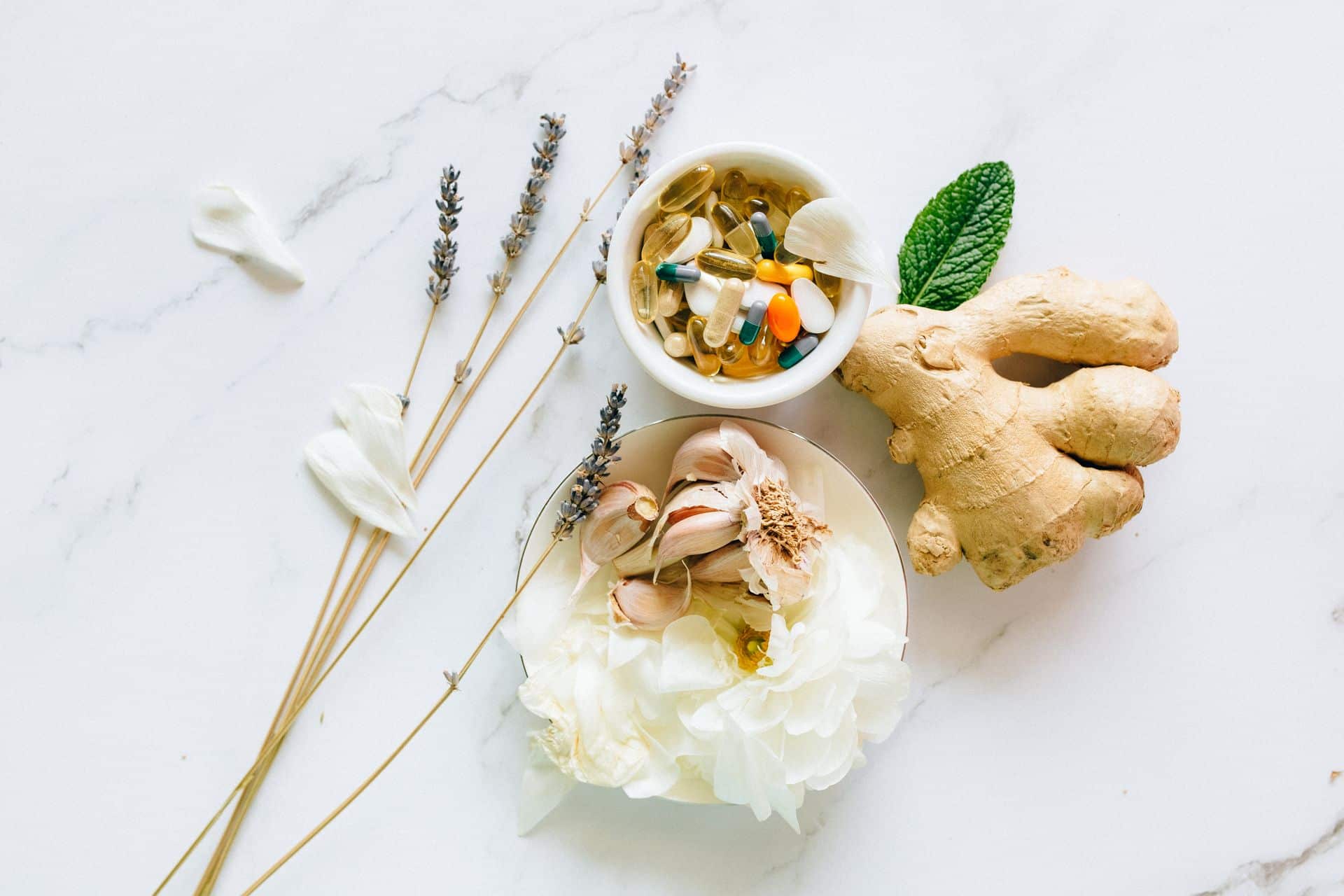
Months of heat styling left my hair dry, rough, and hard to manage, so I started using a coconut oil hair mask, also known as a coconut hair mask, to bring back some softness and shine.
It appealed to me because it’s simple, affordable, and made with ingredients I already had in my kitchen.
The mask takes only a few minutes to mix, and you can adjust the recipe depending on what your hair needs most: more moisture, shine, softness, or repair after damage.
Over time, I figured out which ingredients worked best for my hair, how much oil to apply, how often to use it, and the best way to rinse a coconut hair mask out without leaving my strands heavy or flat.
Why Do I Use a Coconut Oil Hair Mask?
I did not start using a coconut oil hair mask because it was popular online. A friend suggested skipping expensive treatments and using coconut oil from my kitchen instead.
By then, I was already using coconut oil for a few other things around the house, including whitening my smile naturally, so trying it on my hair didn’t feel like a big leap.
I was unsure at first, but I decided to try it one Sunday night. I warmed a small amount, applied it through my hair, and left it on before washing.
The next morning, my hair felt softer and smoother. After a few more uses, the improvement continued. That is why I kept using it. It is affordable, simple to prepare, and helpful for hair that feels dry, dull, or damaged.
How Often Should You Use It
Use a coconut oil hair mask based on your hair type and scalp needs. Dry or damaged hair may need weekly use, while fine or oily hair often benefits from less frequent application to avoid heaviness, grease, or buildup.
Benefits of A Coconut Oil Hair Mask
Coconut oil is not just a kitchen staple. It shows up in a lot of my routine outside of hair care too, from cooking to natural sun protection. It is also one of the few oils that can actually get inside your hair strand instead of just sitting on top of it, thanks to its lauric acid content.
- It helps reduce protein loss caused by coloring, blow-drying, or daily brushing. Regular coconut oil users show noticeably less fiber damage than non-users, which lines up with what researchers have found when comparing the two groups directly.
- It has a low molecular weight, so it soaks into the hair shaft instead of sitting on the surface
- It helps replenish moisture, which is great if your hair feels dry or brittle
- It works well for curly, frizzy, or breakage-prone hair types
Pro tip: If your hair feels greasy fast, use less oil and focus it on your ends instead of your scalp.
From my experience, a coconut oil hair mask is an affordable way to soften dry hair. Start with a small amount, stay consistent, and adjust it to your hair’s needs.
Pros and Cons of a Coconut Oil Hair Mask
| Pros | Cons |
|---|---|
| Cheap and made from pantry ingredients | Can weigh down fine or thin hair if overused |
| Penetrates the hair shaft instead of sitting on top | Difficult to rinse out completely without the right method |
| Reduces protein loss from heat styling and coloring | May clog pores on an oily or acne prone scalp |
| Customizable with honey, egg, or essential oils | Not suitable for anyone with a coconut allergy |
| Works for most hair types with the right amount | Results build gradually, not an overnight fix |
What You Need for a Coconut Oil Hair Mask?
You do not need a long ingredient list for this. I keep mine simple on purpose.
Coconut oil turns solid below 76°F, so soften it before mixing. Microwave it for a few seconds or set the jar in a bowl of warm water until it turns liquid, so it blends easily with the honey or egg listed here.
You only need a few simple ingredients to make a coconut oil hair mask, and each one supports softer, healthier, more manageable hair at home.
- Coconut oil, virgin or expeller-pressed: the main moisturizing ingredient
- Honey, optional: adds shine and extra hydration
- Egg, optional: provides protein for very damaged hair
- Essential oil, optional: adds fragrance and may help reduce scalp buildup
If your hair holds up fine without extra ingredients, you can also use coconut oil as a pre-wash treatment. Apply it to dry hair 30 minutes before you shampoo, which is the method most studies on coconut oil and hair actually test.
Recipe for Coconut Oil Hair Mask
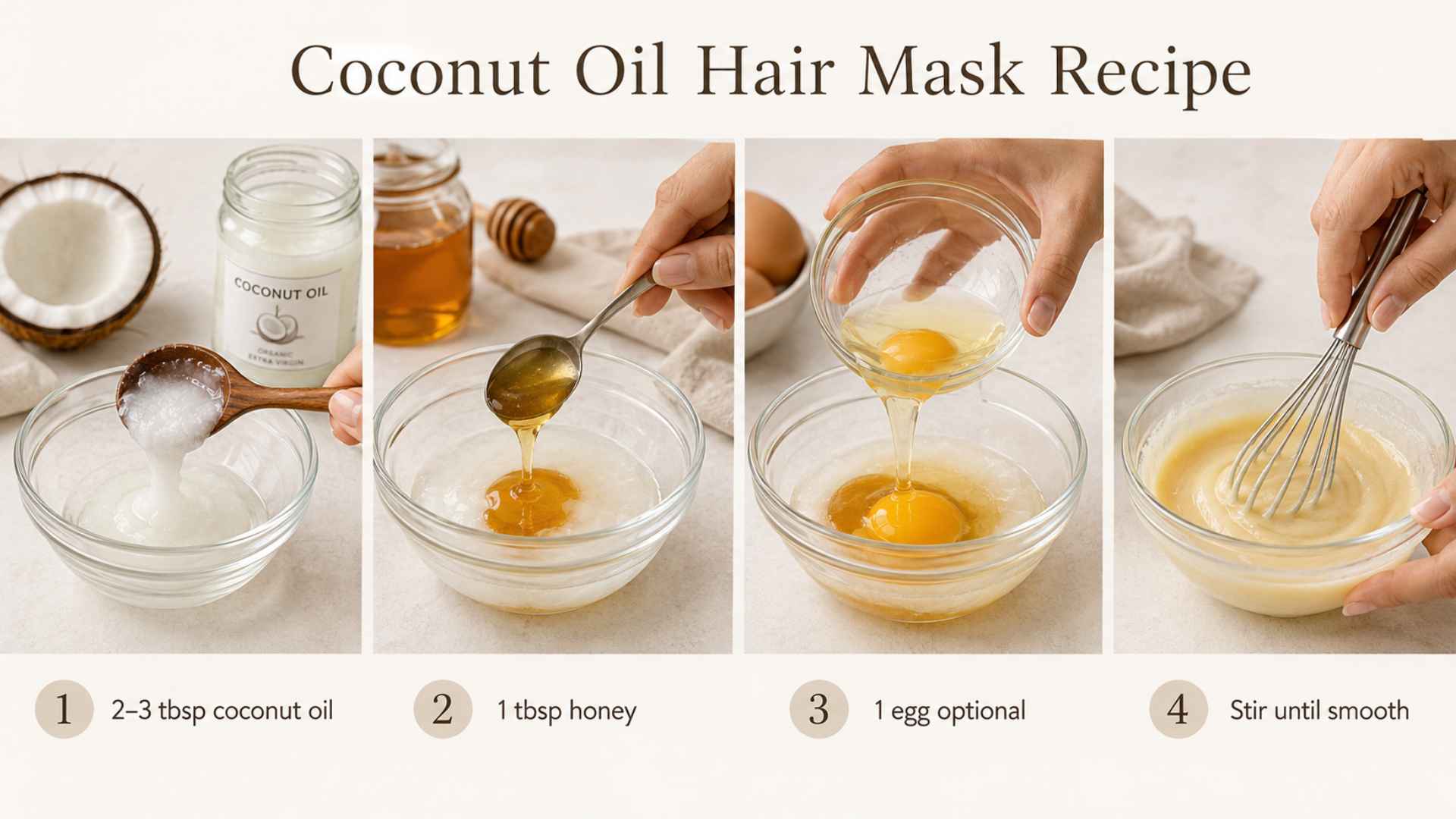
This simple coconut oil hair mask recipe uses adjustable ingredients, so you can make a rich treatment for damaged hair or keep it lighter instead.
- Scoop 2 to 3 tablespoons of coconut oil into a small bowl
- Add 1 tablespoon of honey and mix well
- If your hair is very damaged, whisk in one egg
- Stir until the mixture is smooth and easy to spread
You can apply this to damp hair for lighter, more even coverage, or to dry hair if you want the oil to absorb at full strength. Damp hair suits fine or oily hair best, while dry hair works well for very coarse or damaged strands.
If you want a lighter version, skip the egg and honey and use coconut oil on its own. It still works, just with a slightly different result.
Start with the basic recipe and go from there. The next section covers how to tweak it for specific hair concerns.
Coconut Oil Hair Mask Variations
The basic recipe works well, but I adjust it based on what my hair needs.
Overnight treatment: 1 to 2 tablespoons of coconut oil, applied only to the ends, left on overnight under a hair wrap.
Dry or itchy scalp: 2 tablespoons of coconut oil plus 1 drop of tea tree oil, massaged into the scalp and left for 30 minutes.
Heat-damaged hair: 2 tablespoons of coconut oil, 1 egg, and 2 tablespoons of plain yogurt, left on for 20 minutes, then rinsed with cool water so the egg doesn’t cook into your hair.
Quick refresh: 2 tablespoons of warmed coconut oil alone, left on for 20 minutes.
How to Use a Coconut Oil Hair Mask
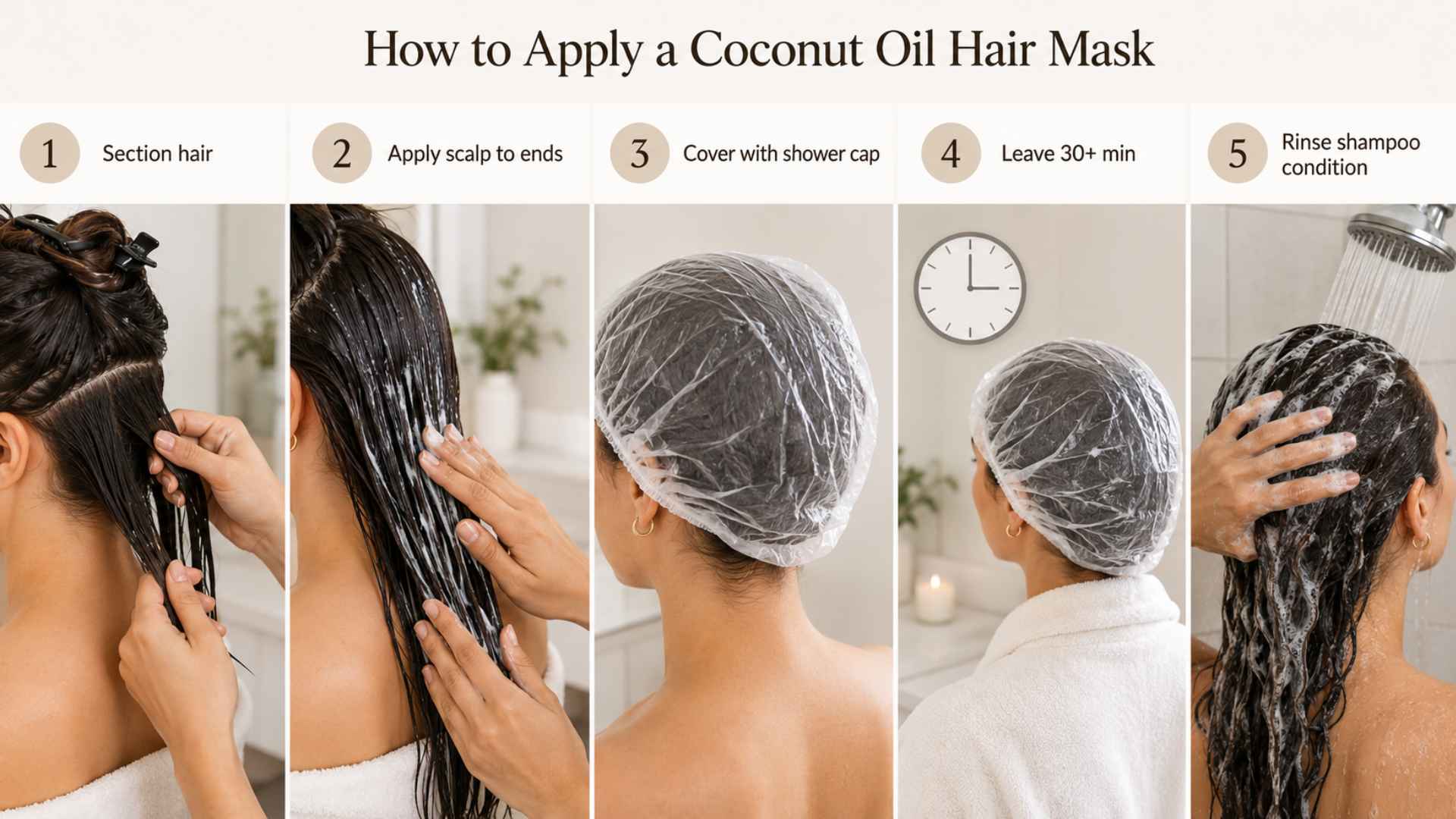
Applying a coconut oil hair mask is simple, but even coverage matters. These steps help the mixture reach your scalp, lengths, and ends without creating unnecessary mess or uneven results.
Once your mix is ready, applying it is the easy part. Follow these steps:
- Section your hair so you can apply it evenly
- Start at your scalp and work the mask down to your ends
- Cover your hair with a shower cap to help it absorb better
- Leave it on for 30 minutes, or longer if your hair needs extra care
- Rinse it out with warm water, then shampoo and condition as usual
Pro tip: If you plan to leave the mask on overnight, use an old pillowcase or a hair wrap so the oil does not transfer onto your bedding.
After rinsing, your hair should feel softer, smoother, and easier to manage. Adjust the amount and timing next time based on how your hair responds to the treatment at home.
Best Tips for Mask Removal
Coconut oil is the main reason people give up on hair masks. It clings to the strand, so rinsing it out the wrong way just pushes the oil around instead of removing it. These tips speed up the process and keep your scalp from feeling greasy afterward.
- Shampoo before you wet your hair: Work shampoo directly into oily, dry hair first, since water and oil repel each other, making the coconut oil harder to lift off your strands.
- Double shampoo: One wash usually is not enough for a heavier application, so shampoo, rinse, then shampoo again to fully clear the oil out.
- Use warm, not hot, water: Warm water helps melt and loosen the oil without stripping your scalp the way very hot water can.
- Reach for a clarifying shampoo occasionally: If you use a coconut oil mask weekly, a clarifying shampoo once or twice a month prevents buildup that regular shampoo can miss.
- Finish with a lightweight conditioner: A rich conditioner on top of leftover oil can feel like doubling up on product, so a lighter formula keeps hair soft without adding extra weight.
- Check your ends last: Ends hold the most oil, so give them a final once over with shampoo before you rinse.
Coconut Oil Hair Mask for Different Hair Types
Different hair types respond to coconut oil in different ways. Adjusting the amount, placement, and frequency helps you get softer, smoother hair without leaving it greasy, flat, or heavy afterward.
Not every hair type needs the same amount or the same routine, so here is how I adjust it:
| Hair Type | How to Use the Mask | Suggested Routine |
|---|---|---|
| Curly or coily hair | Apply a slightly heavier amount through the lengths and ends | Use once a week for added moisture |
| Fine hair | Use a small amount and avoid the scalp | Apply every one to two weeks |
| Oily hair | Focus only on dry ends to prevent heaviness | Use occasionally when hair feels dry |
| Color-treated hair | Add egg for extra protein and apply evenly | Use once a week until hair feels stronger |
| Heat-damaged hair | Apply coconut oil with egg to damaged areas | Use weekly, then reduce as hair improves |
Pay attention to how your hair feels after each treatment. Using the right amount for your texture can improve softness and manageability while avoiding greasy buildup, heaviness, or excess oil.
Things to Know Before Trying It
A few honest notes before you jump in. Before trying a coconut oil hair mask, understand how your hair and scalp may react. These simple precautions can prevent heaviness, buildup, irritation, and disappointing results later.
- Coconut oil can weigh down fine hair, so begin with a small amount and add more only if your strands still feel dry later on.
- Skin can react differently than expected, so if yours is sensitive to new ingredients or fragrances, patch test before applying the full mixture (see the patch test steps in the section on who should be careful).
- Avoid coating your scalp heavily if it becomes oily quickly, because too much coconut oil can leave buildup and make hair look flat and greasy.
- Homemade masks let you control every ingredient, making them useful when you want to avoid added fragrance, silicones, preservatives, or fillers often found in products.
A little preparation makes coconut oil easier to use successfully. Start with less, watch how your hair responds, and adjust the ingredients, placement, and frequency gradually over time when needed.
My Results After a Few Weeks

I did not expect much change after just one try, but I kept going anyway. By the end of the first week, my hair felt noticeably softer, and the frizz around my hairline calmed down a lot.
By week two, my ends looked less rough, and I was brushing through my hair without as much snagging.
Around week four, the biggest change showed up in how my hair handled heat styling. It bounced back faster and did not feel as fried after using my flat iron.
My hair still needs regular trims, since a mask cannot fix split ends, but the overall texture and shine improved more than I expected from something this simple.
Who Should Be Careful?
Coconut oil works well for a lot of hair types, but it is not a perfect fit for everyone. It can support softer, shinier hair, but it may not suit every scalp or hair type. Knowing the possible side effects helps you use it more safely and comfortably.
- Oily or acne-prone scalp: Heavy coconut oil may clog pores and worsen scalp breakouts, especially when applied frequently or left on for long periods. Its comedogenic rating is one reason dermatologists point out it can contribute to breakouts.
- Fine or thin hair: Even small amounts can weigh down fine hair, reduce volume, and leave strands looking flat, greasy, or difficult to style.
- Coconut allergies: Anyone allergic to coconut or coconut-based products should avoid this treatment and consult a doctor before applying it to the skin.
- Patch testing: Apply a small amount behind your ear or on your arm, then wait 24 hours before using it on your whole head.
Start with a small amount, avoid frequent use if your scalp feels greasy, and always patch test first. Stop using coconut oil if irritation, itching, redness, or breakouts appear.
Best Type of Coconut Oil to Use
Choosing the right coconut oil can make your hair mask easier to apply, rinse, and enjoy. Here is how virgin, refined, and expeller-pressed options compare for different hair needs.
| Type of Coconut Oil | Processing Level | Best For | Hair Mask Performance |
|---|---|---|---|
| Virgin coconut oil | Least processed | Dry, damaged, or frizzy hair | Absorbs well and leaves less residue |
| Refined coconut oil | More processed | People sensitive to strong fragrances | Works well but may feel heavier on hair |
| Expeller-pressed coconut oil | Gently processed | Most hair types | Absorbs quickly and rinses out easily |
Best choice: virgin or expeller-pressed coconut oil usually works best for homemade hair masks.
Both absorb well and leave less residue than other options. Choose refined oil when you prefer no scent.
Mistakes to Avoid
I made a few of these mistakes myself before I got the routine right, so I am sharing them here to save you some trial and error.
- Using too much oil: More oil does not mean more moisture. Excess product leaves hair greasy, heavy, and much harder to rinse out completely.
- Applying it to wet hair: Applying the mask to soaking wet hair can dilute the mixture and reduce how effectively coconut oil coats each strand.
- Not rinsing thoroughly: Skipping a thorough shampoo allows leftover oil to remain on the scalp, creating buildup, flatness, and a greasy appearance afterward.
- Leaving it on too long: Leaving the mask on too long can overwhelm fine hair, while thick or curly hair may tolerate longer treatment times.
- Ignoring seasonal changes: Using the same amount year-round ignores seasonal changes, since hair often needs less oil in summer and more in winter.
Avoiding these common mistakes helps your coconut oil mask work better without leaving hair greasy or heavy. Start small, rinse thoroughly, and adjust the amount to suit your hair type.
Conclusion
A coconut oil hair mask is one of the simplest treatments you can add to your hair care routine.
It requires only a few ingredients, takes little time to prepare, and can be adjusted for dryness, frizz, damage, or an itchy scalp.
I still use a coconut hair mask every couple of weeks when my ends feel rough, or my hair looks dull. Since starting, my strands have felt softer, smoother, and easier to manage.
Give it a try and watch how your hair responds over the first few uses.
Frequently Asked Questions
Can I Leave a Coconut Oil Hair Mask on Overnight?
Yes, you can leave it on overnight for deeper moisture. Just protect your pillowcase with a towel or hair wrap so it does not stain.
Should I Apply It to Wet or Dry Hair?
Either works, but they give slightly different results. Dry hair absorbs the oil at full strength, which suits very damaged or coarse hair. Damp hair helps the mask spread more evenly and feels lighter, which suits fine or oily hair.
How Long until I See Results?
Some people notice softer hair after one use. For damaged hair, it may take a few weeks of regular use to see a real change.
Can Coconut Oil Cause Buildup?
Yes, if you use too much or too often. Rinse thoroughly and shampoo well to avoid a greasy or heavy feeling.
Does Coconut Oil Help Hair Grow?
Not directly. Coconut oil does not stimulate new hair growth, but it supports a healthier scalp and reduces breakage, which helps existing hair look fuller and retain length over time.
Can I Use a Coconut Oil Hair Mask on Color-Treated Hair?
Yes. Adding an egg to the mix gives extra protein, which helps color-treated hair that’s more prone to breakage. Focus on the lengths and ends rather than freshly colored roots.