Someone points at a small dark spot on their cheek or just above their lip almost every week and asks the same thing: does this count as a beauty mark?
A beauty mark is simply a small dark spot on the skin, most often a common mole, that people notice on the face and consider attractive.
Doctors do not use beauty mark as a medical diagnosis. It is mainly a beauty and cultural term.
The word gets stretched to cover a lot of ground, though, from actual moles to freckles to birthmarks, and that looseness is exactly where people start second-guessing what they are looking at.
What Is a Beauty Mark and Why Does It Appear?
Most people use “beauty mark” to describe a small facial mole, one that sits somewhere visible enough to be part of how a face reads.
Merriam-Webster’s dictionary defines it as a small dark mark, such as a mole, on the skin, especially of the face
A beauty mark is not a separate type of skin growth from a mole; it’s the same mole, just given a nicer name because of where it sits. Dermatologically, there is nothing special about it. It is the same kind of mole you might find on a shoulder or a knee.
The term gets applied loosely too. Many people also use the term casually for freckles or birthmarks. Knowing these signs can help adults notice unusual skin changes.
What Beauty Marks on the Face Usually Look Like
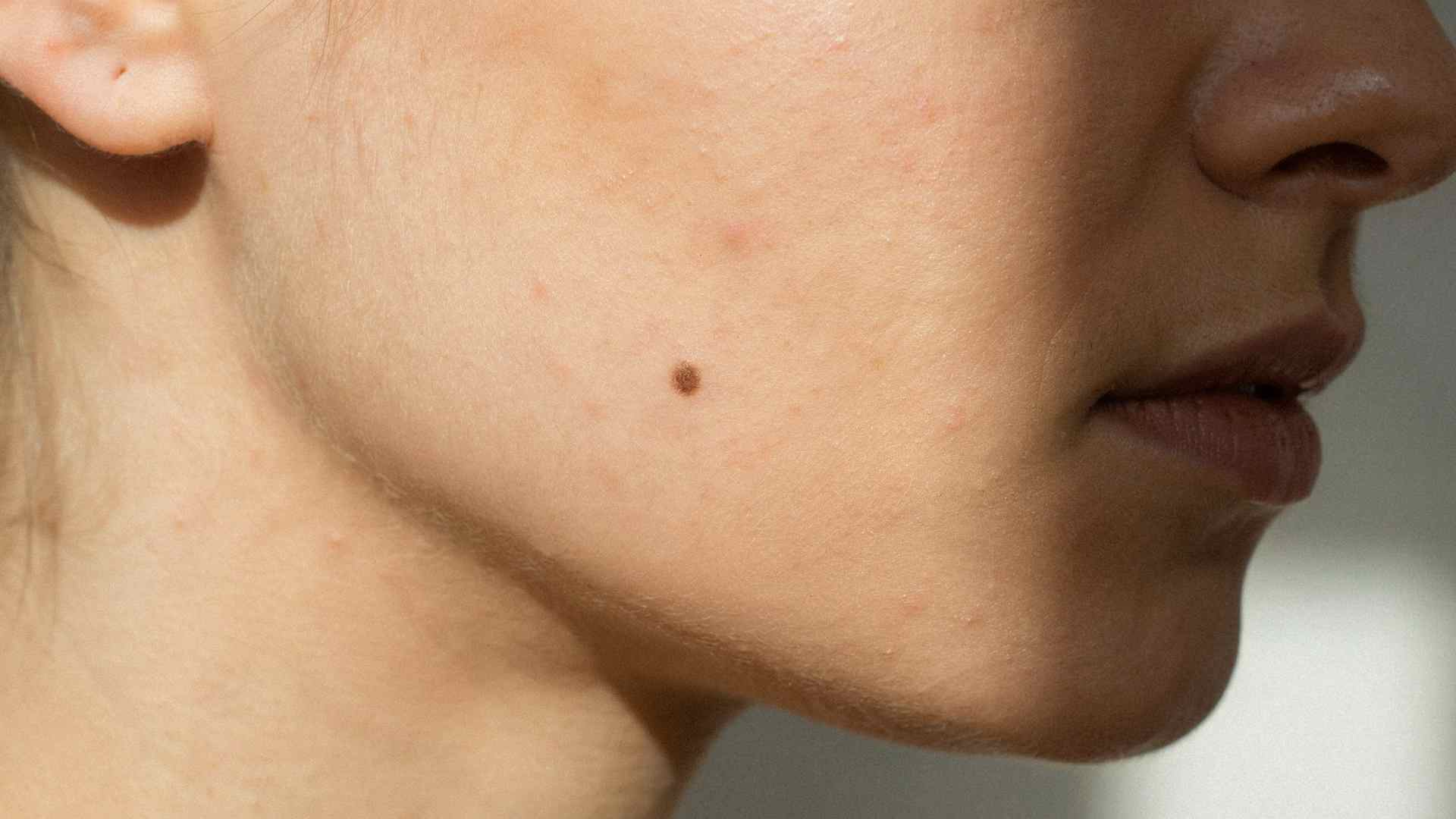
Beauty marks on the face tend to share a few traits. They are usually small, round or slightly oval, and either flat or barely raised, in shades ranging from tan to deep brown to nearly black, typically even throughout rather than mottled.
You will spot these marks most on the cheek, near the corner of the lip, along the chin or jawline, on the forehead, and just beside the eye.
None of these spots are more correct than another, whatever old superstitions claim.
A mole on another part of the body is almost always just called a mole. The same mole on a visible part of the face becomes a beauty mark instead. It’s more culture than biology.
Beauty Mark, Mole, Freckle, or Birthmark: Which Spot Is It
The ACS notes that a normal mole is usually an evenly colored brown, tan, or black spot that tends to stay the same size, shape, and color for years once it develops.
| Skin mark | How it forms | Usual color | Flat or raised | Present at birth or later | Common areas | Changes to watch |
|---|---|---|---|---|---|---|
| Common mole | Melanocytes cluster together | Tan to dark brown | Either | Usually later, childhood or adulthood | Anywhere on the body | New asymmetry, border, or color shifts |
| Freckle | Sun activates pigment production | Light tan to brown | Flat | Later, fades in winter | Sun-exposed areas | Sudden darkening should be checked |
| Birthmark | Pigment or blood vessels, present from birth | Brown, tan, red, or pink | Either | Birth | Anywhere | Any change over time |
| Cherry angioma | Blood vessels cluster near the surface (a small, harmless red bump, not a pigment mole) | Bright red to purple | Slightly raised | Later, more common with age | Trunk, arms, sometimes face | Rapid growth or bleeding warrants a check |
Moles also split into two broader groups worth knowing. Acquired moles are the ones that show up after birth, usually in childhood or the teenage years, and they make up the vast majority of beauty marks.
Congenital moles, on the other hand, are present from birth, are rarer, and can sometimes carry a higher risk profile depending on their size, which is one more reason a dermatologist should take a look at any mole you were born with rather than one that showed up later.
A mole and a freckle can look alike, but they form differently. Freckles appear when skin produces extra melanin, often influenced by genetics and sun exposure, while moles form from clusters of melanocytes.
Why Beauty Marks Form in the First Place
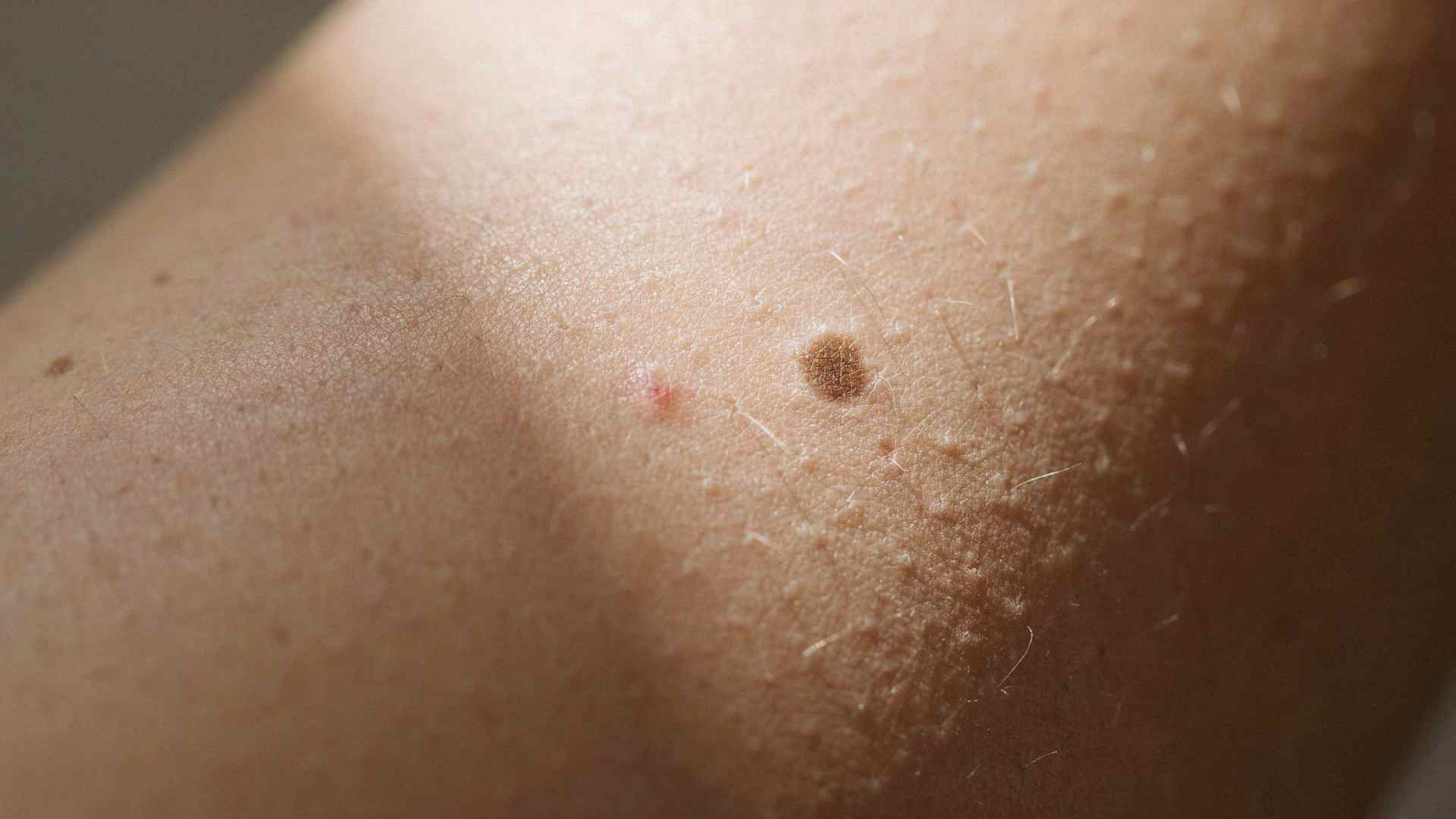
No single trigger causes a beauty mark. It usually comes down to a mix of biology, sun, and time, and understanding each piece makes the marks feel a lot less random.
Pigment Cells Gather in One Place
Skin naturally contains melanocytes, the cells that produce pigment. Most of the time they spread out evenly, which is what gives skin its overall tone.
Sometimes, though, a group of them clusters together instead of dispersing, and that cluster is what becomes a mole.
Many people assume their own mark appeared overnight, but old photos often show it was there faintly for years before it darkened enough to notice. That gradual timeline is pretty typical.
Genes, Sun, and Hormonal Changes
Family history plays a real role here. If your parents have several moles, you have a decent chance of having them too.
Sun exposure can darken existing moles or influence how new ones develop, which is part of why dermatologists are so consistent about sun protection advice. Hormonal shifts matter as well.
|
A few things that influence mole development:
|
None of these factors explain every single beauty mark on its own. Usually it is some combination of genetics and time.
How Many Moles Is Normal to Have?
Most adults have somewhere between 10 and 40 moles, with fair skin often landing on the higher end. Beauty marks tend to show up early too, developing in childhood and darkening further through the teenage years.
A high count alone is not a red flag. Mention it to your dermatologist if you have 50 or more moles.
When a Beauty Mark Starts to Look Different
Most moles remain unchanged for years and do not cause problems. Small changes can happen naturally, but a noticeable or rapid change deserves attention. None of that is automatically worrying.
What matters is a clear, noticeable change rather than a subtle drift.
As the American Academy of Dermatology explains, a spot that looks different from the rest of the spots on your skin, or a mole that is changing in any way- growing, itching, or bleeding- is worth having checked
The ABCDE Signs to Know:
- A is for asymmetry: One half of the mole does not match the other half.
- B is for border: The edges look ragged, blurred, or notched instead of smooth.
- C is for color: Multiple shades appear in the same spot, or the color shifts unevenly.
- D is for diameter: Concerning spots are often larger than 6 millimeters, roughly the size of a pencil eraser, though smaller spots can still matter.
- E is for evolving: Any mole that is actively changing in size, shape, color, or elevation deserves attention regardless of the other four signs.
The American Academy of Dermatology (AAD) states: a mole that is new, changing, itching, or bleeding should be evaluated by a board-certified dermatologist rather than watched indefinitely.
Other Reasons to Book a Skin Check
Pain, crusting, oozing, a spot that bleeds more than once, or a sore that never quite heals are all reasons to get checked.
The same goes for any mole that looks nothing like the others scattered across your skin, or a brand new mark that shows up well into adulthood.
A small red bump is often a cherry angioma. It is usually harmless, but any new or uncertain spot is still worth mentioning at your next skin check.
Knowing these signs takes the guesswork out of skin changes, so checking in with a dermatologist becomes routine, not a last resort.
Do Beauty Mark Locations Really Mean Anything
This is one of the most common questions people ask about beauty marks.
1. Face reading traditions: Older beauty and fortune-telling traditions assigned meaning to where a mark sat on the face, tying position to luck, romance, or personality.
2. European beauty patches: Centuries later, fabric mouches became fashionable in 16th-to-18th-century France and Spain, sometimes to cover scars and sometimes purely for style.
3. Modern folklore: A lot of this thinking still floats around today in horoscope columns and beauty blogs, even though none of it holds up under any real scrutiny.
None of these traditions have a basis in dermatology. Where a mole happens to sit says nothing about someone’s personality, luck, or love life.
Are Beauty Marks Harmful?
For nearly everyone, the answer is no. A beauty mark carries the same low risk profile as any other common mole, and dermatologists treat it as a normal skin feature rather than a health concern on its own.
The CDC points out that a new or changing mole is one of the clearest signs to watch for with skin cancer, which means the mole itself isn’t the danger. The change in it is.
A beauty mark that stays the same size, shape, and color for years is doing exactly what a normal mole is supposed to do.
The marks worth treating as a medical question rather than a style detail are ones present at birth, ones on the larger side, or any mole that starts shifting in the ways covered in the ABCDE checklist below.
Having several beauty marks on the face or body is also not, by itself, a sign of anything wrong. It is only the behavior of an individual mark, not the total count, that tells you whether it needs a dermatologist’s attention.
Dispelling Myths and Misconceptions
Beyond face-reading superstition, a handful of everyday myths about beauty marks tend to stick around simply because they sound plausible. None of them hold up.
- Myth: A beauty mark is a different type of growth than a mole. It isn’t. A beauty mark is a mole; the name only changes because of where it sits.
- Myth: Only fair or light skin develops beauty marks. People of every skin tone can and do develop moles, including ones on the face.
- Myth: Removing a beauty mark always leaves a noticeable scar. Outcome depends on size, depth, and technique; a dermatologist can walk through realistic expectations before any procedure.
- Myth: A mark that has looked the same for years can turn dangerous overnight with no warning. Skin cancer in an existing mole tends to show gradual, visible changes first, which is exactly what the ABCDE checklist is built to catch.
Common Misunderstandings About Beauty Marks
A few smaller mix-ups come up often enough to mention. People sometimes confuse a beauty mark with a sun spot or age spot, even though those form differently and tend to look flatter and more diffuse.
Others assume that having many beauty marks automatically raises skin cancer risk, when it’s really the behavior of any single mole, not the total number, that matters.
And plenty of people think of beauty marks as strictly a facial feature, when the same type of mole on the neck, shoulder, or collarbone gets called a beauty mark just as often.
How a Tiny Dot Became a Beauty Symbol
The name did not appear out of nowhere. It traces back through centuries of face patches, portraiture, and eventually a handful of famous faces that made the mark iconic.
From Face Patches to Modern Makeup
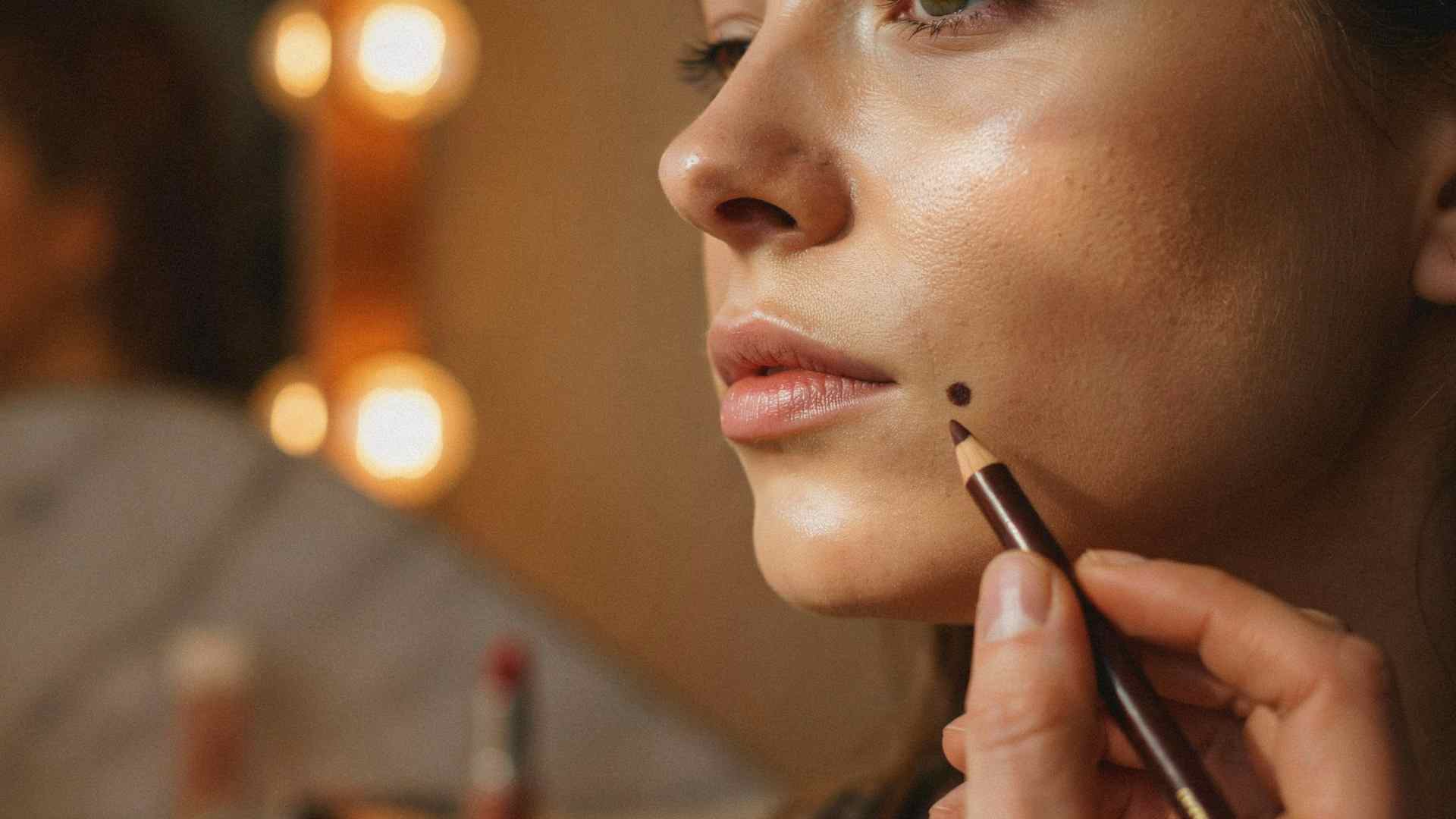
The mouches mentioned above were originally practical, worn across parts of Europe to hide smallpox scars or blemishes.
Over time, they shifted from cover-up to fashion statement, and eventually that same idea resurfaced in modern makeup as the drawn-on beauty mark.
Famous Faces Linked With Beauty Marks

Marilyn Monroe’s mark, whether natural or touched up for photos depending on the era, is still one of the most referenced beauty marks in pop culture history.
Cindy Crawford’s mole near her lip became one of the most recognized in modeling, to the point where it is basically part of her brand.
Eva Mendes has been noted for her visible facial mole, reading it as a natural part of her look rather than something to conceal.
What started as a cover-up became a genuine style statement, proof that a small facial mark can carry real cultural weight.
Covering, Drawing, or Removing a Beauty Mark: What Is Actually Safe
Removing a beauty mark usually comes down to one of two reasons, and they call for different next steps.
Some people simply prefer their skin without it, which is a personal cosmetic choice a dermatologist can walk you through.
Others are removing a mole because it has started changing or looks suspicious, which is a medical decision rather than a style one.
Either way, the removal itself should happen in a dermatologist’s office, never at home.
If you’re weighing your options, our home versus professional removal comparison walks through what each route actually involves before you book anything, and a dermatologist should still confirm the mole is safe to treat either way, electively.
| Approach | What it involves | Worth knowing |
|---|---|---|
| Covering with makeup | Color corrector if needed, a small amount of concealer, a thin layer of base, then setting powder | Keep the layer light so it does not look cakey around the spot |
| Drawing a faux beauty mark | A soft brown pencil, a light tap to soften the point, a touch of powder over top | This is purely cosmetic and has nothing to do with a real mole |
| Professional removal | A dermatologist examines the mole first, then discusses removal options if appropriate | This should never be attempted at home |
The FDA has warned that at-home mole removal products can cause skin injury, infection, and scarring, and using them also means skipping the step where an actual mole gets properly examined.
Adam Friedman, MD, professor and chief of dermatology at George Washington University, has said these products can chemically burn the skin when used without medical supervision, and he has treated patients for the open wounds and infections that result.
When to Seek Professional Advice
A yearly skin check with a dermatologist is a reasonable baseline for most adults, beauty mark or not.
Move that appointment up instead of waiting for the next one if you notice any of the ABCDE signs: a mole that bleeds, itches, or won’t heal; a mark that showed up new in adulthood; or a family history of melanoma.
It’s also worth going in sooner rather than later if you’re simply unsure what you’re looking at. A quick exam determines whether a spot is a harmless beauty mark, a cherry angioma, or something that needs closer monitoring, and it removes the guesswork of trying to self-diagnose in the mirror.
If you don’t already have a dermatologist, the AAD’s Find a Board-Certified Dermatologist tool is a straightforward way to locate one near you.
Final Thoughts
At the end of the day, a beauty mark is nothing more than a mole that happens to land somewhere flattering.
Its appeal comes down to personality and placement, not biology or hidden meaning.
What matters far more is knowing your own skin well enough to catch a genuine change early, whether that’s a shift in color, shape, or texture.
Keep an eye on the ABCDE signs, book a yearly check with your dermatologist, and let the rest be a matter of style.
If you’ve got a beauty mark of your own, I’d love to hear where it sits and whether it’s ever been checked.
Frequently Asked Questions
What’s the Difference Between a Beauty Mark and a Mole?
There isn’t one. A beauty mark is simply a common mole in a spot people consider flattering, like the cheek or lip. Dermatologists use the same medical term, nevus, either way.
Are Beauty Marks Attractive?
That is entirely personal. Culture, era, and individual taste all shape it, which is why the same mark gets called striking by one person and simply a mole by another.
Can You Be Born with a Beauty Mark?
A mark present from birth may be medically called a birthmark or congenital mole, although people often use beauty mark as a casual term.
Can Beauty Marks Fade or Disappear?
Some moles fade naturally with age, and there is nothing unusual about that. A sudden surface change, or a mark that seems to fall off on its own, is worth a visit to a dermatologist.
Is a Red Beauty Mark a Mole?
Not necessarily. Many red spots turn out to be cherry angiomas, formed from small blood vessels rather than pigment cells.