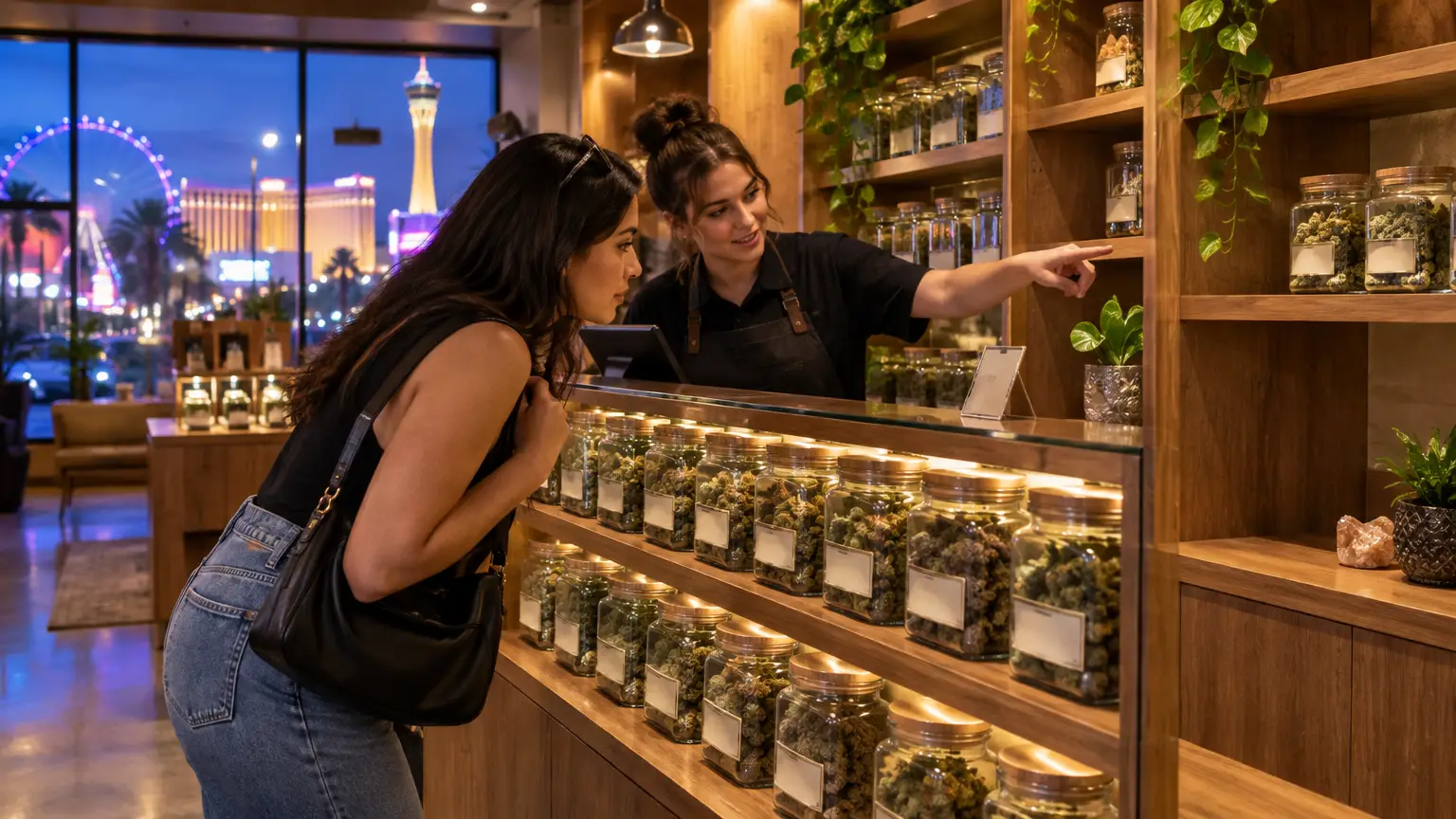
The number on the jar is doing less for you than you think. Walk into any marijuana dispensaries in Las Vegas, NV and you’ll see the same thing on every package: a big THC percentage, a strain name, and a price. Most shoppers make their pick from those three data points alone, and most of them end up with a product that fights them instead of working with them. The labels tell you what the state requires. They don’t tell you what you actually need to know standing in the aisle.
I’ve made that mistake enough times to have opinions now. This piece is about reading the shelf properly, matching a purchase to your actual plans for the night, and walking out with something you’ll finish instead of something that outlives the trip. You don’t need a botany degree. You need about six minutes in the store and the right questions.
Why the Highest THC Number Is Usually the Wrong Buy
THC percentage gets treated like horsepower, and it’s closer to salt content. Past a certain point, more doesn’t improve the meal. In a product with very little moisture content and a high THC load, the throat hit gets sharp and the experience gets flat, and first-timers often interpret that sharpness as intensity when it’s really just harshness.
Here’s what I’d do instead. Look for a mid-range THC number paired with a terpene breakdown printed somewhere on the package or the store’s menu screen. Terpenes are the aromatic compounds that give each strain its character, and they’re the reason two jars with identical THC numbers can feel completely different. According to the National Institutes of Health, NIH research on cannabis compounds continues to examine how these aromatic and active compounds interact, which is the long way of saying the chemistry is more layered than a single number suggests.
If the terpene profile isn’t visible anywhere, ask. A good budtender can name the dominant terpene on three products without checking a screen. If they can’t, that tells you how the menu was built.
Reading a Batch Date Without Getting Fooled
Freshness shows up on the label as a harvest or packaging date, and it’s the single most underrated line on the package. Flower that’s been sitting for months in a plastic jar turns dry and brittle, and you’ll lose more to the grinder than you put in your bowl. Vape cartridges hold up longer, and edibles have their own expiration logic.
My rule: if the harvest date is more than a few months back and the price hasn’t been cut to reflect it, put it down. Stores are required to test for things like moisture and contamination, and those results get summarized on the package. Skipping a stale jar is a matter of scanning for the recent date, not trusting the sale sticker. When you’re in Las Vegas for a weekend, you notice a dry product fast, because you only have a couple of days to use it.
Quick shelf checklist before checkout
- Harvest or packaging date within the last few months, or a clear discount that accounts for the gap.
- Terpene information available on the package or the menu screen.
- A form factor that matches your setting: a pre-roll for a balcony, a vape for a walk, an edible for the room.
- Total package weight, not just the per-unit price, so you can compare fairly.
Matching the Product to Your Night, Not the Reverse
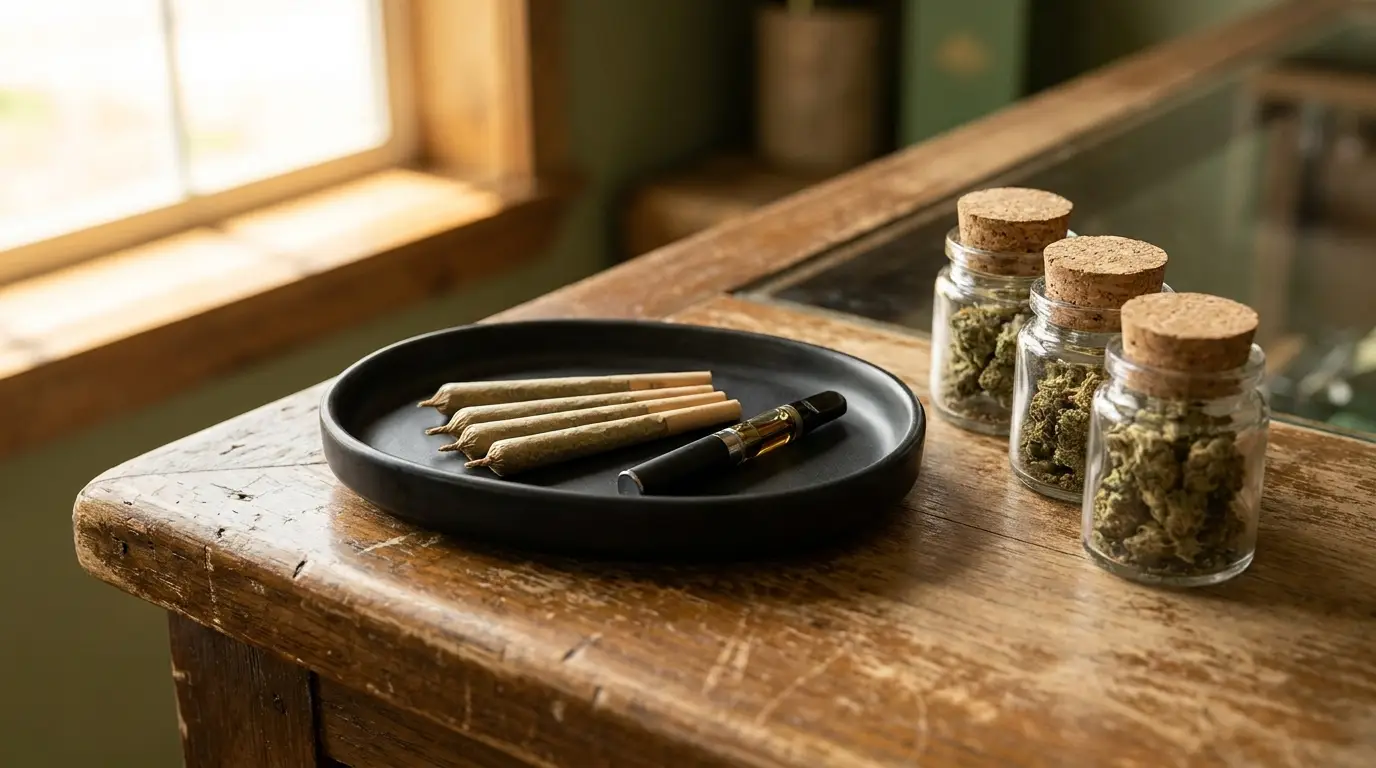
Picture the trip. You’ve got a show at nine, a walk down Fremont after, and a hotel room with a view. A slow-onset edible is the worst possible choice for that schedule, because the effect takes a while to show up and you’ll be long past the venue by the time it fully kicks in. A pre-roll or a vape gives you immediate feedback and a faster off-ramp. A tincture lets you measure in drops, which is friendlier when you’re sharing a room with someone who’s not partaking.
Budget works the same way. Edibles and drinks have a longer useful window than flower, which matters when you’re packing a carry-on. Some travelers pick up a small amount of several categories instead of committing to one big jar. There’s nothing wrong with a mixed purchase if you’ll actually use each item.
What the Store Staff Will Actually Do for You
Most dispensaries keep a trained advisor near the door or the counter whose job is to translate your goal into a product. The good ones ask what you’re planning to do after and skip straight to matching. The indifferent ones point at the bestseller and go back to their screen.
You can force the good conversation with three specific questions: what’s fresh this week, what would you pick for someone with a low tolerance, and what’s the lowest-dose option you carry. That last one matters more than people admit. Half a standard dose is a perfectly reasonable request, and any store worth visiting will have an answer.
Expect to show a valid government-issued ID if you’re buying recreationally, and bring your medical card if you have one. Store security follows rules set by the state, and the National Institute of Standards and Technology has published guidance on physical security practices that commercial retail operations commonly reference. You’ll notice the entry desk, the ID scanner, and the camera layout. None of it is personal, and going along with it keeps the line moving.
Drive, Park, Shop, Get On With Your Day
If you’re staying on the Strip, pick a dispensary on the way to whatever else is on your itinerary rather than making a dedicated round trip. North Las Vegas sits along a natural corridor for anyone heading out toward the speedway or the recreation areas, and the parking lot is easier to manage than the cramped lots near the resort corridor. Check hours before you roll out. Days and closing times vary across the valley, and you don’t want to arrive ten minutes after the doors lock.
Go earlier in the day if you can. The aisles are calmer, the advisors have more time, and you won’t be deciding between a dozen options while a line builds behind you. That’s a real quality difference in service, not a preference. Late afternoon on a weekend is the worst window in any city.
A Stance You Can Argue With
If a store won’t tell you the harvest date or the terpene content, walk out. That’s my line, and I don’t think it’s too harsh. Plenty of stores carry perfectly good product and simply run a thin menu, but the information gap almost always costs the customer. You’re spending real money for a small quantity. You get to ask where it came from and when it was picked.
One more habit worth stealing: buy small on the first visit, then come back if it works. A single pre-roll and a low-dose package cost less than a mistake, and you’ll know within an hour whether the store’s sourcing suits you. Repeat visits also get you better answers, because staff remember a face and a preference. That’s the whole advantage of shopping in one neighborhood instead of chasing coupons across the valley.
The shelf isn’t hiding anything on purpose. It just front-loads the numbers that sell and buries the ones that inform. Read the date, find the terpenes, match the format to your plans, and you’ll spend half as much for a better time. What’s the last product you bought purely because the percentage was the highest, and how did that go?