
Ever caught yourself tilting your face toward the light, checking if that upper lip shadow is visible to everyone else? You’re not imagining things, and you’re definitely not alone. Over 40% of women have some degree of unwanted facial hair.
The tricky part isn’t just getting rid of the hair. It’s finding a method that actually works without wrecking your skin or becoming a money pit.
Permanent options, such as electrolysis facial hair removal, offer lasting solutions worth exploring. Temporary fixes seem easier, but turn into never-ending routines. Knowing what works and what doesn’t saves you time, money, and a lot of frustration.
Why Facial Hair Shows Up
Facial hair isn’t a flaw. It’s hormones doing their thing. When your testosterone goes up, or estrogen drops, hair on your face gets thicker and darker. This happens naturally during puberty, pregnancy, and menopause. Birth control, certain medications, and health conditions can trigger it, too.
Genetics matters more than most people realize. If your mom dealt with facial hair, chances are you will too.
For most people, facial hair is cosmetic. But if you notice sudden changes in how much hair you have or where it grows, talk to your doctor.
Shaving: Quick but Short-Lived
Shaving is the fastest way to remove hair. It’s cheap, painless, and you can do it at home in under five minutes. But the results don’t last. Hair grows back within one to three days, which means you’re stuck shaving constantly.
The myth about shaving making hair thicker? Completely false. It just feels stubbier because you cut it at a blunt angle.
Start by wetting your face with warm water because it softens the hair. Put on shaving cream to create a barrier between the razor and your skin. Shave the same way your hair grows, not against it. Going against the grain causes ingrown hairs and irritation. Replace your razor every week or so because dull blades tug instead of cutting cleanly.
Waxing: Weeks of Smooth Skin with a Catch
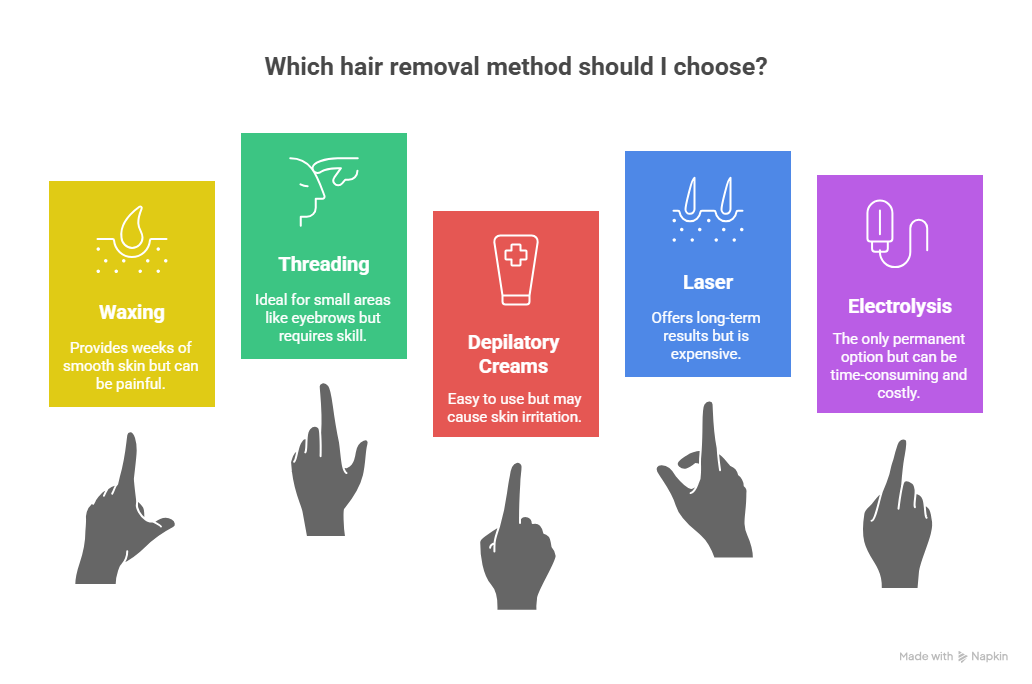
Waxing pulls hair out from the root, keeping you smooth for three to four weeks. You can buy strips at the drugstore or get it done professionally. Either way, it lasts way longer than shaving.
The downside? It hurts. A lot, sometimes. If the wax is too hot, it burns your skin. Too cool, and it won’t work.
People using retinoids or who have recently taken acne medication should skip waxing. It can tear your skin and leave you with redness that sticks around for days. Always test the wax temperature on your wrist before putting it on your face. And never reuse strips because bacteria spread fast.
Threading: Perfect for Small Areas
Threading uses twisted cotton thread to grab and yank out multiple hairs at once. It’s incredibly precise, which is why it’s so popular for eyebrows and upper lip hair.
No heat, no chemicals. Just thread and technique. Results last about four weeks, and there’s less risk of irritation compared to waxing.
You need a skilled technician for this. Trying it yourself without training leads to uneven results and potential skin damage. The process isn’t painless, but most people find it more tolerable than waxing.
Depilatory Creams: Easy but Risky
These creams dissolve hair at the surface with chemicals. You spread it on, wait a few minutes, then wipe it off along with the hair. Results last longer than shaving but not as long as waxing.
Sensitive skin and these creams don’t mix well. Do a patch test at least 24 hours before using one on your face. If you see redness, bumps, or feel itching, don’t use it. People with eczema, psoriasis, or rosacea should avoid them completely.
The smell is another issue. Strong and chemical. Some people can’t stand it.
Laser: Long-Term Results That Cost More
Laser treatments use light to damage hair follicles, slowing down or stopping growth. After multiple sessions, many people stay hair-free for years. Some never see the hair return.
This works best on people with light skin and dark hair because the laser targets pigment. Darker skin needs different lasers, or you risk burns. Professional treatments cost more at the start but last way longer. Home devices are budget-friendly but weaker.
Sessions are typically spaced weeks apart, with 4 to 6 sessions being the minimum needed to see adequate results. Your skin stays sensitive after treatment. Avoid sun, hot showers, and tight clothes for at least a day. Wear sunscreen religiously to prevent dark spots.
Electrolysis: The Only Permanent Option
Electrolysis is the only method the FDA recognizes as truly permanent. A technician puts a very thin probe into each follicle and runs an electric current through to kill the root.
This works on all skin tones and hair colors, including light or fine hair that lasers can’t touch. But it’s slow. Each hair gets treated individually, so you need multiple sessions.
It’s ideal for small areas such as your upper lip or chin. More painful than a laser, but no maintenance is needed once you’re done. Make sure you see a qualified professional because improper technique causes infections or scarring.
What to Avoid
Don’t skip skin prep. Jumping straight into hair removal with dirty skin or leftover makeup blocks follicles and reduces how well treatments work. Cleanse first, always.
Stop using the wrong method for your skin type. Sensitive skin can’t handle hot wax or harsh chemical creams. Acne-prone skin shouldn’t be waxed over active breakouts because it spreads bacteria.
Timing matters more than you think. Shaving too often irritates the skin. Waxing when hair is too short doesn’t work. Laser sessions need to be spaced weeks apart to catch hair in its growth phase.
Aftercare isn’t optional. Skip the hot showers, saunas, and swimming for 24 hours after removing hair. Heat and chlorine both irritate skin right after treatment. Don’t wear tight clothing either, since it holds sweat and bacteria against your skin. Don’t use products with alcohol or fragrance right after treatment.
Cheap tools cause problems. Dull razors tug at hair and cause cuts. Fake laser devices don’t have proper safety features and can burn your skin badly. Old waxing strips spread bacteria. Invest in quality products that protect your skin.
Tell your provider about medications and health conditions. Some prescriptions make your skin more sensitive to light. Active skin conditions worsen with hair removal. Recent cosmetic treatments leave your skin fragile.
Finding What Works for You
Pick what fits your skin, hair, and budget. Shaving and creams work fast, but you’re back at it in days. Waxing, threading, and sugaring last for weeks, but they’re not painless.
Laser and electrolysis last the longest. Laser works best if you have light skin and dark hair. Electrolysis handles any skin or hair type. Small spots like your chin do well with tweezers or threading. Bigger areas need waxing or laser.
Sensitive skin can’t handle hot wax or chemical creams. Stick with threading or good razors instead. Clean your skin before and protect it after, no matter what method you use.