Finding a sports bra that does its job sounds simple. In practice, most women own one or two that get rotated through every workout regardless of what they are doing that day. The problem is that a bra designed for a slow yoga flow performs differently from one built for sprint intervals, and wearing the wrong one leads to discomfort, distraction, and eventually skipping the workout entirely.
The solution is not buying a dozen bras. It is understanding which styles match which activities, then building a small rotation that covers your actual training week.
Halter Neck
The halter design wraps around the neck instead of crossing the back, which creates a secure hold through the chest and shoulders without the strap slippage that plagues traditional designs. This makes a halter sports bra particularly effective for movements involving overhead reach, lateral motion, and rotation. Think tennis, HIIT circuits, dance-based workouts, and anything where you are constantly shifting direction.
The halter cut also tends to be more flattering on longer torsos. Because the straps pull upward from a single point rather than two separate shoulder straps, the bra creates a clean neckline that works just as well under a tank top as it does on its own during a summer run.
If you have broader shoulders or find traditional racerback straps dig into the base of your neck, halter styles distribute pressure differently and may feel more comfortable during longer sessions.
Racerback
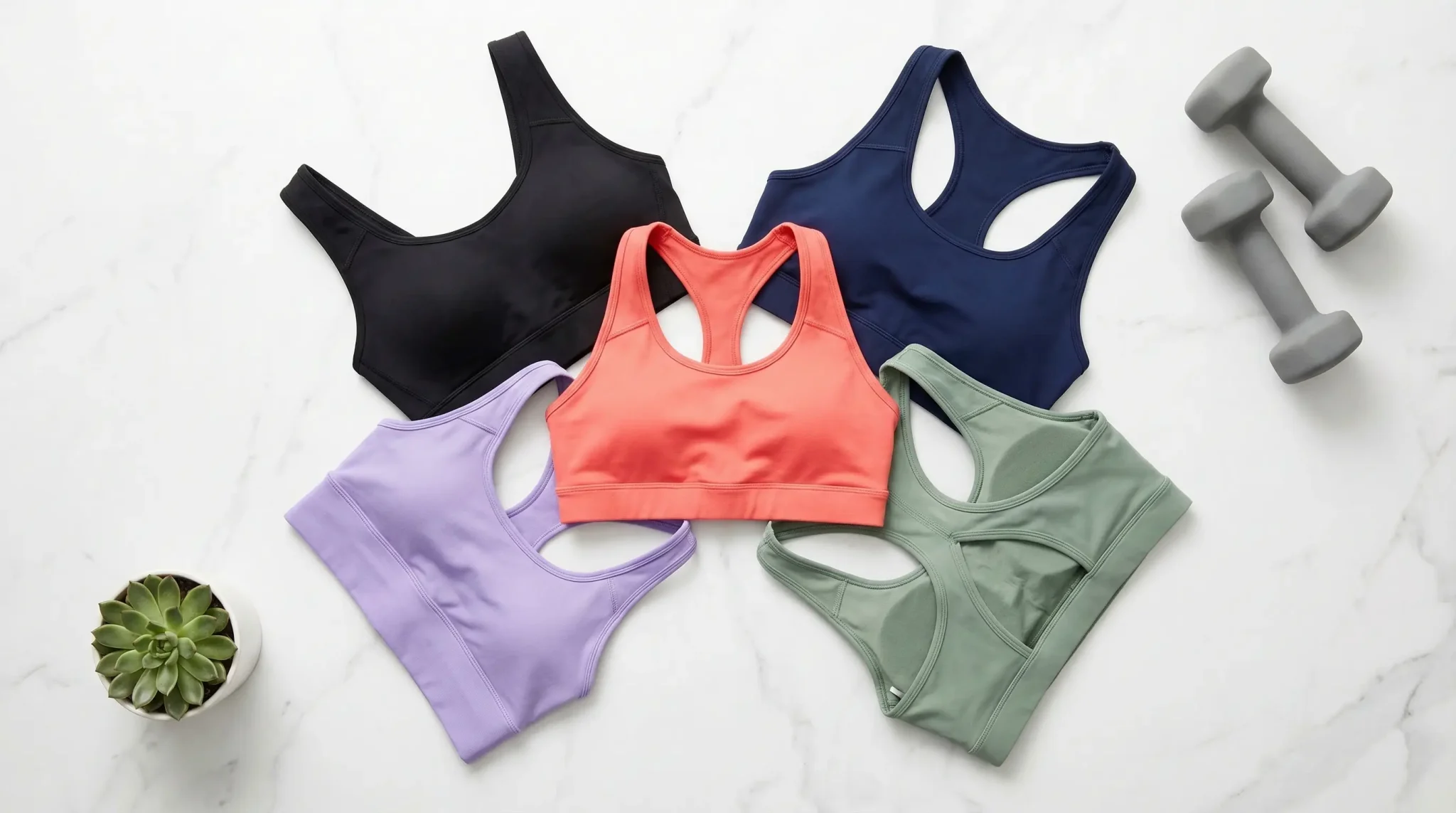
The classic. Racerback bras pull the straps toward the center of the upper back, creating a T or Y shape that keeps straps from sliding off the shoulders. This design is a workhorse for most gym activities: weight training, rowing, cycling, and moderate-impact cardio.
The racerback works well because it balances support with range of motion. Your arms move freely through presses, pulls, and lateral raises without straps interfering. For women who train four to five days a week with a mix of strength and cardio, this is the style that gets the most mileage.
Open Back
Open back designs cut away most of the rear panel, leaving a minimal strap structure that keeps the bra secure while maximizing ventilation. If you run hot during workouts or train in warm environments, an open back sports bra solves the problem of a sweat-soaked back panel clinging to your skin halfway through a session.
This style works best for low to medium impact activities: yoga, pilates, barre, stretching, and lighter strength sessions. The reduced back coverage means slightly less support than a full-panel design, so it may not be ideal for high-impact running or plyometrics. But for everything else, the airflow and comfort are hard to beat.
The open back has also become a style choice in its own right. Worn under a loose tank or on its own, it reads as intentional rather than purely functional.
Longline
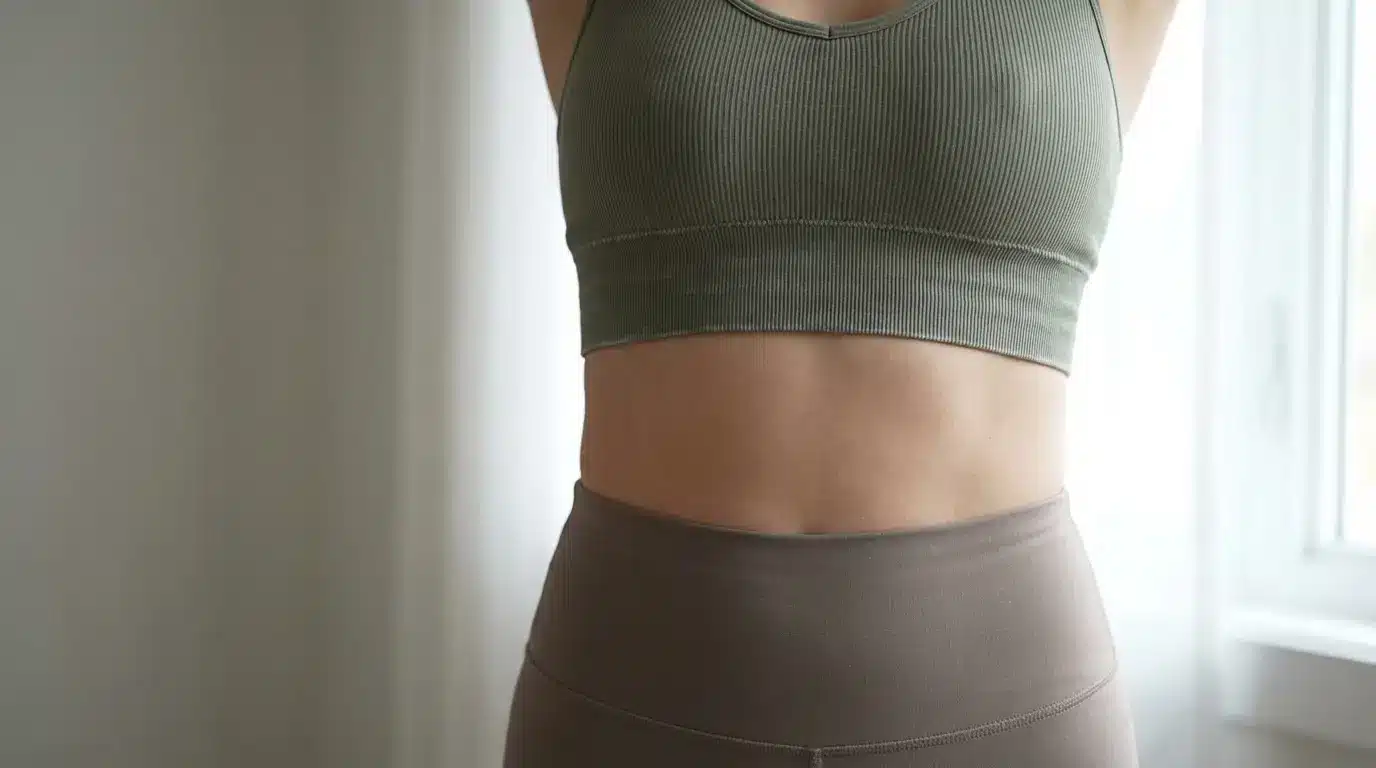
Longline bras extend several inches below the bust, typically ending at or near the bottom of the rib cage. This extra length serves two purposes. First, it distributes compression over a larger surface area, which makes the bra feel less restrictive during longer wear. Second, it provides light core coverage that smooths the transition between bra and leggings without needing a separate crop top.
Longline styles are ideal for yoga, pilates, and any workout where you want coverage without layers. They also work well as standalone tops during warmer months. The extended band adds a small amount of core support that some women find helpful during planks and ab work.
Compression
Compression bras use tight, stretchy fabric to press the chest firmly against the body rather than encapsulating each side separately. This makes them the simplest and often most supportive option for high-impact activities: running, jumping, burpees, box jumps, and anything that involves repeated vertical movement.
The trade-off is shape. Compression bras flatten rather than lift, which some women prefer for performance and others do not. For pure function during intense cardio, though, nothing locks things down quite as effectively.
Building Your Rotation
Three bras will cover most training schedules. One high-support option for intense days, like a compression or well-structured halter. One mid-support style for strength training, like a racerback. And one low-impact pick for recovery and flexibility work, like an open back or longline.
Rotate based on your training plan, wash after every session, and replace any bra that has lost its elasticity. A sports bra that no longer bounces back after stretching is no longer doing its job.