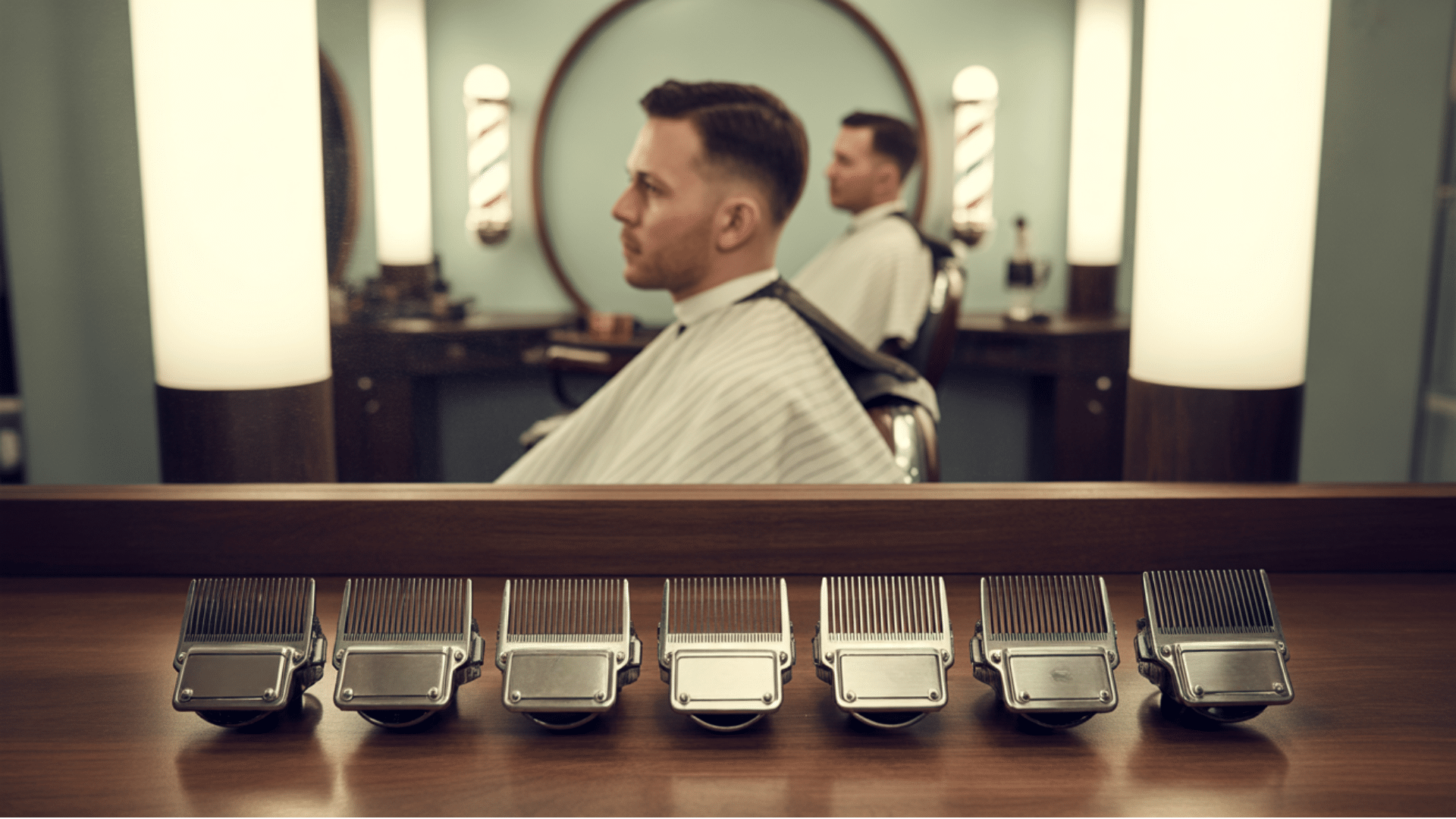
The buzz fade proves that short hair never has to look boring.
By pairing the even length of a buzz cut with gradually faded sides and back, this haircut creates a cleaner, sharper finish that works for almost any style.
From subtle low fades to bold skin fades, the right variation can completely change the overall look. These buzz fade ideas will help you find one that fits your face shape, hair type, and personal style.
Classic Buzz Fade Styles That Never Go Out of Style
These are the foundation cuts that have proven themselves over time. They’re reliable, flattering, and work well in almost any situation – perfect if you want something dependable but still stylish.
1. High Fade Buzz Cut
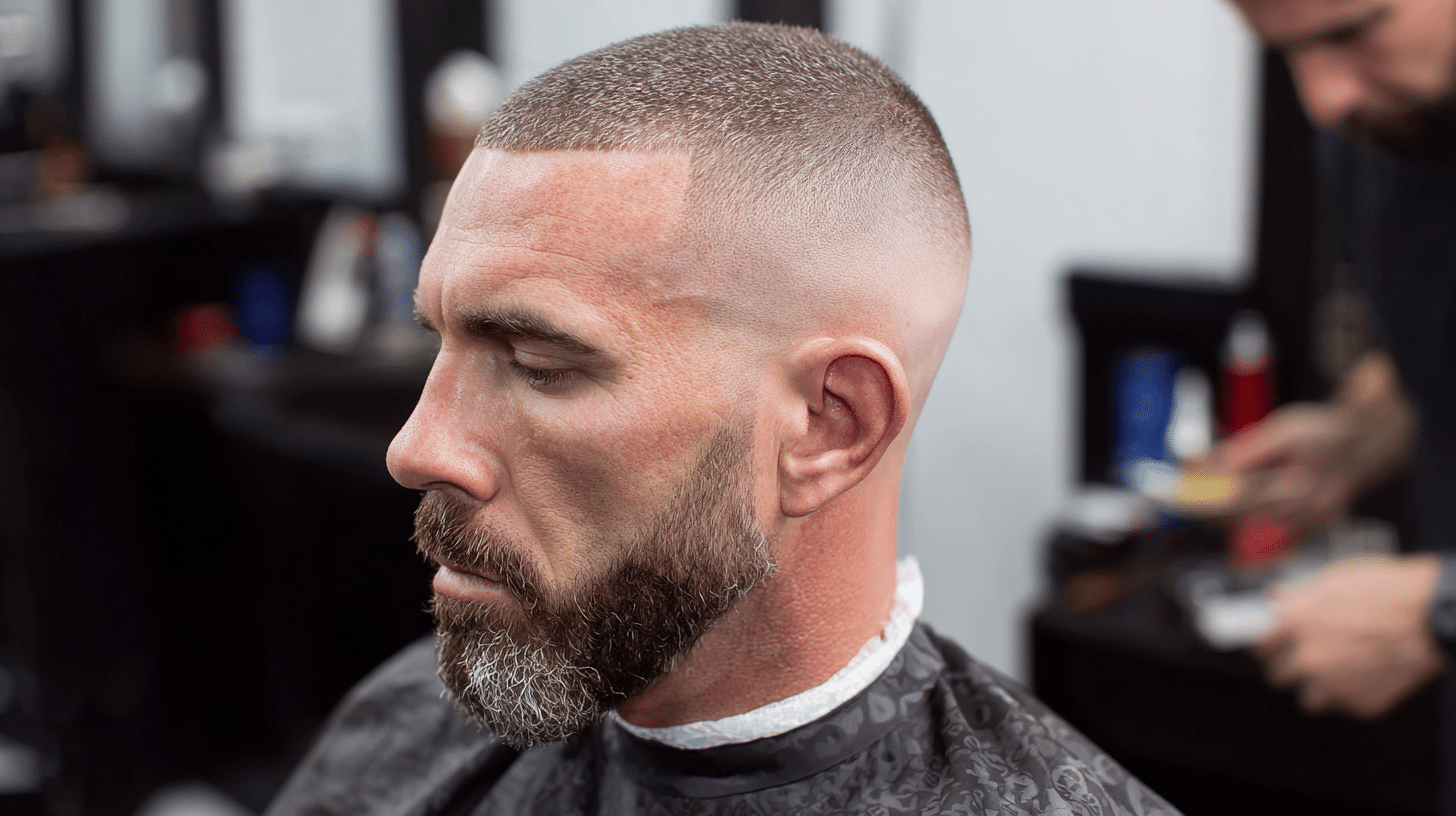
Picture hair that’s uniformly short on top (usually a #3 or #4 guard), with the fade starting high on the sides near the temples. This creates a bold contrast and works particularly well if you have a strong jawline or want to emphasize your facial features.
- Best for: Thick or dense hair, since the height of the fade removes bulk that a lower blend would leave behind
- How to achieve it: Ask your barber to run the clippers guardless down to skin starting at temple height, then blend upward in short guard increments so the line disappears smoothly
- Maintenance tips: Book a trim every two weeks, since regrowth is most visible where the fade sits highest on the head
2. Low Fade Buzz Cut
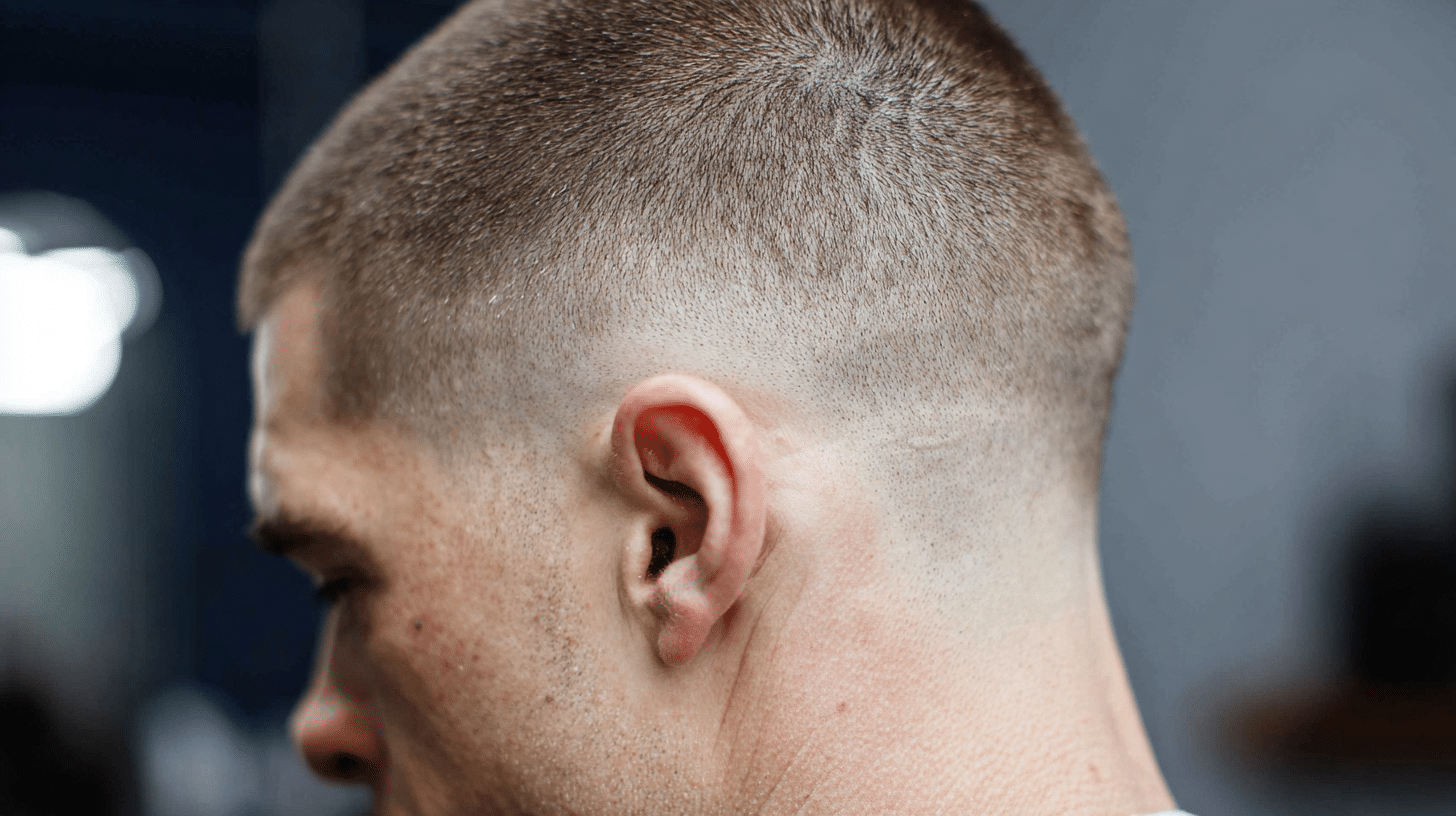
Here, the fade begins much lower, around the ear level. The change is subtler, making it perfect for professional settings or you those who prefer a more conservative approach. The top remains evenly buzzed while the sides gradually taper down.
- Best for: Office environments and client-facing jobs where a dramatic haircut change might draw too much attention
- How to achieve it: Have the barber start with a #2 guard around the ear and step down gradually rather than switching straight to skin, keeping the shortest point below the ear line
- Maintenance tips: Rebook every four weeks, since the lower blend point takes longer to grow out of shape
3. Mid Fade Buzz Cut
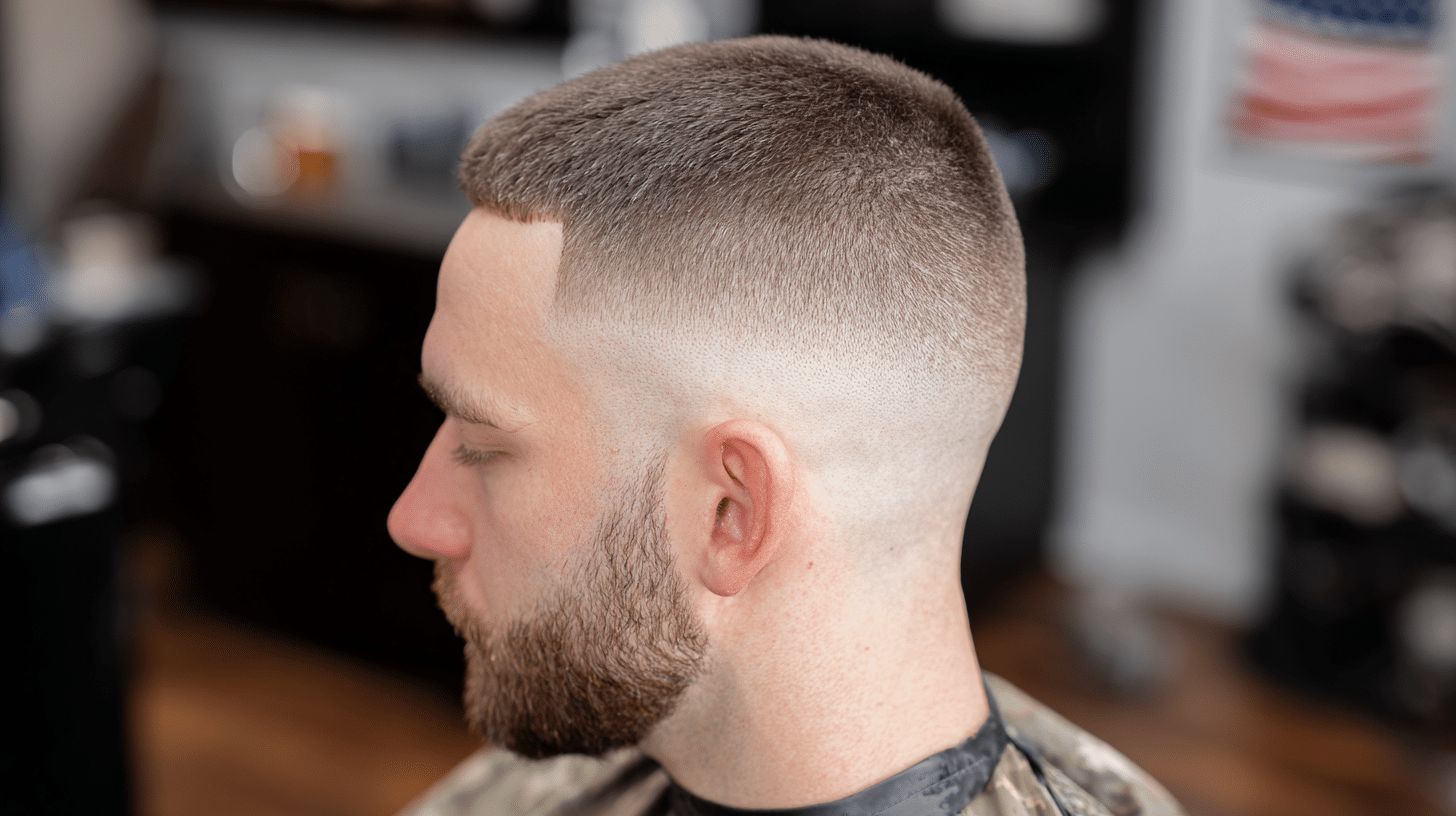
This strikes the perfect balance between high and low fades. The transition starts at the middle of your ear, creating a natural-looking gradient. It’s versatile enough for both casual and formal occasions.
- Best for: Guys who switch often between casual weekends and formal work settings without wanting two different haircuts
- How to achieve it: Request several guard changes (a #1 into a #2 into a #3) rather than just two lengths, which is what keeps the gradient looking gradual instead of stepped
- Maintenance tips: A three-week rebooking window keeps the blend from losing its shape
4. Skin Fade Buzz Cut
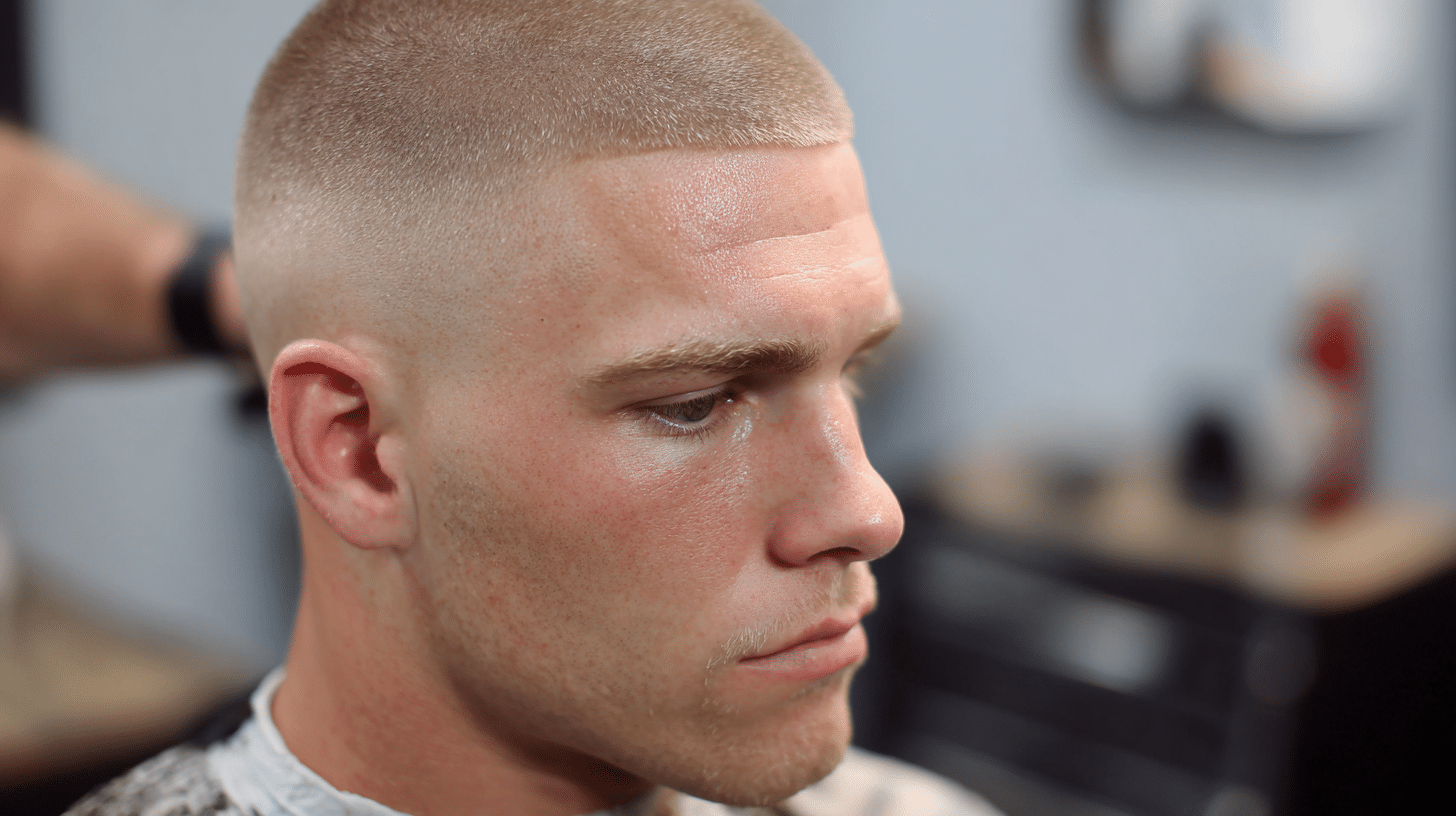
The most dramatic of the fades, this style takes the hair down to the skin at the bottom, creating a stark contrast with the buzzed top. It requires more frequent touch-ups but delivers maximum impact.
- Best for: Dark or black hair, where bare skin against the buzzed top creates the sharpest visual line
- How to achieve it: A triple zero blade is used to clear the lower section completely, then a barber blends the edge upward using the clipper over comb technique so no harsh ring is left behind
- Maintenance tips: Plan on weekly visits, since bare skin areas show new growth faster than any other fade style
5. Taper Fade Buzz Cut
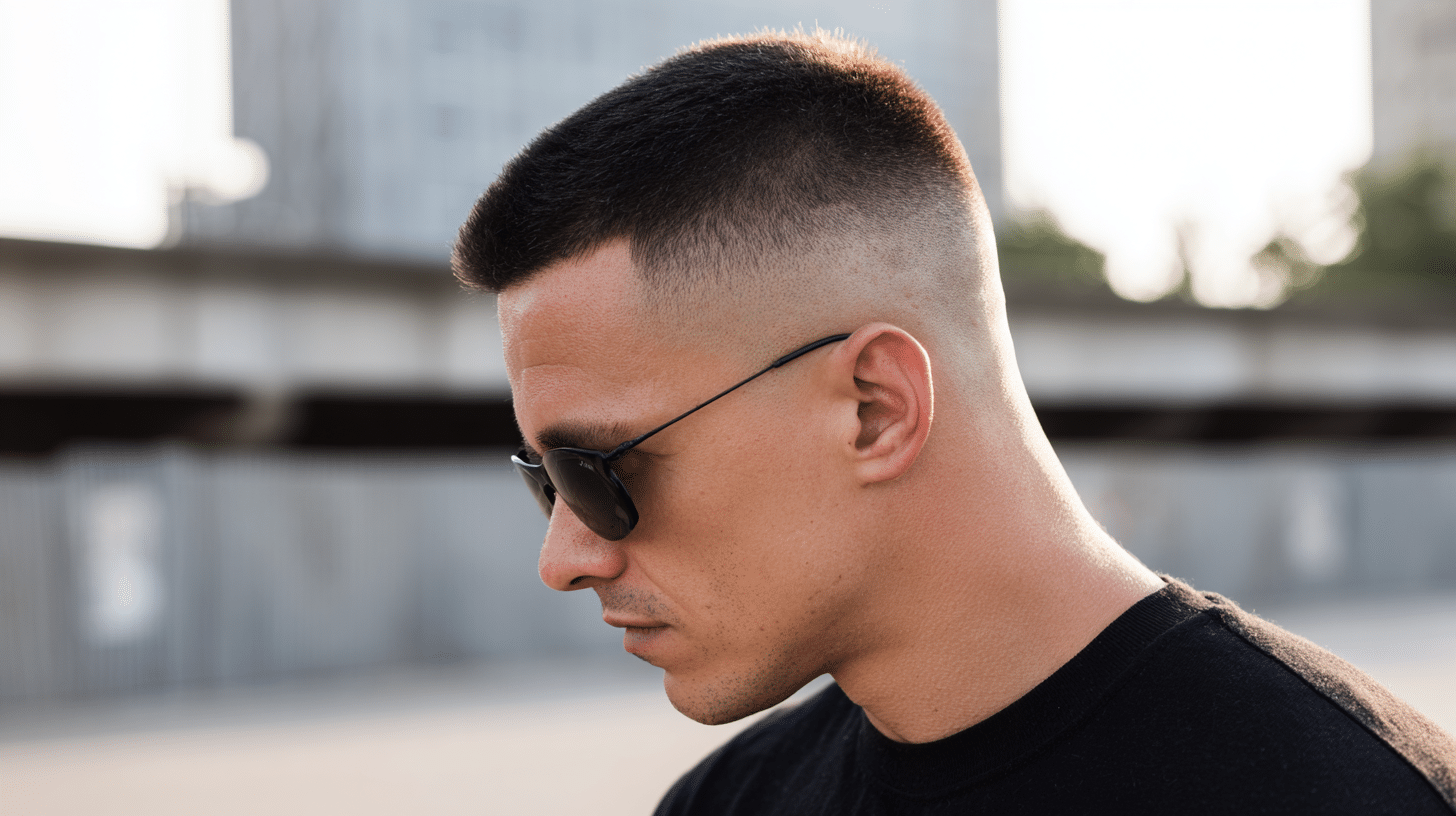
Think of this as the gentlest fade option. Instead of a sharp transition, the hair gradually gets shorter, creating a smooth, natural look. It’s ideal if you’re new to fades or prefer subtle changes.
- Best for: First-time fade clients who are unsure how short they want to go
- How to achieve it: The barber avoids clipping down to skin entirely and instead lowers the guard size in small steps, leaving a visible hairline rather than a shaved section
- Maintenance tips: This style holds its shape the longest of any fade, so five-week appointments are usually enough
Creative Variations That Make a Statement
Ready to add some personality to your cut? These options take the basic buzz fade and give it a twist that sets you apart without going too bold.
6. Buzz Fade with Shaved Line Design
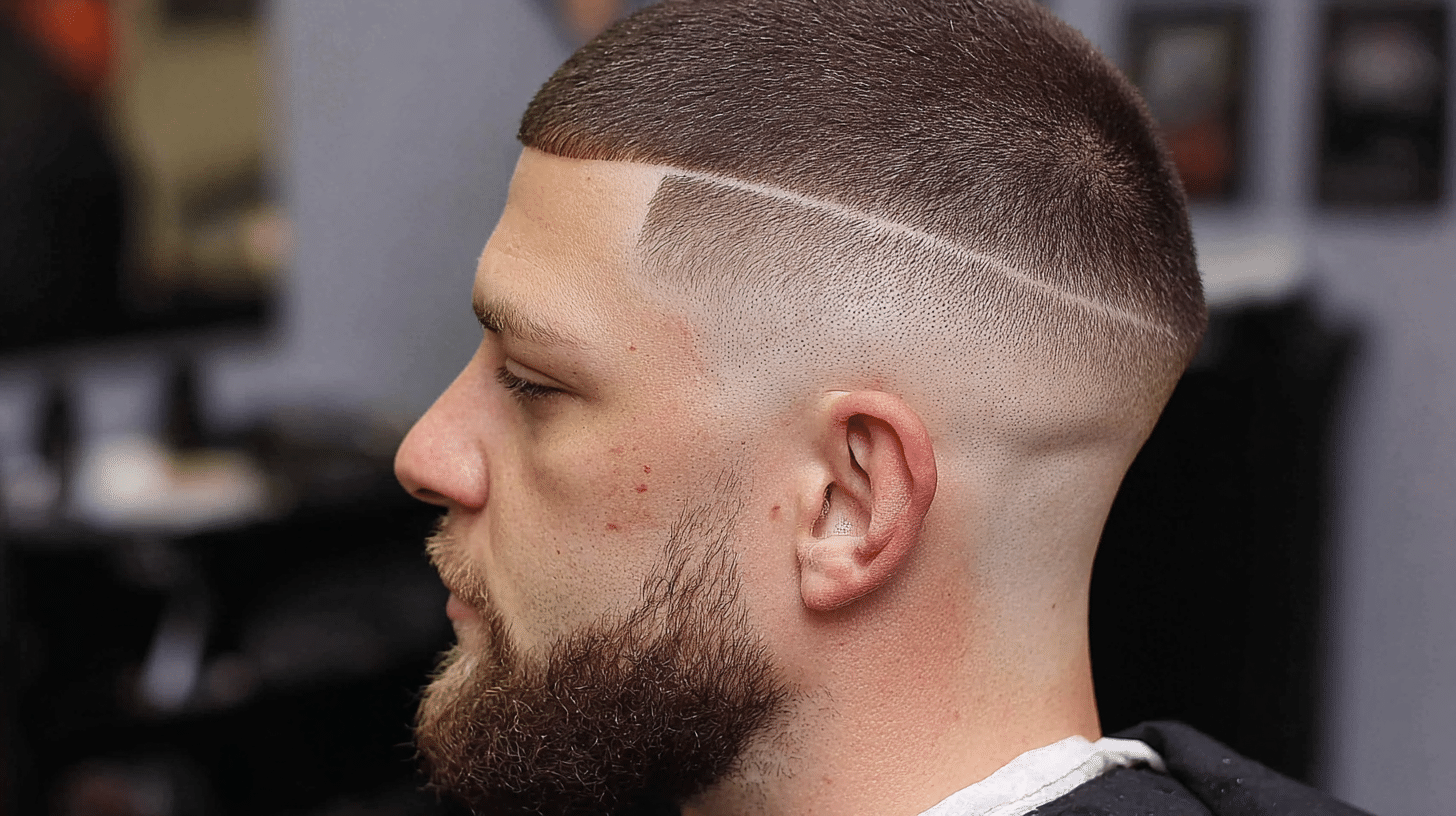
Add personality with a single clean line shaved into the side. This could be a straight line, curved arc, or even multiple parallel lines. It’s a simple way to make your cut stand out without being too flashy.
- Best for: Guys wanting one small design detail without committing to a full pattern
- How to achieve it: The line is added last, once the fade is finished, using the edge of a trimmer blade against the scalp
- Maintenance tips: Touch up weekly, since even a few millimeters of regrowth blurs a thin shaved line
7. Buzz Fade with Geometric Patterns
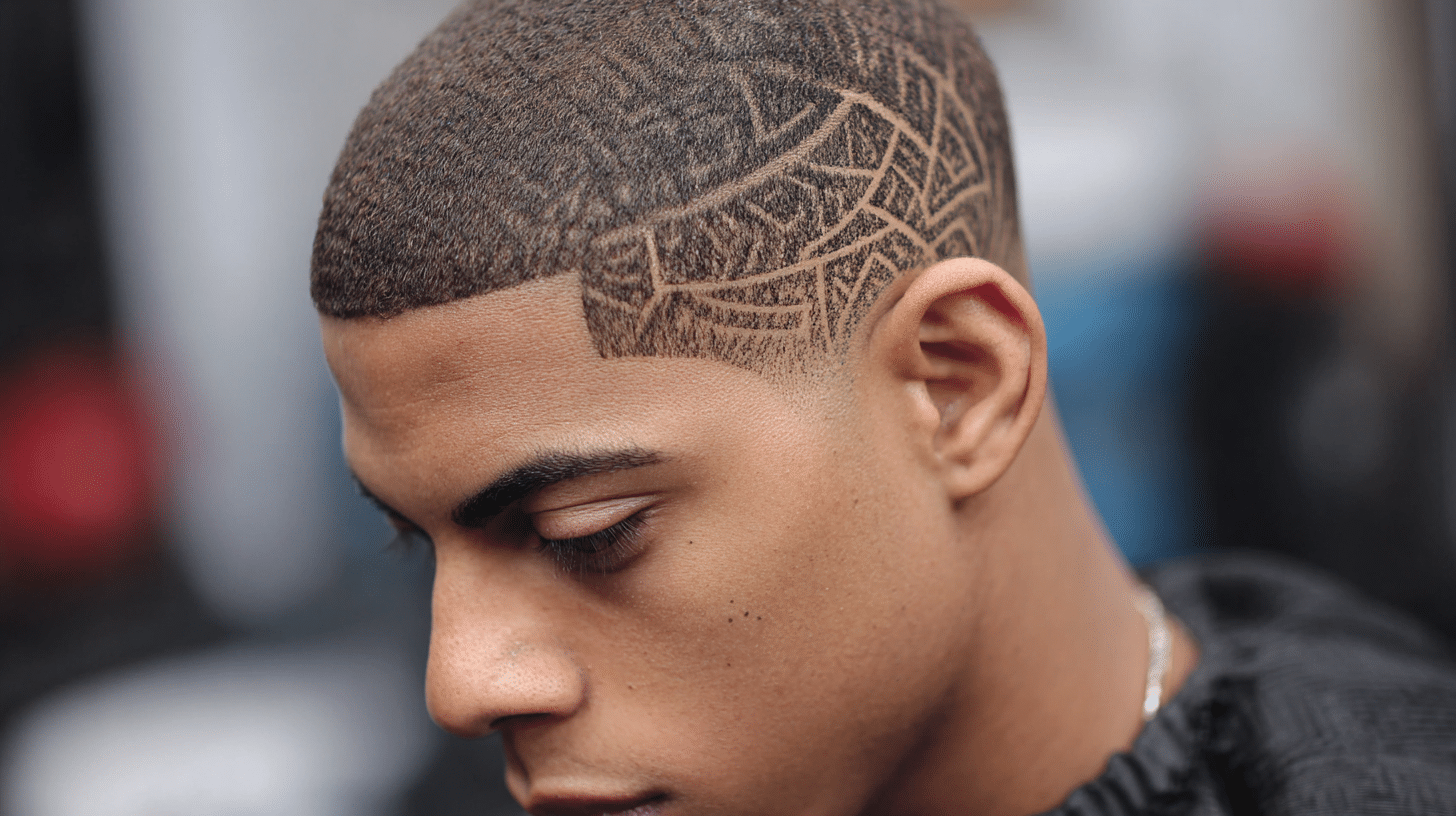
For those who want something truly unique, consider geometric shapes like triangles, diamonds, or zigzag patterns shaved into the sides. These work best with darker hair, where the contrast is more visible.
- Best for: Guys wanting a statement look for events or photos rather than daily wear
- How to achieve it: A skin fade is done first to clear space, then the pattern is freehanded using detail trimmers and stencils for symmetry
- Maintenance tips: Expect weekly upkeep, since any regrowth softens the pattern’s edges quickly
8. Buzz Fade with Hard Part
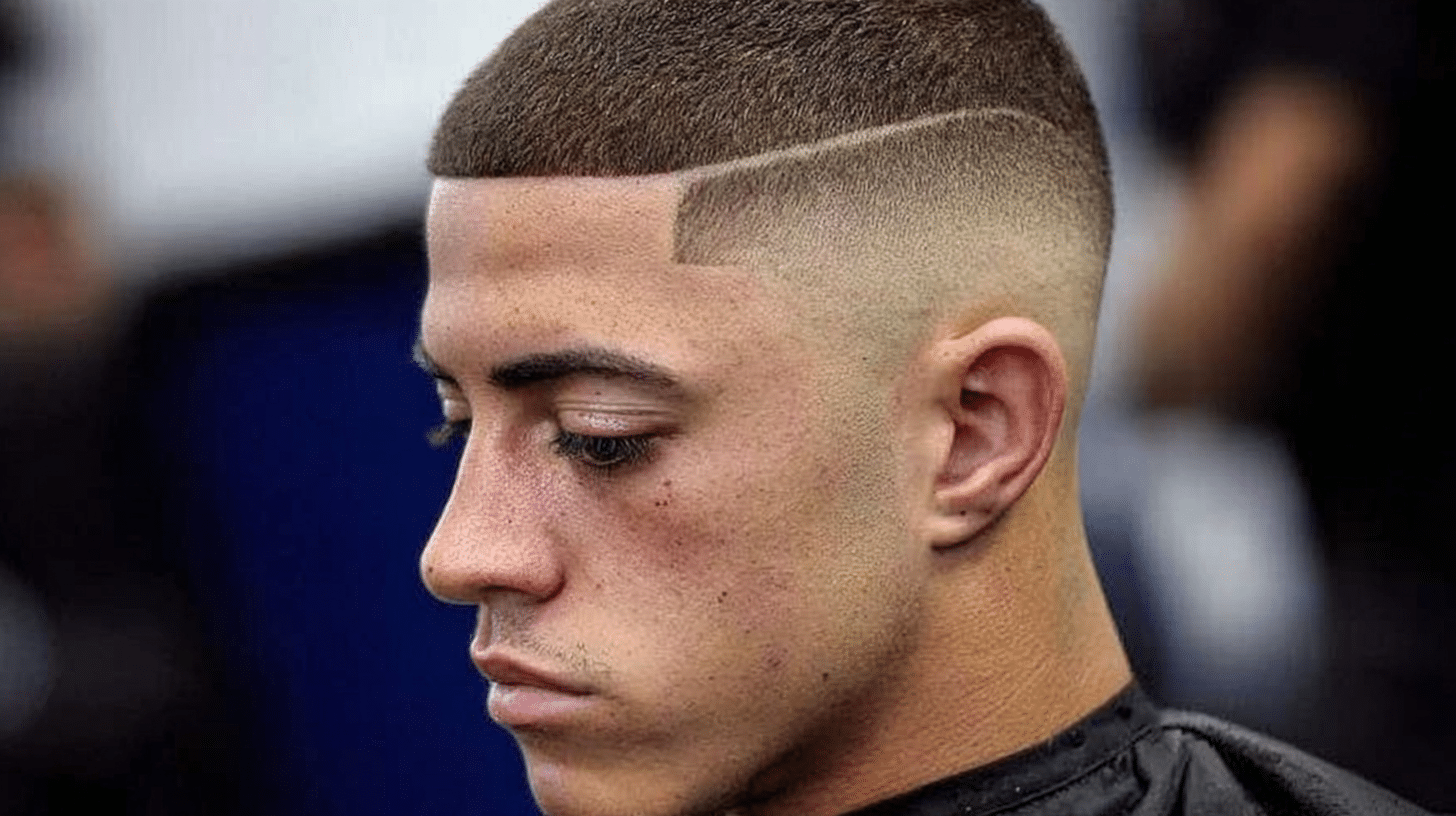
A precisely shaved part line adds structure and definition. Picture a razor-sharp line separating the top from the faded sides, creating a crisp, professional appearance.
- Best for: Guys who already part their hair naturally and want that part permanently defined
- How to achieve it: A straight razor is used to shave a single thin line along the natural part after the fade is complete
- Maintenance tips: Refresh every ten days, since this is one of the fastest-growing areas on the head
9. Buzz Fade with Textured Top
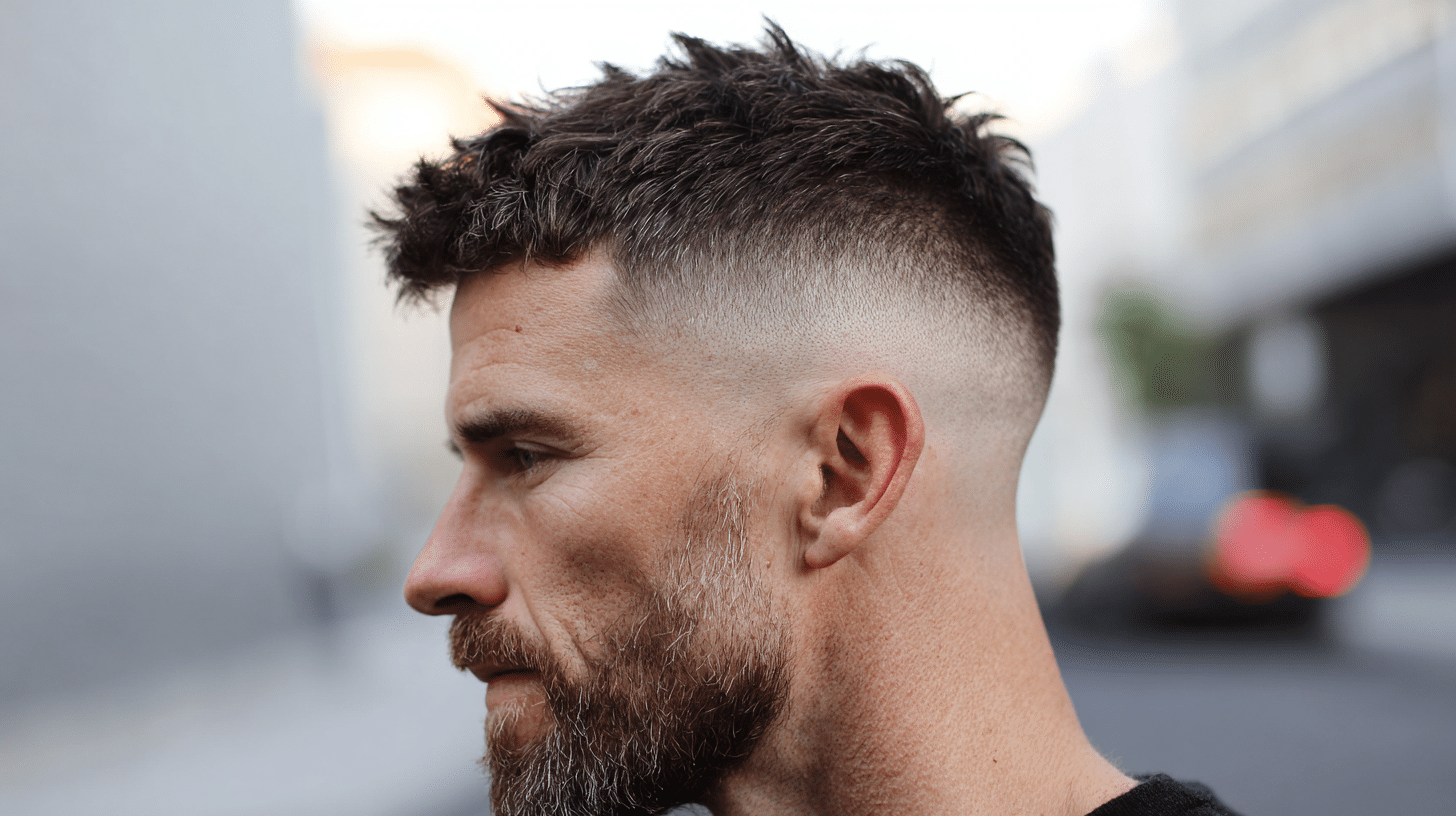
Instead of a uniform buzz, ask for slight length variation on top. This creates a natural-looking texture while maintaining the fade on the sides. It adds visual interest without requiring styling.
- Best for: Thicker hair types that look flat or helmet-like when buzzed to one uniform length
- How to achieve it: Barbers use point cutting or texturizing shears over a #3 or #4 guard to remove weight unevenly, creating natural movement
- Maintenance tips: Book every four weeks, since the texture holds its shape longer than a sharply defined fade
10. Buzz Fade with Forward Brushed Style
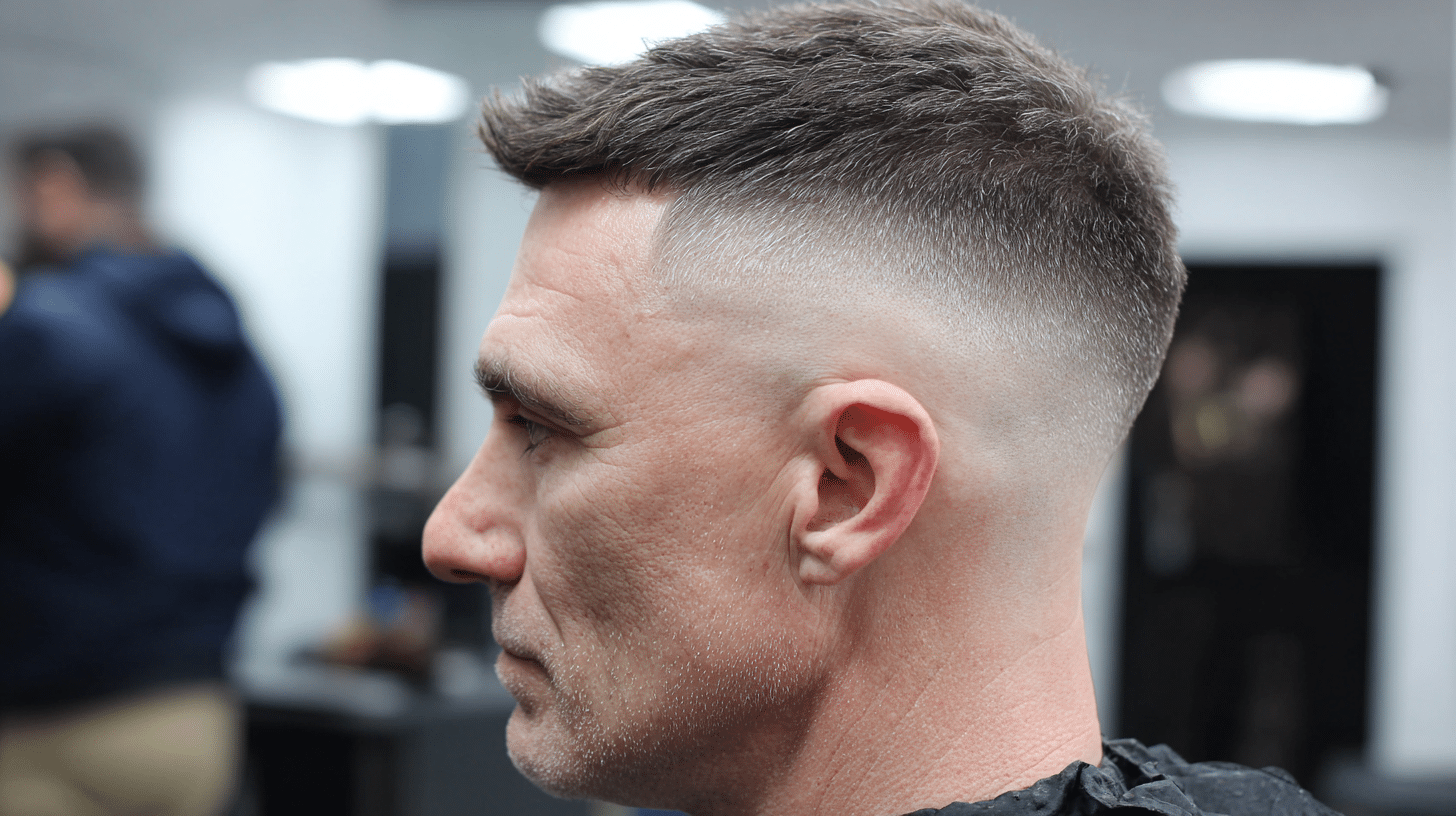
Keep slightly more length on top and have it cut to naturally fall forward. This creates movement and works well if you have a higher forehead or want to soften angular features.
- Best for: Higher hairlines, since forward movement visually shortens the forehead
- How to achieve it: A longer guard, usually a #5, is left on top and cut with a slight forward lean so the hair naturally falls that direction without heavy styling
- Maintenance tips: A small amount of matte clay worked through damp hair each morning keeps the forward fall in place all day
Pairing with Facial Hair
Your haircut and facial hair should work together, not compete. Here’s how to combine your buzz fade with different beard and mustache styles for a cohesive look.
11. Buzz Fade with Full Beard
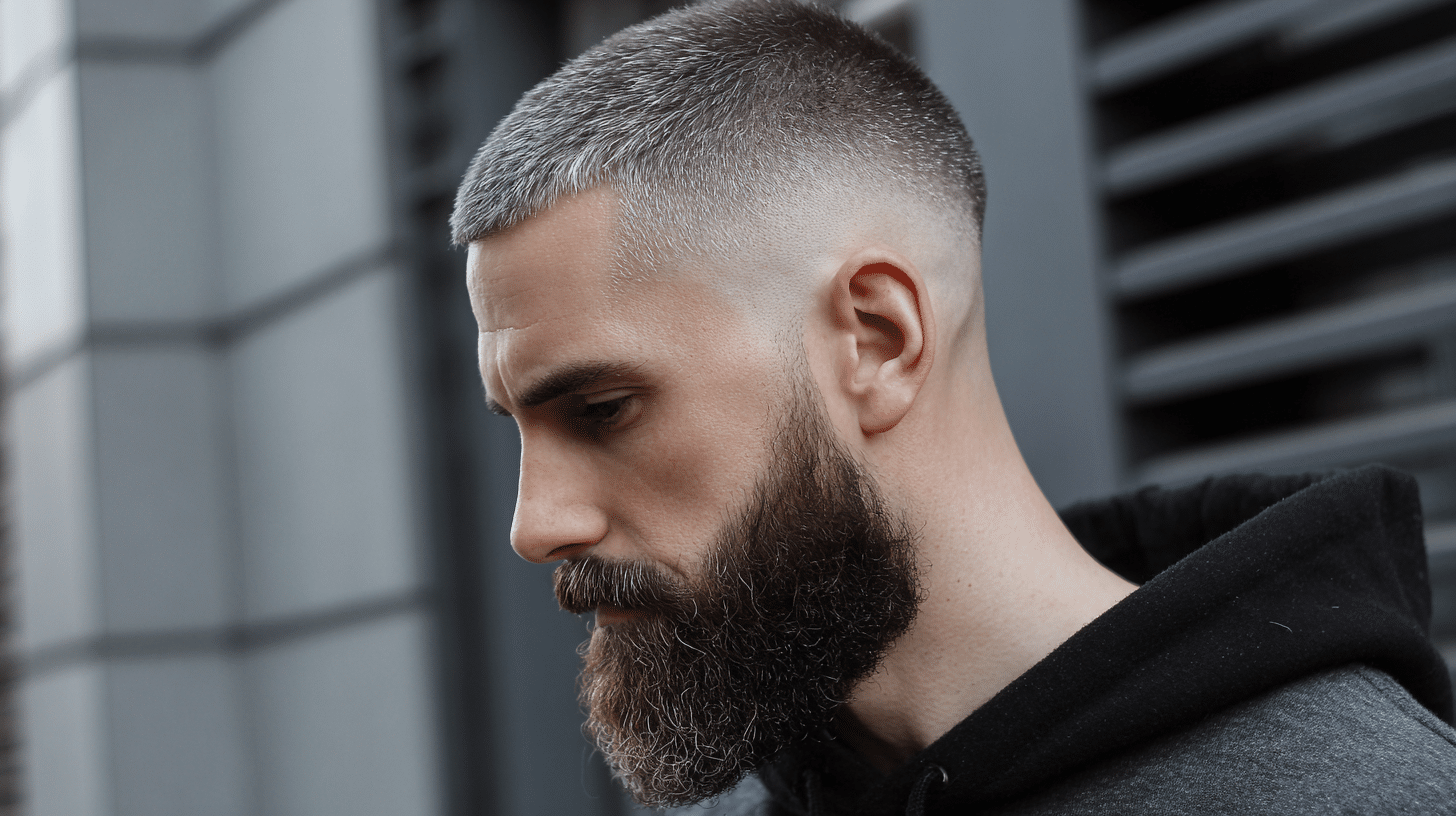
The contrast between a clean, short haircut and a full beard creates a striking masculine look. The key is keeping the beard well-groomed to match the precision of your haircut.
- Best for: Guys with strong beard growth who want the beard as the main focal point
- How to achieve it: Pair a high or skin fade with the beard, since the sharpness on the sides is what keeps a fuller beard from looking unkempt
- Maintenance tips: Trim the beard weekly with clippers to match the precision of the fade underneath it
12. Buzz Fade with Stubble
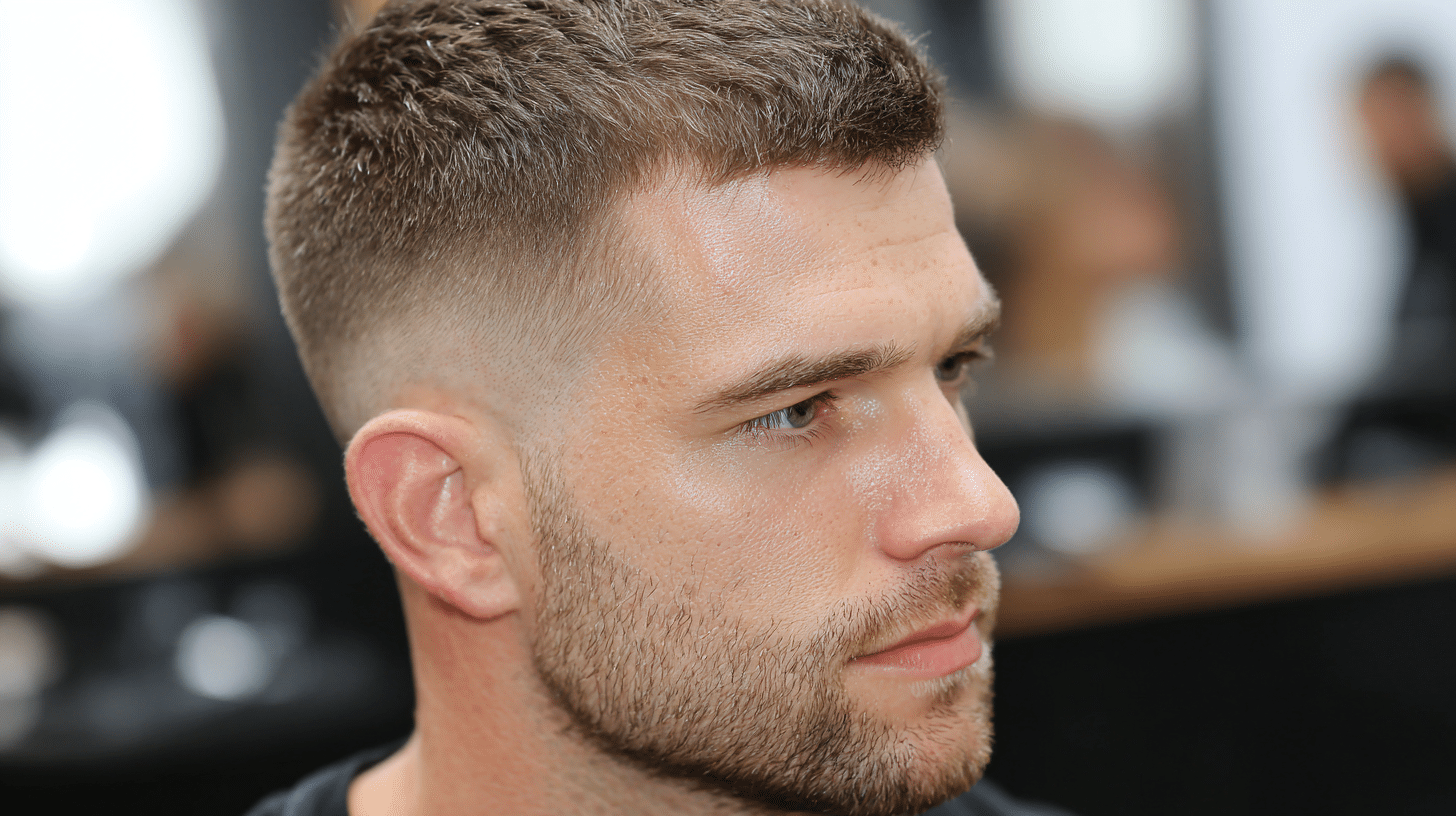
A few days of stubble perfectly complement the rugged simplicity of a buzz fade. This combination looks effortless while still appearing intentional and well-maintained.
- Best for: Guys wanting a low-effort look for everyday wear rather than special occasions
- How to achieve it: Let facial hair grow three to five days between beard trims, and keep the fade at a mid or low height so nothing on the head competes with the stubble
- Maintenance tips: Line up the cheek and neck edges every few days using a trimmer to stop stubble from looking patchy
13. Buzz Fade with Goatee
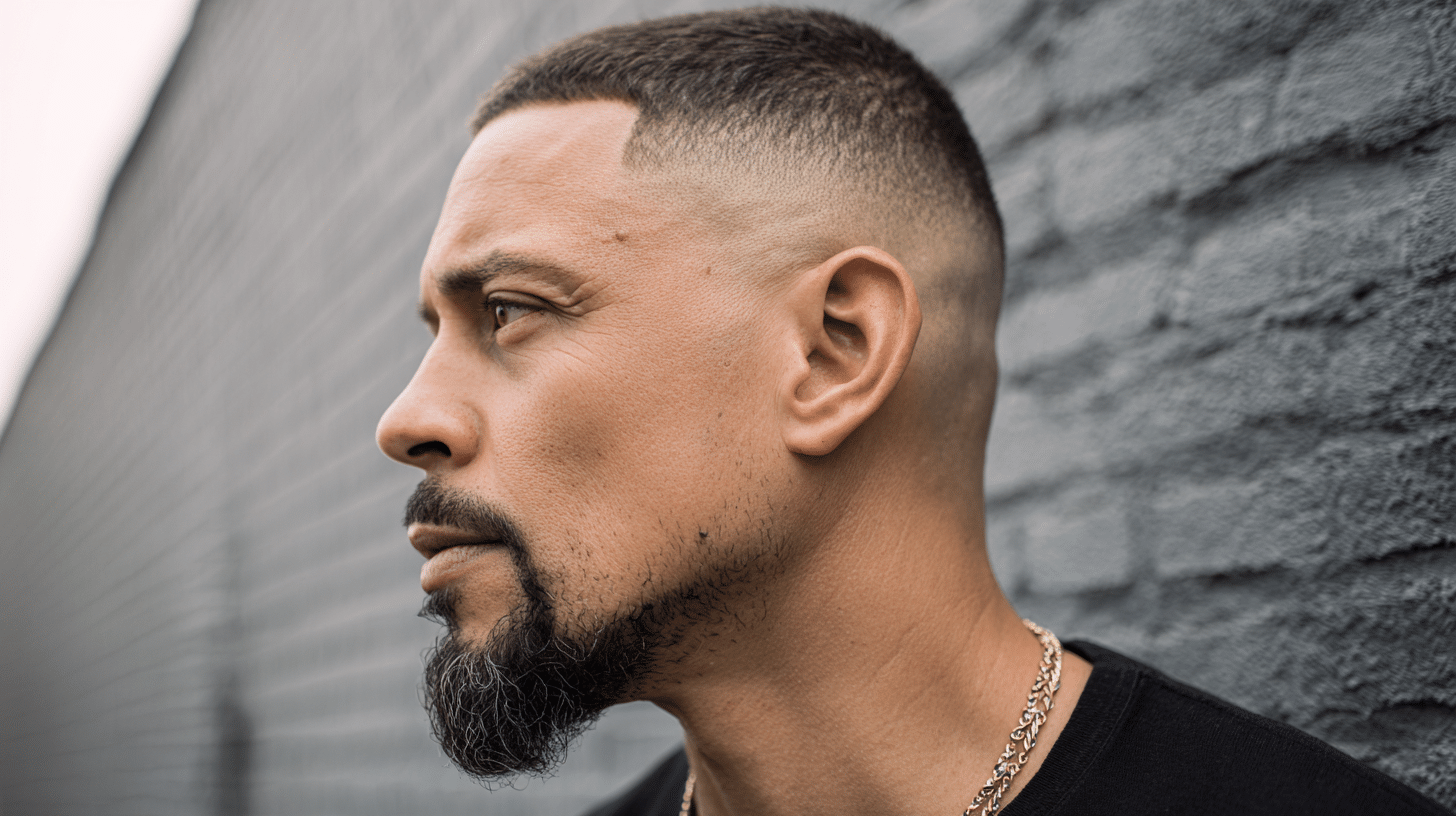
A goatee draws attention to your mouth and chin area, balancing the short hair on top. This combination works particularly well for round or oval face shapes.
- Best for: Guys wanting to add definition to the chin without growing a full beard
- How to achieve it: Keep the goatee lined cleanly along the jaw and mouth using a trimmer guard, independent of whatever fade height you choose on top
- Maintenance tips: Line the goatee edges every three to four days to stop it from blending into surrounding stubble
14. Buzz Fade with Beard Fade
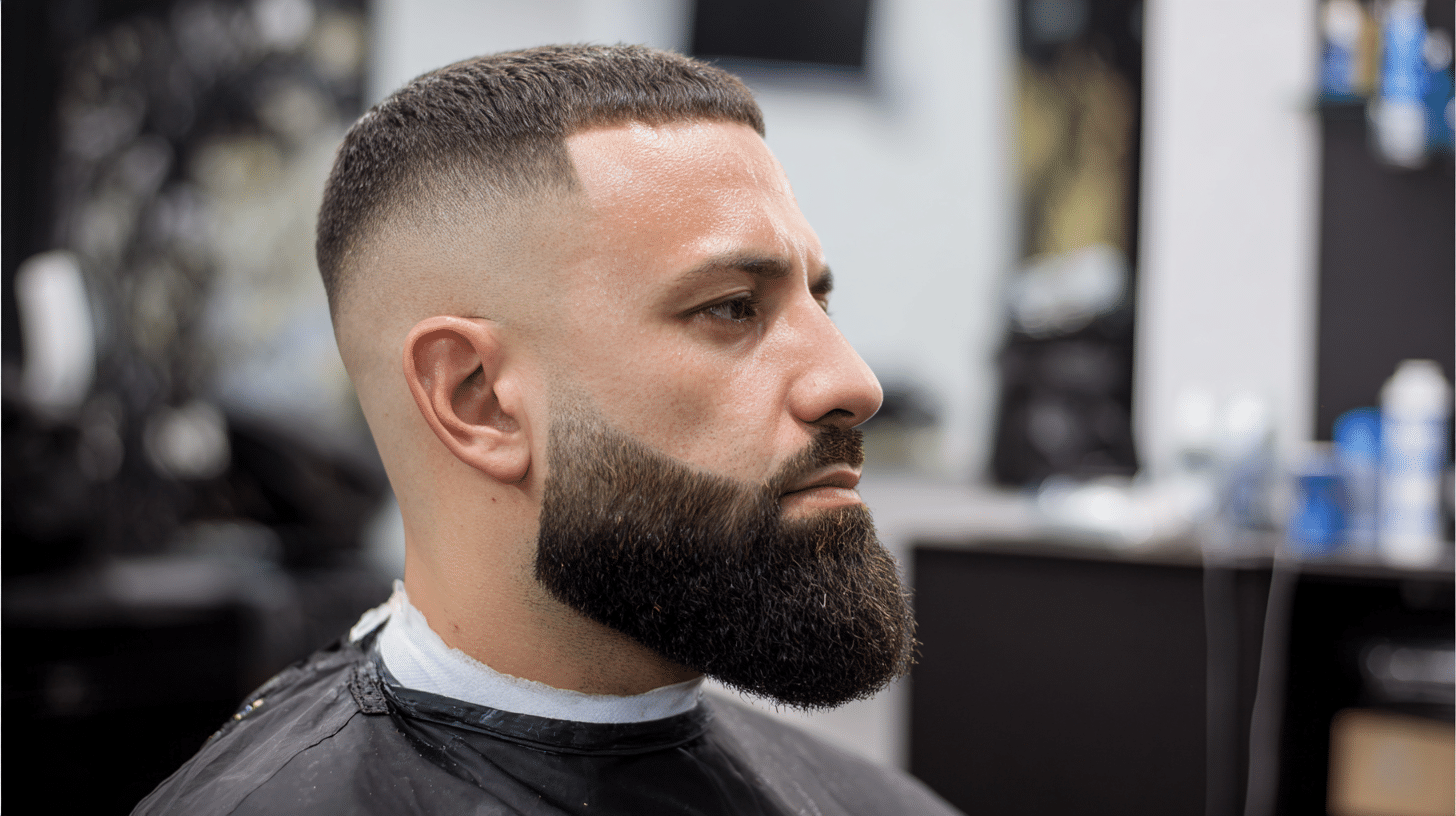
Match your hair fade with a complementary beard fade. The hair gradually shortens toward your ears, while the beard follows the same pattern along your jawline, creating a cohesive, polished look.
- Best for: Guys wanting their whole head, hair, and beard included, to look like one connected style
- How to achieve it: Ask the barber to blend both fades in the same appointment so the hairline fade and jawline fade meet at the same point near the ear
- Maintenance tips: Book both together every two weeks, since mismatched regrowth between the two fades is what breaks the connected look fastest
Color and Texture Options
Want to make your buzz fade stand out even more? Adding color or playing with texture can give your cut extra dimension and visual interest.
15. Two-Tone Buzz Fade
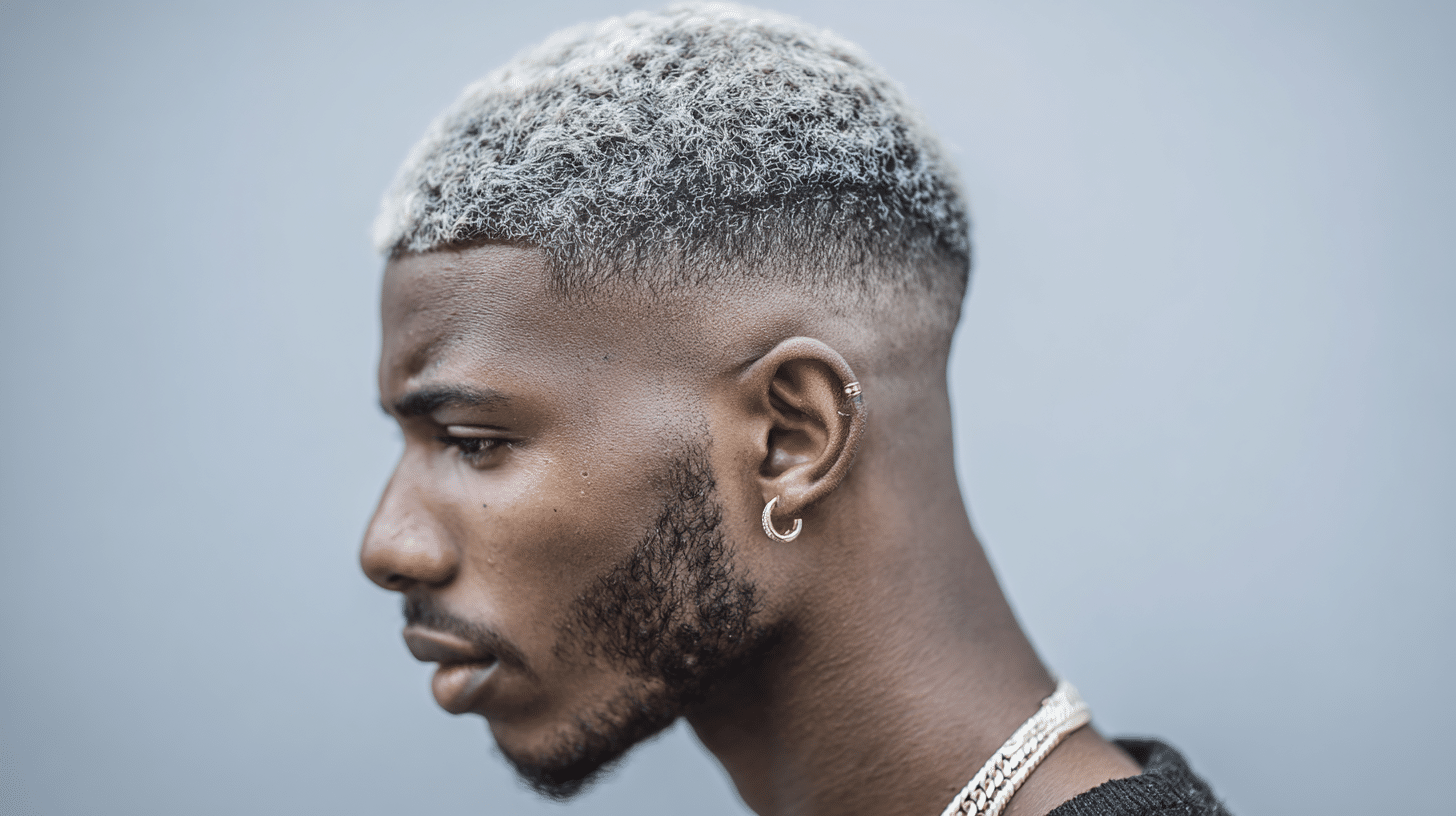
Use different shades to emphasize the fade transition. This might mean keeping your natural color on top while going slightly darker on the faded areas, or vice versa.
- Best for: Guys wanting extra dimension without a full head color change
- How to achieve it: A colorist applies the second shade only to the top or only to the faded section after the cut, then seals it with a toner to blend the edges
- Maintenance tips: Coordinate color touch ups with each fade appointment so the two lines never drift apart as hair grows
16. Platinum or Bleached Buzz Fade
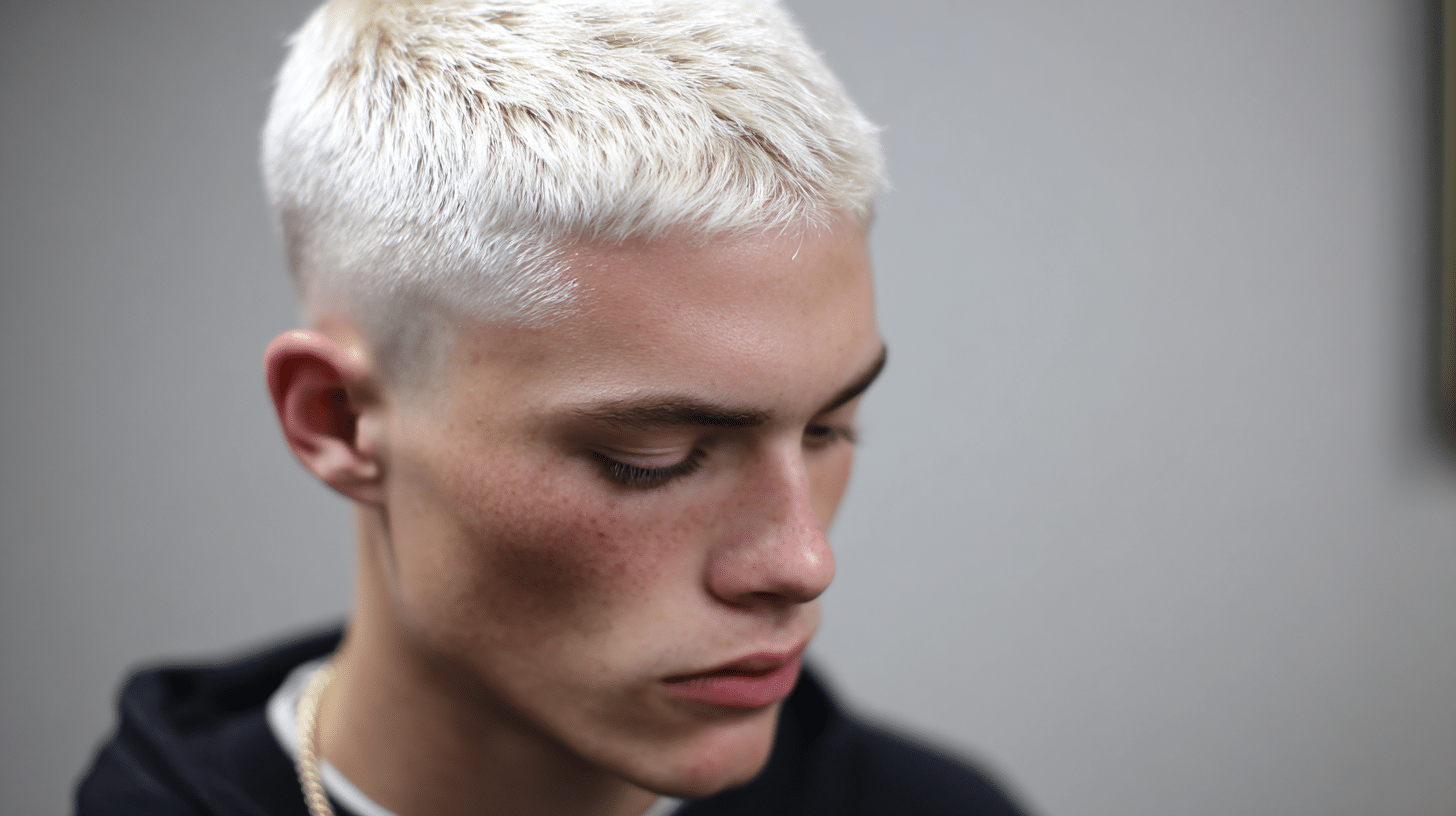
Light colors can make the fade more dramatic and eye-catching. The short length makes maintenance easier than with longer bleached styles.
- Best for: Guys with darker natural hair wanting the highest contrast possible against the fade
- How to achieve it: Bleach is applied evenly to the top section only, left to process, then rinsed before the sides are faded so the color line stays clean
- Maintenance tips: Apply a scalp conditioning oil between visits, since bleach dries out skin more noticeably at short lengths
17. Pastel Buzz Fade
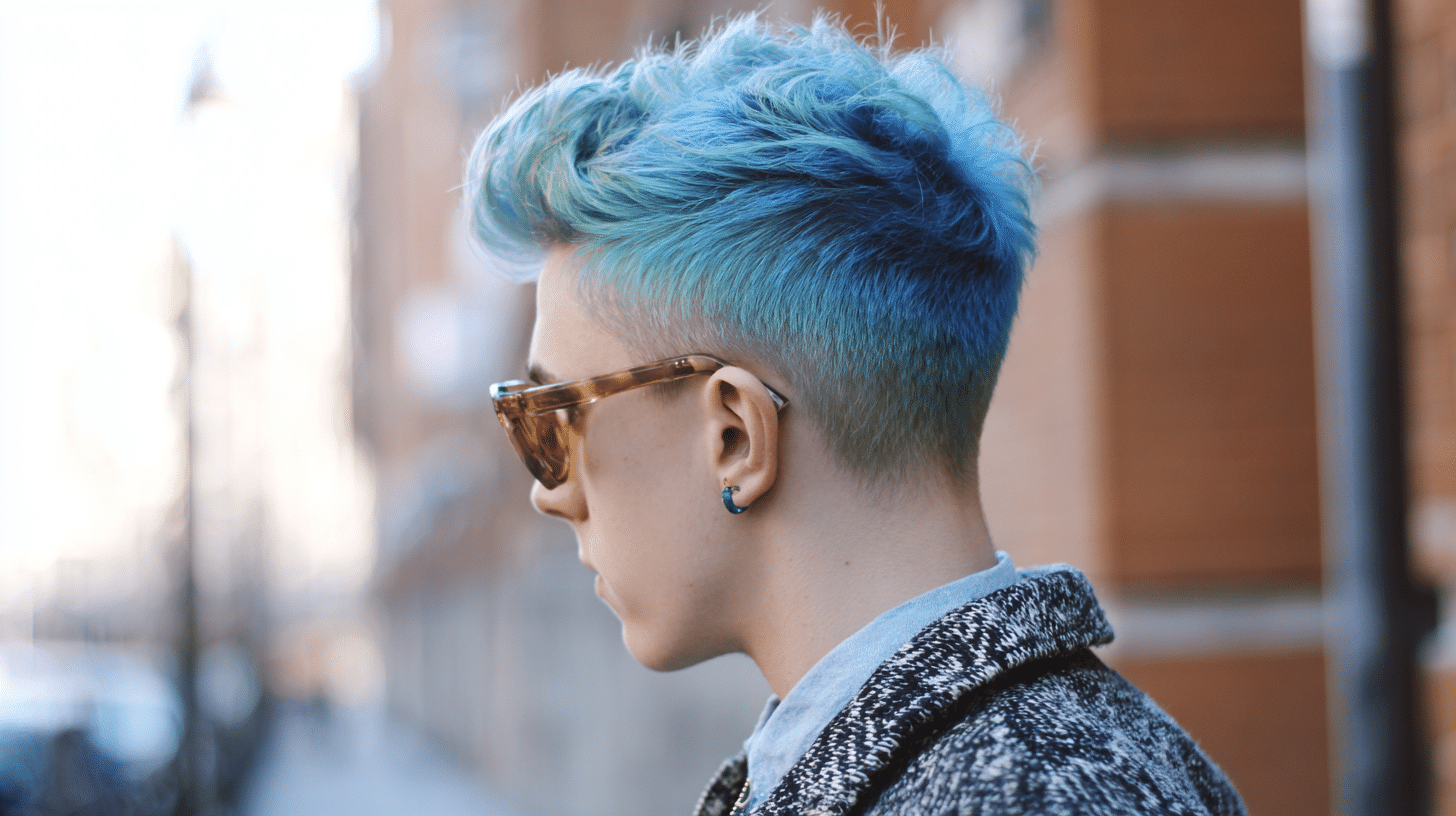
Soft colors like blue, pink, or green can add personality while remaining professional in many settings. The short length means the color commitment is minimal.
- Best for: Guys wanting to try color without a long-term commitment
- How to achieve it: Hair on top is pre-lightened first, then a semi-permanent pastel dye is applied over it while the sides stay untouched and natural
- Maintenance tips: No real upkeep needed since the color simply gets cut away with regular fade appointments
18. Textured Buzz for Thick Hair
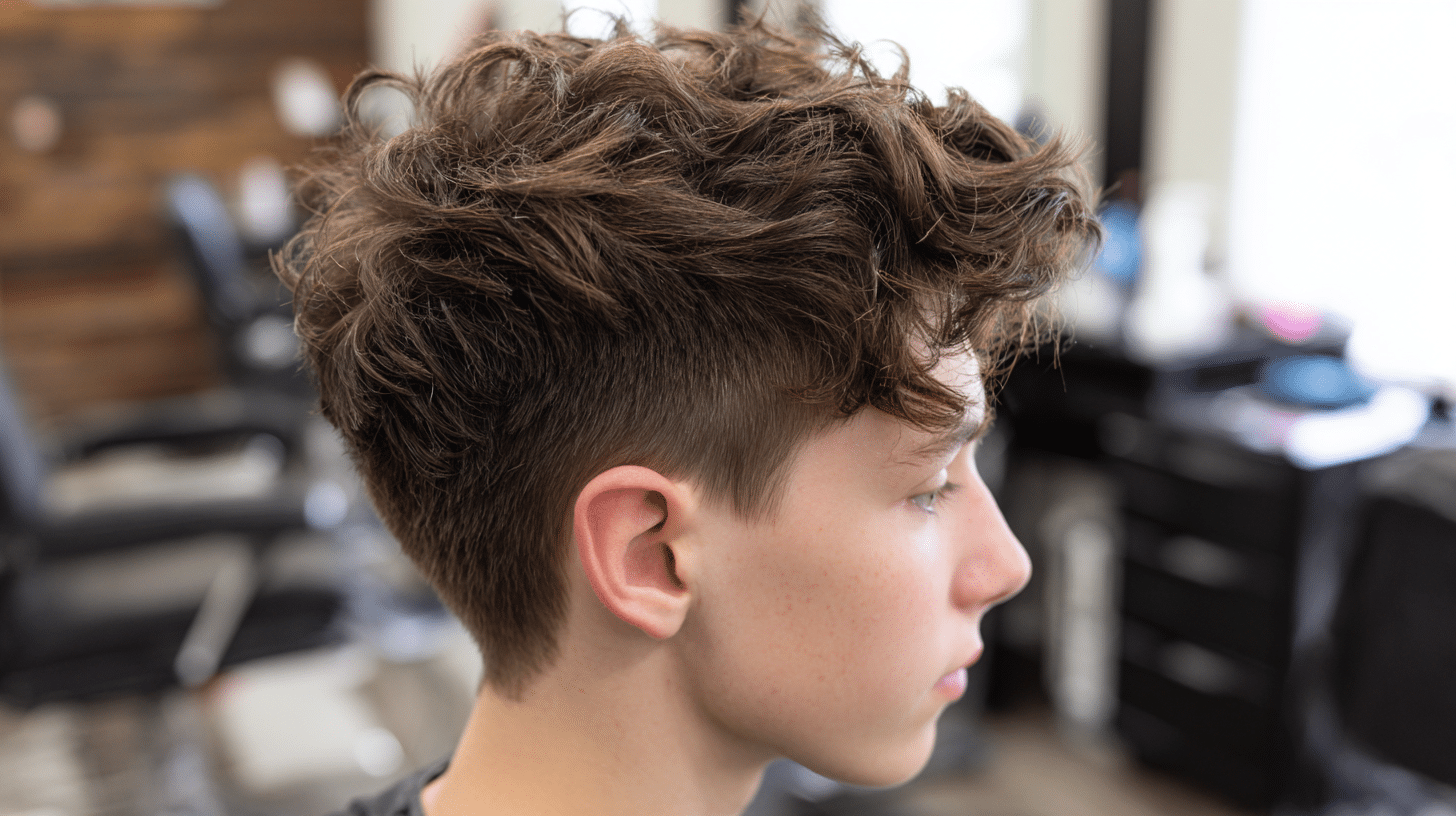
Thick or coarse hair can carry extra bulk on top, even at short lengths, so ask your barber to point-cut or thin out the density with texturizing shears.
This reduces weight and helps the hair sit flatter and move more naturally, giving the fade below room to stand out rather than compete with a heavy top
- Best for: Coarse or dense hair that looks bulky even at a #3 or #4 length
- How to achieve it: Texturizing shears remove weight in random sections rather than an even trim across the top, which is what stops the bulk from returning evenly
- Maintenance tips: Rebook every three weeks, before the thinned sections grow back into a solid mass
Choosing Based on Your Face Shape
Not all cuts work the same on every face. Use these guidelines to pick the buzz fade variation that will best flatter your specific features.
19. Buzz Fade for Round Faces
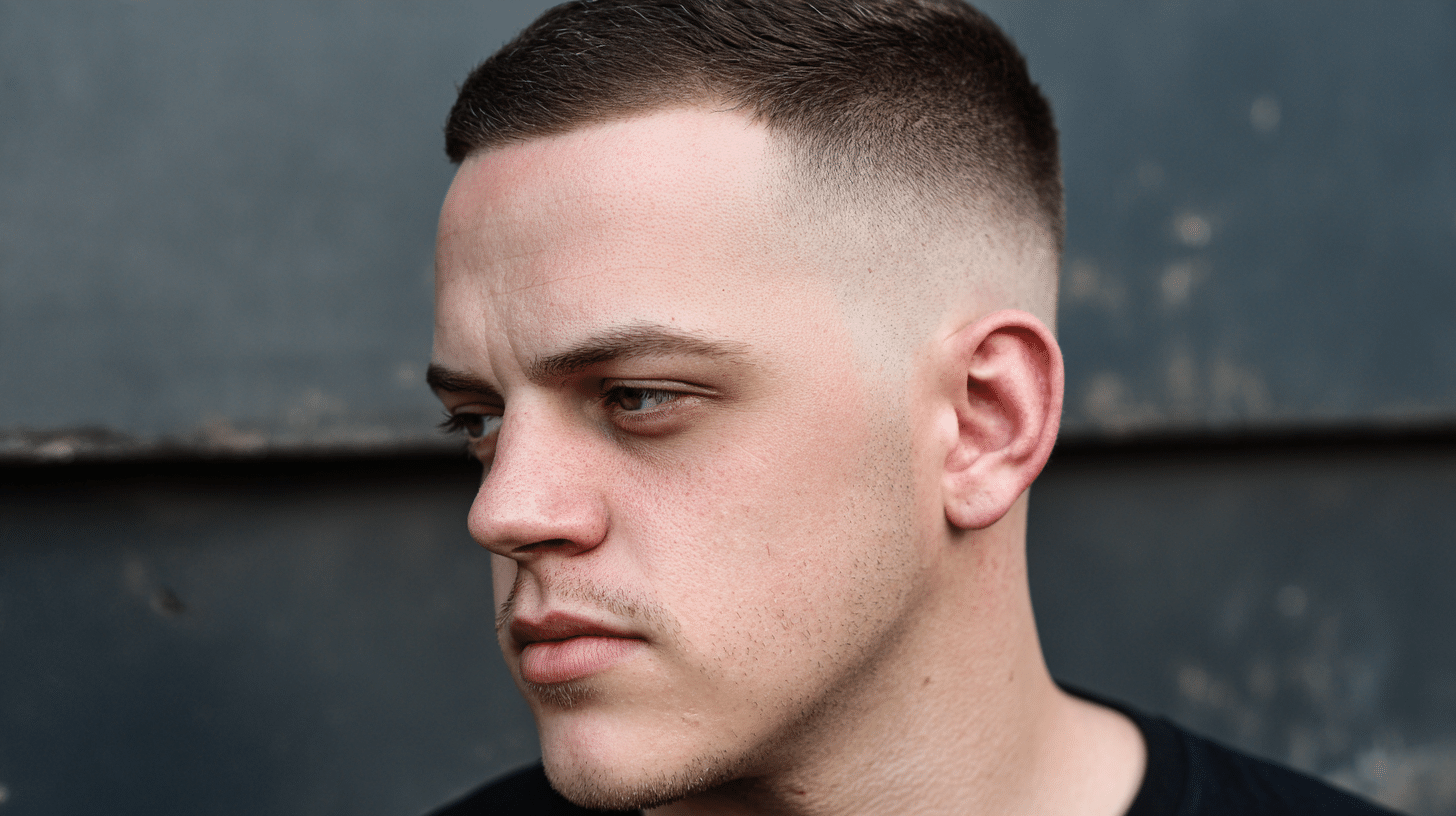
Go for a higher fade to create the illusion of length. Keep slightly more height on top and avoid fades that are too wide on the sides, which can make your face appear rounder.
- Best for: Faces that are wider than they are long
- How to achieve it: Ask specifically for the fade to sit close to the temple rather than the ear, since that placement is what adds the visual length a round face needs
- Maintenance tips: Every two weeks, since a high blend point on a round face loses its sharpness quickly
20. Buzz Fade for Square Faces
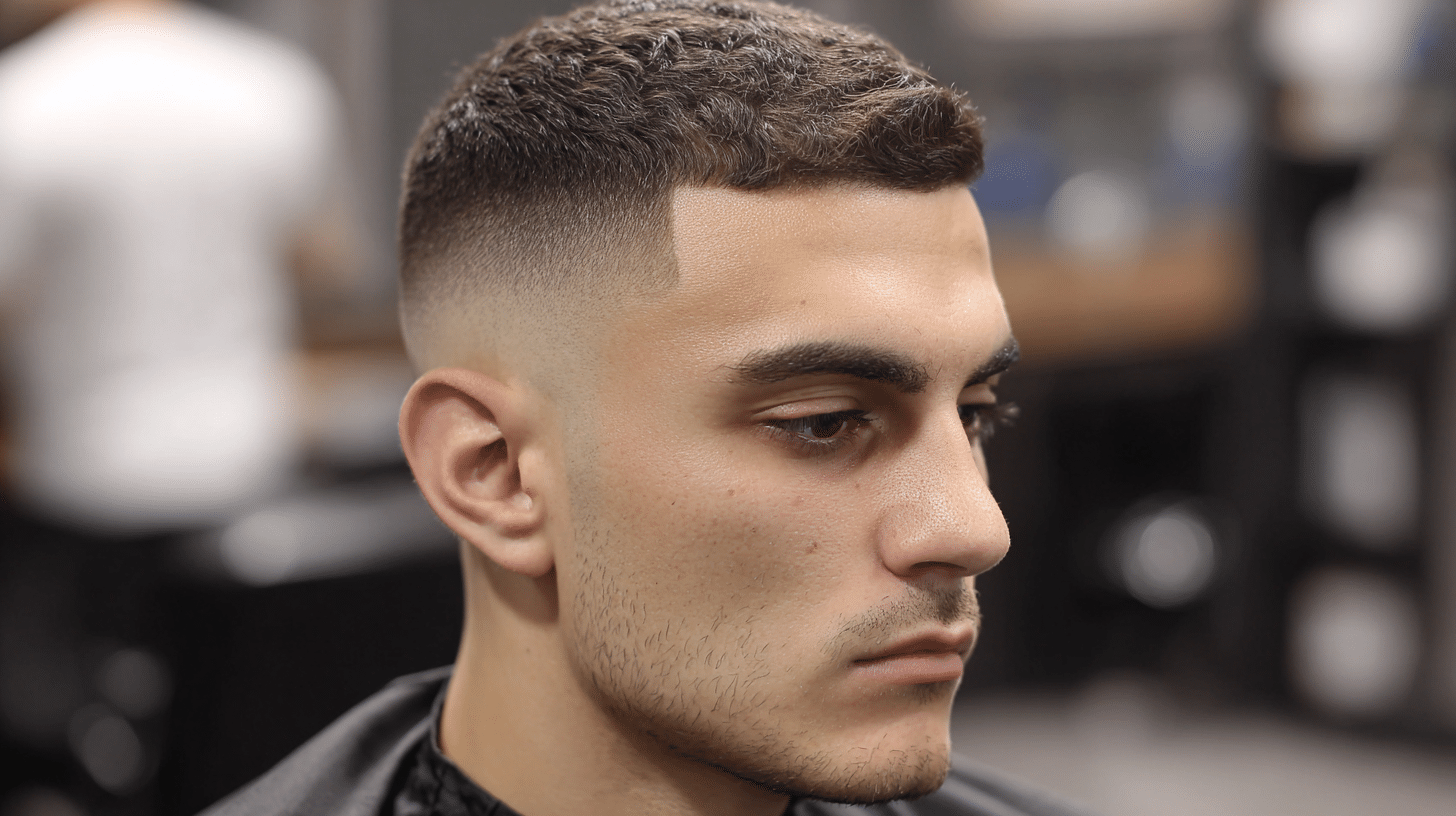
You can handle almost any fade style, but consider softening sharp angles with a gentler taper rather than a skin fade. A mid-fade often works perfectly.
- Best for: Strong, angular jawlines that don’t need extra sharpness added
- How to achieve it: Tell your barber to avoid a hard skin line and instead step the guard down slowly, which softens rather than sharpens the jaw
- Maintenance tips: Every three weeks is enough, since a gentler taper hides regrowth better than a sharp fade would
21. Buzz Fade for Oval Faces
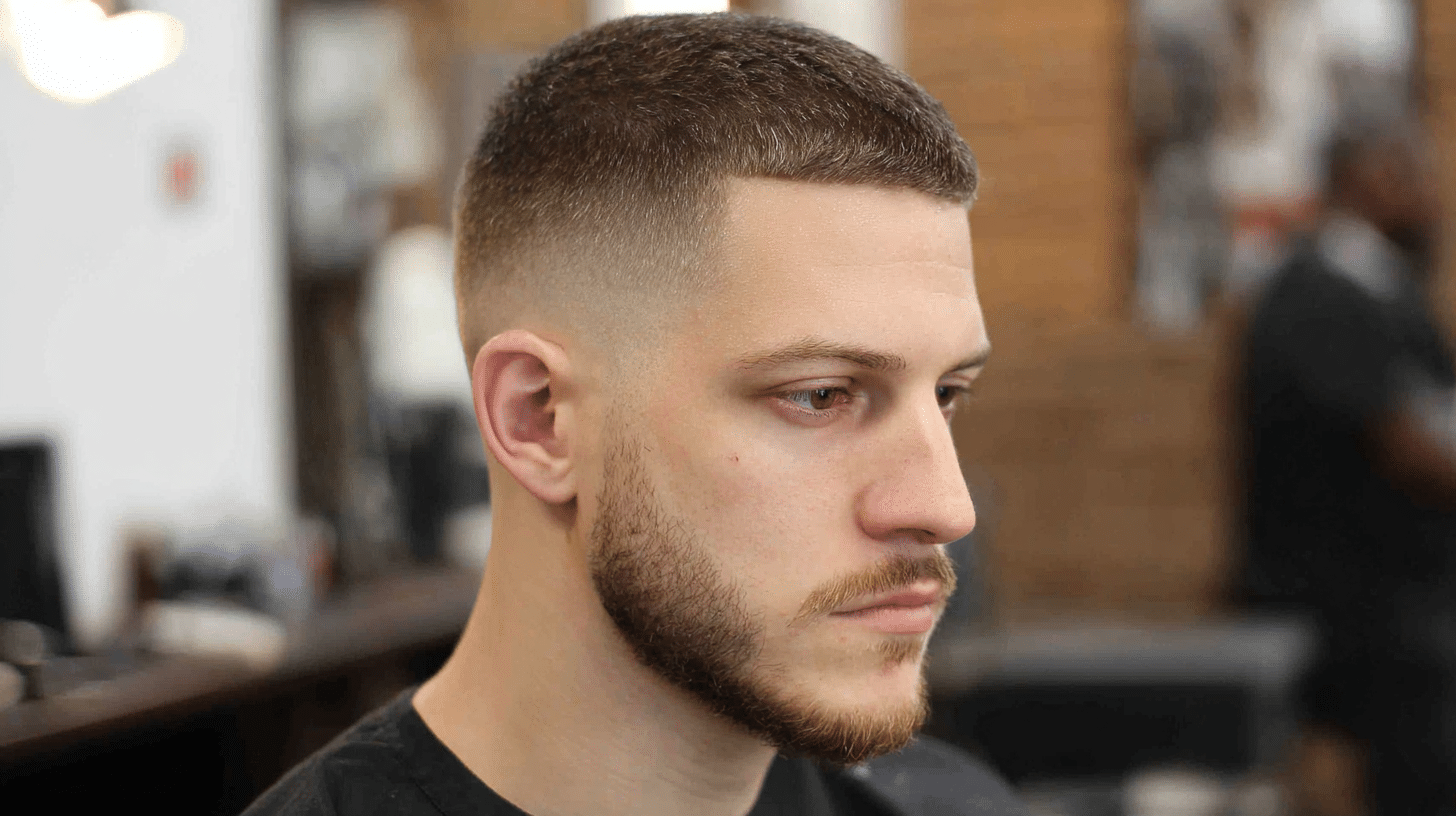
You’re lucky – most buzz fade variations will work well for you. Experiment with different fade heights and creative elements to find what you like best.
- Best for: Balanced proportions where no single feature needs correcting
- How to achieve it: Since no fade height is off limits, base the choice on hair thickness instead; thicker hair suits a high fade, while finer hair suits a low one
- Maintenance tips: Standard three- to four-week rebooking applies regardless of which variation you pick
22. Buzz Fade for Diamond Faces
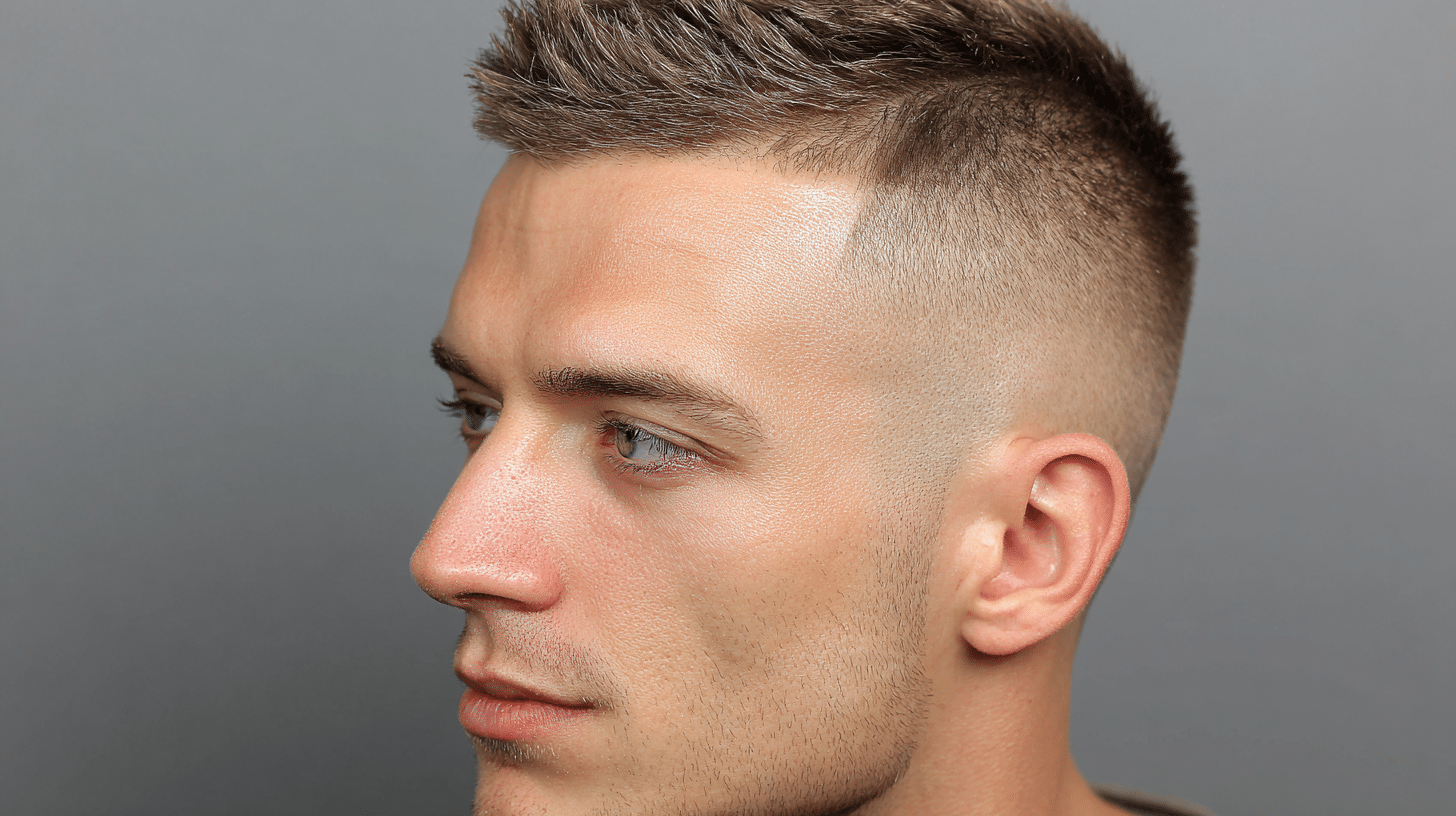
A high-and-tight style works well, keeping the focus on your strong cheekbones while balancing a narrower forehead and chin.
- Best for: Prominent cheekbones paired with a narrower forehead and chin
- How to achieve it: Keep the top very short, a #2 works best, since extra height on top would widen the face at the crown and throw off the balance
- Maintenance tips: Every two weeks, since the high and tight combination grows out visibly fast at the temple
Unique and Trendsetting Options
For those who want something truly different, like a Viking haircut, these specialized fade techniques offer cutting-edge style. They’re conversation starters that still maintain that clean, professional edge.
23. Buzz Fade with Drop Fade
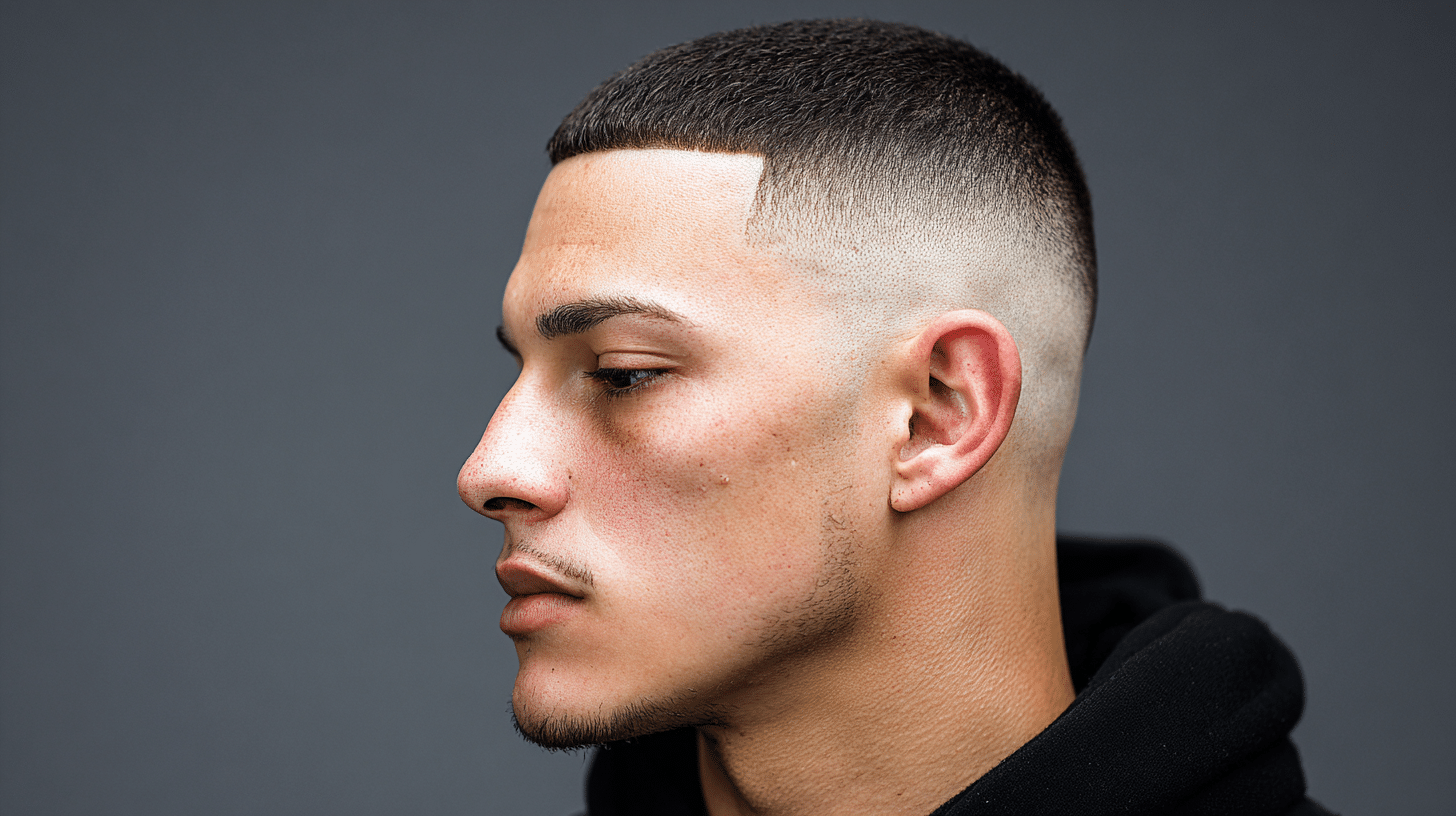
The fade follows the natural curve behind your ear, dropping down toward the neck. This creates a unique silhouette that’s both modern and flattering.
- Best for: Rounder head shapes, since the dropped curve adds an angle that a straight fade line would not
- How to achieve it: The barber guides the fade line to curve downward behind the ear instead of keeping it level around the head
- Maintenance tips: Every two to three weeks, since the curved line needs precise reshaping to avoid looking uneven
24. Buzz Fade with Burst Fade
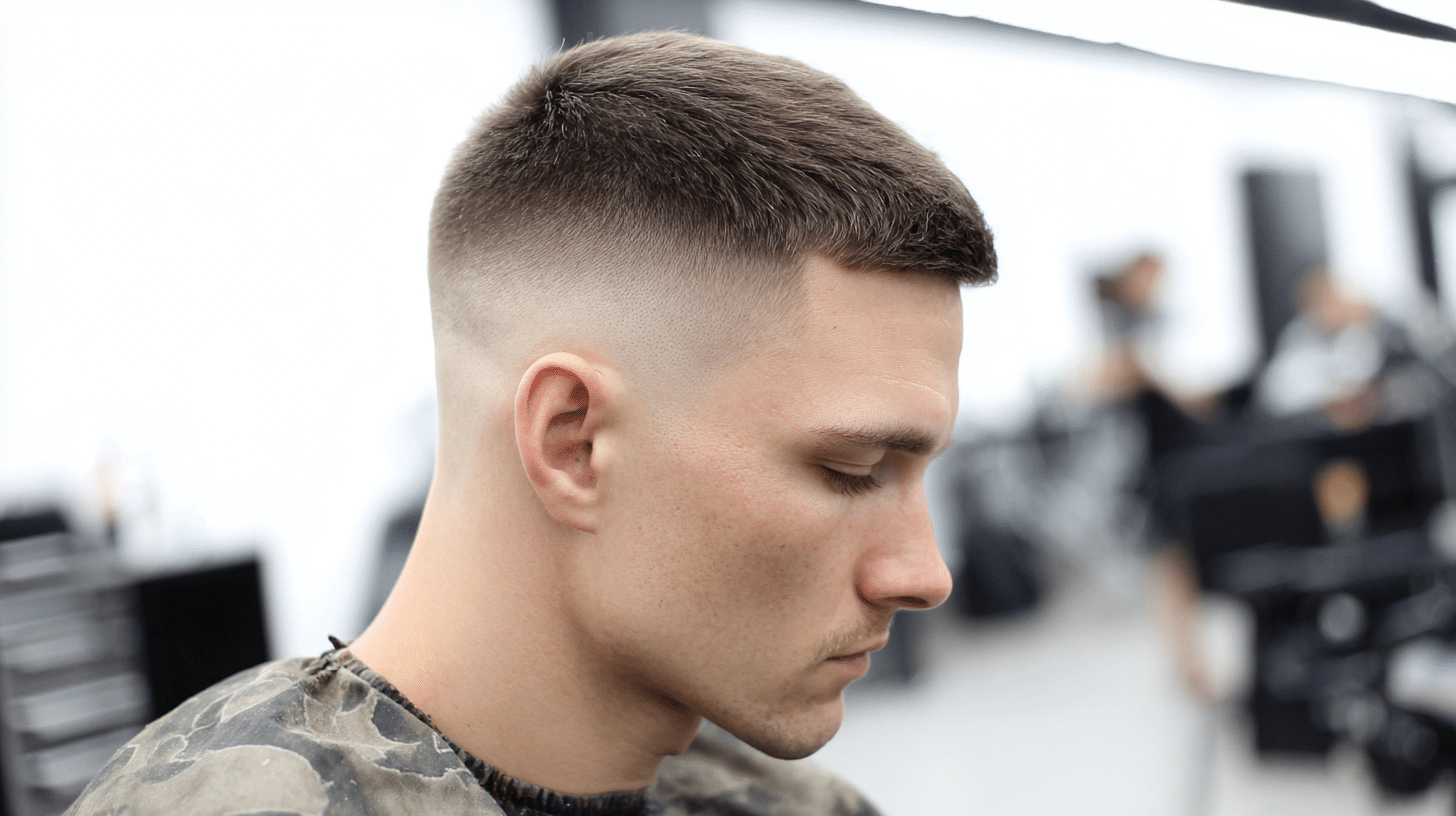
Picture the fade radiating out from behind your ear in a burst pattern. It’s subtle but distinctive, adding visual interest without being too bold.
- Best for: Longer top styles or undercuts, where a burst gives the back a rounded finish instead of a flat line
- How to achieve it: Clippers fade outward from a single point behind the ear in a radiating motion rather than moving in one direction around the head
- Maintenance tips: Every three weeks, since the radiating pattern is more forgiving of regrowth than a straight fade line
25. Buzz Fade with Temple Fade
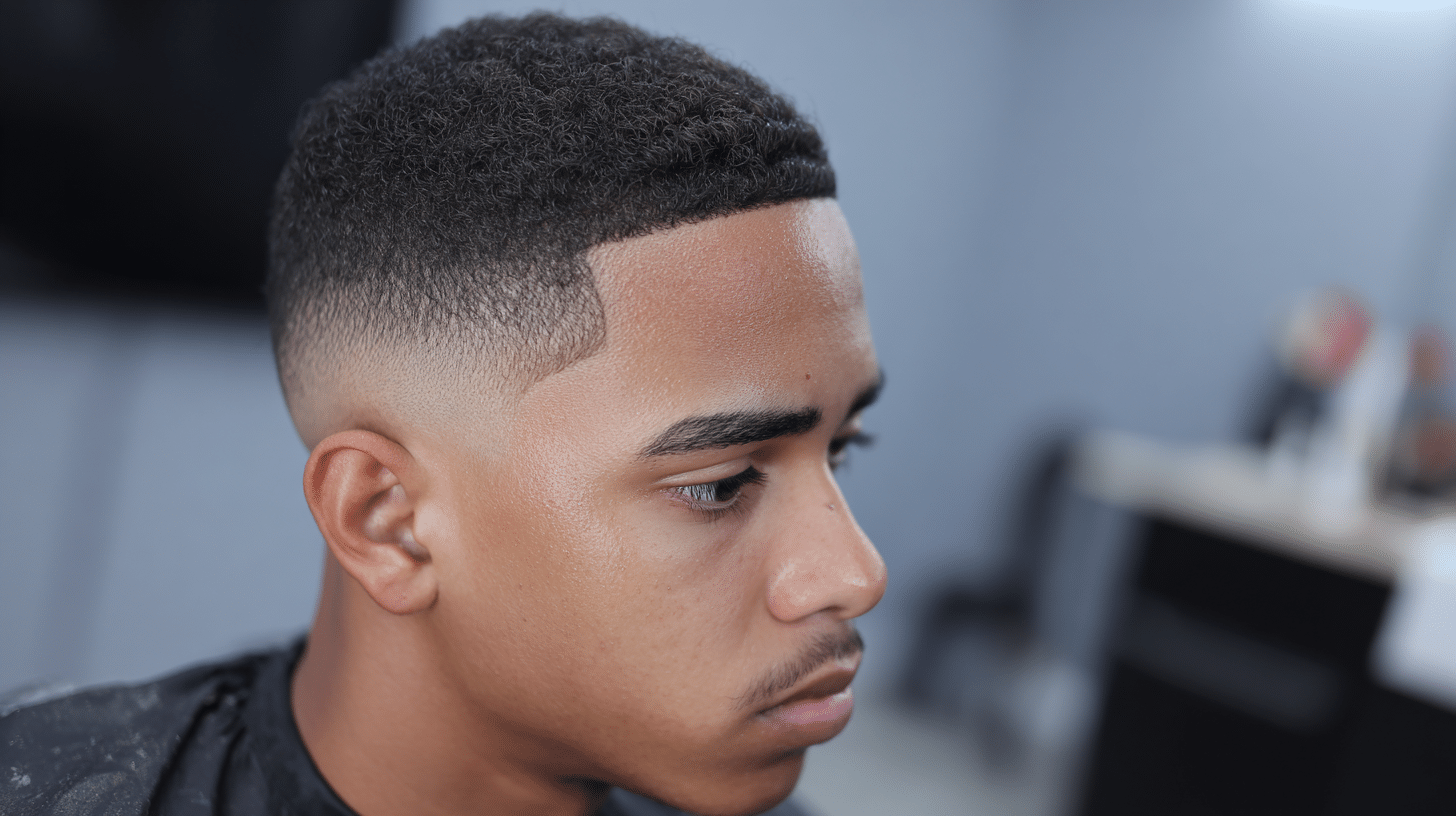
Focus the fade primarily on the temple area while keeping more length around the ears and back. This creates an interesting asymmetrical effect.
- Best for: Guys wanting a partial introduction to fades without committing to a full one
- How to achieve it: Only the temple region is faded down, while the ear and back sections are left at the original buzzed length
- Maintenance tips: Every four weeks, since only the small temple section actually needs reshaping between visits
Buzz Fade by Hair Type
Not all hair behaves the same way under a fade, so knowing your hair type helps you and your barber pick the right approach.
| Hair Type | Best Buzz Fade Approach | Why It Works |
|---|---|---|
| Straight | Skin fade or high fade | Straight hair shows a clean, sharp line, so the contrast really stands out |
| Wavy | Mid fade with slight texture on top | The natural wave adds movement without disrupting the crisp fade lines |
| Curly | Low fade with more length on top | Keeps the fade neat while letting the curls stay full and defined |
| Coily | Taper fade with rounded shape | A gentler transition blends smoothly and keeps the shape balanced |
| Thick or coarse | Textured top with a mid or high fade | Varying the length on top prevents a bulky or helmet-like look |
| Fine or thin | Low fade with a slightly longer top | Adds the appearance of fullness without exposing thin patches |
Once you know how your hair type responds, you can walk into your next appointment and ask for the exact combination that will hold up best between visits.
What Makes a Buzz Fade Work So Well?
Now that you’ve seen all these options, you might be wondering what makes a buzz fade such a reliable choice. The secret lies in how it’s built.
A buzz fade takes the traditional buzz cut and adds a gradual transition from longer hair on top to shorter hair on the sides and back. This creates depth and dimension while keeping the overall length short and manageable.
The real magic happens in its adaptability. You can adjust the fade height, add creative elements, or pair it with facial hair to create a look that fits your personality and lifestyle perfectly.
It’s this flexibility that makes it work for so many different people and situations.
Making Your Buzz Fade Work for You
The key to a great buzz fade is choosing the right variation for your lifestyle, face shape, and personal style. Consider these factors:
- Your daily routine: How much time do you want to spend on your hair each morning? Most buzz fades require virtually no styling time.
- Your work environment: Some careers require more conservative cuts, while others allow for creative expression.
- Your facial features: Use the fade to enhance your best features and balance any areas you’d like to downplay.
- Your hair texture: Fine hair shows fades differently than thick, coarse hair. Discuss your hair type with your barber.
Keeping Your Look Fresh
A buzz fade typically needs refreshing every 2 to 4 weeks, depending on hair growth, to maintain its sharp appearance.
On average, scalp hair grows about half an inch per month, according to research published in the National Library of Medicine, which is why fades with a higher blend point show regrowth faster than those with lower ones.
Between barber visits, keep your neckline clean and consider investing in a good-quality trimmer for touch-ups around the ears.
How to Ask Your Barber for a Buzz Fade
Walking in with the right words makes all the difference. Simply saying “buzz fade” is a great start, but a few extra details help your barber nail the look on the first try.
- Give your guard number: Most buzz fades use a #2, #3, or #4 guard on top, so naming your preference gives your barber a clear starting point.
- Specify your fade height: Let them know whether you want it high near the temples, low around the ears, or somewhere in between.
- Describe the contrast you want: Use words like bold and dramatic for a high fade or subtle and conservative for a low fade.
- Bring a reference photo: Barbers see hundreds of clients, and a photo removes any guesswork about fade height, guard length, or extra details like a hard part or shaved line.
- Mention your hair type and face shape: A good barber uses this information to adjust the fade so it works with your natural growth pattern and flatters your features.
- Ask for a clean blend: A simple line like keep the sides tight and blend it clean tells your barber you want precision.
Walk in with these details ready, and your barber can shape the fade around exactly what you have in mind.
Ready to Take the Plunge?
The best buzz fade is the one that complements your hair type, face shape, and everyday routine.
A small adjustment in fade height or top length can make the same haircut look completely different, so it is worth discussing your preferences with your barber before making a decision.
Save a few styles that stand out, use them as references during your appointment, and choose a cut that feels just as good as it does on day one as it grows out.
Frequently Asked Questions
How Much Does a Buzz Fade Typically Cost?
A buzz fade usually costs between $20 and $45, depending on the barber and your location. Extra services like hair designs or color can increase the price.
Can You Do a Buzz Fade at Home Without a Barber?
Yes, you can do a buzz fade at home with quality clippers and the right guards. However, creating a smooth fade takes practice.
How Short Does Your Hair Need to Be to Start One?
A buzz fade works on most hair lengths, but it is easiest when the hair is under 2 inches long. This helps create an even, clean finish.
Will a Buzz Fade Work With a Receding Hairline?
Yes, a buzz fade can help make a receding hairline less noticeable. A high or skin fade creates a clean, balanced appearance.