Khakis and chinos might look alike, but they’re not the same. Each has its own fabric, structure, and purpose, and knowing the difference helps you dress well without confusion.
Khakis are casual and rugged, while chinos are lighter and cleaner for dressier occasions.
Understanding which one fits the setting saves time when getting ready and helps your outfit look intentional.
Learn exactly what separates khakis from chinos, when to wear each, and how to style them with shirts, shoes, and layers that match.
With a few quick distinctions, choosing the right pair becomes simple and effortless.
What Are Khakis?
Today’s khakis are made from a heavier cotton twill fabric. They feel sturdy and tough, like pants that can handle whatever you throw at them.
Most khakis have a relaxed, comfortable fit. You might notice visible stitching on the outside, and some pairs even have pleats (those little folds) at the waist.
When people think of khakis, they usually picture colors like beige, tan, or other earthy tones. That classic khaki color is what most folks wear to casual work days or weekend barbecues.
What Are Chinos?
Chinos are made from a lighter-weight cotton twill or sometimes a cotton blend. They feel smoother and softer than khakis.
The construction is sleeker; you’ll usually see a flat front with no pleats, hidden seams that don’t show, and legs that taper slightly toward the ankle.
Here’s something cool about chinos: they come in way more colors than khakis.
Sure, you can get them in khaki tan, but you’ll also find navy blue, gray, olive green, burgundy, and even brighter shades. This makes chinos super versatile for different occasions and styles.
Key Differences Between Khakis & Chinos
Now that you know their history, let’s get into the details that matter when you’re choosing which pair to wear. Here are the six main differences you should know about.
1. Material & Weight
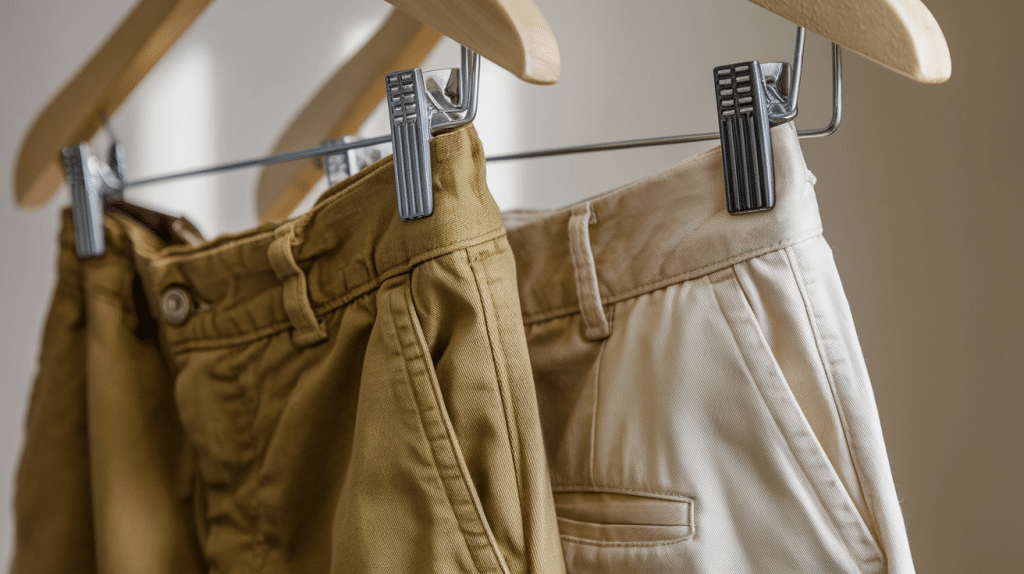
Khakis use a heavier, more rugged fabric. Think of them as the workhorse pants in your closet. Chinos are made from lighter and smoother material.
They feel more like the sleek sports car of pants. The weight difference affects how each pair feels on your body and how they handle daily wear.
2. Durability & Wear
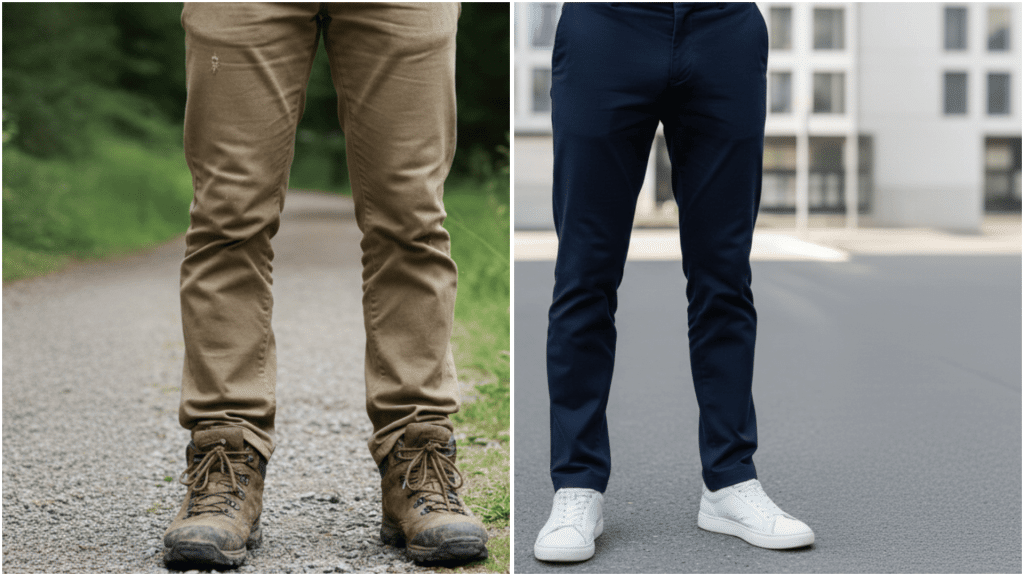
Because khakis are thicker, they hold up better to tough use. Hiking, yard work, or bumping around on the weekend? Khakis have your back.
Chinos are more delicate but perfect for day-to-day wear when you’re not doing anything too rough. Choose based on your activity level.
3. Formality Level

Here’s an important one: chinos are generally dressier than khakis. If you’re trying to look a bit more polished, chinos are your friend.
They work for situations where you want to look put-together without wearing dress pants. Khakis lean more toward casual and comfortable settings.
4. Fit & Cut
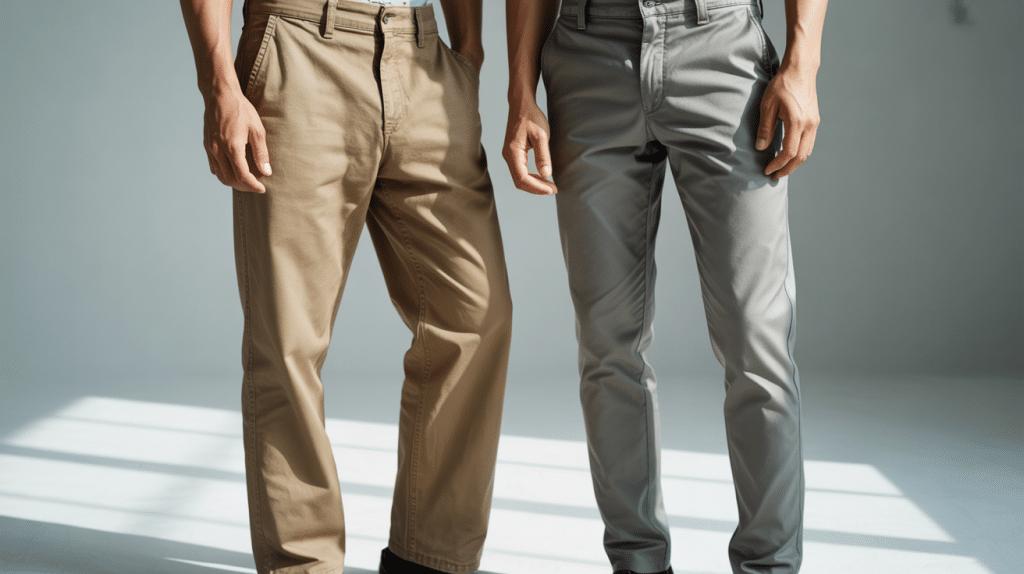
Chinos often have a slimmer, more tapered fit. They hug your legs a bit more and create a modern silhouette.
Khakis tend to be more relaxed or straight-cut, giving you that comfortable, easygoing vibe. The fit you choose depends on your personal style and comfort preferences.
5. Color & Variety
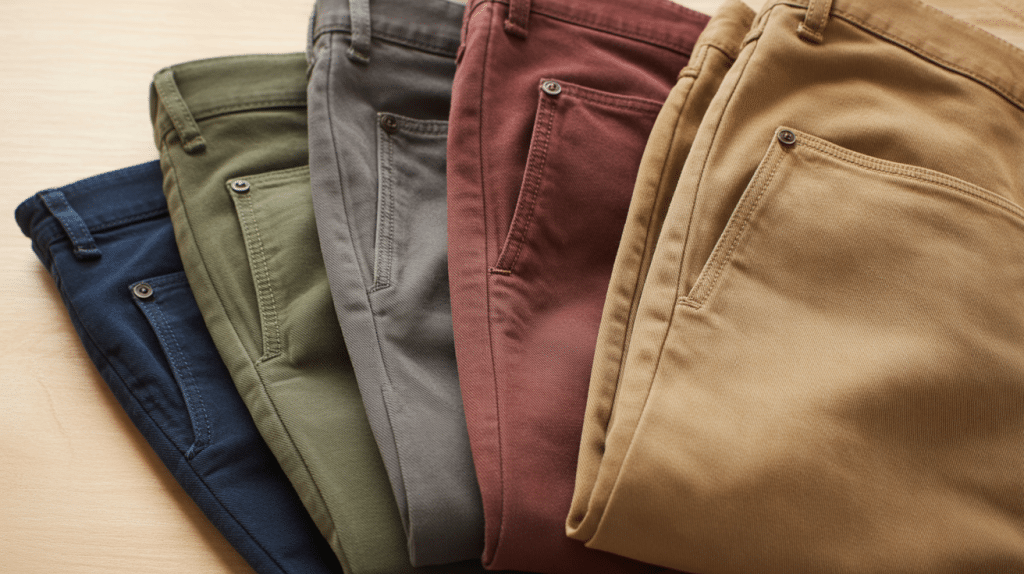
Chinos come in tons of colors beyond the traditional tan. You’ll find navy, gray, burgundy, olive green, and even brighter shades.
Khakis usually stick to their classic tan and earth-tone palette. If you want pants in multiple colors to match different outfits, chinos offer more options.
6. Details & Finishing
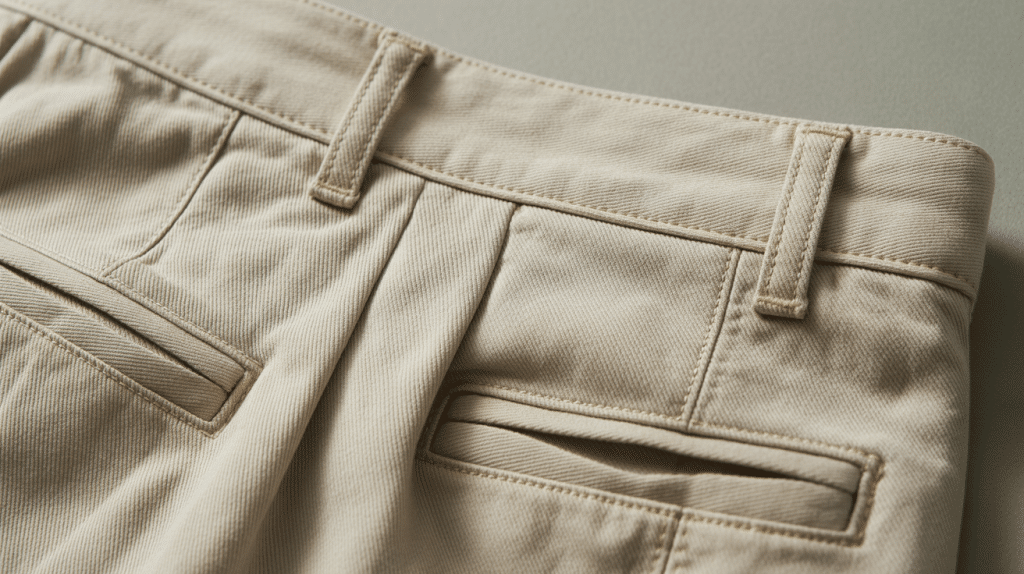
Look closely at the seams and stitching. Chinos have concealed seams and subtle design details. Everything is meant to look clean and refined.
Khakis show their stitching more and might have visible pockets or pleats, giving them a more casual, functional appearance that emphasizes practicality over polish.
What’s the History: Khakis and Chinos
Both khakis and chinos started as military uniforms before becoming the casual pants we know today.
1. Khakis
The word “khaki” means “dust” in Persian, and these pants were born from a clever solution to a military problem.
| Time Period | What Happened |
|---|---|
| Mid-1800s | British officer Harry Lumsden dyed uniforms dusty tan using mud and coffee in India |
| Early 1900s | Khaki became the standard color for military uniforms worldwide |
| 1940s | American WWII soldiers wore khaki pants as part of their uniforms |
| Post-WWII | Veterans brought khaki pants into civilian fashion |
| 1990s | Khakis became a business casual staple in American offices |
2. Chinos
Named after the Spanish word for China, chinos were designed for comfort in hot, tropical climates.
| Time Period | What Happened |
|---|---|
| 1898 | American soldiers needed lightweight pants for the tropical climate in the Philippines |
| Early 1900s | “Chino cloth” from China used to make military uniforms |
| Post-War Era | Soldiers brought chinos home and wore them in civilian life |
| Mid-1900s | Chinos evolved with tailored fits and expanded color options |
| 1950s-60s | Became a preppy fashion staple on college campuses |
| Today | Considered one of the most versatile pant options available |
Both pants share military roots, but they took different style paths. Khakis stayed more casual and rugged, keeping their connection to durability and comfort.
Chinos evolved into a more refined option, gaining popularity as a smart-casual choice that bridges the gap between dressy and relaxed.
Best Occasions for Each
So when should you reach for khakis versus chinos? Let’s make this super practical.
Khakis Work Best For:
- Casual work days or business casual environments where comfort matters
- Outdoor settings like picnics, camping, or travel
- Weekends when you’re running errands or hanging out with friends
- Any situation where you need pants that are durable and comfortable
Think of khakis as your reliable, go-anywhere pants that won’t let you down.
Chinos Work Best For:
- Semi-formal or business casual settings where you want to look sharp
- Dinner dates, presentations, or casual meetings
- Times when you might need to shift from a casual afternoon to a nicer evening event
- Situations where you want pants that can be dressed up or down
Chinos are like that friend who always knows what to say. They fit in almost anywhere and make you look good doing it.
Styling & Pairing Tips
Now for the fun part: putting together great outfits with your khakis and chinos.
1. How to Style Khakis
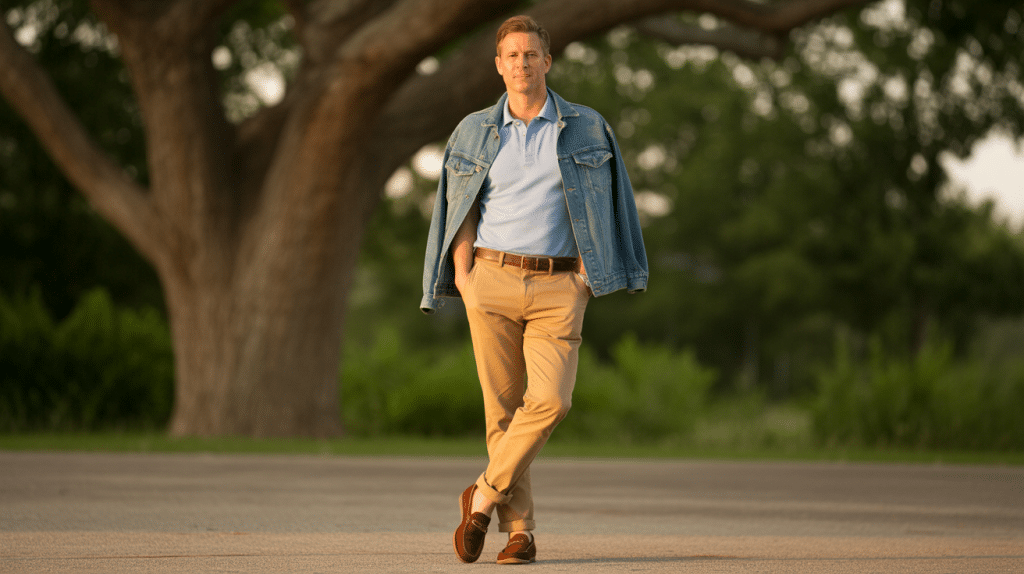
Khakis love a relaxed, casual vibe. Try pairing them with polo shirts for a classic look. Rugged sweaters work great in cooler weather, and casual button-down shirts keep things simple but stylish.
For shoes, think boots, canvas sneakers, or loafers in earthy colors like brown or tan. These match the natural, laid-back feel of khakis perfectly.
Want to add a layer? A denim jacket or lightweight blazer over a t-shirt and khakis creates an effortlessly cool outfit.
2. How to Style Chinos
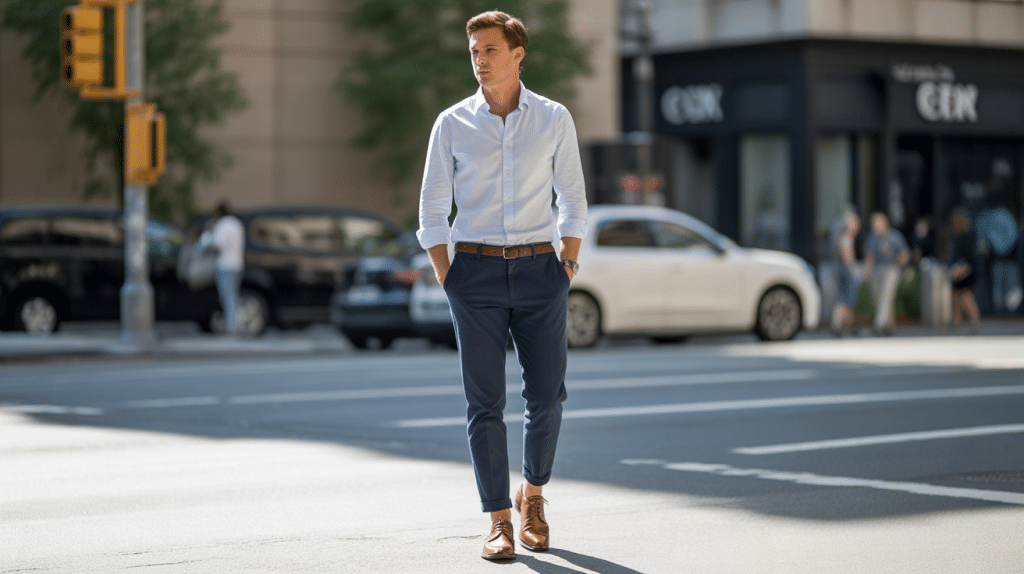
Chinos let you get a bit fancier. Pair them with crisp dress shirts for work or important events. Sport coats and knitwear also look fantastic with chinos when you want to step up your style game.
For footwear, try loafers, oxfords, or even clean minimalist sneakers. These shoes match the refined look of chinos and help you transition from casual to dressed-up seamlessly.
One cool trick with chinos: use them in monochrome outfits (all one color) or try bold color coordination. Navy chinos with a white shirt and brown shoes? Classic. Burgundy chinos with a gray sweater? Stylish and modern.
3. Belt and Shoe Matching
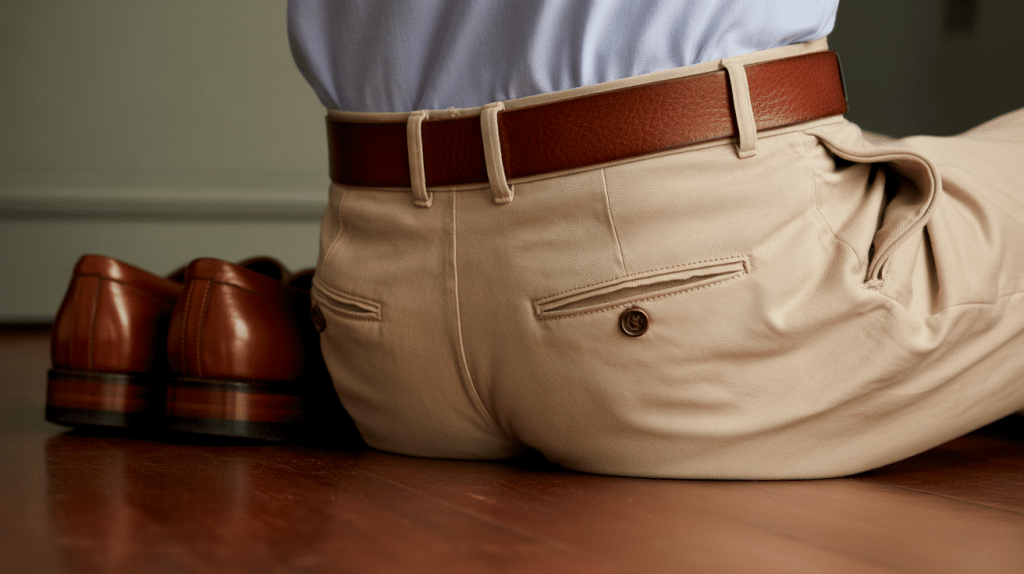
Here’s a quick tip for both: match your belt to your shoes, and pick styles that fit the formality level.
Brown leather works great for both khakis and chinos. Black leather leans more formal, so save it for dressier chino outfits.
Conclusion
Let’s wrap this up. Khakis and chinos might look similar at first glance, but now you know the real story. Khakis are heavier, more rugged, and perfect for casual, everyday wear.
They come in classic earth tones and have a relaxed fit that prioritizes comfort.
Chinos are lighter, sleeker, and dressier. They come in tons of colors and have a more tailored look that works for business casual settings and occasions when you want to look polished.
The good news? You don’t have to choose just one. Having both styles in your closet gives you flexibility.
The final takeaway is simple: choose based on what you’re doing, how you’re feeling, and what you already have hanging in your closet.