Believing in yourself while wearing a swimsuit isn’t a matter of attitude. It’s a matter of engineering. When the rise and side design are done correctly, and the fabric bounces back perfectly, a confident silhouette isn’t a gamble, it’s a decision.
Why “Bold” Swimwear Feels Riskier Than It Is
People typically don’t steer clear of a high-cut or Brazilian bottom because they find it unappealing when observing it on display. They shy away because at some point in the past a certain style shifted and did not cover enough or more than what was promised by the product image. This expectation versus reality induced anxiety is an actual obstacle, not a small styling inclination. 85% of women in the Dove Global Beauty and Confidence Report disclose that they’ve forgone significant occurrences, such as beach outings and holidays, because they felt unhappy with their appearance. That’s a good deal of life to miss out on for a fairly insignificant piece of Lycra.
The solution isn’t a motivational discussion to love your body as it is. It’s the realization of what exactly the bold cut should achieve on your body, any body, prior to making a purchase. Once you’re aware of the criteria to validate, a good deal of the experimentation vanishes.
Coverage Names Mean Almost Nothing Across Brands
Here’s the part nobody tells you when you’re scrolling a swim collection: “cheeky,” “Brazilian,” “string,” and “high-cut” are marketing words, not standardized measurements. One retailer’s Brazilian cut is another retailer’s cheeky. A brand that runs its sizing generously might label something “moderate” that reads as bold on a competitor’s model. Coverage terminology is inconsistent enough that treating a label as gospel will let you down.
Instead, use labels as a starting point, then judge the actual garment on three things: side seam width, rear panel coverage, and rise. A Brazilian cut typically sits between cheeky and thong on the coverage spectrum, with narrower side seams than a classic bottom but a fuller rear panel than a thong or string style. That fuller panel is what makes Brazilian cuts feel bold without feeling exposed – there’s still fabric doing real work, it’s just cut differently than a traditional bottom.
When you’re comparing options, look past the category name and look at the product photos from multiple angles, plus any written coverage description. This is where it helps to shop somewhere that gives you more than a single hero shot. Sommerswim’s collection of Brazilian Bikini Bottoms lays out coverage details and size guidance alongside each style, which matters more than it sounds like it should – it’s the difference between guessing and actually comparing cuts before you commit.
The Three Specs That Decide Whether a Bold Cut Works
If you’d like to take as much of the guesswork out of swimwear shopping as possible, stop buying by feel and start buying by three numbers: rise, side width, and leg opening.
Rise is essentially where the front of the bottom hits in relation to your natural waist and hip line. A higher rise on a Brazilian bottom will visually lengthen your torso and can offset a bolder rear cut, because the eye reads the overall silhouette, not just the coverage percentage. A lower rise puts more emphasis on the hip and can feel more exposed, even with the exact same rear coverage.
Side width is the actual fabric measurement at the hip. It’s the number that makes the difference between a “cheeky-bold” cut and something that’s truly minimal. It’s having thin side seams, sometimes just a strip of fabric, one tie, or a tiny piece of elastic, that pushes a bottom over that Brazilian/thong border. If you’re nervous about exposure, this is the spec to prioritize over the rear coverage itself.
Leg opening describes how the cut sits against your leg and how much it visually cups inward at the hip crease. A higher leg opening elongates the leg line, which is why high-cut styles photograph as dramatically bolder than they actually feel when being worn – it’s that your eye is following the curved line up and reading your whole leg as being exposed, even though the rear coverage hasn’t changed a ton.
Why Fabric Content Matters as Much as the Cut
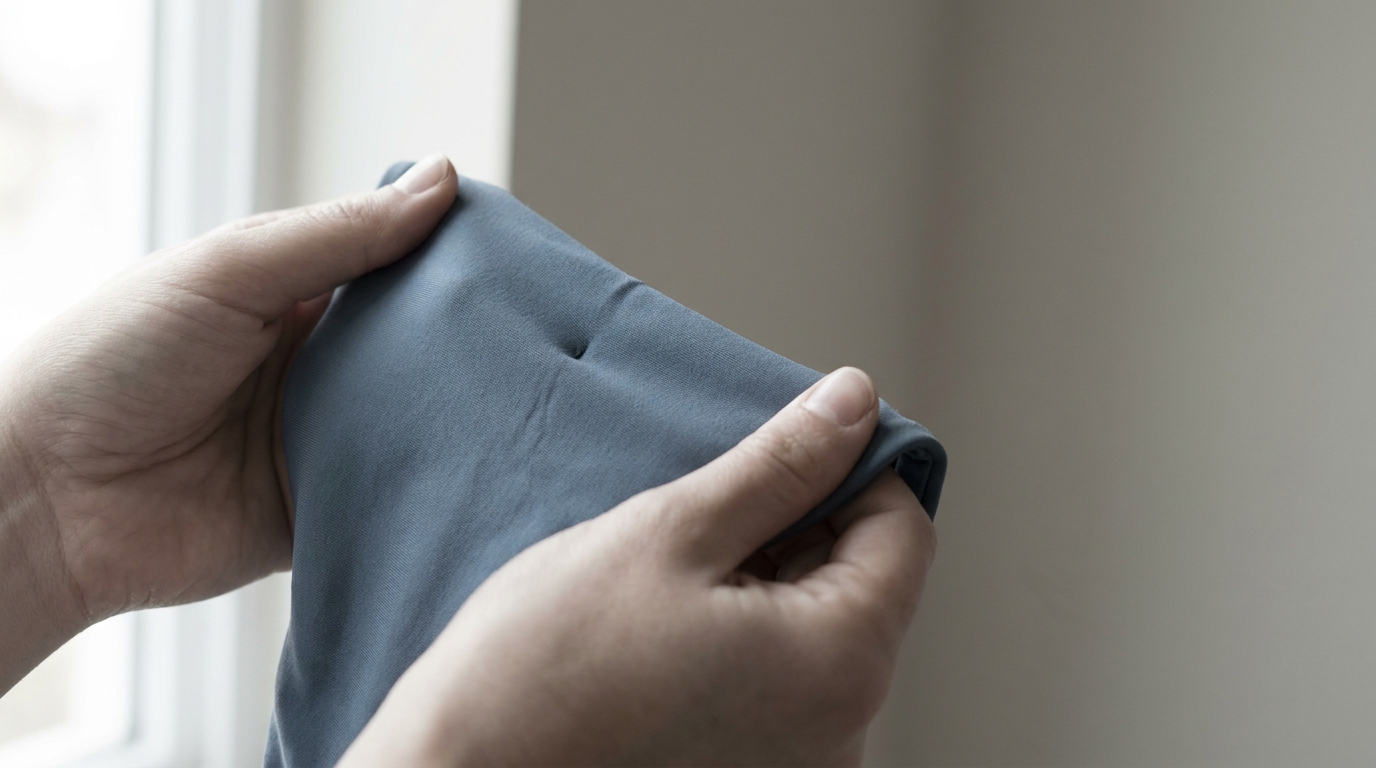
Even if it’s a well-designed cut, your swimwear in cheap fabric will let you down. But the thing is, swimwear that holds shape through actual swimming, sitting, and repeat wears requires a specific fiber blend, and most consumers never even look at this particular spec.
You want something in the neighborhood of 70-80% nylon or polyamide to about 20-30% elastane (which you might see for sale as spandex). The nylon or polyamide is what makes the fabric resistant to chlorine, sunscreen oils, and general wear. The elastane is what gives it stretch recovery, meaning it snaps back to the shape it was before you sat down or swam a few laps.
You can test this before you even leave the fitting room, or right when a package arrives. Just stretch the fabric between your fingers and let go. Good swimwear fabric recovers instantly, with no visible sag or looseness where you pulled it. If it stays stretched out, or if it takes a second to slowly creep back, that bottom is going to lose its shape fast, and a bold cut with loose fabric is a genuinely different experience than a bold cut with fabric that holds tension against your body. The cut isn’t the problem in that scenario. The material is.
The At-Home Movement Test That Actually Predicts Fit
Mirrors are pretty much useless as a litmus test for whether or not a swimsuit bottom fits. Swimsuit bottoms fail when they fail during action, not when you’re standing perfectly still and admiring how good your butt looks.
Before you write a bottom off as ever being workable, do a motion-based check: squat down like you’re picking something off the ground, bend forward at the waist, and walk a few steps. This three-part check reveals migration and gapping that standing still will never show you. A bottom that looks perfectly fitted while you stand can ride up in the rear during a squat or gap at the hip crease when you bend. If it holds its position through all three movements, you’ve got a genuine fit, not just a flattering photo in the mirror.
This is especially important for high-cut and Brazilian styles in particular. The narrower side seams and higher leg openings aren’t just there for aesthetics, they’re functionally making the bottom less stable because there’s less fabric in contact with your body to hold that sucker in place. With the broader, more conventional cut, there’s a little more room for error just because there’s more fabric in general making contact with your skin and keeping the bottom in place. The bolder the cut, the more that suit is doing with less material, so fit is everything.
Sizing Between Two Numbers
If you find yourself in between sizes, hips-wise, it’s always recommended to size up and use the ties to secure the perfect fit for your body. It’s common practice since it’s a lot easier to adjust the ties than to magically expand the fabric of a too-small bottom. Especially considering it can’t be let out. Size up on a tie-side and you’ve got a margin to work with. Cinching a tie-side bottom doesn’t change the coverage, which can be counted as a win.
What you don’t want to do is go for a hip size that has you feeling exposed because the next number up felt a bit too roomy. Going up a size might mean the perfect amount of coverage actually sits a touch low on your hip bone but it’s easier to secure at that point than the bottom that just doesn’t stay on. The cozy factor is key. Losing your suit while diving under waves is a bummer.
When you shop an e-commerce site, it’s a great idea to use the provided size charts but it’s an even better idea to check if your favorite brand has their own size guides. Trust a rise measurement over low, mid, and high descriptors any day of the week. Scroll down, find your comfortable rise, and measure it right onto the bottoms of a suit in your drawer. No more guessing. Just count the centimeters.
Style Choices That Offset the Anxiety Without Changing the Cut
You don’t need to cover up a bold bottom with a boring top, but you can make styling choices that direct the eye where you want it to go. For example, pairing a minimal Brazilian or high-cut bottom with a substantial top can create a well-balanced overall silhouette, as opposed to one that feels like too much skin all over.
A ruched front panel is an excellent detail to know about, as ruching provides that confidence-inducing busy print or texture in an area where it’s quite wanted. The front of the suit subtly distracts the eye without altering the cheeky cut in the back and so you get the confidence-back-coverage decision you actually came in for. High-rise front panels can achieve a similar end by elongating the look of the torso. The more you train the eye upwards, the better.
Plan for the Tan Lines Before You Buy
This is a detail that people often overlook and they shouldn’t. Thin side seams result in neat, precise tan lines, and those tan lines will require a lot of effort to disappear if you’re not still in a swimsuit. If you’re a habitual sunbather or you take several sunny vacations a year, a Brazilian or high-cut brief is going to engrave a visible memory of your swim-time on your skin, and you’ll see it for longer than the actual holiday. This isn’t a reason to avoid the style. It’s a reason to work out early if you’re ok with the line, or if you’d rather sunbathe the rest of the time carefully to help mask the contrast. Neither response is outrageous. Being caught off guard in late autumn is.
Buy Separates, Not Sets
A more useful if less exciting shift is that people are just buying tops and bottoms from swimwear boldly and separately, not in any commitment to each other as a set. A single well-fitted Brazilian bottom can pair with three or four different tops across a season – a bandeau one week, a triangle top the next, something with more structure for an active day. That’s a much lower actual risk of committing to a bolder cut, because you’re not staking an entire outfit on one purchase. You’re building a small rotation where the bottom does the heavy lifting on fit and the top does the heavy lifting on styling.
It’s also just plain cheaper over a season, since a good bottom that fits and holds its shape gets worn far more often than a matching set that only works as a single unit.
Keep the Fit You Paid For
Elastane breaks down faster than most people realize, and chlorine and sunscreen are the two biggest culprits. Rinse your swimwear in cool water immediately after any pool or ocean exposure, hand-wash it in cold water rather than tossing it in a machine, and air-dry it away from direct sunlight. Heat and UV exposure are what degrade elastane’s recovery over time, which is exactly the property that made your bold cut fit correctly in the first place.
Skip this routine and even a well-constructed bottom will start to sag and lose its shape within a season. Follow it, and the same suit holds its fit for years, which makes the whole idea of “bold cut confidence” a lot less fragile than it sounds.
Get the rise right, check the fabric blend, run the squat test, and buy the separates that let you build a rotation instead of a single bet. The confidence isn’t something you talk yourself into on the beach. It’s something you built into the purchase before you ever left the house.