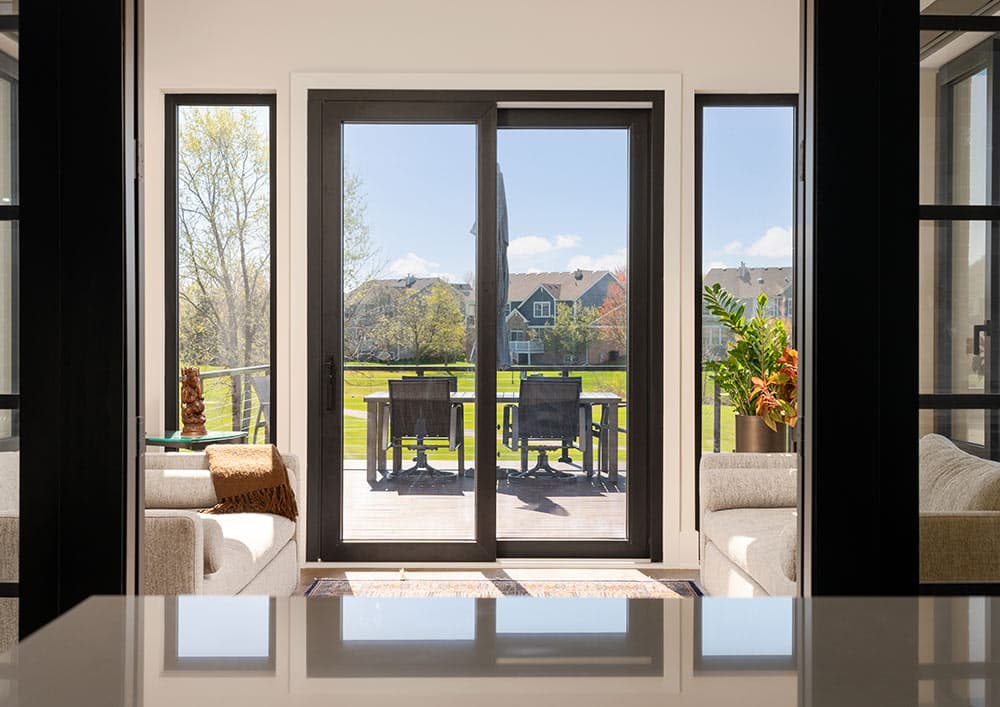
Most homeowners treat window selection as either an aesthetic decision or a performance decision. It is neither – it is one decision, because the windows that look most correct on a given architectural style are almost always the ones built to the highest engineering standard. Slim-profile thermally broken aluminum in matte black, triple-glazed with multi-point locking, is both the right look for a contemporary home and the window that hits U-Factor 0.20.
Wood-look steel-reinforced uPVC with divided lites is both the right look for a craftsman house and the product with a 35-year lifespan and zero maintenance. Demanding design requires demanding engineering. The guide below covers all four decisions – architecture, color, material, and performance verification – in sequence.
Which Frame Style Fits Your Home’s Architecture?
Every architectural style has a window language. Getting it wrong is immediately visible. The table below maps the three most common American residential styles to their correct specification. Mid-century modern and farmhouse follow their own rules – aluminum with warm bronze tone for mid-century, white or black uPVC for farmhouse depending on which direction the renovation is taking.
Style
Material
Profile
Colors
Grille
Key Design Move
Contemporary / Modern
Thermally broken aluminum or slim uPVC
Slim – narrow sightlines essential
Matte black, anthracite, dark bronze. White reads as builder-grade.
None – grille-free is non-negotiable
Large fixed lites, minimal operable sections. No grilles – ever. Slim + dark + grille-free is the whole formula.
Craftsman / Arts & Crafts
uPVC in wood-look laminate
Standard to mid – heavier reads as more crafted
Oak, walnut, cherry. Painted: forest green, deep navy, warm red
Divided lites – 3-over-1; prairie pattern at sash top quarter
Removing craftsman grilles to ‘modernize’ is the most common renovation mistake. The grilles are the architecture.
Colonial / Traditional
uPVC white or off-white; painted wood for historic applications
Standard – slim profiles look wrong against traditional proportional rules
White, cream, off-white. Black shutters + white frames = classic contrast scheme.
6-over-6 double-hung is the Colonial standard. Do not substitute.
Symmetry is non-negotiable – mismatched window heights or non-centered placement breaks the entire facade composition.
Which Frame Colors Work – and Which Last 30 Years?
Matte black is an established standard for contemporary and modern farmhouse, not a trend. Anthracite gray is the more versatile dark option – the same contemporary signal with more tolerance for aging. Wood-look laminates are growing because the zero-maintenance argument over genuine wood is becoming widely understood. The more durable question than what is trending: frame color is a 30-year commitment. One practical note most buyers discover too late – bi-color specification (dark exterior, white interior) is available standard from most European manufacturers and resolves the interior brightness concern completely without any aesthetic compromise on the facade.
Table 2 – Frame Color Coordination: Pairings, Pitfalls, and Durability
Frame Color
Best With (Siding)
Avoid
Interior Implication
Durability Note
Matte black (RAL 9005)
White, light gray, light beige – high contrast is the logic
Dark siding – frames disappear. Warm brick without sufficient contrast reads muddy.
Specify bi-color (dark exterior, white interior) to preserve interior brightness. Available standard from European manufacturers.
Powder-coated aluminum: 15–25 year UV stability. uPVC black laminate quality varies – request UV warranty term in writing.
White / off-white
All siding types – universal neutral that works with everything
Nothing it can’t work with; on all-white facades frames simply recede
Lowest visual impact – no color cast, most flexible for window treatments. Best choice when in doubt.
White uPVC is the lowest-maintenance color option – chalking risk minimal and least visible when it does occur.
Wood-look laminates (oak, walnut, cherry)
Warm stone, brick, fiber cement in warm tones, real wood cladding
High-contrast contemporary elements – dark metal cladding, gray fiber cement
Primary value is interior warmth – the look of stained wood without any painting. Exterior reads as genuine wood at normal distance.
Zero painting or staining ever required. UV-stable laminate holds appearance 20–30 years. Manufacturer UV warranty is the quality differentiator.
Do Slim Profiles Perform as Well as Standard Frames – and What About Steel-Look?
Slim sightlines and high thermal performance are not competing outcomes. Sightline width is determined by how the profile meets the glass face. Thermal performance is determined by profile depth and internal chamber count – both invisible from outside. A 7-chamber uPVC profile at 82mm depth presents a narrow sightline while achieving U-Factor 0.20 with triple glazing. OKNOPLAST’s PIXEL system demonstrates this: slim-profile uPVC with STV (Static Dry Glazing) technology that bonds glass directly to the sash structure, increasing rigidity, enabling larger glass formats in slimmer profiles, and delivering certified NFRC performance at ENERGY STAR Most Efficient standard. For steel-look applications: genuine Crittall-style non-thermally-broken steel has U-Factor 0.50 or higher – two to three times worse than any compliant product. OKNOPLAST’s MIRU EVO Steel system replicates the narrow sightlines and industrial grid geometry in thermally broken aluminum with triple glazing at U-Factor 0.22 to 0.28, fully ENERGY STAR compliant, visually indistinguishable from genuine steel at any normal viewing distance.
Aluminum vs. uPVC vs. Wood-Look: The Decision Matrix
The material that is architecturally correct for a given style almost always also has the right performance and durability profile. Thermally broken aluminum is correct for contemporary, modern, mid-century, and industrial styles – its material character (thin, precise, metallic) cannot be replicated in uPVC. Steel-reinforced uPVC is correct for craftsman, farmhouse, colonial, and traditional – particularly in wood-look laminates that deliver the warmth of stained wood with zero maintenance painting. OKNOPLAST’s PAVA system covers the full uPVC scope: 50-plus color and finish options including oak, walnut, cherry, and pine laminates; any RAL color in matte finish; bi-color exterior/interior; and custom shapes including arched tops and trapezoids. The PIXEL system extends uPVC into slim contemporary applications. Both reach U-Factor 0.20 with 25 to 40-year steel-reinforced lifespans.
Table 3 – Aluminum vs. uPVC vs. Steel-Look: Style, Performance, and Ownership
Material
Best Styles
Maintenance
Lifespan
U-Factor Range
Cost (supply only)
Steel-reinforced uPVC
Craftsman, farmhouse, colonial, traditional, mid-century in wood-look. Steel reinforcement is non-negotiable – separates 35-year product from 17-year product.
Very low – no painting, no staining, no sealing. UV-stable surface.
25–40 years (reinforced). Non-reinforced vinyl: 15–20 years before deformation.
0.18–0.30; triple-glazed reaches 0.20 Most Efficient threshold
$350–$900/window (standard, triple glazing). Wood-look laminates at upper end.
Thermally broken aluminum
Contemporary, modern, mid-century, industrial. Material character – thin, precise, metallic – cannot be replicated in uPVC.
Low – powder coat requires no painting. Check coating condition at 20–25 years.
35–50+ years. Does not warp, rot, or degrade. One fewer replacement cycle over a 100-year building.
0.20–0.28 with triple glazing and full thermal break. Non-broken aluminum: 0.50+ – do not specify.
$600–$1,600/window. Steel-look grid systems at upper end.
Steel-look aluminum (Crittall-style)
Industrial, loft, contemporary with grid windows. Genuine non-broken steel has U-Factor 0.50+ – thermally broken aluminum is the specification-correct alternative.
Low for structural frame. Grid detail requires careful cleaning at divisions.
35–50+ years frame. Grid gasket inspection recommended at 15–20 years.
0.22–0.30 thermally broken – significantly better than genuine non-broken steel.
$700–$2,000+/window depending on grid complexity and lite count.
Three Questions That Tell You Whether a Good-Looking Window Also Performs
Tilt and turn windows add a design benefit that most spec sheets don’t mention: inward opening means no exterior screen frame interrupting the glass reading from the street, window treatments can hang closer to the glass than with outward-opening casements, and tilt ventilation mode provides airflow without any screen at all. Air leakage with multi-point locking is 0.01 to 0.06 cfm/ft² versus 0.20 to 0.30 for standard double-hung – the design-forward operating choice is the performance-forward one. OKNOPLAST’s U.S. range – PIXEL, PAVA, and MIRU EVO aluminum including the steel-look variant – is NFRC-certified and ENERGY STAR Most Efficient qualified, with dealer coverage across NJ, NY, PA, MA, NC, CO, MT, TN and expanding. Full product documentation at oknoplast.us/windows/upvc-windows/ and oknoplast.us/windows/aluminum-windows/. The three questions below take ten minutes with any supplier and tell you whether the product matches the presentation.
Table 4 – Design + Performance Checklist: Three Questions Before You Commit
Question to Ask
Why It Matters
Design Implication
Performance Implication
What is the NFRC-certified U-Factor for this exact product configuration?
The only independently verified thermal number – manufacturer brochure claims are not a substitute
Two windows that look identical can differ by U-Factor 0.10 or more – invisible aesthetically, significant in 30 years of heating bills
0.27 = ENERGY STAR minimum for most U.S. zones. 0.20 = Most Efficient, qualifies for the $600/window federal tax credit (IRC §25C).
Does the frame include steel reinforcement (uPVC) or a full thermal break (aluminum)?
The single most important structural and longevity variable – determines whether the product lasts 20 years or 40
Unreinforced vinyl deforms in 10–15 years producing visible warping that no refinishing corrects
Steel-reinforced uPVC: 25–40 year lifespan. Non-reinforced: 15–20 years. Non-thermally-broken aluminum: U-Factor 0.50+ – do not specify.
What is the air leakage (AL) rating and how many points does the sash lock at?
Air leakage is the draft at a closed window and a significant fraction of heating loss through the envelope
No visible difference from exterior – multi-point and single-latch hardware look similar in finished installation
Standard double-hung: 0.20–0.30 cfm/ft². Multi-point tilt and turn: 0.01–0.06 cfm/ft² – 5 to 20x better. Security and energy performance are the same mechanism.