Your wallet gets more honest use than most things you own. It comes out at the coffee shop, the parking meter, the pharmacy counter, the airport gate. It sits in your hand while you’re distracted, tired, running late for something.
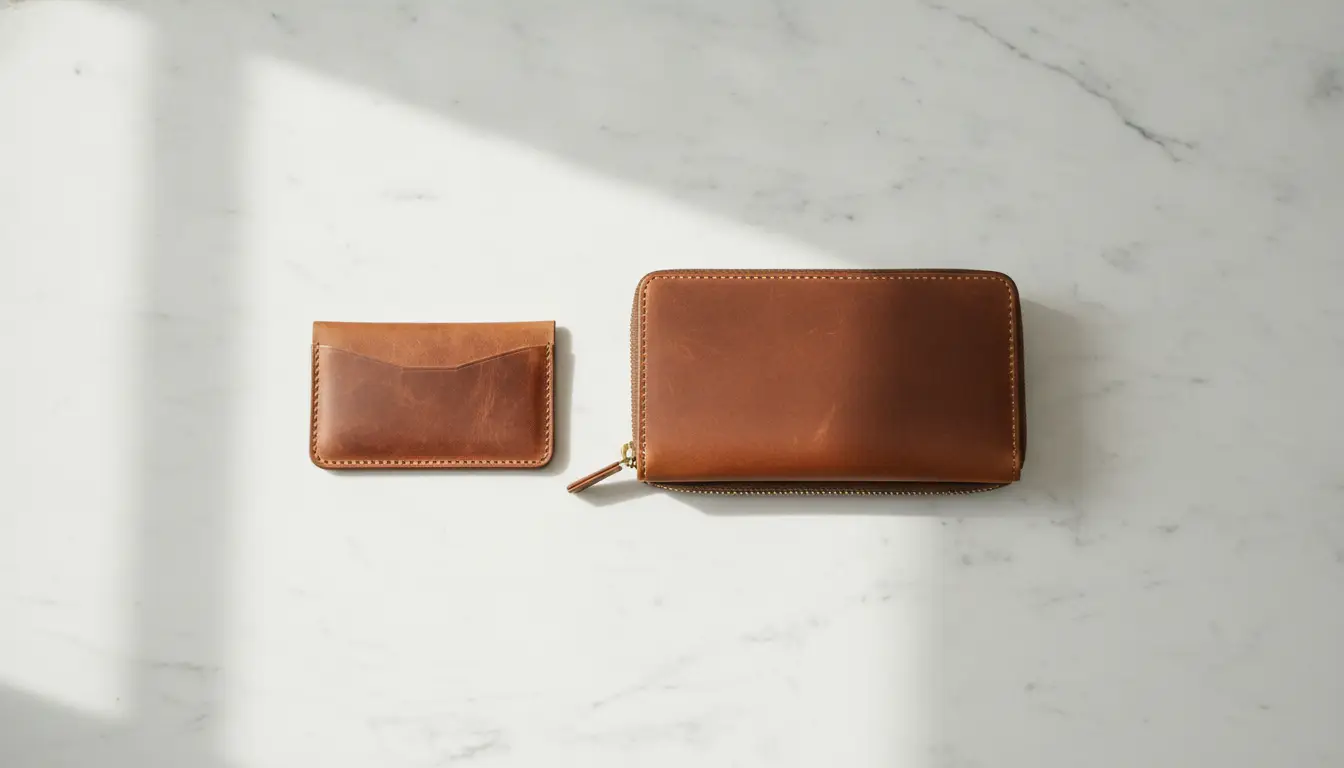
So choosing between a slim card sleeve and a full-fold wallet with a dozen slots isn’t an abstract style debate. It’s a daily-life question, and the answer isn’t the same for everyone. Both camps have a real case. The minimalist swears by the card sleeve that disappears into a back pocket.
The maximalist wouldn’t dream of leaving the house without her long zip-around, the one holding everything from a library card to a folded receipt from 2023.
Neither side is wrong. They’re solving different problems.
Minimalism Wins the Morning Commute
On a normal weekday, the slim wallet has the edge. You need one card, maybe two, and an ID. You’re tapping to pay, moving fast, hands full of a phone and a coffee. A leather sleeve slides in and out without ceremony. It doesn’t add bulk to a small crossbody. You’re not digging for anything.
The maximalist wallet, in that same scenario, is overkill. You’re hauling loyalty cards you haven’t used in a year, a punch card for a bakery that closed, and enough receipts to reconstruct your quarter. It weighs down the bag and slows you down at the register. For the commute, less really is more.
Maximalism Wins the Trip You Actually Care About
Now change the setting. You’re heading to a wedding out of state, or a two-week trip abroad, or a long weekend where you’ll rent a car and cross a border. Suddenly the slim sleeve feels thin. You need a passport slot, room for two currencies, a home for insurance cards, and somewhere secure for the receipts you’ll have to expense later.
This is where the maximalist wallet earns its keep. A zip-around or bifold with real capacity keeps the whole trip organized in one place. You’re not fishing through a tote for a folded boarding pass at the gate.
Fashion has usually adapted to how people actually move through the world, and the long history of accessories tracks alongside how mobile and international daily life has become. Bigger wallets exist because bigger lives sometimes demand them.
The Two Approaches Split on What You Value Seeing
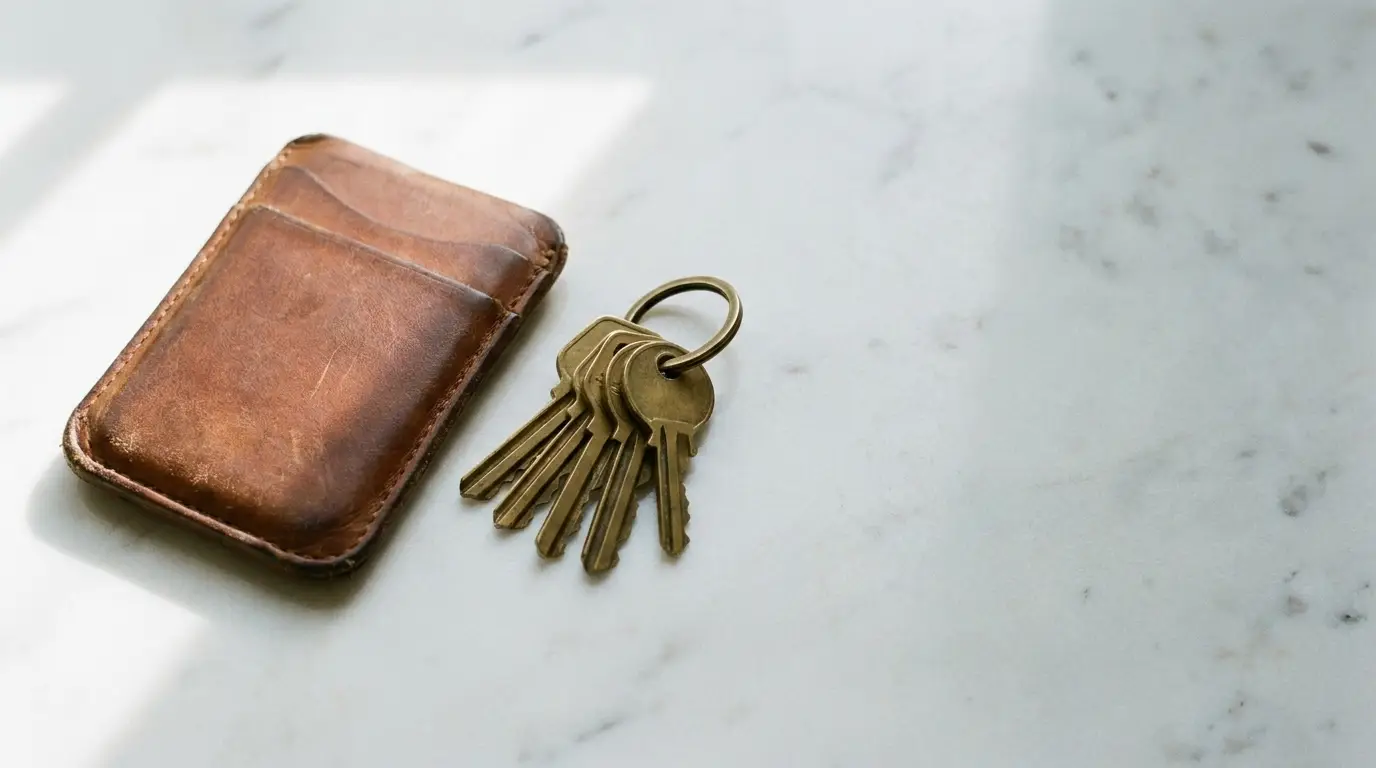
There’s an aesthetic argument too, and it cuts both ways. A slim wallet reads as considered. It signals that you’ve edited your life down to what you use. It photographs well on a marble counter next to your keys. The material does most of the talking, so the leather has to be good.
A larger wallet has a different kind of presence. It reads as prepared. It reads as an heirloom.
Pulled from a structured shoulder bag, a soft, broken-in long wallet carries weight in a way a card sleeve never will. Both looks are valid. They just say different things about the person carrying them.
Where They Agree: Cheap Leather Loses Either Way
Whichever camp you land in, the material decides how long the wallet stays with you. Thin, coated splits crack at the fold within a season. Full-grain leather softens, deepens, and holds its shape for years.
The size question is preference. The quality question isn’t. This is where investing in a well-made leather wallet pays off in either format. A slim sleeve in cheap leather looks tired by month three. A maximalist wallet in cheap leather sags and warps under its own contents.
There’s a sustainability angle both sides can agree on. The fashion industry’s environmental footprint is significant, and buying one durable piece instead of replacing a flimsy one every year is a real form of restraint. The work of the UN Alliance for Sustainable Fashion on the industry’s water and emissions impact is worth reading if you’ve never thought of a wallet as a wardrobe decision.
How to Pick the Side You Actually Live On
The honest test isn’t which wallet looks best on a mood board. It’s which one matches the week you actually had. Pull out the wallet you’re carrying right now and empty it. Count what you used in the last seven days versus what came along for the ride.
The wallet debate isn’t really minimalist versus maximalist. It’s about matching the object to the life. Buy for the life you have, in leather that will still look good when that life changes.