Your attic probably holds more potential than you realize. Most homeowners treat this space as a catch-all zone where forgotten boxes pile up in the dark.
The awkward angles, uncomfortable temperatures, and tricky access make it easy to ignore.
But here’s the thing: that dusty space above your ceiling could become your home’s most valuable storage area.
With the right planning and organization, you can transform your attic from a cluttered mess into a functional storage powerhouse.
This guide walks you through everything you need to know, from safety checks and smart organizing strategies to creative storage solutions that actually work.
Assessing Your Attic’s Potential
Before you haul a single box up those stairs, you need to understand what you’re working with. Start by checking your attic’s structural strength.
Look at the joists and determine whether the floor can handle storage weight. Some attics are only built to support insulation, not heavy boxes.
Check your insulation and ventilation situation. Your attic likely swings between freezing winters and scorching summers.
Look for signs of moisture, condensation, or water damage. These issues need fixing before you store anything valuable.
Do a thorough inspection for pests, leaks, and exposed wiring. Mouse droppings or water stains are deal-breakers that require professional help.
Finally, evaluate your access point. A wobbly ladder or tiny hatch will make every trip up there miserable.
Steps to Organize & Prepare the Attic
Getting your attic storage-ready takes effort, but following these steps makes the process manageable.
Step 1: Empty everything out and inventory what you have. Yes, this sounds brutal. Do it anyway. Bring everything down so you can see what you’re dealing with. Sort items into categories as you go.
Step 2: Declutter ruthlessly. Separate items into four piles: keep, donate, sell, and discard. That exercise bike from 2015? Be honest about whether you’ll actually use it. Old toys your kids have outgrown? Someone else’s family could enjoy them.
Step 3: Clean and repair the space. Sweep away cobwebs, vacuum dust, and wipe down surfaces. Seal any leaks or gaps where moisture or pests could enter. If needed, install a vapor barrier to protect against humidity.
Step 4: Add or reinforce flooring. Walking on exposed joists is dangerous and limits where you can store things. Install plywood sheets or walkway boards to create safe, stable surfaces. This investment pays off every time you access your storage.
Step 5: Plan your layout with zones. Decide which areas will hold frequently accessed items versus long-term storage. Keep seasonal decorations near the access point. Push rarely needed items toward the back corners.
Step 6: Upgrade the lighting and electrical. A single bare bulb won’t cut it. Install bright LED fixtures throughout the space. Adding outlets means you can use fans, dehumidifiers, or even plug-in organizational tools.
Step 7: Create a labeling and mapping system. Take photos of what goes in each box and label all sides clearly. Draw a simple map showing where different categories live. In the future, you will be grateful when you’re hunting for those holiday lights at midnight.
Step 8: Set up seasonal reviews. Schedule twice-yearly checkups to rotate seasonal items and verify everything stays in good condition. This prevents the gradual slide back into chaos.
How to Maximize Attic Space
Start by using vertical space. Install shelving units along knee walls and mount hooks on exposed rafters.
Those sloped ceilings work to your advantage; build custom drawers or cubbies under the lowest areas for flat items.
Invest in modular shelving systems and stackable clear containers. Consider ceiling-mounted racks or motorized lifts for bulky seasonal items.
Use corners strategically with triangular bins. Designate low-clearance zones for suitcases and linens. Always maintain clear pathways for safe access.
Creative Attic Storage Ideas
Ready for specific solutions? These practical ideas help you make the most of your attic’s unique layout and turn challenging spaces into functional storage zones.
1. Custom Shelving Between Rafters

Install shelving units that fit perfectly between exposed rafters to maximize vertical space. These built-in shelves turn structural beams into functional storage zones.
They work particularly well for storing bins, boxes, and seasonal items. The snug fit prevents wasted space and creates a clean, organized look throughout your attic.
2. Sloped Ceiling Drawers

Build custom drawers or pull-out cubbies designed specifically for those awkward eave spaces where the ceiling slopes down.
These low-profile storage solutions make previously unusable areas incredibly functional.
They’re perfect for storing flat items like wrapping paper, craft supplies, fabric, tablecloths, or holiday decorations that don’t need much vertical clearance.
3. Clear Plastic Bins with Detailed Labels
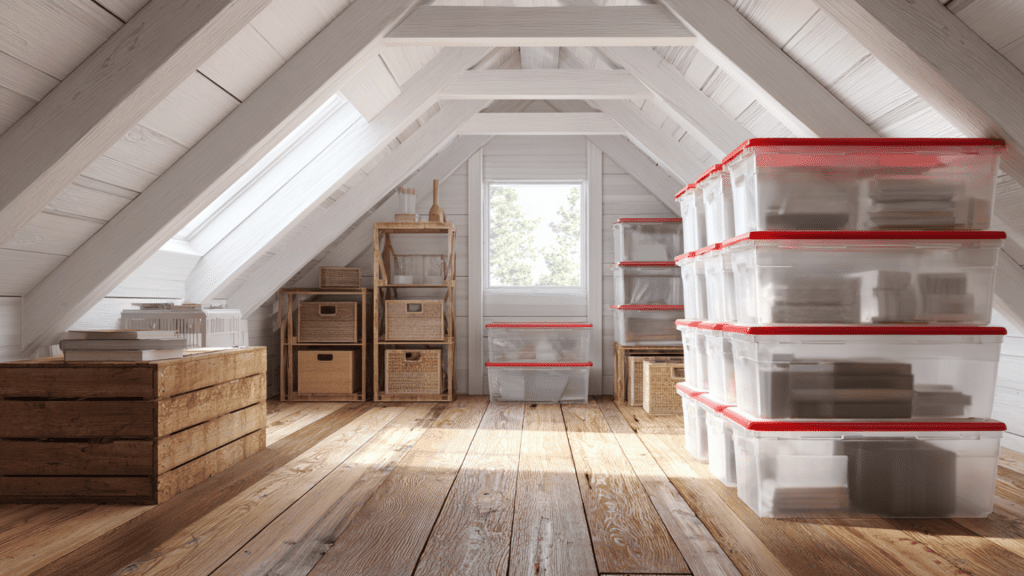
Switch to transparent storage containers so you can instantly identify contents without opening every box.
Label all four sides clearly with detailed descriptions of what’s inside. This system saves time and frustration when you’re searching for specific items.
Stack them strategically by frequency of use, keeping regularly accessed bins near your entry point.
4. Pegboards Mounted on Beams
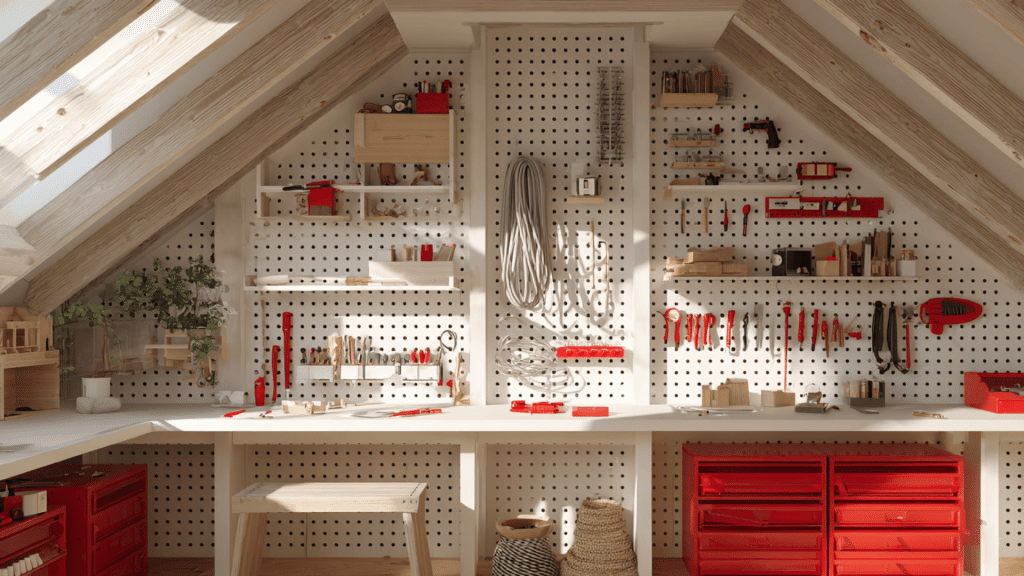
Attach pegboard panels directly to exposed beams to create flexible wall storage for tools, extension cords, and small accessories. The holes allow you to rearrange hooks and holders as your needs change.
This system keeps frequently used items visible and accessible. It works especially well for organizing seasonal decorating supplies or hobby equipment.
5. Ceiling-Mounted Bike Hoists
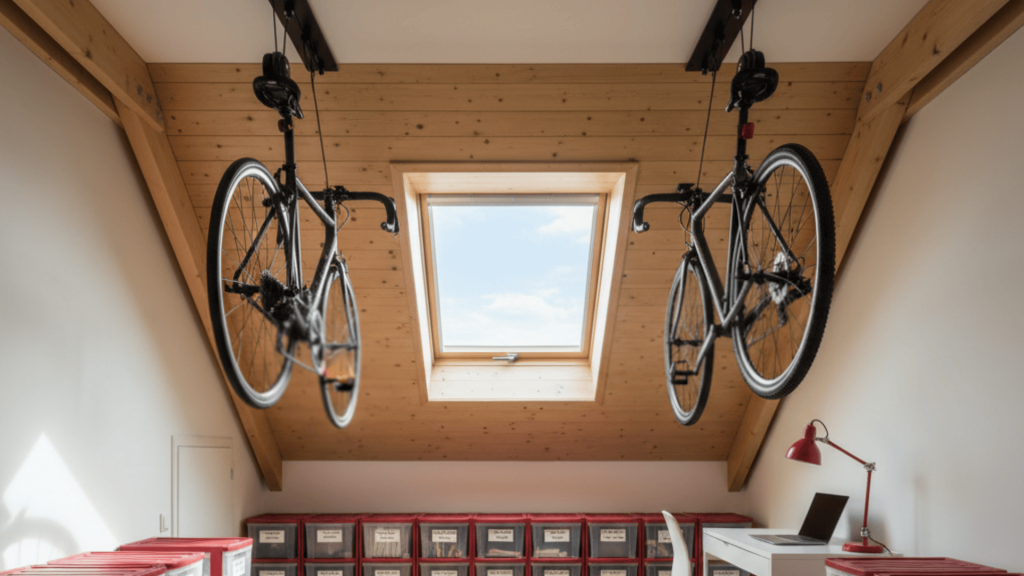
Install pulley systems that lift bicycles up to the ceiling, freeing valuable floor space below. These hoisting mechanisms make storing and retrieving bikes surprisingly easy, even for one person.
They keep bikes out of the way during off-season months while protecting them from damage. Look for systems with locking mechanisms for added safety.
6. Motorized Attic Lifts
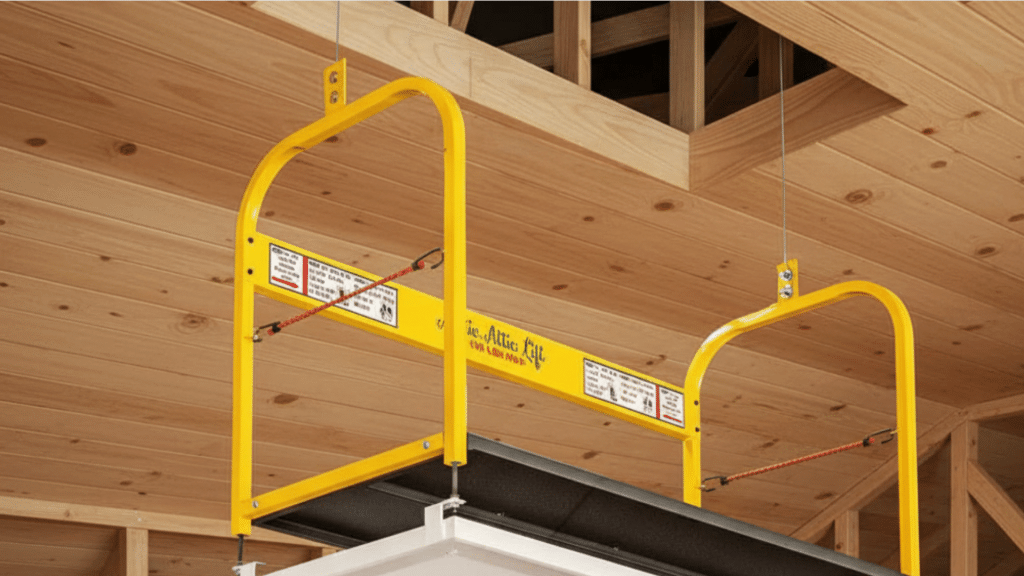
Invest in a motorized lifting platform that raises and lowers heavy boxes at the push of a button.
These devices eliminate the physical strain of hauling storage containers up steep stairs or ladders.
They’re particularly helpful for moving seasonal decorations or bulky items multiple times per year. The convenience factor makes accessing attic storage much more practical.
7. Sliding Track Shelves

Install shelving units on sliding tracks that pull forward for easy access to items stored deep in the space.
This system works like library shelving, allowing you to reach back areas without climbing over other storage.
It’s particularly useful in attics with limited maneuvering room. The sliding mechanism makes every inch of depth fully accessible.
8. Overhead Hanging Rods

Mount sturdy rods or bars from the ceiling to hang seasonal clothing, costumes, or rarely used garments. This approach keeps clothes wrinkle-free and visible while utilizing overhead space efficiently.
Use garment bags to protect items from dust and temperature fluctuations. Position rods where you have adequate ceiling height for hanging full-length items.
9. Built-In Bookcases Along Knee Walls

Construct permanent shelving units along knee walls where ceiling height permits comfortable access. These bookcases provide substantial storage capacity for books, photo albums, and boxed items.
The built-in design maximizes available wall space while creating an organized, library-like atmosphere. Adjust shelf heights to accommodate items of varying sizes.
10. Wreath Hanging Racks

Create dedicated hanging storage specifically designed for holiday wreaths and seasonal door decorations. Mount hooks or install a specialized wreath storage rack that prevents crushing, tangling, and damage.
This keeps decorative items in pristine condition year after year. Space wreaths adequately apart to maintain their shape and protect delicate embellishments.
11. Underfloor Storage Trapdoors

Build concealed storage compartments beneath removable floorboards for valuable or rarely accessed items.
These hidden spaces utilize the cavity between joists without taking up visible room. They’re ideal for storing important documents, family heirlooms, or emergency supplies.
Ensure trapdoors are clearly marked and easy to open when needed.
12. Wall-Mounted Nets
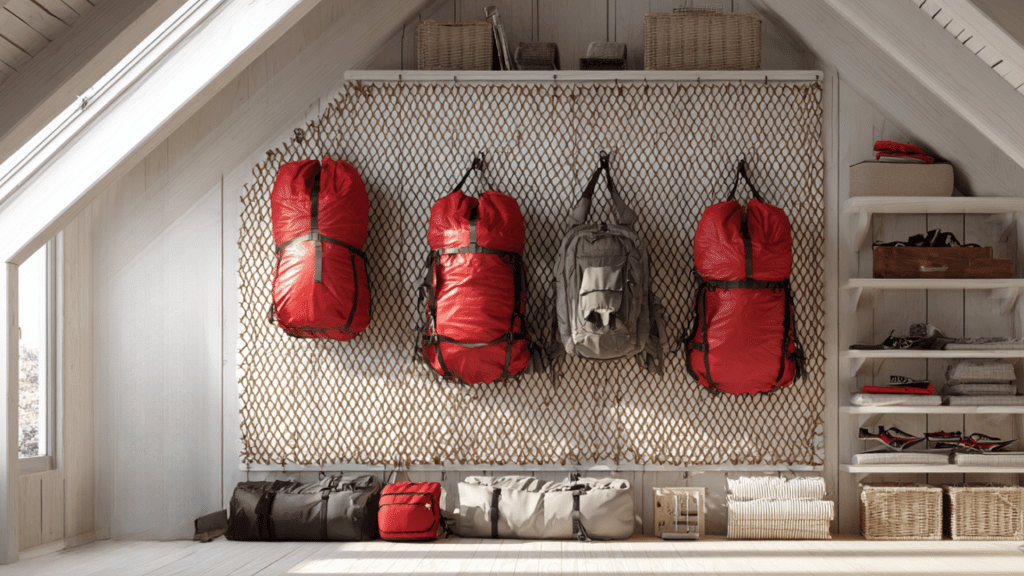
Attach large cargo nets to walls or beams to hold lightweight, bulky items like sleeping bags, pool toys, or sports equipment.
The mesh design allows air circulation while keeping items contained and off the floor. Nets compress soft items efficiently without damaging them.
This solution works great for irregularly shaped objects that don’t fit well in boxes.
13. Drop-Down Ladders with Foldable Doors
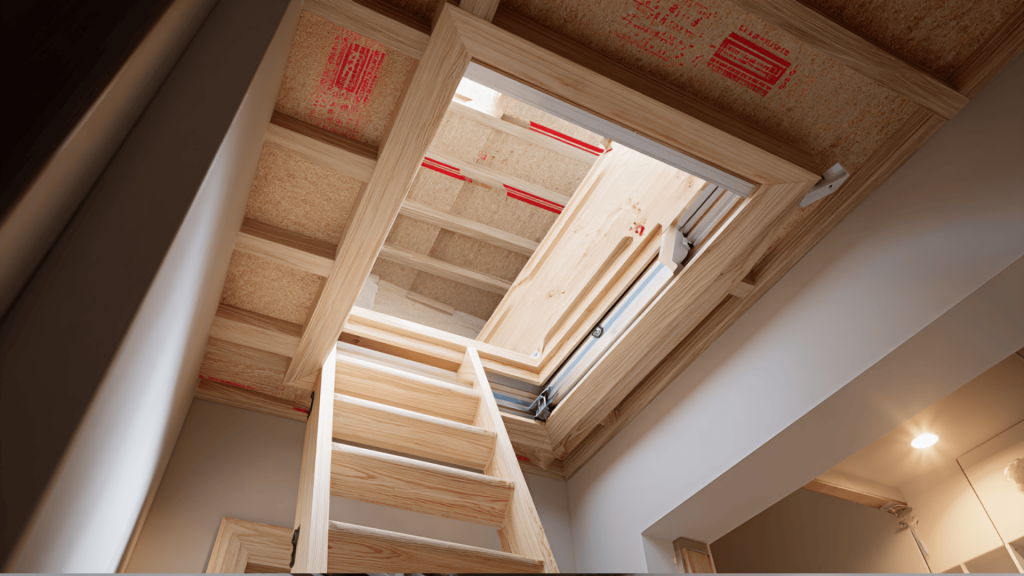
Upgrade your attic access with a quality folding ladder system and an insulated door that seals properly when closed.
Better access means you’ll actually use your attic storage instead of avoiding it. Look for models with sturdy construction and appropriate weight ratings.
Insulated doors prevent energy loss while maintaining climate control.
14. Stackable Crates with Uniform Labeling
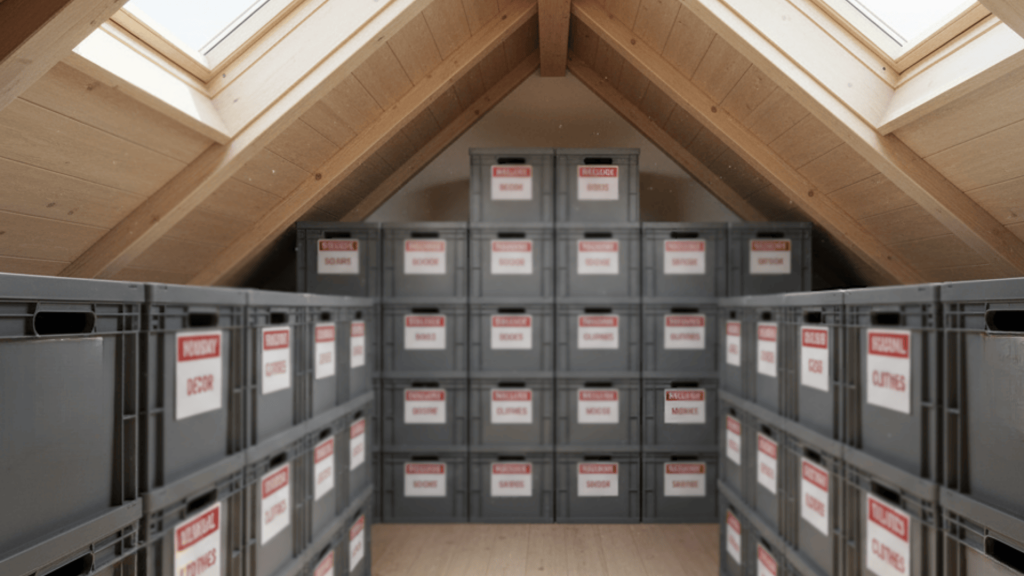
Use matching stackable crates or modular storage boxes that create a cohesive, organized system. Uniform sizing allows efficient stacking and makes the most of available space.
Label each crate clearly on multiple sides with contents and date stored. The modular approach lets you easily reorganize and reconfigure as your storage needs evolve.
What to Store & What to Avoid
Not everything belongs in your attic. Temperature extremes and humidity make some items poor candidates for attic storage.
Great attic storage includes seasonal decorations, holiday items, off-season clothing in sealed containers, luggage, and sturdy household goods.
Books, linens, and non-valuable papers generally handle attic conditions fine. Sports equipment like skis, camping gear, and exercise mats work well too.
Skip storing electronics, which suffer from temperature swings. Keep photographs, important documents, and delicate fabrics elsewhere.
Plants, food, and anything requiring climate control belong in conditioned spaces. Musical instruments, vinyl records, and valuable collectibles deserve better treatment.
If you must store temperature-sensitive items, improve your attic’s insulation and consider a dehumidifier. Small climate-controlled storage units work better for truly irreplaceable items.
Safety Tips & Best Practices
Safety comes first when organizing your attic. Follow these essential guidelines to protect both your home’s structure and your personal well-being.
| Safety Area | Best Practice |
|---|---|
| Structural Load | Check joist load limits before storing heavy items, and distribute weight across multiple joists rather than concentrating it in one spot |
| Walking Surfaces | Never walk between joists, always step on installed flooring or support boards to avoid a foot through your ceiling |
| Ventilation | Maintain proper airflow and insulation to prevent moisture damage; leave soffit vents and ridge vents unobstructed to avoid mold growth |
| Access Equipment | Use sturdy ladders and stable pull-down stairs with proper weight ratings; rickety access equipment causes preventable injuries |
| Fire Safety | Install smoke alarms and carbon monoxide detectors, especially if your HVAC system runs through the attic space |
| Pathway Management | Keep walkways clear and avoid stacking containers too high; towers of boxes become dangerous obstacles in dim lighting |
Pro tip: Take photos of your attic layout after organizing so you can reference the setup and maintain safe pathways during future storage sessions.
Conclusion
Your attic represents valuable square footage that deserves better than becoming a dumping ground.
With proper assessment, thoughtful organization, and smart storage solutions, this space can handle years of household overflow.
Start by inspecting your attic’s condition and addressing any structural or safety concerns. Then declutter ruthlessly before implementing storage systems that work with your space’s unique shape.
Choose a few ideas from this guide and start small. You don’t need to complete everything in one weekend.
Even adding some basic shelving and proper containers makes a huge difference in functionality and accessibility.