The question of how to get tape extension glue out of hair at home has a straightforward answer: try to avoid doing so (or to be more specific: ask the stylist for a second removal appointment if you can).
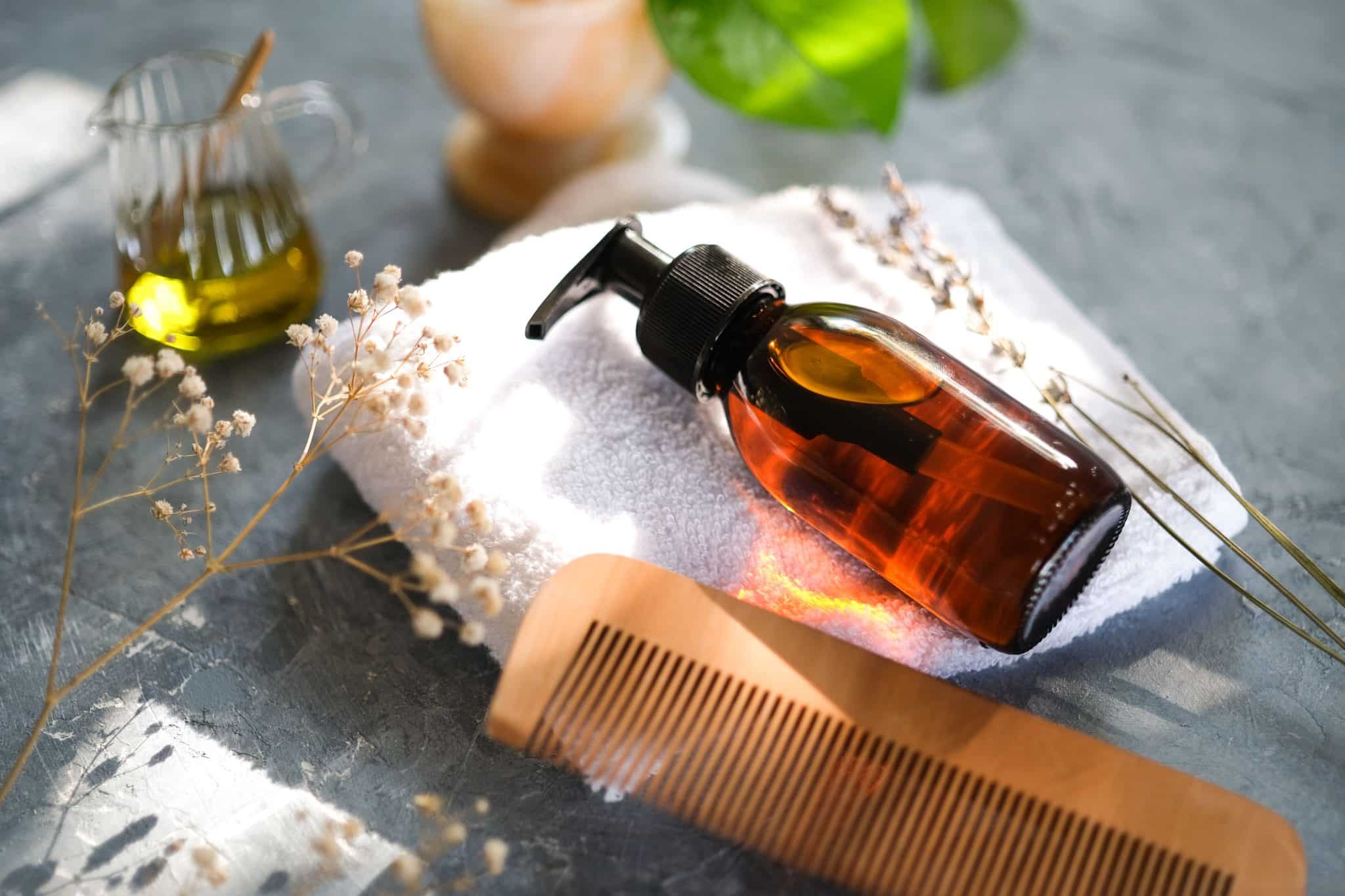
If getting a stylist to do the job of banishing that leftover residue isn’t an option, use oil rather than force. Alcohol bond removers and oil-based removers both dissolve extension glue, but oil-based is far kinder to the hair and skin, so it is the right choice at home.
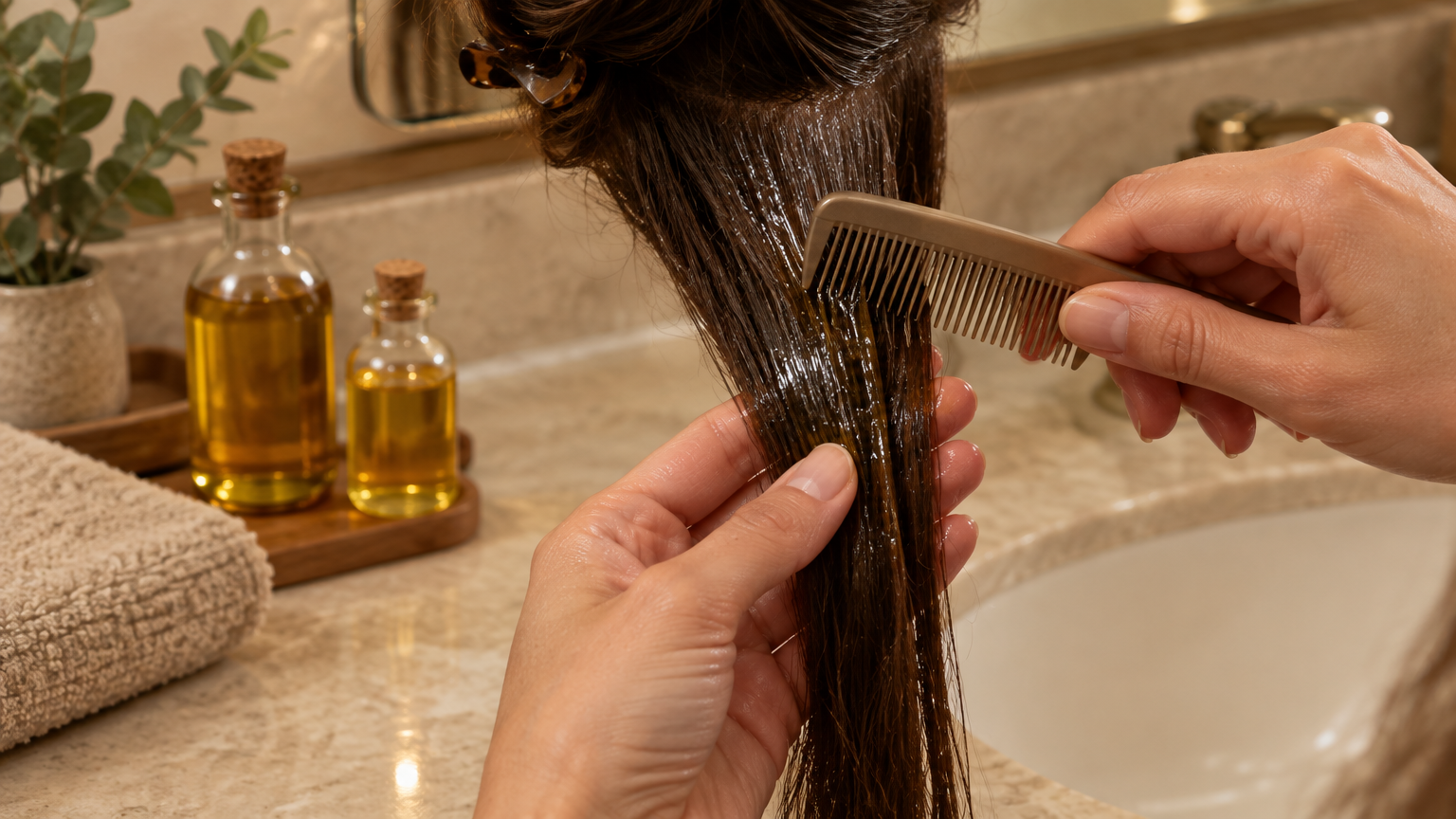
To dissolve the glue in your hair safely at home, apply an oil-based remover or a mix of oil and conditioner, leave it for 5 to 10 minutes, and finally comb the softened residue out in horizontal rows with a fine-tooth comb. Never pull, pick, or cut the sticky patches, as force causes breakage on every hair type.
What Dissolves Tape-In Glue and What Doesn’t
You might understandably be unsure what dissolves tape-in extension glue; as adhesive for this purpose is designed to hold securely, ordinary shampoo may not remove every sticky patch. Oil-based products can help soften the adhesive, making it easier to separate from individual strands.
Common methods for getting tape-in glue out of hair compare as follows. A few of them can be effective, while certain others should be avoided in all circumstances.
|
Method |
Dissolves the glue? |
Risk to the hair |
Verdict for home use |
|
Oil-based tape remover |
Yes |
Lower risk when used as directed |
The best dedicated product option |
|
Argan or coconut oil with conditioner |
Yes |
Generally gentle when used carefully |
Reliable household alternative |
|
Alcohol-based remover |
Yes |
High; can dry hair and irritate skin |
Leave it to a salon professional |
|
Acetone or nail polish remover |
Partially |
Harsh and potentially damaging |
Avoid completely |
|
Combing out dry |
No |
High risk of pulling, matting, and breakage |
Never |
|
Cutting it out |
No |
Extreme; risks cutting healthy hair, leaving uneven length and damage |
Never |
An oil-based tape remover is the best dedicated product for tackling leftover adhesive. For example, Cliphair’s Tape In Hair Extensions Remover is priced at £15 for 118ml at the time of writing; this oil-based tape remover has an alcohol-free formulation designed to soften tape bonds in less than a minute (although a longer wait than this will be needed for leftover adhesive after tapes have been removed).
Unlike harsh alcohol-based removers, this remover will not dry out the hair, which is one more quality that can make it well worth considering as a home treatment.
Why Residue Gets Left Behind
Anyone working out how to get tape-in extension glue residue out of hair may also wonder how it got there in the first place. After all, didn’t you pay to have all this material professionally removed?
The reality is that when the adhesive strips of tape-in extensions are separated during the professional removal process, glue can transfer onto natural hair. Although a professional stylist will use a suitable remover to release the hair pieces, small amounts of softened adhesive can remain along the root line.
How to Clear Tape-In Residue, Step by Step
Follow these steps explaining how to get tape extension glue out of hair at home. The following method is intended for dealing with leftover residue after a stylist has already taken out the extensions, not for removing the hair pieces themselves.
- Wash your natural hair with a clarifying shampoo. This will help remove surface product build-up and prepare the strands for treatment. Rinse thoroughly, following the instructions on the shampoo label.
- Mix a little argan oil into your conditioner and apply it all over, roots included. This provides slip and will help make the subsequent detangling process easier.
- Add a drop of argan or coconut oil (or an oil-based tape remover) to each sticky patch. Focus on the affected strands instead of saturating your entire head with oil.
- Leave the oil or remover on the sticky patches for 5 to 10 minutes. This will give the treatment time to soften the remaining tape glue.
- Comb out the softened residue, working through the treated hair with a fine-tooth comb in horizontal rows. Start at the nape of the neck and gradually work up towards the crown. Clean the comb to remove accumulated adhesive before you move to the next row.
Do you find that a section is resisting the comb as you try to remove adhesive after tape-in removal? In that case, stop and apply a little more oil. Resist the temptation to force the comb through a stubborn knot or tug at individual strands.
Washing Out the Oil Afterwards
The use of oil-based hair tape remover and natural oils to eradicate tape-in glue can leave hair feeling greasy afterwards. It is therefore important to take the final step of thoroughly shampooing.
Washing your hair with shampoo will help lift the remaining oil and loosened adhesive. A second gentle wash may be necessary if your hair still feels coated. Follow this up by applying conditioner to the lengths only, before rinsing thoroughly and allowing the hair to air dry if this is practical. Alternatively, finish with a cool setting on a dryer.
Once your hair is dry, check the root area and lengths for any lingering sticky patches. Your hair should feel clean, soft, and free of tackiness.
When to Go Back to the Stylist
Have you been using tape-in extension remover several times to tackle leftover glue after your hair pieces were taken out, only to find that the lingering adhesive won’t shift? Perhaps you’re experiencing extensive matting or soreness around the roots? These are all good reasons to seek professional help, instead of continuing to struggle at home.
When you book a second removal appointment, your stylist will be able to finish the clean-up safely and check the condition of your natural hair before any refitting is considered. Remember that the fitting, removal, and re-taping of semi-permanent hair pieces is always the job of a salon professional.
Conclusion
The key to getting tape glue out of hair is to ask a stylist for help first. If this isn’t possible, a combination of oil-based remover, patience, and careful sectioning will help soften and clear the remaining adhesive without causing damage.
Cliphair’s products support the gentle approach that is necessary if the wearer’s natural hair is to be preserved in the process of removing tape-in extension residue.
FAQ
Can You Take Tape-In Extensions Out At Home?
Tape-in extensions should be removed by a professional stylist, instead of being taken out at home. If your hair pieces have already been taken out but sticky residue remains, the leftover glue can be eradicated using oil and conditioner or an oil-based remover.
Does Coconut Oil Remove Tape-In Glue?
Coconut oil can be effective at softening tape-in residue, thereby making it easier to comb the leftover glue out of natural hair. Here’s how to get tape glue out of hair using this gentle and widely available option: apply a small amount directly to each sticky patch or mix it with conditioner for easier distribution. Leave it for 5 to 10 minutes, followed by using a fine-tooth comb to carefully work through the affected strands.
How Long Should You Leave Oil or Remover on Tape-In Residue?
Leave oil or an oil-based remover on the sticky patches for 5 to 10 minutes before combing. This amount of time will give the product sufficient contact to dissolve the adhesive, so that it becomes easier to comb away the residue cleanly.