Nickel-safe jewellery is often presented as a simple concept, yet the term can obscure important technical distinctions. A piece may appear refined and high-quality while still causing discomfort after prolonged skin contact. This is significant because nickel remains one of the most common triggers of allergic contact dermatitis, a condition caused by repeated exposure rather than a single event.
Epidemiological data indicates that a substantial proportion of the population is affected by nickel sensitivity. This makes material composition and surface interaction critical factors in everyday wear. For readers evaluating accessible, skin-conscious design, https://www.edblad.com/en_uk offers a practical example of how modern brands position nickel-safe stainless steel pieces for frequent use, particularly within women’s jewellery collections.
Why Nickel-Safe Pieces Matter Daily
Why Daily Contact Can Matter
Jewellery intended for daily wear typically remains in constant contact with the skin. Under these conditions, even minimal nickel release can accumulate into irritation over time, meaning that “nickel-safe” refers less to visual qualities and more to how a piece performs during extended use.
Prolonged skin contact increases exposure risk, and repeated wear can amplify cumulative effects, often leading to localized irritation at consistent points of contact. Common areas of concern include earlobes, fingers, wrists, and other places where metal components press against the body. These patterns align with dermatological observations, where piercings are frequently the first sites to develop sensitivity.
It is also important to recognize that nickel is not limited to lower-cost jewellery. Its presence depends on alloy composition rather than price category, so even high-end pieces may trigger reactions if nickel release exceeds safe thresholds.
What the Label Does Not Specify
A key distinction in material safety lies between nickel content and nickel release. Regulatory frameworks such as the REACH regulation focus specifically on the latter, establishing limits for how much nickel may migrate from a surface into direct skin contact.
- Piercing posts: <0.2 µg/cm²/week
- Prolonged contact items: <0.5 µg/cm²/week
- Coatings must maintain compliance over time
Testing methodologies further clarify these standards. EN 1811 provides a controlled laboratory measure of nickel release, whereas dimethylglyoxime functions as a rapid screening tool. General descriptors such as “skin-friendly” lack this level of specificity and should be interpreted cautiously.
Empirical studies demonstrate variability even within regulated markets. A 2025 review identified measurable nickel release in a notable proportion of tested earrings, reinforcing the importance of standardized testing over marketing language.
Which Pieces Tend to Feel More Comfortable
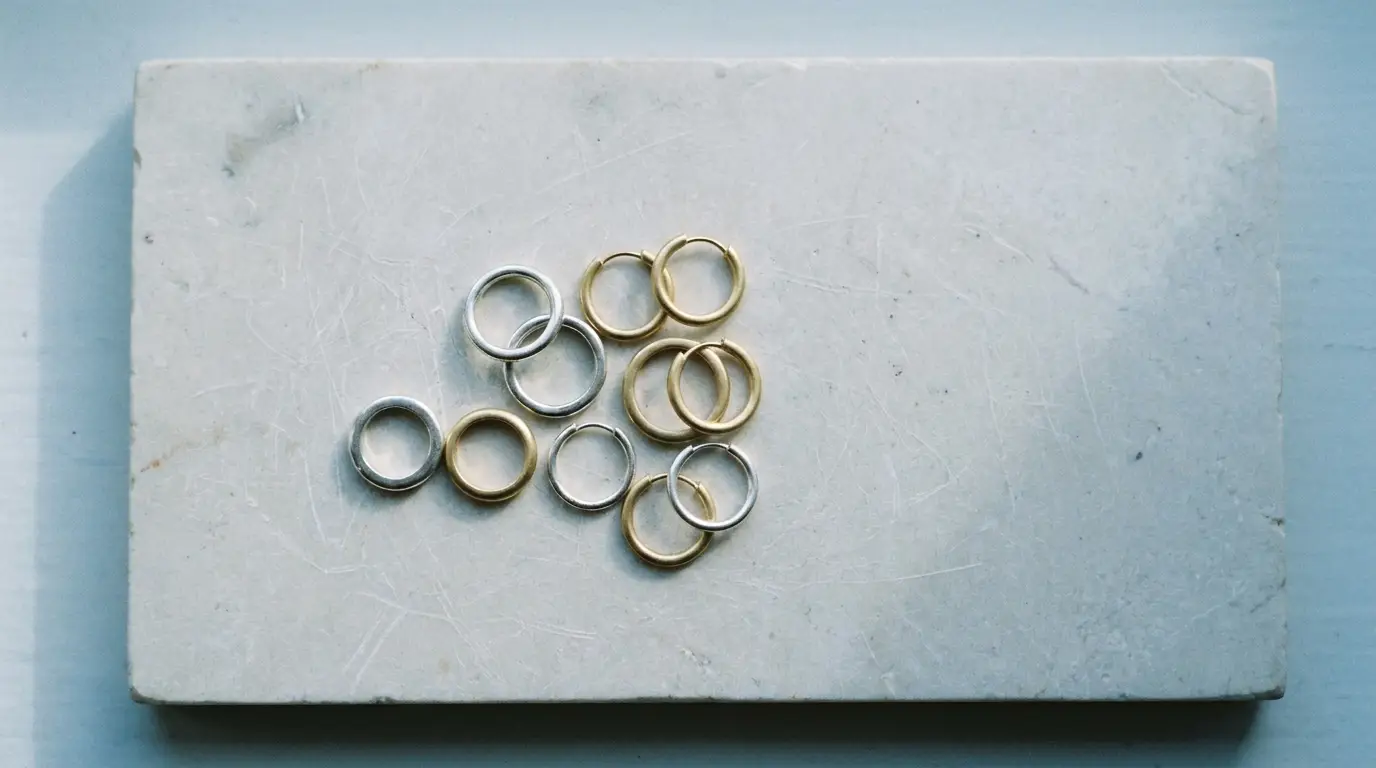
Clinical guidance often recommends materials with lower reactivity profiles, including:
- Titanium
- Platinum
- High-karat gold
- Sterling silver
- Surgical-grade stainless steel
However, visual appearance—such as gold or silver coloration—does not guarantee safety. Surface treatments, plating, and alloy mixtures influence actual skin interaction. Stainless steel is often preferred in everyday jewellery because its structure can limit nickel migration under normal conditions.
For individuals with piercings, proper care practices are equally important. Guidance on healing and minimizing irritation can be found in resources such as piercing aftercare, which address both material choice and hygiene considerations.
Wear over time also affects performance. Scratches, coating degradation, and microfractures can alter how a surface interacts with skin. Studies have shown that even tools and accessories outside traditional jewellery categories may release nickel under certain conditions.
Better Comfort Starts With Informed Choices
Nickel-safe jewellery is best understood as a functional characteristic rather than a fixed label, as comfort depends on several interacting variables including duration of wear, material composition, surface integrity, and adherence to verified testing standards.
A practical approach involves carefully evaluating high-contact components such as earring posts, ring interiors, and clasps, while also prioritizing transparency in testing. When these factors are considered systematically, jewellery can remain both aesthetically refined and physically comfortable.
In this context, the objective is not only to prevent irritation but to support consistent, confident wear. When material performance aligns with daily use, jewellery can provide both style and long-term skin compatibility without compromise.