There is a problem that nearly every beauty lover faces at least once. You spend an hour at a fragrance counter, you spray tester after tester onto your wrist, and you still walk away unsure which scent is yours.
The world of perfume is intoxicating, but it can also feel overwhelming — especially as the market grows and launches multiply at a pace that is difficult to keep up with.
Here is something most fragrance guides overlook: the bottle is not just decorative. It is a carefully engineered communication system designed to tell you exactly what kind of experience you are about to have, before a single drop touches your skin.
Learning to read that system can completely transform how you shop for scent. And in 2026, that system has become more sophisticated — and more informative — than ever.
Understanding the latest 2026 perfume packaging design trends can give you a genuine edge as a beauty consumer, helping you match your instincts to the right fragrance faster and with far greater confidence.
The Bottle Speaks Before the Scent Does
Think about the last perfume that caught your eye from across a shelf. Chances are, you registered something about its texture, its weight, its color, or its silhouette before you even read the name. That reaction is not accidental.
Fragrance brands invest enormous resources into bottle design precisely because the object communicates mood, identity, and price positioning in less than a second. A frosted glass bottle with a matte finish signals something clean, airy, and intimate — think skin-close musks or cool aquatics.
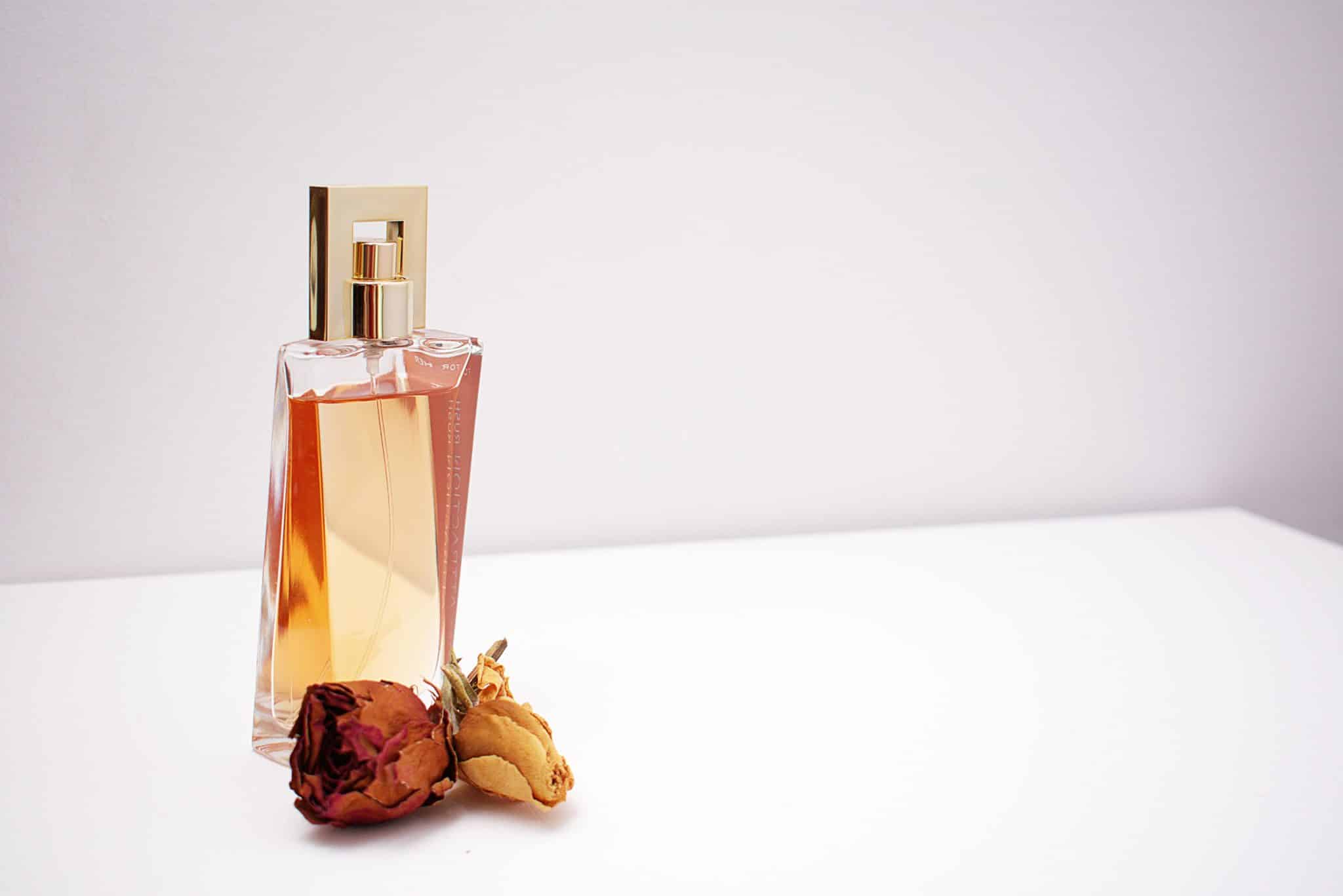
A weighty, lacquered bottle with gold hardware communicates drama, projection, and evening glamour. A simple, unadorned cylinder in warm sand-toned glass says: “this is for someone who values quiet elegance.”
This is what packaging designers call sensory pre-loading. Because you cannot smell a perfume through a screen or a display window, the packaging primes your brain with expectations.
When the fragrance matches those expectations, the purchase feels deeply satisfying. When it does not, you walk away confused — even if the formula itself is technically beautiful.
Texture Is the Anti-Regret Tool You Are Not Using
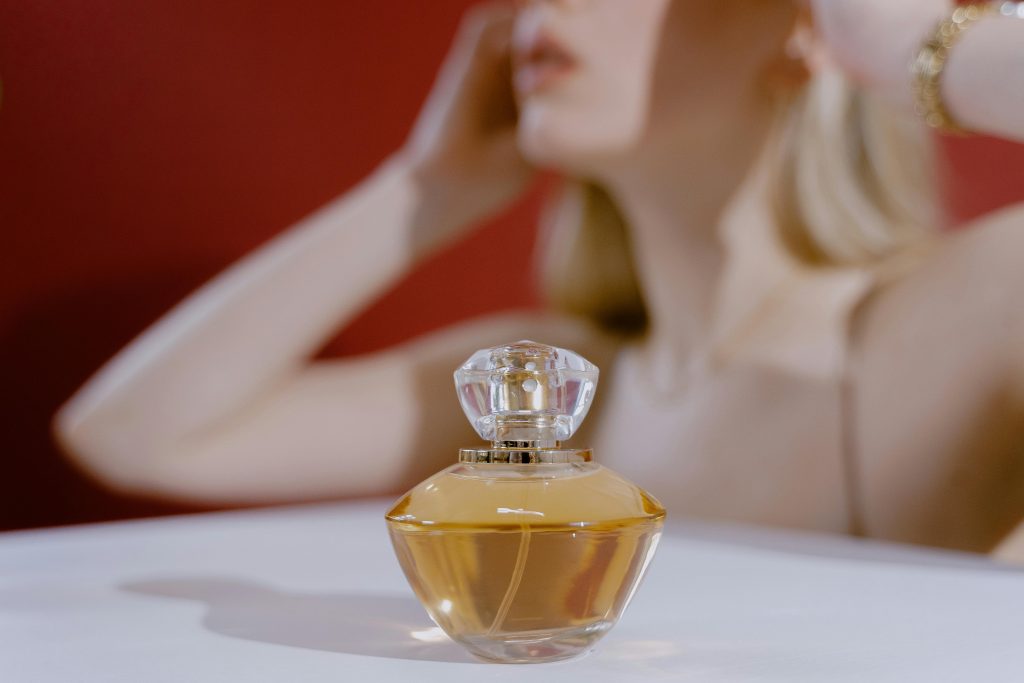
In 2026, texture has moved to the center of fragrance packaging strategy — for good reason. Tactile finishes like frosted glass, embossed labels, matte coatings, and acid-etched surfaces do two things simultaneously. Online, they stop the scroll because the human brain needs an extra moment to process what it is seeing. In real life, they signal quality before you even lift the bottle.
As a shopper, this works entirely in your favor. A brand that has invested in high-quality tactile finishes on its packaging almost always reflects an equivalent investment in the juice itself.
When you pick up a bottle and it feels considered — the surface has depth, the cap closes with a precise click, the weight feels balanced — you are holding a product from a brand that genuinely cares about the end experience.
Conversely, high-gloss, generic-feeling bottles with flat prints and lightweight glass are an honest signal too. They are telling you to manage your expectations accordingly.
A useful habit to adopt: close your eyes briefly when you first pick up a bottle, before your first spray. Let your hands do the initial assessment. Premium packaging that rewards that brief tactile test rarely disappoints when the cap finally comes off.
The Gender-Neutral Revolution and What It Opens Up for You
If you have noticed that something is changing about the fragrance aisle — that it feels less divided, more open, less coded — you are not imagining it. One of the most significant structural shifts in the beauty industry is playing out right now, and it changes what is available to every shopper.
The rise of unisex fragrances is rewriting the rules of luxury perfume packaging in ways that directly benefit the everyday beauty consumer. The old pink-versus-dark-glass binary was never really about scent — it was a retail segmentation tool. Today, the fastest-growing segment of the market has moved beyond it entirely, embracing architectural minimalism, sustainable materials, and a color language built on warm neutrals, natural textures, and refined restraint.
For you as a shopper, this shift opens up considerably more territory. Bottles that once lived exclusively in the so-called “men’s” section — cool minerals, smoky woods, green aromatics — are now presented in packaging designed for everyone.
Some of the most wearable, long-lasting, and skin-enhancing fragrances of the season are launching in unassuming matte cylinders and sand-toned flacons with no gender coding whatsoever.
The practical takeaway is simple: stop reading packaging for gender cues. Start reading it for mood, aesthetic quality, and material finish.
Sustainable Packaging Is a Quiet Quality Guarantee
If a fragrance brand has made the effort to use recycled glass, mono-material cartons, refillable architecture, or natural closures, you are looking at a brand that is paying close attention.
Sustainability in packaging requires careful engineering, supplier coordination, and real investment in craft. It is genuinely difficult to fake at scale.
From a shopping perspective, sustainable packaging choices also correlate strongly with the clean, honest-material aesthetic that defines today’s most critically praised niche fragrances. Brands that prioritize eco-forward design tend to be equally thoughtful about formula quality, ingredient sourcing, and skin performance. Look for refill programs, streamlined secondary packaging, and cartons that feel designed rather than defaulted. These are brands building for the long term — and the ones most likely to reward your loyalty over time.
Building a Fragrance Wardrobe You Will Actually Love
Now that you can read packaging more fluently, here is a practical framework for building a collection that genuinely serves you:
- For daytime and office wear, reach for frosted or translucent bottles in pale neutrals. These visual cues reliably signal lighter concentrations, fresher profiles, and polite projection.
- For evening and occasion scents, follow the weight. Heavier glass, deeper color, and more elaborate closures typically indicate higher concentration and stronger sillage.
- For a signature skin scent, look to the architectural minimalists — clean labels, warm-toned glass, understated silhouettes. These brands are usually crafting intimate fragrances designed to work with your skin chemistry rather than over it.
- For exploration and discovery, let texture lead. Pick up anything with an unusual surface treatment, a surprising material combination, or a format you have not encountered before. Innovative packaging frequently accompanies innovative perfumery.
The fragrance aisle has never been more visually rich or strategically layered.
Once you start reading the packaging as the first chapter of the fragrance story rather than mere decoration, the shopping experience transforms from overwhelming to genuinely exciting — and the chance of landing on a scent you truly love increases dramatically.