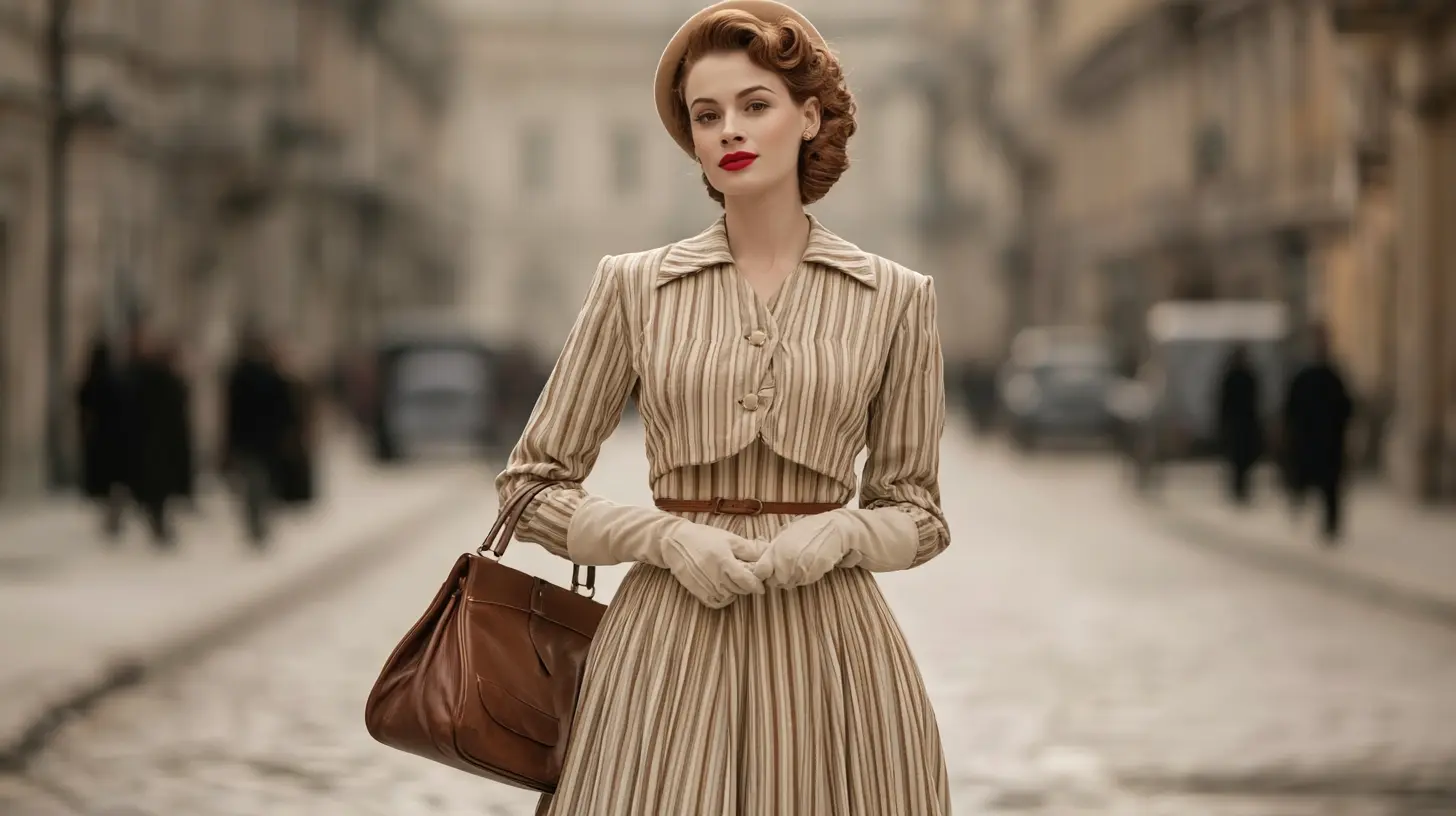
1940s fashion split into two clear phases. The first half of the decade favored practical, structured clothing shaped by wartime shortages.
The second half, starting around 1947, brought back fuller skirts, softer shoulders, and more feminine dresses. Fabric rationing, military uniforms, and factory work all left their mark on what people wore.
Structured shoulders, fitted waists, knee-length skirts, and simple suits defined the early years, while the later years brought glamour back into daily dressing.
Two designers bookend that shift: Claire McCardell, whose practical American sportswear defined the wartime years, and Christian Dior, whose 1947 New Look brought fabric-heavy glamour back once rationing eased.
What Was 1940s Fashion Like?
The decade split cleanly into two moods, and knowing both helps explain almost every trend that followed. Wartime dressing was about getting by, while post-war dressing was about celebration.
Fashion in the early 1940s focused on practicality and structure. Fabric restrictions during World War II forced designers and everyday people to simplify their clothing. After the war ended in 1945, styles slowly became fuller and more decorative again.
- Women wore fitted suits for work and daily errands.
- Men wore slim suits with wider shoulders, often based on uniform shapes.
- Evening wear grew more dramatic once fabric was easier to find.
The wartime impact varied by country. Britain focused on utility clothing and rationing; the United States saw growing ready-to-wear and sportswear; and France faced an occupied Paris and declining international influence. FIT highlights these as three distinct fashion stories of the early 1940s.
These two moods, restriction and then release, set up everything else in the decade’s clothing story.
How World War II Influenced 1940s FashionWorld War II had a major impact on 1940s fashion by changing fabric availability, production, and acceptable clothing styles. Fabric shortages led to simpler designs with fewer pleats, ruffles, and decorative details. Skirts became shorter, and silhouettes became more practical. In Britain, the Utility Clothing Scheme limited fabric use and extra trims. In the United States, the War Production Board’s Order L-85 went further, capping skirt length and width, limiting hems and belts to two inches, and banning pleats, ruffles, and patch pockets outright, according to HistoryNet’s account of wartime clothing restrictions. |
Key Features of 1940s Fashion
A handful of design choices show up again and again across the decade’s clothing, whether in a work dress, a suit, or an evening gown.
- Structured Shoulders and Defined Waistlines: Explains the signature 1940s silhouette featuring strong shoulders, shaped waists, and fitted construction that created a balanced, practical, and polished look for women’s clothing.
- Knee-Length Skirts and Fitted Suits: Covers how skirt suits became everyday essentials during the 1940s, including pencil skirts, A-line styles, and matching sets designed for practicality, comfort, and a refined appearance.
- Practical Fabrics and Simple Details: Highlights the durable fabrics and minimal designs used in 1940s clothing, showing how material shortages influenced choices like wool, cotton, and rayon for long-lasting everyday wear.
Luxury fabrics were harder to find, so clothing was built to last rather than to impress with fine material.
Women’s Fashion Trends in the 1940s
Women’s clothing during this decade had to work as hard as the women wearing it, since so many held jobs outside the home for the first time.
The Utility Suit

This became the default work outfit for millions of women. It paired a fitted jacket, a blouse, and a matching skirt into one polished, low-fuss look.
Women chose it because it was practical, met rationing limits, and still looked put together for the office or errands.
Designer Claire McCardell was among the American names who built a whole career out of this kind of practical, ready-to-wear dressing, using denim, seersucker, and jersey when wool and silk were scarce.
Her work became a defining part of what fashion historians now call the American Look, a sporty, easy style that filled the gap while occupied Paris lost its usual influence over the industry.
Shop Here: Banana Republic Factory | Noble | Etsy
Claire McCardell and the Rise of American Sportswear: Claire McCardell helped shape American sportswear by focusing on practical, comfortable clothing that suited everyday life. She worked with accessible fabrics such as cotton, denim, seersucker, and jersey while adapting her designs to wartime material restrictions. Her Popover dress, introduced in 1942, became a strong example of this approach, combining simple construction with practical details for American women.
Popular 1940s Dresses

Dresses stayed simple but still had room for personality through print and detail.
- Shirt dresses
- Wrap-style dresses
- Tea dresses
- Floral prints
Common details included button fronts, a defined waist, and modest necklines.
Shop Here: Revival Vintage |CherryVille
Elizabeth Taylor: Elizabeth Taylor helped shape the feminine side of 1940s fashion, particularly through her early Hollywood appearances. Her polished dresses, defined waistlines, floral prints, and classic silhouettes reflected the era’s preference for feminine yet practical dressing. Her growing popularity also helped bring these styles to a wider American audience.
Women’s Trousers Became More Popular

As women filled factory jobs once held by men, their clothing had to change to match the work.
Rosie the Riveter became the face of this shift, and her rolled-sleeve coveralls turned practical workwear into a recognizable wartime symbol.
Wide-leg trousers moved from a novelty to an accepted daily option. Katharine Hepburn’s off-screen wardrobe of high-waisted slacks helped make the look feel fashionable rather than purely practical, though it was wartime factory work that first made trousers a daily reality for millions of women.
Shop Here: The House of Foxy |Collectif Vintage
Katharine Hepburn and the Trouser Shift: Katharine Hepburn helped turn women’s trousers from practical wartime clothing into a fashionable and aspirational style. Her off-screen wardrobe often featured high-waisted trousers, button-down shirts, and relaxed tailoring, creating an athletic, confident look. While trousers became increasingly useful for women entering wartime work, Hepburn’s personal style helped popularize them as a defining part of the American sportswear aesthetic.
Men’s Fashion Trends in the 1940s
Men’s fashion after 1940 tells its own story, one shaped almost entirely by military service and its aftermath.
Classic 1940s Men’s Suits

Broad shoulders, high-waisted trousers, and double-breasted jackets defined the standard suit of the era. The overall silhouette was structured and masculine, with padded shoulders adding width to the upper body and trousers sitting higher on the waist than many modern styles.
Double-breasted jackets offered a formal, polished appearance, while single-breasted suits were often chosen for their practicality and simpler construction.
Patterns generally remained restrained, with solid colors, narrow stripes, and subtle checks being common choices. As the decade progressed, wartime fabric restrictions began to shape men’s tailoring more noticeably.
Cary Grant and the Classic 1940s Men’s Suit: Cary Grant became a defining style figure of 1940s menswear, often appearing in sharply cut suits with broad shoulders, high-waisted trousers, and clean, structured lines. His polished screen wardrobe helped popularize the refined American suit silhouette while reinforcing the decade’s preference for masculine, well-defined tailoring.
Military Influence on Men’s Clothing

Uniform-inspired jackets and functional design details carried over into civilian suits, giving everyday menswear a stronger and more purposeful silhouette.
Broad shoulders, structured jackets, patch pockets, and practical closures reflected the influence of military uniforms, while simpler tailoring suited the practical demands of wartime life.
Many men also favored durable fabrics and straightforward designs that could be worn regularly and maintained easily.
Color choices followed a similar practical direction. Muted khakis, olive greens, browns, navy, and grays became common, echoing the shades associated with military dress and workwear.
Shop Here: Popper | The Bronson MFG | Army Surplus World
Norman Norell and American Design: Norman Norell helped establish American women’s fashion as a distinct design force during the 1940s. His polished tailoring, clean silhouettes, and practical polish reflected the growing influence of American designers as wartime conditions disrupted Parisian fashion. His work helped strengthen New York’s role in shaping modern American style.
The Rise of the Zoot Suit

Not every trend followed wartime restraint. The zoot suit pushed in the opposite direction, with an oversized jacket, high-waisted trousers, and a long, dramatic silhouette tied closely to youth culture, particularly among Black and Latino communities in American cities.
Its use of extra fabric ran against rationing rules, and servicemen saw the style as unpatriotic during wartime.
That resentment fed into a wave of racially motivated violence in June 1943, when servicemen and civilians attacked Mexican American, Black, and Filipino American youths wearing the style in what became known as the Zoot Suit Riots.
Shop Here: Contempo Suits | Emensuit | Signature Menswear
Cab Calloway and the Zoot Suit: Cab Calloway helped popularize the zoot suit through his performances and distinctive stage style. His exaggerated jackets, wide-leg trousers, and flamboyant presence made the look closely associated with Black youth culture and jazz. As the style spread, it became more than clothing, representing confidence, identity, and resistance during wartime America.
Men’s fashion in the 1940s balanced practicality with personal style. While military influences shaped everyday suits, trends like the zoot suit showed how different groups used clothing to express identity and creativity.
1940s Children’s Fashion
Children’s fashion in the 1940s balanced practicality, durability, and neat styling. Wartime shortages encouraged simpler garments and careful reuse, while royal and cultural figures helped shape popular ideas of how boys and girls dressed during the decade.
Girls’ Clothing

Girls commonly wore dresses as their most recognizable everyday choice, along with a short list of everyday staples:
- Cotton dresses and pinafores
- Skirts and cardigans
- Knee-length socks
Floral prints, Peter Pan collars, puffed sleeves, and defined waists added feminine touches without making outfits overly elaborate.
During wartime, simple construction and durable fabrics were especially valuable, allowing clothes to be washed, repaired, altered, and passed down to younger children.
School and everyday outfits were generally modest and comfortable, while special-occasion dresses could feature slightly fuller skirts, decorative collars, or matching accessories.
Shop Here: Etsy | Black Butterfly
Princess Elizabeth: The young Princess Elizabeth became a recognizable style figure during the 1940s. Her polished dresses, coordinated outfits, and formal appearances reflected the neat, modest aesthetic associated with girls’ fashion during the period.
Boys’ Clothing

Boys typically wore short trousers, button-down shirts, sweaters, overalls, and simple suits, with shorts becoming a common choice for everyday wear and school.
Sailor-inspired outfits, often featuring sailor collars, stripes, or matching caps, remained popular for younger boys and special occasions.
For formal events, boys might wear fitted suits, ties, or matching jackets. Wartime shortages encouraged parents to choose sturdy, versatile garments that could withstand frequent washing, repairs, and hand-me-downs.
Darker colors and practical fabrics also made everyday clothing easier to maintain.
Prince Philip: Photographs of the young Prince Philip show the smart, structured clothing and military influences that shaped boys’ and young men’s styles during the 1940s.
Wartime Influence on Children’s Clothing: Wartime shortages encouraged families to repair, reuse, and alter children’s clothes rather than replace them frequently.
Simpler designs and durable materials helped garments last longer, while hand-me-downs became common and reflected the decade’s broader emphasis on conserving resources.
Although wartime practicality strongly shaped children’s clothing, royal influence, popular culture, and familiar silhouettes kept 1940s children’s fashion charming, recognizable, and distinctly tied to the decade.
1940s Fashion After the War: The New Look Era
After the war, fashion slowly shed its restrictions and moved toward something far more decorative.
Luxury fabrics returned, and silhouettes grew fuller as designers set out to put fabric shortages behind them. The turning point came in 1947, when Christian Dior introduced what the fashion press dubbed the “New Look.”
Features of the New Look: A small, cinched waist paired with rounded, softer shoulders. Full, voluminous skirts replaced the narrow wartime cut. The overall shape read as distinctly feminine after years of boxy, practical tailoring.
According to the fashion history timeline from the Fashion Institute of Technology, Dior’s designs returned women’s clothing to an overtly feminine silhouette after years of wartime simplicity, and the shift marked a clean break from the restraint of the early 1940s.
Popular 1940s Fashion Accessories
Accessories carried extra weight during the war years, since they let people add personality to outfits without using much fabric.
- Hats and hair accessories: Small, tilted hats, turbans, and snoods framed the face without adding extra fabric.
- Shoes and handbags: Chunky, low heels, practical everyday shoes, and structured handbags balanced comfort with a finished look.
- Gloves and jewelry: Gloves for formal occasions, brooches, and pearl necklaces added a personal touch to simple outfits.
Silk and nylon shortages hit stockings especially hard, since both materials were redirected toward parachutes. Many women went bare-legged and drew a line down the back of each leg with an eyebrow pencil to fake the look of a seam.
1940s Hairstyles and Makeup Trends
Beauty routines of the decade leaned on a few signature looks that are still copied today for vintage-inspired events.
|
Popular Hairstyles |
1940s Makeup Style |
|---|---|
|
Victory rolls |
Red lipstick |
|
Soft waves |
Defined eyebrows |
|
Shoulder-length curls |
Soft, polished complexion |
Hollywood films of the period helped spread this glamorous look far beyond the movie screen and into everyday beauty routines.
Actress Veronica Lake’s peekaboo waves became so widely copied that factory safety officials asked her to change her hairstyle because it caught in machinery on assembly lines.
How to Create a 1940s-Inspired Outfit Today
Recreating this look today doesn’t mean dressing head to toe in a costume. A few well-chosen pieces go a long way.
- Everyday 1940s Outfit Ideas: Shares simple ways to recreate casual everyday 1940s fashion with practical pieces like high-waisted trousers, blouses, pencil skirts, fitted jackets, and belted shirt dresses for a classic vintage-inspired look.
- 1940s Outfit Ideas for Special Events: Explains how to create a polished 1940s-inspired event outfit using vintage-style dresses, gloves, classic heels, and makeup details like red lipstick for a glamorous appearance.
- Modern Ways to Wear 1940s Fashion: Shows how to blend 1940s fashion elements with modern clothing by focusing on key details like silhouettes, accessories, and makeup without creating a complete period costume.
1940s fashion can easily be adapted for modern wardrobes by focusing on key details like fitted silhouettes, classic accessories, and timeless pieces. These elements create a vintage-inspired look without feeling outdated.
Famous Icons Who Influenced 1940s Fashion
Hollywood carried enormous influence over how ordinary people dressed during this decade, and a handful of actresses stand out.
|
Icon |
Signature Style |
|---|---|
|
Katharine Hepburn |
Relaxed trousers, menswear-inspired pieces |
|
Rita Hayworth |
Glamorous curls, fitted gowns |
|
Lauren Bacall |
Sharp tailoring, structured coats |
|
Veronica Lake |
Peekaboo waves, femme fatale styling |
Their on-screen wardrobes gave everyday audiences a template for what looked modern and desirable at the time.
Final Thoughts
What strikes me most about 1940s fashion is how much it reflects the era’s mood in real time. Restriction gave way to structure, and once the war ended, structure gave way to softness again.
Those same shapes- a fitted waist, a strong shoulder, a full skirt- still show up in closets today because they flatter almost every body type.
If you want to borrow from this decade, start small, one fitted piece, one accessory, one hairstyle, and build from there.
Frequently Asked Questions
What Did Women Wear in The 1940s?
Women commonly wore fitted suits, simple dresses, blouses, and skirts. Trousers also gained popularity as more women joined factory jobs during the war.
What Was the Most Popular 1940s Fashion Trend?
Fitted suits defined the war years, while Dior’s New Look with full skirts and cinched waists shaped post-war fashion after 1945.
What Colors Were Popular in 1940s Fashion?
Neutral shades, navy, brown, earthy tones, and floral prints were popular, while bright colors were limited during rationing years.
How Can I Dress Like the 1940s Today?
Add high-waisted trousers or skirts, a fitted jacket, a vintage handbag, and soft curls or victory rolls for a simple 1940s-inspired look.