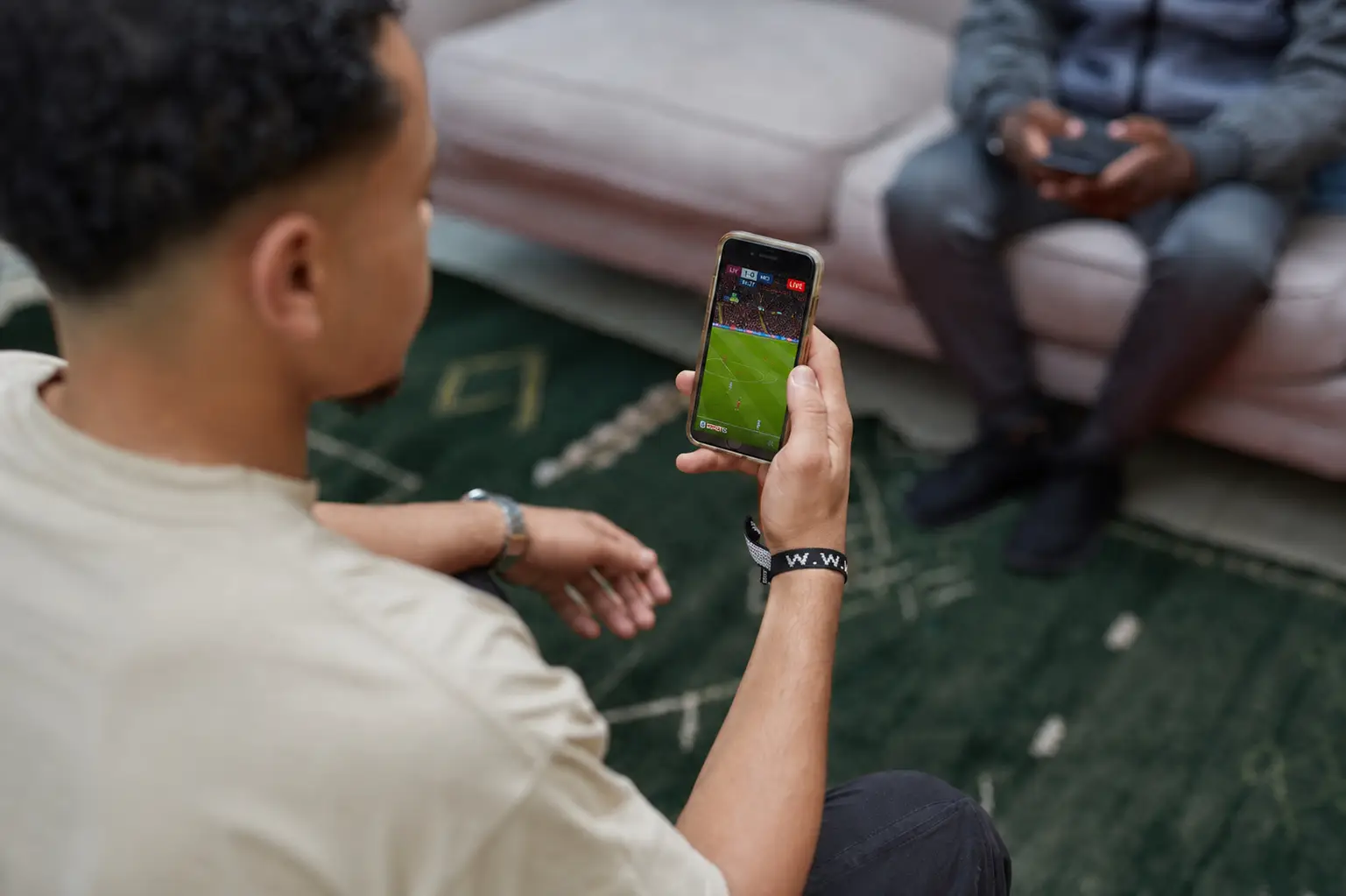
The Match Is No Longer Confined to 90 Minutes
Football’s next month will unfold across several screens at once. WAFCON 2026 runs in Morocco until August 16, Al Ahly will face Barcelona at Spotify Camp Nou on August 19, and the Premier League begins on August 21. Television still carries the main image, but the fan experience is increasingly controlled by apps, alerts, live statistics, social clips and personalized feeds. A supporter can watch Tanzania press South Africa, check a heat map, discuss a substitution and compare live cotes before the replay has finished. Digital platforms have not replaced matchday. They have stretched it beyond kickoff and full time.
The Second Screen Has Become the Control Room
A football broadcast offers one editorial version of the match. The second screen lets the viewer build another. Official team apps deliver lineups, data providers supply xG and shot locations, and social feeds surface moments the director may have missed.
The difference appears during tactical swings. A side can hold 60 percent possession yet create little inside the penalty area. With field tilt, shot quality and passing maps, apparent dominance may look sterile. Real-time statistics give fans better language for what they are seeing.
The Metrics That Actually Help
Useful match insights answer a clear question:
- Expected goals: were the chances genuinely dangerous?
- Touches in the box: did possession reach threatening areas?
- High turnovers: did the press win the ball near goal?
- Progressive passes: who broke defensive lines?
- Shot locations: was the attack settling for poor attempts?
- Substitution timing: did the coach react before momentum changed?
Personalized content then filters those signals around a club, national team or player. A Tanzanian fan following Winfrida Gerald does not need the same feed as a neutral tracking Zambia’s Barbra Banda.
WAFCON Shows Why Mobile Distribution Matters
CAF’s 2026 tournament expanded to 16 teams and scheduled 34 matches across Rabat and Casablanca. Tanzania’s 2-1 win over South Africa on July 27 created an immediate qualification opportunity before the July 31 fixture against Burkina Faso at Larbi Zaouli Stadium. That story can move quickly from a live broadcast to highlights, player clips and tactical analysis.
Not every supporter can sit in front of one television for three weeks. Notifications preserve the thread between matches by delivering standings, lineups, injuries and kickoff reminders. When several fixtures share one day, the platform organizing attention becomes almost as important as the one owning the pictures.
Personalization Turns a Global Match Into a Private Feed
The old sports homepage showed every user the same headlines. Newer systems rank content around followed teams, location, prior behavior and preferred formats. One fan receives a 30-second goal clip; another gets a tactical breakdown; a third sees the next fixture and predicted lineup.
The feed still needs discovery. A supporter focused on one club can miss a rising African player until a transfer is nearly complete. Tournament pages, comparison tools and broader recommendation tabs reduce noise without sealing the user inside one football bubble.
Betting Platforms Compete on Context, Not Just Odds
The strongest sport betting sites now operate as information layers around the fixture. Users expect cotes, team news, form and live market movement in one interface. Access to online betting from Melbet.tz can place those elements beside the bet slip, letting the user compare a pre-match view with what the game is producing. A price on over 2.5 goals means little without shot quality, tempo and the scoreline’s effect on risk. The sound habit is to define a stake before kickoff and avoid increasing it because the first prediction failed.
During a goal review or red card, traffic spikes and cotes may suspend, reopen and move within seconds, while Melbet Tanzania gives football followers access to pre-match and live markets, but a useful decision still starts with probability rather than familiarity. The best sport betting app is the one that presents settlement rules, market status and relevant data clearly before confirmation. Fans who stake sport betting selections without checking those details are reacting to motion, not reading the match.
Data Quality Is the New Trust Signal
The SoccerNet 2026 challenges drew 427 teams and 1,129 submissions across ball-action anticipation, player-centered event spotting, pitch localization and visual question answering. Those tasks support faster highlights, automated tagging and richer tactical interfaces.
Accuracy matters more than novelty. A wrongly identified player, delayed event marker or inflated possession figure can distort analysis and live markets. Platforms need clear timestamps, reliable data partners and visible correction processes. Every alert and graphic depends on infrastructure the fan rarely sees.
Matchday Identity Lives Online and Offline
Digital fan engagement is not limited to statistics. Supporters coordinate shirts, beauty looks, travel, watch parties and social posts around the fixture. The jersey appears at the stadium, in a group photo and in a reaction video within the same hour.
That helps explain why football content travels beyond sports media. Al Ahly’s first Joan Gamper Trophy appearance will create a visual story around red shirts at the reopened Spotify Camp Nou, not only a scoreline.
August Will Test the Entire Fan Stack
WAFCON must keep 34 matches discoverable until the August 16 final. Barcelona-Al Ahly on August 19 will generate global traffic around an African club in a European showcase. The Premier League’s August 21 return will then produce the season’s first surge of alerts, fantasy decisions, live data and market movement.
Fans should check three things before relying on a platform: whether lineups come from an official source, whether statistics carry a visible timestamp, and whether betting markets show clear settlement rules. More information only helps when the user can identify which signals deserve attention.