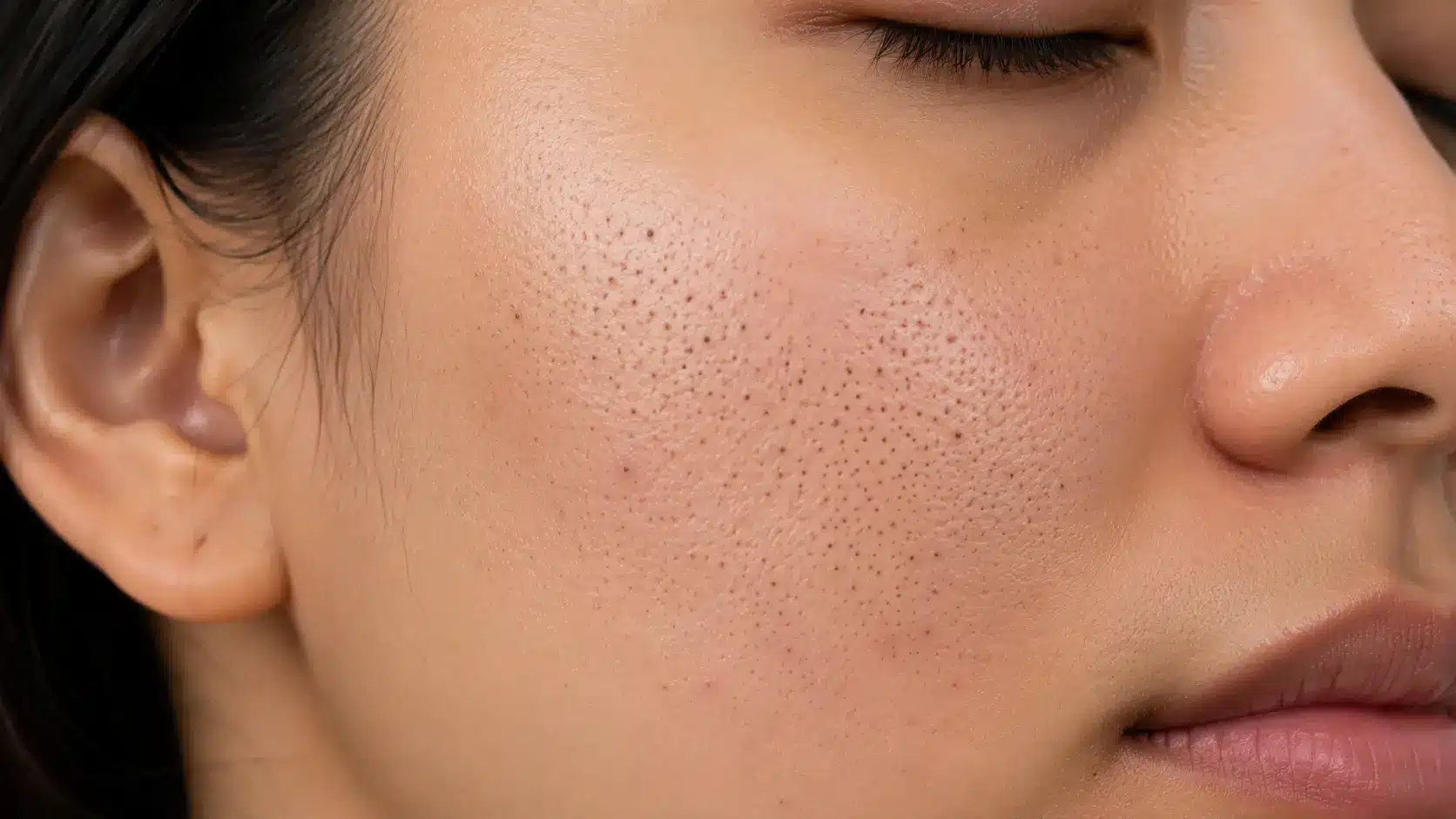
Finding a blackhead in my ear caught me off guard the first time it happened. It looked strange sitting right on the edge of my ear, and my first thought was how to get rid of blackheads in my ears overnight without making it worse.
A little digging into what actually causes them, plus some trial and error with different remedies, taught me a lot about treating this the right way.
Ears have oil glands and hair follicles just like the rest of our skin, so buildup happens more often than people realize.
Why Do Blackheads Form in the Ears?
The skin on my ears has tiny hair follicles and oil glands, just like the skin on my face. When oil, dead skin cells, earwax, dirt, and other debris collect inside a pore, they can form a small plug.
Once that plug is exposed to air, it oxidizes, turns dark, and becomes what we know as a blackhead. I also noticed that certain habits can make the problem worse.
Hormonal changes and wearing earbuds daily can also make someone more prone to them, which is part of why they show up more than people expect. It’s not that your ears are dirty; it’s just an easy spot to overlook.
Once I understood how blackheads form, it made complete sense that my ears could deal with the same buildup that causes blackheads on nose skin for so many people.
Blackheads Versus Other Skin Bumps
Not every dark or white skin bump is a blackhead. Knowing the differences helps you identify clogged pores, normal oil buildup, and trapped keratin.
| Bump Type | Pore Status | Color | Texture |
|---|---|---|---|
| Blackhead | Open (exposed to air) | Dark or black | Slightly raised, gritty plug |
| Whitehead | Closed comedone | White or skin-toned | Small, firm bump |
| Sebaceous filament | Open, not clogged | Grey or light tan | Flat, lies within the pore |
| Milia | Trapped keratin cyst | White or yellowish | Hard, small, clustered bumps |
Understanding these bumps makes skincare choices easier. Blackheads, whiteheads, filaments, and milia form differently and need different care approaches.
Can You Actually Clear Them Overnight
Not fully, and it helps to be honest about that up front. A single overnight treatment can calm the area, shrink some of the swelling around a blackhead, and make it less noticeable by morning, especially if it’s small or new.
A stubborn blackhead that’s been there for weeks will usually need several nights of consistent, gentle care.
Here’s what matters most: the goal isn’t to force it out in one try. Aggressive picking or scrubbing usually makes things worse and can leave your ear red, sore, or even scarred. Gentle, repeated beats are better than rough, rushed scrubbing almost every time.
Overnight Remedies That Actually Work
These are the methods dermatologists and skincare experts point to again and again. Try one at a time so you know what’s working for your skin.
- Warm compress first. Soak a clean washcloth in warm water, wring it out, and hold it against your ear for about 5 minutes. This softens the plug inside the pore and makes everything else you do afterward more effective.
- Salicylic acid cleanser. Dip a cotton ball in a gentle salicylic acid cleanser and dab it directly onto the blackhead. Salicylic acid breaks down oil and dead skin sitting inside the pore, which is exactly what’s clogging it.
- Diluted tea tree oil. Mix a drop of tea tree oil with a carrier oil like jojoba, then apply with a cotton swab. Tea tree has natural antibacterial properties that may help keep the area clean between treatments, though it won’t clear the blackhead on its own.
- Spot clay treatment. A thin layer of clay mask left on for 10 minutes can pull out surface oil. Rinse it off completely before bed since leaving clay on too long can dry out delicate ear skin.
| Remedy | Best For | Leave-On Time |
|---|---|---|
| Warm compress | Loosening the plug before treatment | 5 minutes |
| Salicylic acid | Ongoing daily control | Rinse after a few minutes |
| Diluted tea tree oil | Mild antibacterial support | Overnight |
| Clay spot mask | Occasional deep clean | 10 minutes, then rinse |
Pro tip: Never apply anything directly inside the ear canal. Stick to the outer ear and earlobe area only, and keep cotton swabs shallow so you don’t accidentally push wax or product deeper in.
Step-by-Step Removal Process
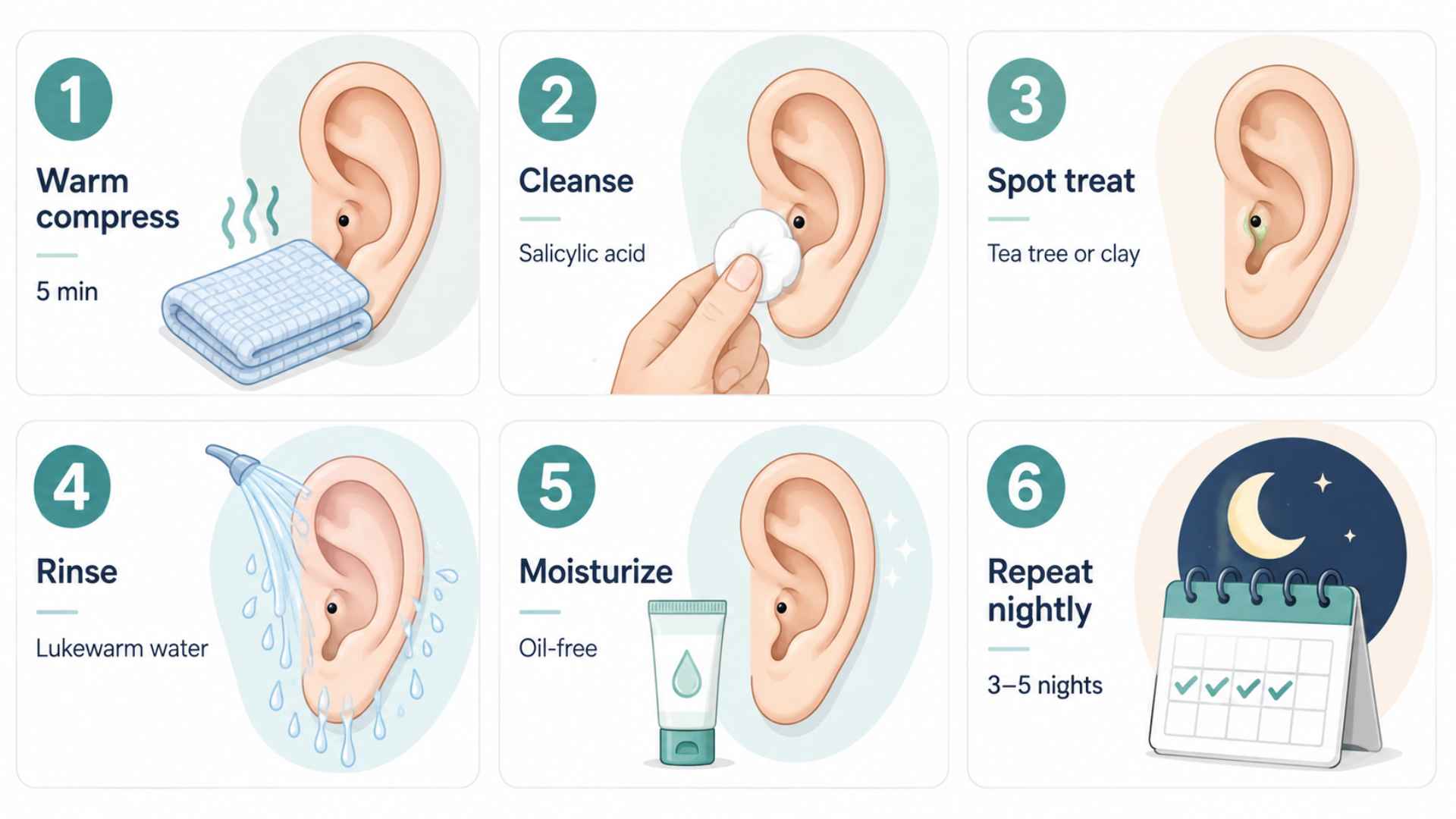
Blackheads on the ear can be stubborn, but gentle care usually works better than squeezing. This simple routine uses warmth, cleansing, spot treatment, and moisture to clear clogged pores safely.
Step 1: Soften the Pore
Soak a clean washcloth in warm water and hold it against your ear for 5 minutes. Heat opens the pores and loosens hardened oil and dead skin trapped inside, making every step after this one work better and reducing the effort you need later.
Step 2: Cleanse the Area
Dip a cotton ball in a gentle salicylic acid cleanser and dab it directly onto the blackhead. Salicylic acid breaks apart the oil and dead skin clogging the pore. Avoid scrubbing, since gentle dabbing works just as well without irritating the thin skin around your ear.
Step 3: Apply a Spot Treatment
Use diluted tea tree oil or a thin layer of clay mask only on the blackhead. Leave clay on for 10 minutes, then rinse fully. This step targets the blackhead directly and helps pull out any leftover oil near the surface.
Step 4: Rinse and Pat Dry
Rinse the area with lukewarm water to remove any product residue, then pat it dry with a clean towel. Leftover cleanser or clay can dry out your skin overnight, so make sure the area is fully rinsed before moving to the next step.
Step 5: Moisturize Lightly
Apply a small amount of oil-free, non-comedogenic moisturizer around the outer ear. This keeps the skin balanced and prevents it from overproducing oil, which can happen when skin gets too dry from acne treatments.
Step 6: Repeat Nightly
Stick with this routine for 3 to 5 nights in a row for stubborn blackheads. Consistency matters more than intensity, since gentle repeated care clears blackheads more effectively than one aggressive attempt ever will.
Keep the routine gentle and stop if the skin becomes sore, swollen, or irritated. If the blackhead does not improve, a dermatologist can remove it safely without damaging surrounding skin.
Remedies to Skip
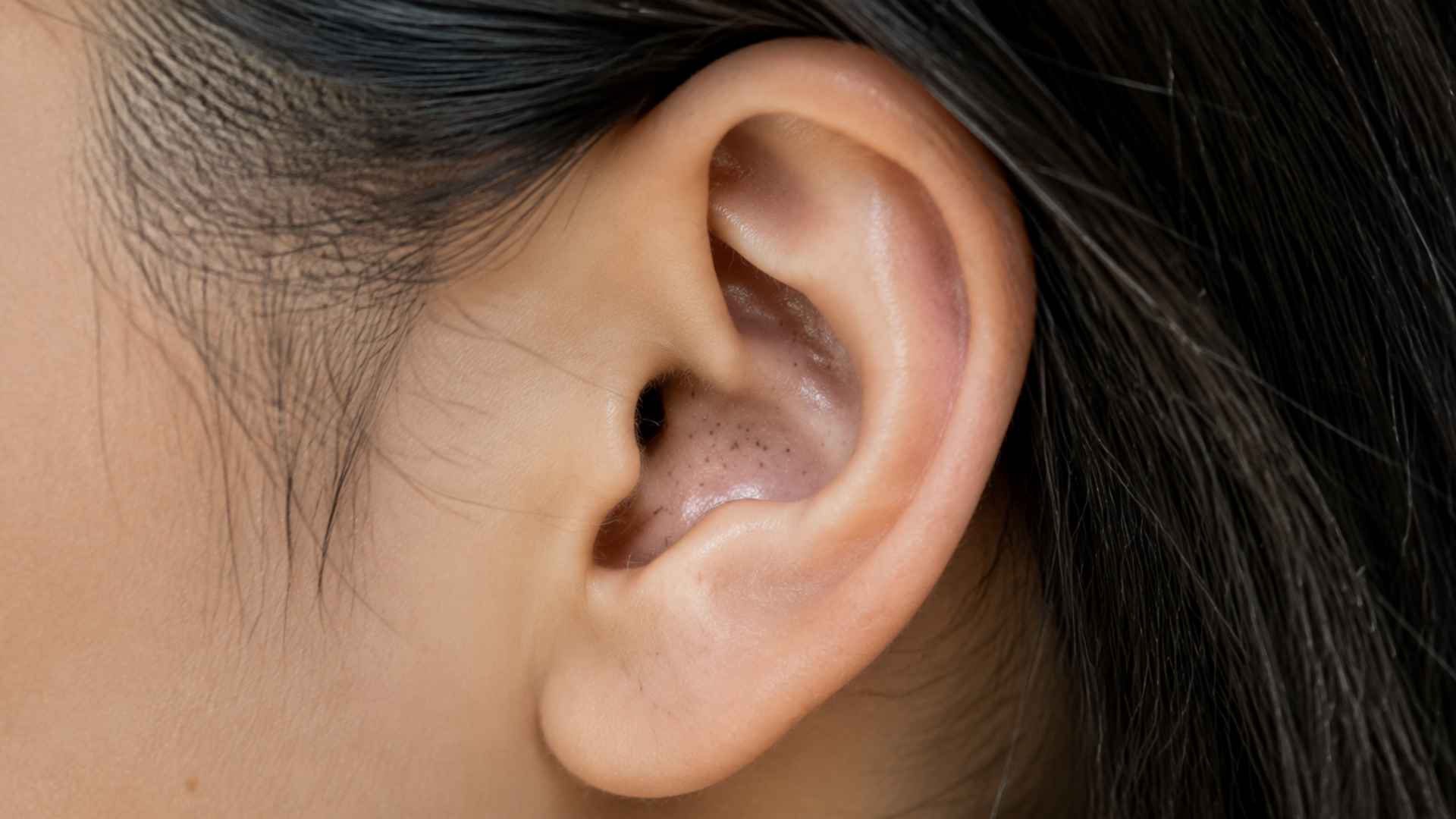
Not everything that shows up in a late-night search actually helps. A few of these can even set you back.
Rubbing alcohol dries out your skin and kills surface bacteria, but it does nothing to pull out a blackhead and can irritate your ear.
Hydrogen peroxide has the same problem: no real science backs it up for blackhead removal, and it can sting sensitive ear skin.
And skip the fingernails, tweezers, or bobby pins. Ears are thin-skinned and close to your ear canal, so DIY digging is one of the easiest ways to cause an infection or leave a scar.
The same clogged pores that causeblackheads on cheeks can just as easily show up in a spot most people never think to check.
What a Dermatologist Might Recommend
If home care isn’t cutting it after a couple of weeks, a dermatologist has stronger tools available.
They may suggest a prescription-strength retinoid to speed up skin cell turnover, or a stronger salicylic acid formula than what you’d find over the counter.
For blackheads that just won’t budge, professional extraction is often the safest route.
A trained provider uses a sterile tool and knows exactly how much pressure to apply, which is very different from trying it yourself with something from your bathroom drawer.
Book an appointment if you notice swelling, pain, or a blackhead that keeps coming back in the exact same spot no matter what you try.
Is It Okay to Remove Blackheads With Extraction Tools? Not at home. Extraction tools can tear thin ear skin, causing irritation, scarring, or infection, so leave it to a dermatologist.
Professional Treatments for Ear Blackhead Removal
Home care handles most cases, but persistent or deep-set blackheads sometimes need a dermatologist’s tools and training to clear safely.
- Manual extraction: A dermatologist uses a sterile comedone extractor under bright light to remove the plug without tearing delicate ear skin.
- Chemical peels: Salicylic or glycolic acid solutions dissolve the top skin layer, clear pores, and improve texture around the ear.
- Microdermabrasion: Fine crystals or a diamond-tipped wand gently exfoliate the surface, lifting shallow blackheads and smoothing skin.
- Prescription retinoids: Stronger vitamin A formulas speed up cell turnover, preventing new plugs from forming as quickly.
These options work best combined with a steady home routine, since professional treatments clear existing blackheads but don’t stop new ones from forming.
How Common is This Condition?
Blackheads in the ears are more common than most people think. Anywhere skin has oil glands and hair follicles, blackheads can show up, and that includes your ears, not just your face.
Dermatologists see this often, especially in people who wear earbuds daily, have oily skin, or go through hormonal changes like puberty or their monthly cycle. It’s not rare; it’s just rarely talked about since most people can’t easily see inside their own ears.
How to Stop Them From Coming Back
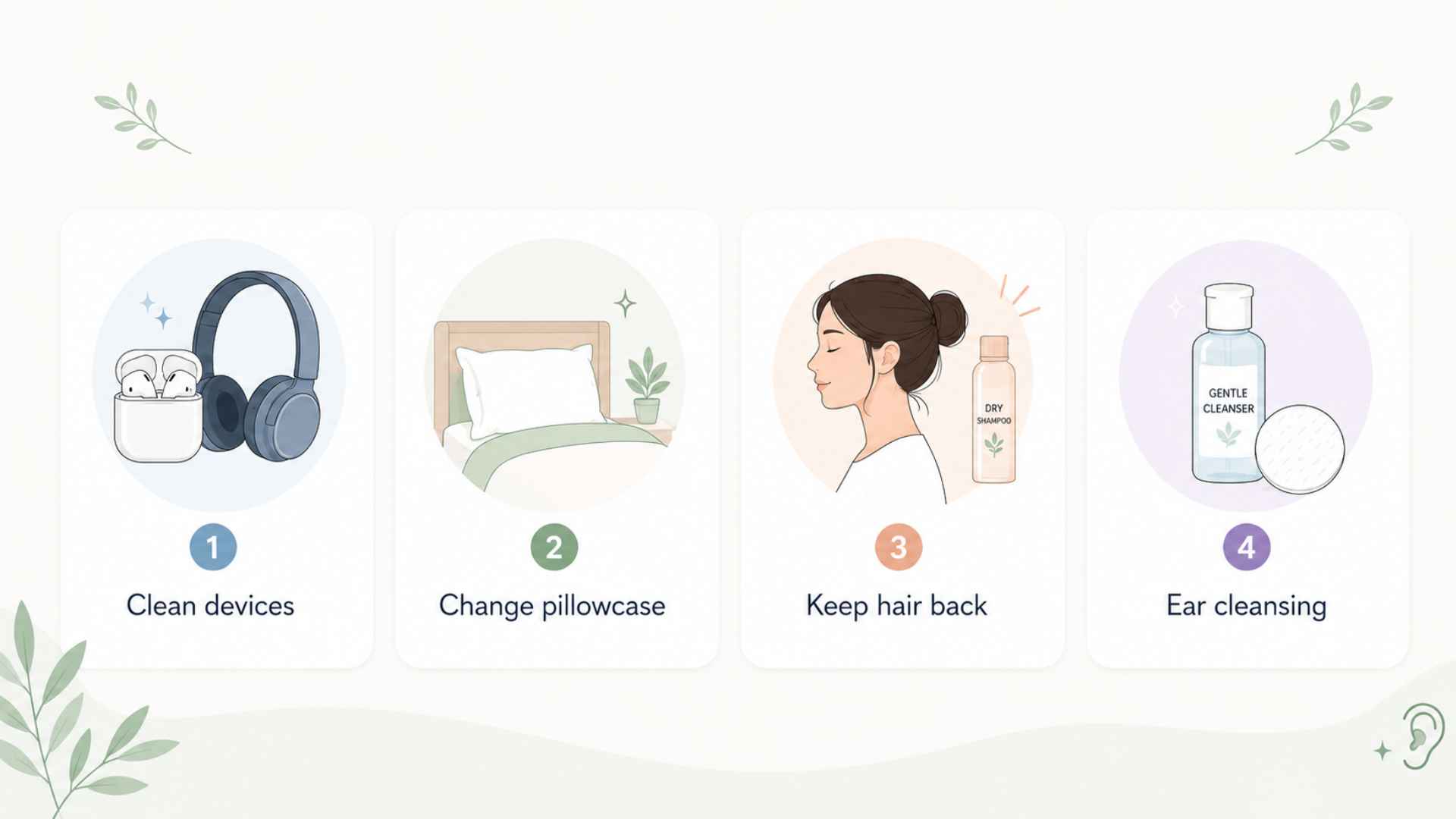
Once your ears are clear, a little upkeep goes a long way. Blackheads often return when oil and buildup collect around the ears. Simple daily habits can help keep pores cleaner and reduce future clogged pores.
- Clean your earbuds: Wipe earbuds or headphones weekly with alcohol wipes to remove oil, dirt, and bacteria that can contribute to clogged ear pores.
- Change pillowcases often: Wash pillowcases every few days to prevent oil, sweat, and product buildup from transferring back onto your ears during sleep.
- Control hair oil transfer: Tie hair back or use dry shampoo when skipping washes to reduce oil reaching your ears overnight.
- Clean your outer ears: Add ear cleansing to your skincare routine by gently wiping the outer ear with a cleanser-soaked cotton pad.
Pro tip: Set a weekly reminder on your phone to clean your earbuds. It takes 30 seconds and prevents most of the buildup that causes ear blackheads in the first place.
Conclusion
Looking back, treating a blackhead in my ear was never about rushing the process. Gentle, steady care always won over anything aggressive, and that’s the biggest lesson from figuring out how to get rid of blackheads in ears overnight.
A warm compress, a mild cleanser, and a little patience did more for my skin than any harsh scrub ever could.
Sticking with small habits, like cleaning earbuds and swapping pillowcases, kept new blackheads from coming back.
If a stubborn one refuses to budge after a couple of weeks, seeing a dermatologist is worth it. Sometimes the smartest move is letting someone trained handle what home care can’t fix.
Frequently Asked Questions
Is It Safe to Remove Blackheads in Your Ears at Home?
Yes, if you use gentle methods like salicylic acid or warm compresses. Avoid picking, scraping, or using sharp tools, since ear skin is thin and can scar easily.
What Causes Blackheads in The Ears?
They’re caused by trapped oil, dead skin, and bacteria inside hair follicles. Earbuds, phones, unwashed hair, and hormonal oil production are the most common triggers.
Do Pore Strips Work on Ears?
Not well. Ears have curves and ridges that make strips hard to press evenly, so most people get better results from cleansers or spot treatments instead.