Blackheads on the cheeks happen when pores get clogged with oil, dead skin cells, and sometimes leftover makeup.
They show up as small dark spots that sit close to the skin’s surface, and they tend to stick around when a skincare routine doesn’t quite fit the skin type.
They are common, and they respond well to the right approach. Squeezing or picking at them often makes things worse, since it can irritate the skin and leave marks behind.
Let’s get started and understand why blackheads form on the cheeks, safe ways to treat them, at-home options, and habits that keep them from coming back.
What are Blackheads?
Blackheads are a mild form of acne that forms when a hair follicle gets blocked. Unlike pimples, they usually don’t hurt or swell.
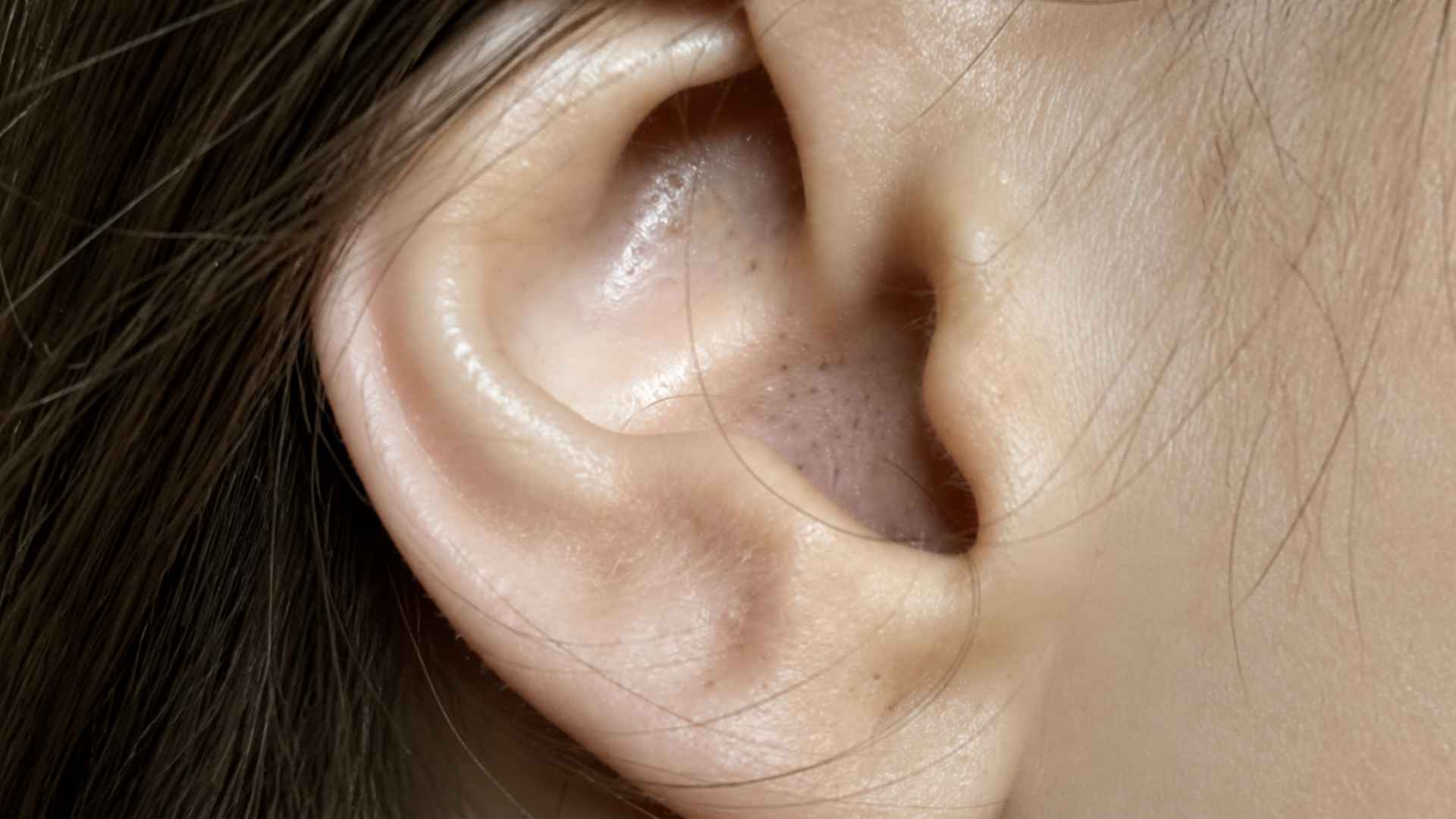
Blackheads can also appear in areas like the ears, nose, and chin because these areas have more oil glands.
However, searches for how to get rid of blackheads in ears overnight often lead to quick-fix methods that may irritate the skin. Safe removal usually requires gentle cleansing and pore-clearing ingredients over time.
Understanding what’s happening under the skin makes it easier to pick treatments that actually work instead of ones that just sit on the surface.
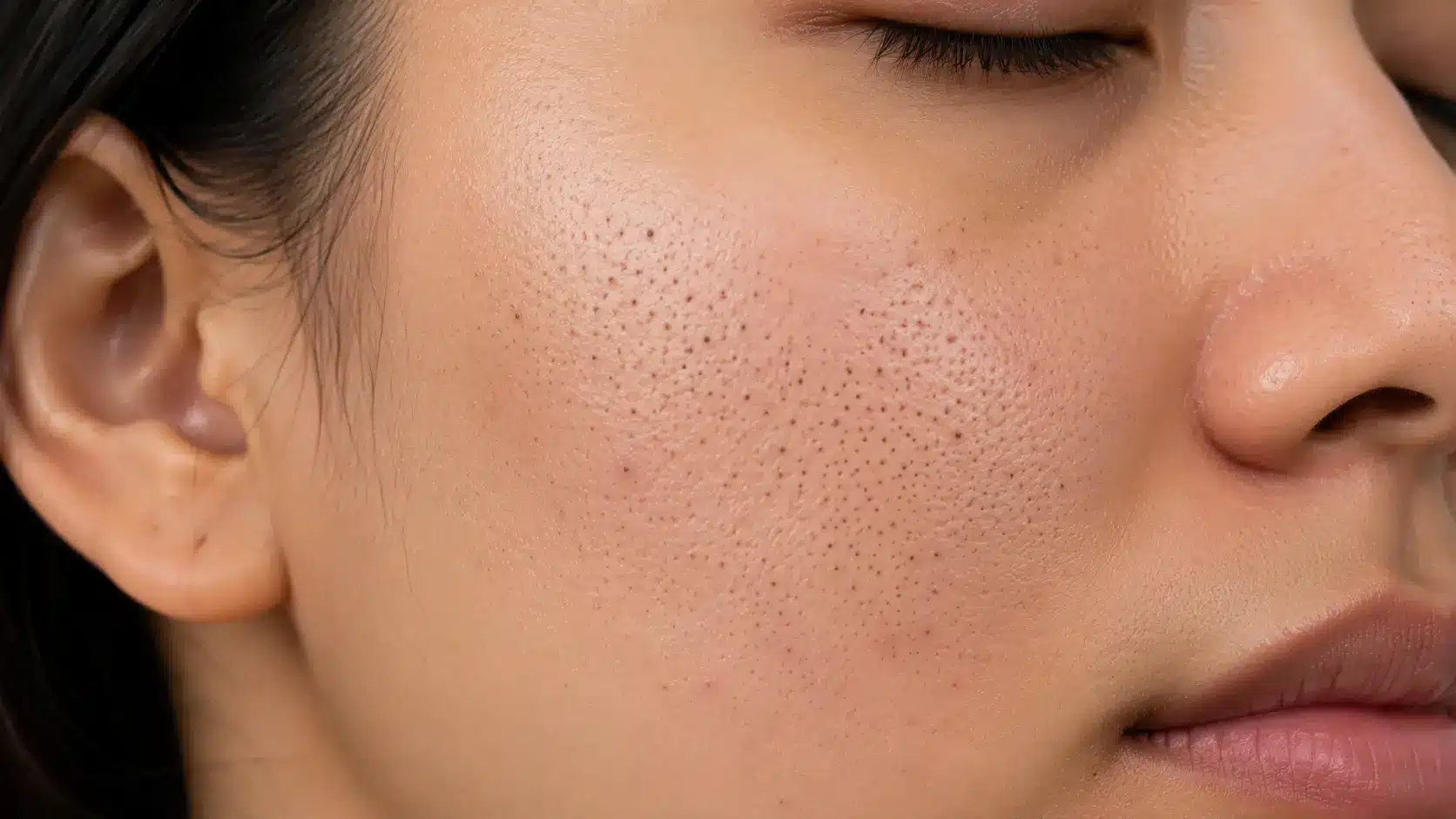
How Blackheads Look on Cheeks:
They usually appear as small, dark dots scattered across the cheeks and may feel slightly raised when you run your fingertip over the skin.
Knowing how blackheads form and appear helps you choose gentle treatments that target clogged pores without irritating your skin.
How Blackheads Form on Your Cheeks
Blackheads start when a pore becomes partly blocked, trapping oil and skin cells inside while staying open at the top. Common contributors include:
- Excess oil from the skin’s own glands
- Dead skin cells that haven’t shed properly
- Makeup residue left on overnight
- Everyday dirt and pollution buildup
A blackhead usually darkens gradually over several hours to a few days after the pore opens. Air exposure causes oxidation, turning the trapped oil and skin cell buildup darker.
Blackheads vs Whiteheads: What is the Difference?
Blackheads and whiteheads both form when oil and dead skin cells clog pores. The main difference is whether the pore stays open or closed, which changes how the buildup appears.
| Feature | Blackheads | Whiteheads |
|---|---|---|
| Pore opening | Open pore exposed to air | Closed pore covered by skin |
| Appearance | Dark dots due to oxidation | Small white or skin-colored bumps |
| Texture | Slightly rough or raised | Smooth, small bumps |
| Treatment focus | Helps clear open, clogged pores | Helps prevent blocked pores |
Knowing the difference between blackheads and whiteheads helps you choose the right products and avoid ineffective treatments.
Who Do Blackheads Affect?
Blackheads can affect anyone, but teenagers and people with oily skin face them most often because puberty raises oil production.
They commonly show up on the cheeks, nose, chin, and forehead, where oil glands are more active. Adults can get them too, especially with hormonal changes, heavy makeup use, or a family history of acne and clogged pores.
What Causes Blackheads on Cheeks?
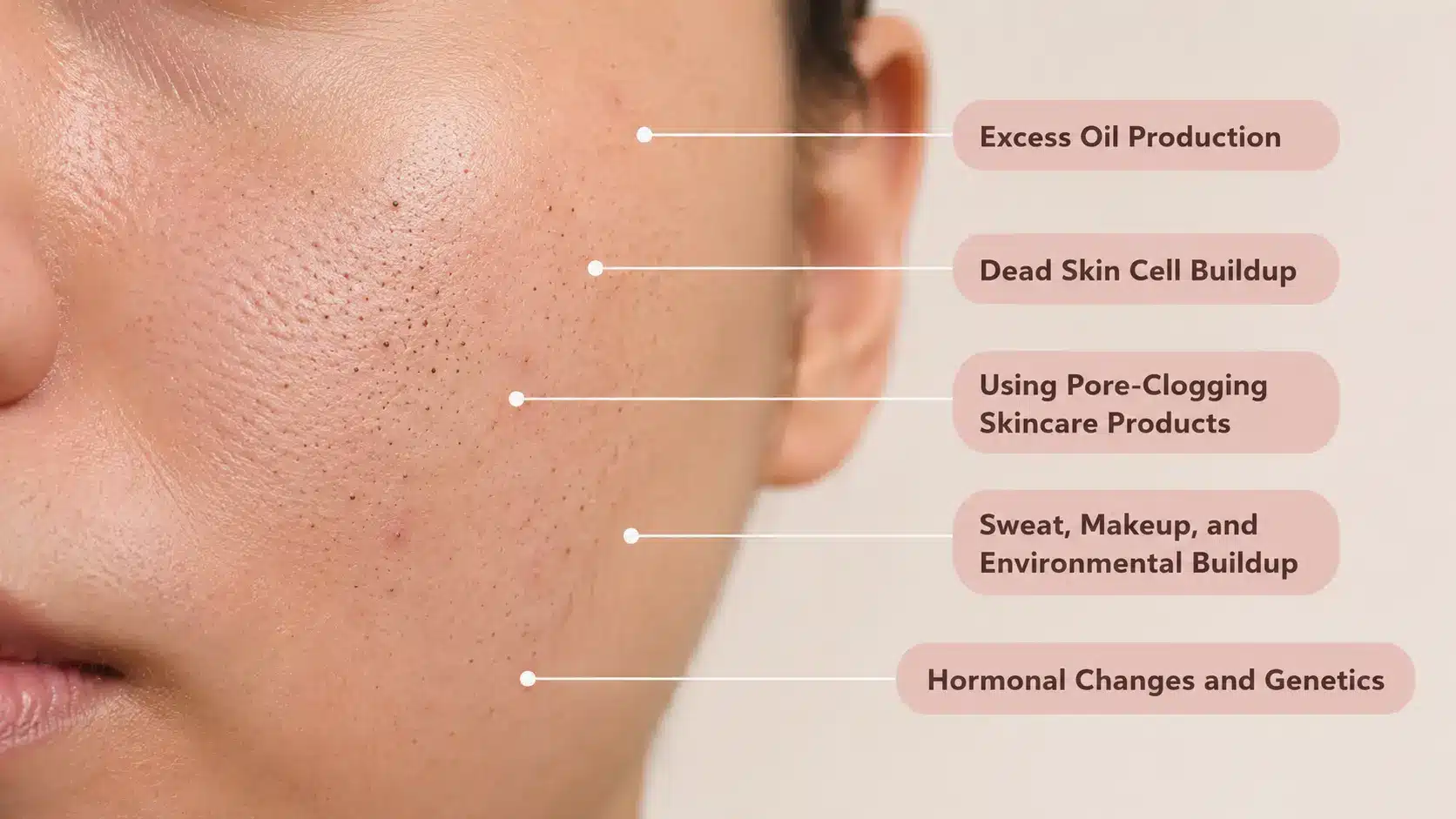
Several everyday factors contribute to blackheads forming specifically on the cheeks, from oil production to the products used daily. Recognizing the actual cause makes it much easier to choose a fix that lasts.
Blackheads can fade naturally over time, especially as skin sheds and pores clear on their own. However, this process is often slow and inconsistent skincare can cause them to return quickly.
Gentle exfoliation, salicylic acid, or retinoids can speed up clearing and help prevent new blackheads from forming on the cheeks.
- Excess Oil Production: Oily skin produces more sebum, which can mix with dead skin cells and collect inside pores, leading to blackheads.
- Dead Skin Cell Buildup: When dead skin cells do not shed properly, they can combine with oil and get trapped inside pores, creating blockages.
- Using Pore-Clogging Skincare Products: Heavy creams, thick makeup, and non-noncomedogenic products may trap oil and increase the risk of clogged pores.
- Sweat, Makeup, and Environmental Buildup: Leaving makeup on overnight, skipping cleansing after sweating, and regular exposure to dust or pollution can contribute to pore buildup.
- Hormonal Changes and Genetics: Hormonal shifts can increase oil production, making blackheads more common during puberty or other changes. According to the National Institute of Arthritis and Musculoskeletal and Skin Diseases (NIAMS), a family history of acne can also make some people more likely to develop clogged pores.
Understanding the causes of blackheads helps you identify daily habits that may be clogging your pores and choose better skincare.
|
How Common is this Condition? Blackheads are one of the most common skin concerns, affecting people of nearly every age and skin type. According to Cleveland Clinic, roughly 10 to 20 percent of adults deal with blackheads at any given time, and most people experience them at least occasionally during their teenage years, when oil production tends to peak. |
How to Get Rid of Blackheads on Cheeks
Treating blackheads works best with ingredients that clear pores gradually, not harsh methods that irritate the skin.
Salicylic acid, retinoids, and gentle exfoliation are some reliable options to get rid of blackheads on cheeks
1. Use a Salicylic Acid Cleanser
Salicylic acid helps break down oil and buildup inside pores. Use it a few times a week at first, especially if you have sensitive skin.
Best for: Oily skin and clogged pores
2. Add Gentle Chemical Exfoliation
Chemical exfoliants clear away dead skin cells without harsh scrubbing. Avoid strong physical scrubs, as they may irritate the skin.
- Salicylic acid (BHA): Helps unclog oily pores
- Glycolic acid (AHA): Smooths rough skin texture
Best for: Removing dead skin buildup
3. Try a Retinoid for Stubborn Blackheads
Retinoids help increase skin cell turnover and reduce pore clogging. Start slowly with a lower strength and always apply sunscreen during the day.
Best for: Blackheads that keep returning
4. Use Clay Masks Occasionally
Clay masks absorb excess oil and can temporarily reduce the appearance of clogged pores. Use them once or twice a week to prevent dryness.
Best for: Extra oil control
5. Get Professional Extraction
A dermatologist or trained professional can remove blackheads safely with proper tools. This lowers the risk of irritation, marks, or skin damage.
Best for: Stubborn blackheads
Consistent treatment with the right ingredients works better than quick fixes. Choose methods that suit your skin type and avoid harsh removal techniques.
Home Remedies to Remove Blackheads on Cheeks
Simple daily habits can make a real difference alongside targeted treatments. These at-home steps focus on cleaning the skin properly without causing extra irritation.
- Wash Your Face With a Gentle Cleanser: Use a mild cleanser twice daily to remove oil, sweat, and buildup. Avoid over-washing, as it may irritate skin and increase oil production.
- Use Warm Water Before Skincare: Warm water can soften surface buildup before cleansing. Avoid hot water, as it may dry out and irritate your skin.
- Avoid Squeezing Blackheads: Squeezing can push debris deeper into pores and cause redness, irritation, or dark marks.
- Be Careful With Pore Strips and Extraction Tools: Pore strips may offer temporary results, but frequent use can irritate skin. Avoid harsh extraction tools that may damage pores.
Gentle, consistent care works better than quick fixes for treating blackheads and keeping cheeks clear.
Are blackheads contagious?
No, blackheads are not contagious. They form from clogged pores, oil, and dead skin cells, not bacteria or viruses that spread between people.
You cannot catch blackheads from touching someone else’s skin, sharing towels, or close contact. They develop internally, so prevention comes down to skincare habits, not avoiding others.
Cheek Blackheads Prevention Routine to Follow
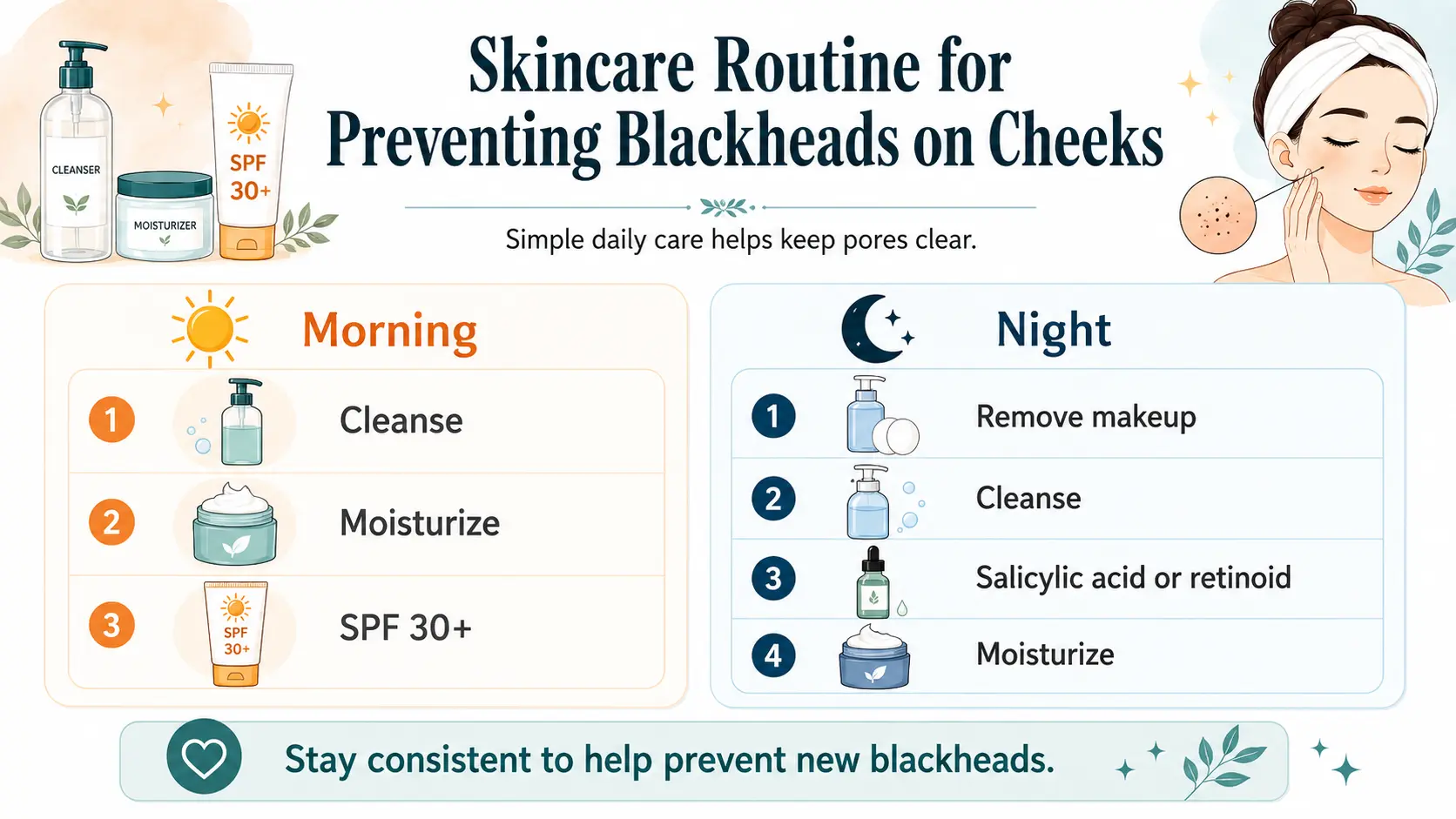
A simple daily routine can help keep pores clear and reduce the chances of blackheads returning. The key is to cleanse gently, use suitable products, and stay hydrated.
| Morning Routine | Night Routine |
|---|---|
|
Start your day by washing your face with a gentle cleanser, followed by a lightweight, non-comedogenic moisturizer. Finish with sunscreen (SPF 30 or higher) to protect your skin. |
End your day by removing makeup, cleansing your skin, and applying a treatment like salicylic acid or a retinoid. Finish with a moisturizer to maintain hydration. |
Following a consistent skincare routine helps manage oil, remove buildup, and reduce the chances of new blackheads forming on your cheeks.
How to Prevent Blackheads from Coming Back
Treatment only goes so far without habits that keep pores clear over time. These small adjustments can reduce how often new blackheads appear.
Preventing blackheads starts with simple habits. Use non-comedogenic products, remove makeup before sleeping, keep pillowcases and phones clean, and avoid over-exfoliating to protect your skin barrier.
Avoid common mistakes like scrubbing too hard, using too many active ingredients, or expecting overnight results.
Gentle, consistent care works best over time. Preventing blackheads is about maintaining healthy skin habits, not using harsh methods. Small changes can make a big difference over time.
When Should You See a Dermatologist?Most blackheads respond to a steady skincare routine, but some situations call for professional support. It may be time to see a dermatologist if:
|
Final Thoughts
Blackheads on the cheeks are common, and they’re manageable with a routine built around gentle cleansing, targeted treatment, and patience.
Ingredients like salicylic acid, retinoids, and clay masks each play a role, but consistency is what actually clears pores over time.
Avoiding harsh scrubbing and squeezing protects the skin barrier while treatment does its work.
Sticking with a simple routine and preventing new buildup is far easier than repeatedly treating the same breakouts.
Frequently Asked Questions
Why Do I Suddenly Have Blackheads on My Cheeks?
Changes in skincare, hormones, oil production, or habits like sleeping in makeup can trigger sudden blackheads.
Can Blackheads on Cheeks Go Away Naturally?
Some may fade naturally, but proper skincare with effective ingredients helps clear and prevent them faster.
Is It Safe to Squeeze Blackheads on Cheeks?
No, squeezing can irritate skin, push debris deeper, and cause redness, swelling, or lasting marks.
How Long Does It Take to Remove Cheek Blackheads?
Most treatments take four to eight weeks of consistent use before noticeable improvements appear.