Standing in the skincare aisle reading “tripeptide-infused bioactive serum with encapsulated retinol complex” can feel like studying for a chemistry exam nobody signed up for, phone in hand, trying to decide if the price tag is justified. Beauty buzzwords tend to sound far more complicated than the ingredients or techniques they’re actually describing. Marketing simply rewards words that sound impressive over words that are easy to understand. A serum promising “neuropeptide activation” and one simply described as “a peptide that relaxes fine lines” can be the exact same product. Learning to translate a handful of common terms removes most of the mystery instantly.
Why Do Beauty Buzzwords Sound So Much More Complicated Than They Are?
Most beauty buzzwords describe something straightforward dressed up in scientific-sounding language. A longer, technical-feeling word simply tests better on a label than a simple one. “Bioactive” often just means an ingredient does something measurable to the skin. That description fits nearly every active ingredient that exists. “Encapsulated” usually just means an ingredient is wrapped in a delivery shell so it breaks down more slowly. “Growth factor” sounds like something out of a lab. It simply refers to proteins that signal skin cells to repair themselves, a process skin already does on its own. The scary-sounding name rarely matches how ordinary the underlying concept actually is.
What Does “Peptide” Actually Mean on an Ingredient Label?
Peptide might be the single most overused buzzword on a modern skincare shelf, showing up on everything from serums to shampoos to the occasional lip balm. In plain terms, a peptide is a short chain of amino acids. Those are the same building blocks that make up the proteins already present in skin and hair. Different peptide chains send different signals to skin cells. The peptide terminology in research is vast; however, none of that vocabulary changes what a peptide actually is on a skincare label. It’s a small, naturally occurring molecule doing a specific, limited job.
Which Buzzwords Come Up Most Often on Skincare Labels?
A handful of terms show up constantly across skincare and haircare packaging. Each one sounds more complicated than the actual definition. Common ones include:
- “Bioavailable” meaning an ingredient is in a form the skin can actually absorb and use
- “Microbiome-friendly” meaning a product avoids disrupting the skin’s natural bacteria
- “Cosmeceutical” a marketing term with no official regulatory definition
- “Clean beauty” a label with no single agreed-upon industry standard
- “Dermatologist tested” which means a dermatologist reviewed the product, not that it works
None of these terms is meaningless. They’re just far less exotic than the label makes them sound.
What Are “Sebaceous Filaments” and Why Do They Sound Scarier Than They Are?
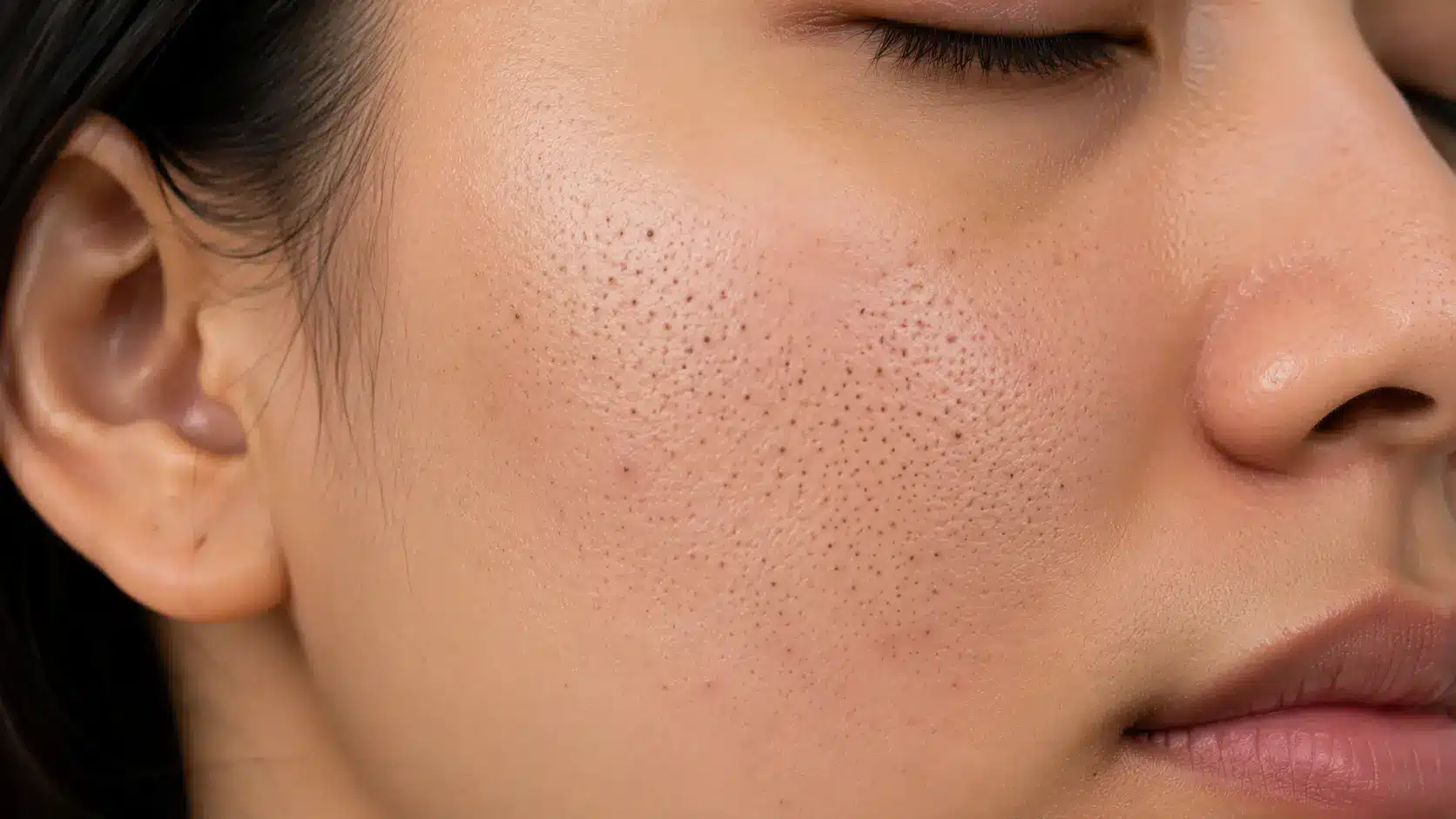
Sebaceous filaments are one of the most misunderstood terms in skincare, thanks in large part to close-up phone photos that make ordinary pores look alarming. They mostly get mistaken for blackheads on sight. They’re actually a normal, permanent part of skin structure. Every pore has one, and its job is simply to channel oil to the skin’s surface. Products aimed at reducing the appearance of sebaceous filaments can make pores look less noticeable. Nothing removes them permanently, though, because removing them isn’t actually possible or necessary. The scary-sounding name creates a problem that doesn’t really exist: normal skin function mistaken for something that needs fixing.
Do Hair Buzzwords Follow the Same Pattern?
Hair terminology gets just as dressed up as skincare, often for the same reason: stylists and brands both benefit when a technique sounds exclusive rather than ordinary. For example, root melt; it sounds like an advanced chemical process. But it’s just a softer, more gradual blend between a natural root color and lighter lengths, achieved through careful placement rather than any special formula. The technique itself isn’t new. Giving it a name that sounds technical just made it easier to market and easier to request by name at a salon.
What Does the FDA Actually Say About Beauty Claims Like These?
Some beauty buzzwords carry more regulatory weight than others, and it’s worth knowing which ones actually mean something legally versus which ones are pure marketing flourish. The FDA’s guidance on cosmetic labeling and drug claims states plainly that “cosmeceutical” has no legal meaning under federal law. That’s true no matter how often it appears on packaging. The same guidance notes that a cosmetic becomes a drug the moment its claims promise to treat or prevent a condition. That’s part of why some skincare copy carefully avoids specific medical language, even when the ingredient has real evidence supporting it. Reading a label with that distinction in mind cuts through a surprising amount of marketing noise.
Read the Label, Not the Hype
Beauty buzzwords tend to sound impressive because that’s exactly what they’re designed to do. The underlying science usually isn’t actually complicated at all. A peptide is a small molecule doing one job. A sebaceous filament is a normal part of skin nobody needs to eliminate. A root melt is just a soft blend with a marketable name. Next time a label reads like a chemistry lecture, look up the plain-language definition before assuming the product does something extraordinary. Most of the time, the buzzword is doing more work than the ingredient is.