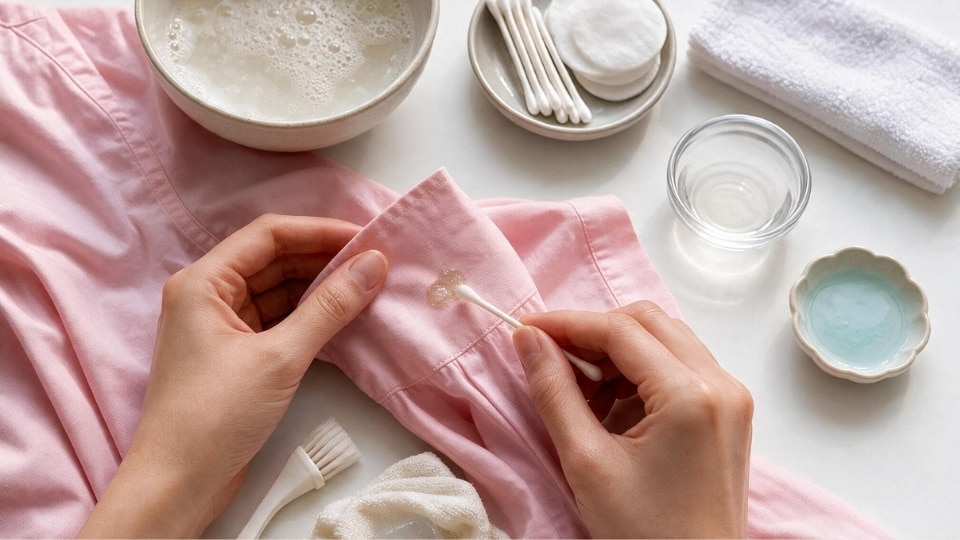
The first time I got nail glue on a cotton T-shirt, I made the mistake almost everyone makes.
I grabbed a damp cloth and started rubbing. Instead of lifting the glue, I spread it through the fibers, and it hardened into a larger patch.
After testing different removal methods on cotton, denim, and polyester, I found that the safest approach isn’t always the strongest solvent.
If you’re looking for how to get nail glue out of clothes, the best method depends on two things: the fabric type and whether the glue is still wet or has already cured.
Once you know those, removing the stain becomes much more straightforward.
Why Nail Glue is so Hard to Remove from Fabric
Nail glue is not like a craft glue you can rinse out under warm water. Most formulas rely on cyanoacrylate, the same bonding agent used in super glue, which means it cures fast and hard.
Once it dries, it does not sit on top of the material. It works its way into the fibers and hardens there, basically becoming part of the fabric structure until something breaks that chemical bond.
I have noticed the damage gets worse the longer glue sits, which is why speed matters more than almost anything else on this list.
Important Safety Steps Before Treating the Stain
Before you reach for any product, run through this checklist. I think about every one of these whenever I am doing my nails near clothing that actually matters to me, especially on days I’m taking off a manicure rather than just touching one up.
- Work in a ventilated space: Acetone and similar solvents release fumes that build up fast in small bathrooms
- Keep glue-soaked fabric off your skin: Nail glue reacts with cotton and wool and can heat up fast against skin. If glue-soaked fabric is touching you, get it off right away rather than waiting.
- Always test on a hidden seam first: Like an inside hem or underarm panel, before treating the visible stain
- Never mix cleaning chemicals: Bleach combined with acetone or ammonia-based products can be genuinely dangerous
- Keep a damp cloth nearby: So you can rinse solvent off quickly if the fabric starts to react
- Work on a flat, protected surface: Keep a towel underneath, so the glue does not transfer to whatever is beneath it
None of these steps take much extra time, but skipping them is how a small glue spot turns into a bigger mess. A little caution upfront saves you from damaging the fabric or your skin later.
Methods to Remove Nail Glue from Clothes
I have tested most of these on my own clothes over the years, sometimes out of necessity and sometimes just to see what would happen. Here is what actually gets results.
Method 1: Acetone or Nail Polish Remover
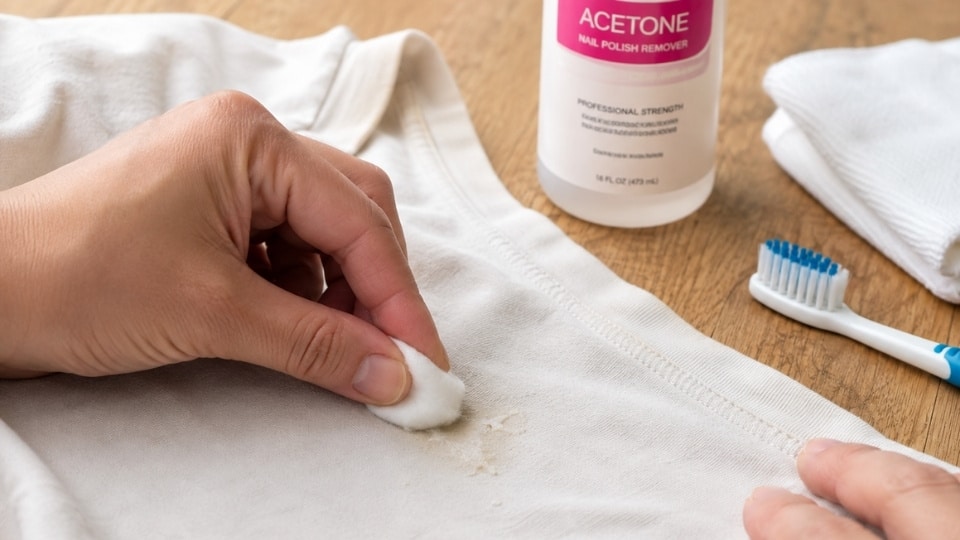
Acetone is the first thing I reach for, mostly because it’s always in my kit at all times. Chemically, it is the closest match to what caused the stain in the first place.
- Best for: Cotton, denim, and other sturdy woven natural fabrics.
- Tools and materials needed: Pure acetone or an acetone-based nail polish remover, cotton balls, a soft-bristled toothbrush, a clean white cloth
- Steps to follow: Gently scrape off any raised glue with a dull edge. Soak a cotton ball in acetone and press it onto the stain for one minute. Blot and gently rub in small circles, then rinse with cold water and repeat as needed
- Time needed: 15 to 30 minutes depending on how set the glue is
Never use on polyester, nylon, spandex, acetate, or triacetate, since acetone can melt or warp synthetic fibers.
Method 2: Rubbing Alcohol
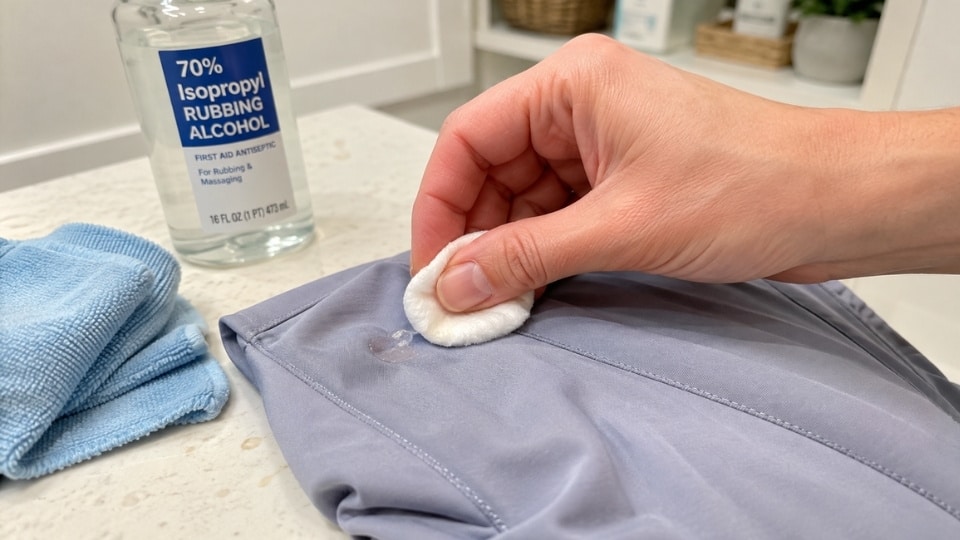
A small bottle of rubbing alcohol lives in my bathroom cabinet, mainly for cleaning brushes, but it turns out to be gentler on fabric than acetone in a lot of cases.
- Best for: Synthetic blends and fabrics that react poorly to acetone
- Tools and materials needed: Isopropyl rubbing alcohol, cotton pads, a soft cloth
- Steps to follow: Dab rubbing alcohol directly onto the glue spot and let it sit for a few minutes. Gently work the softened glue loose with your fingers or a cloth, then rinse and check the area before repeating
- Time needed: 10 to 20 minutes
Method 3: White Vinegar Soak
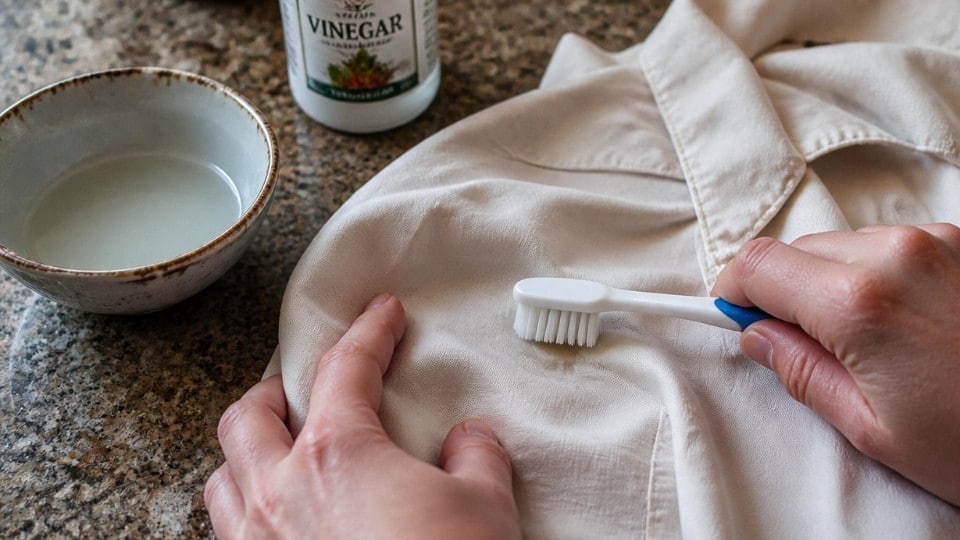
When I am dealing with a fine, easily damaged piece I do not want to risk with anything stronger, vinegar is what I turn to. It softens glue without any harsh chemical smell.
- Best for: Fine fabrics like silk, rayon, or anything you would normally hand wash
- Tools and materials needed: White vinegar, a small bowl, a soft toothbrush, warm water
- Steps to follow: Warm the vinegar slightly, then soak the stained section for 15 to 20 minutes. Gently scrub with the toothbrush to lift loosened glue, then rinse thoroughly with warm water
- Time needed: 20 to 30 minutes
Method 4: Freezing the Glue
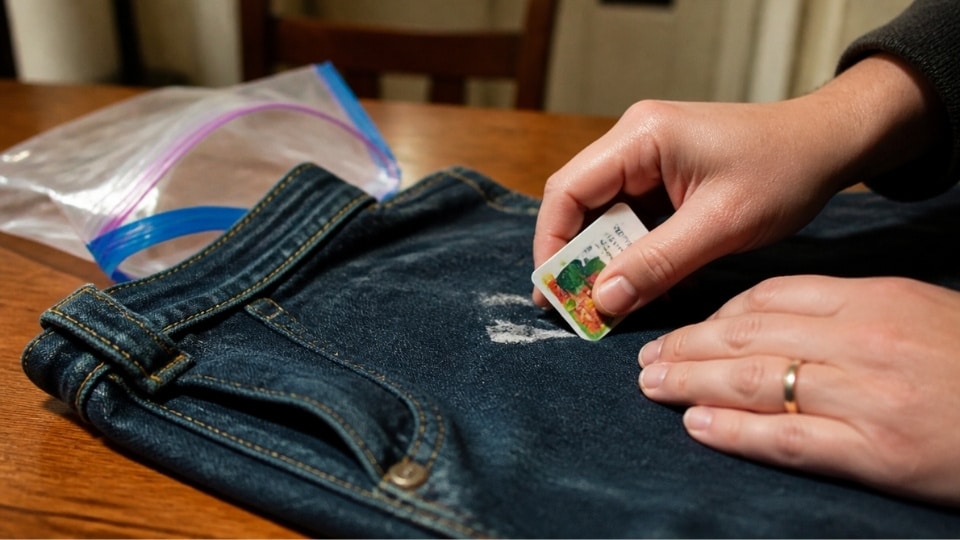
I have used this on stiff denim more than once, and it works because cold makes cyanoacrylate brittle enough to crack apart instead of stretching.
- Best for: Thick, durable fabrics like denim or canvas
- Tools and materials needed: A sealed plastic bag, freezer access, a dull butter knife or old credit card
- Steps to follow: Seal the stained area in a plastic bag and place it in the freezer for 1 to 2 hours. Once frozen solid, gently flex the fabric and scrape at the glue until it flakes off
- Time needed: 1 to 2 hours, mostly hands-off
Method 5: Dish Soap and Warm Water Soak
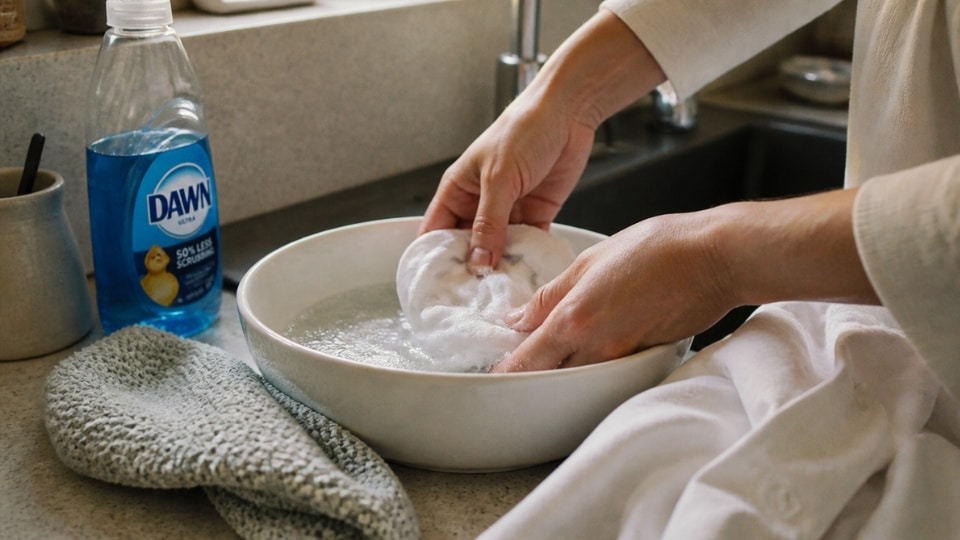
For fresh spills that have not fully cured yet, the simplest option is usually the right one. I try this before anything stronger every time.
- Best for: Fresh, still tacky nail glue on any washable fabric
- Tools and materials needed: Dish soap, warm water, a soft brush or cloth
- Steps to follow: Mix a few drops of dish soap into warm water and submerge the stained area. Let it soak for 10 minutes, then gently scrub and rinse, repeating if any glue remains
- Time needed: 10 to 15 minutes
Method 6: Petroleum Jelly or Oil Loosening
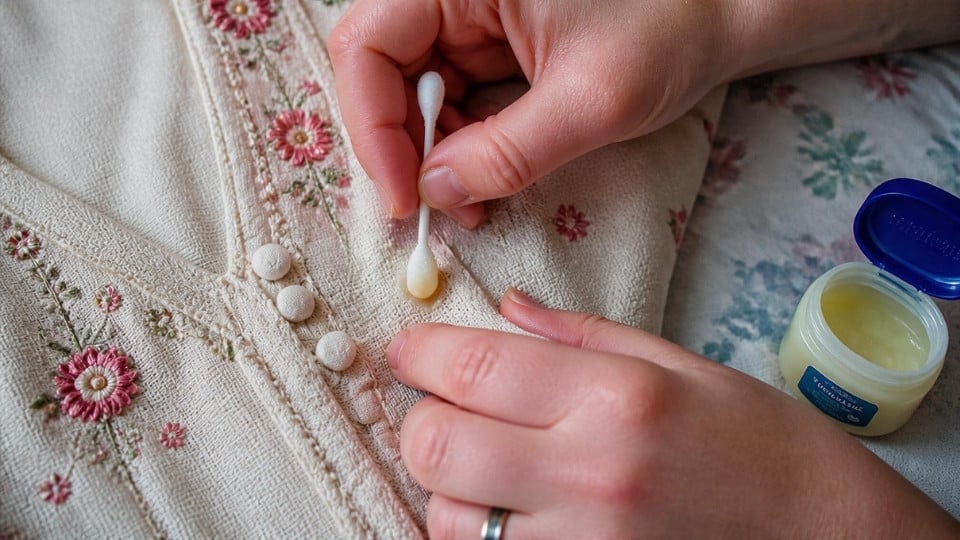
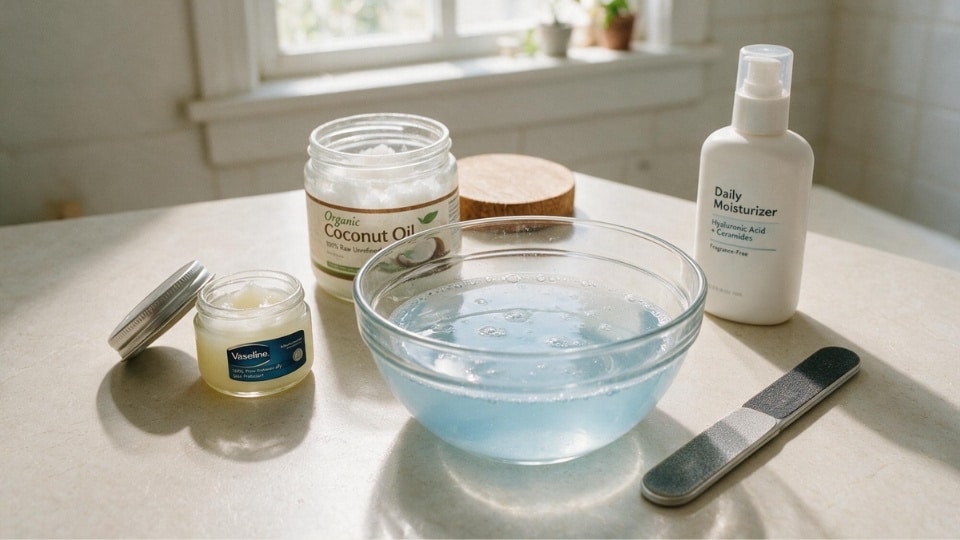
I picked up this trick by removing glue from my own hands, and it translates surprisingly well to fabric edges and trims that cannot handle solvents.
- Best for: Trims, buttons, or fabric near beading and embellishments
- Tools and materials needed: Petroleum jelly or a neutral oil like coconut or olive oil, cotton swabs, a soft cloth
- Steps to follow: Massage a small amount of oil directly into the glue and let it sit for 10 minutes to soften the bond. Wipe away gently with a cloth, then wash the garment as usual to remove oil residue
- Time needed: 15 to 20 minutes
Method 7: Commercial Adhesive Remover
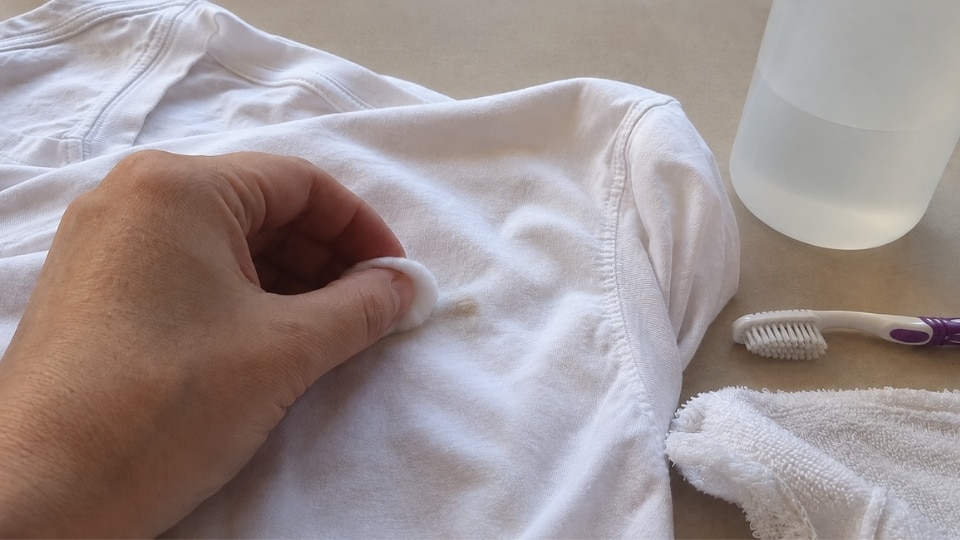
For fully cured glue that shrugs off everything else on this list, a dedicated fabric-safe adhesive remover earns its spot in your cabinet.
- Best for: Heavily set, older stains on sturdy fabrics
- Tools and materials needed: A fabric-safe adhesive remover product, cotton pads, a soft brush
- Steps to follow: Apply the remover according to the product’s instructions, usually with a short dwell time of a few minutes. Scrub gently, rinse, and launder the garment right after treatment
- Time needed: 20 to 40 minutes depending on the product
What to Avoid When Removing Nail Glue From Clothes
Do not place the garment in the dryer until the glue is completely removed, as heat can permanently set the stain.
Avoid aggressive scrubbing with rough brushes, which may damage fibers, cause fraying, or create pilling.
Always test the removal method on a hidden area first to check how the fabric reacts.
Avoid using acetone on sensitive fabrics like acetate, triacetate, modacrylic, polyester, nylon, or spandex, as it may dissolve, melt, or distort the material.
Never combine acetone with bleach or ammonia-based cleaners, as the mixture can create dangerous fumes.
Do not scrape or pull dried glue forcefully with your nails, since this can damage the fabric threads.
Avoid prolonged contact between solvent-treated fabric and your skin.
Fabric by Fabric Considerations
Different materials react differently to solvents, so matching your method to the fabric matters as much as the method itself. Use this table as a quick reference before you start treating anything.
|
Fabric Type |
Recommended Method |
Notes |
|---|---|---|
|
Cotton |
Acetone or dish soap soak |
Sturdy enough for most methods; patch test still recommended |
|
Denim |
Freezing or acetone |
Thick construction holds up well to stronger treatment |
|
Silk |
White vinegar soak |
Acetone can strip sheen and weaken fibers |
|
Wool |
Rubbing alcohol, diluted |
Test carefully; wool can felt with heat and aggressive scrubbing |
|
Polyester |
Rubbing alcohol |
Acetone can melt or warp synthetic fibers |
|
Nylon |
Dish soap soak |
Avoid acetone, which can degrade the material |
|
Leather or suede |
Oil loosening only |
Solvents can strip color and dry out the material |
|
Fine lace |
White vinegar, gentle dabbing |
Avoid scrubbing entirely; dab only |
Knowing which column your garment falls into before you start saves you from turning one problem into two.
How to Prevent Nail Glue Stains in the Future
Treating a stain is one thing, but avoiding the spill altogether saves you the entire process. These are the habits I actually stick to now.
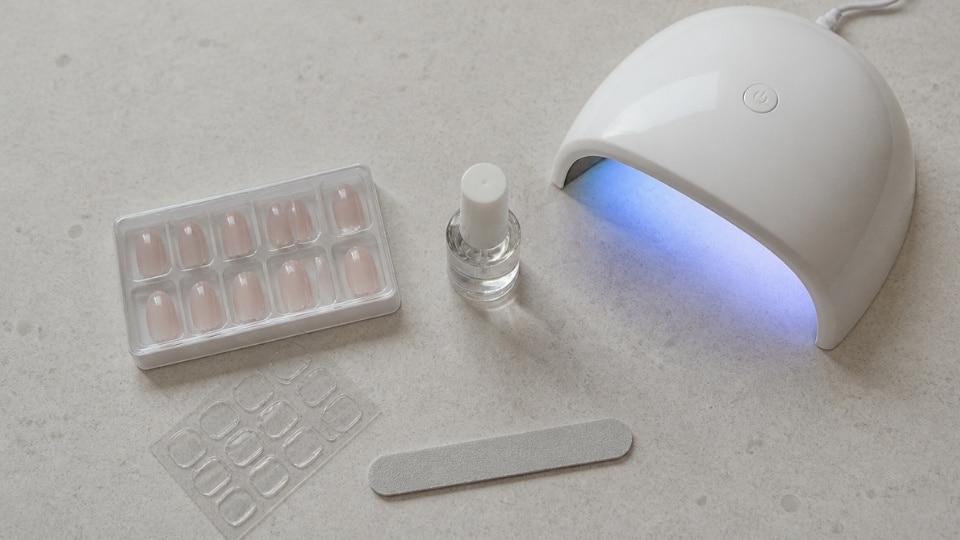
- Wear an old shirt or apron during any at-home nail session, since press-ons and full-coverage glue application carry the highest spill risk, which is part of why I’ve started looking at glue-free application methods for the sets I do at home.
- Lay down a towel or paper towel across your lap and work surface before opening the glue bottle
- Keep the applicator brush wiped clean between uses, since excess glue on the brush tip drips more easily
- Work over a bare surface, not your actual clothing, whenever possible
- Keep a stain removal kit within reach, so a fresh spill gets treated in the first few minutes instead of hours later
- Close the glue bottle immediately after use, since open bottles are the most common source of accidental drips
I do all of these now, mostly because I have already learned the hard way what happens when I skip them.
Final Thoughts
Most nail glue stains aren’t permanent, even if they’ve been sitting on the fabric for a while.
The key is knowing when to let the glue harden, when to use a remover like acetone, and when to choose a gentler approach instead.
Once you understand how to get nail glue out of clothes, you can handle future spills with confidence instead of guessing and risking damage.
Keep these methods in mind, and a small manicure accident is far less likely to cost you a favorite piece of clothing.
Frequently Asked Questions
Can Toothpaste Remove Nail Glue from Clothes?
No, toothpaste is not effective on nail glue and may push the adhesive deeper into the fabric. Use a proper glue remover or solvent instead.
Will Washing Machines Remove Nail Glue on Their Own?
No, washing alone will not dissolve nail glue. Treat the stain first, then wash the garment to remove any remaining residue.
Does Nail Glue Stain Fabric Permanently if It Sits for Weeks?
Not usually. Older stains can be harder to remove, but they often respond to repeated treatment with the right solvent.