The first question I ask before removing any press-on nails isn’t how long they’ve been on.
It’s what was used to keep them there. How to remove press-on nails depends on that one detail more than anything else.
Sticky tabs, nail glue, and builder gel each need a different approach, and once you know which one you’re dealing with, the rest of the process becomes much more straightforward.
How Long to Wait Before Removing Press-Ons
I never remove a set the same day I put it on, even if a nail already feels loose. The adhesive needs time to fully settle, and pulling too early puts real strain on the nail plate before it’s ready.
Sticky tabs are usually fine to remove after a few days. Glue and builder gel sets do better with a week or more of wear before you touch a removal method.
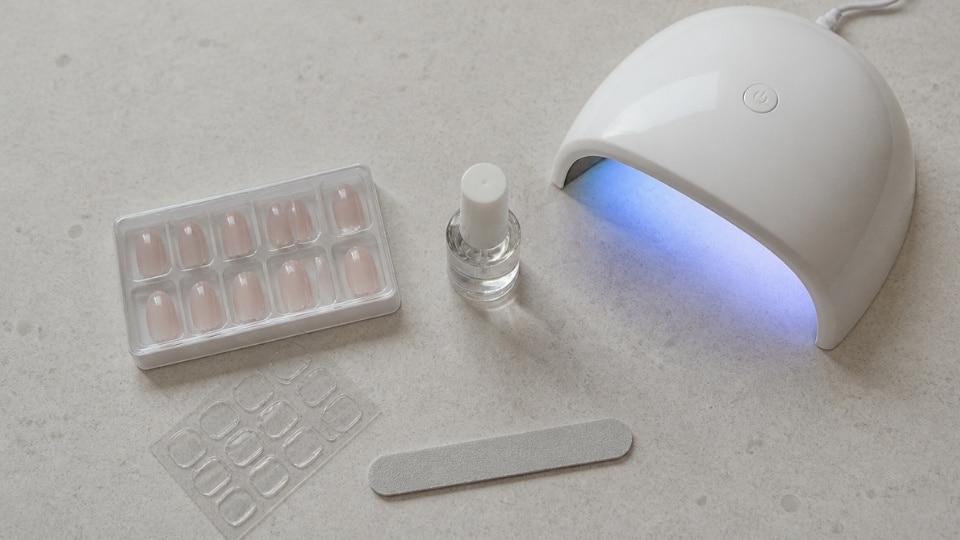
If you used builder gel or a UV-cured application, treat it like a gel manicure instead of a regular press-on. Acetone is really your only option here, no matter how gentle you’d rather be. Soapy water and oil won’t touch that bond.
What You Need Before Removing Press-On Nails
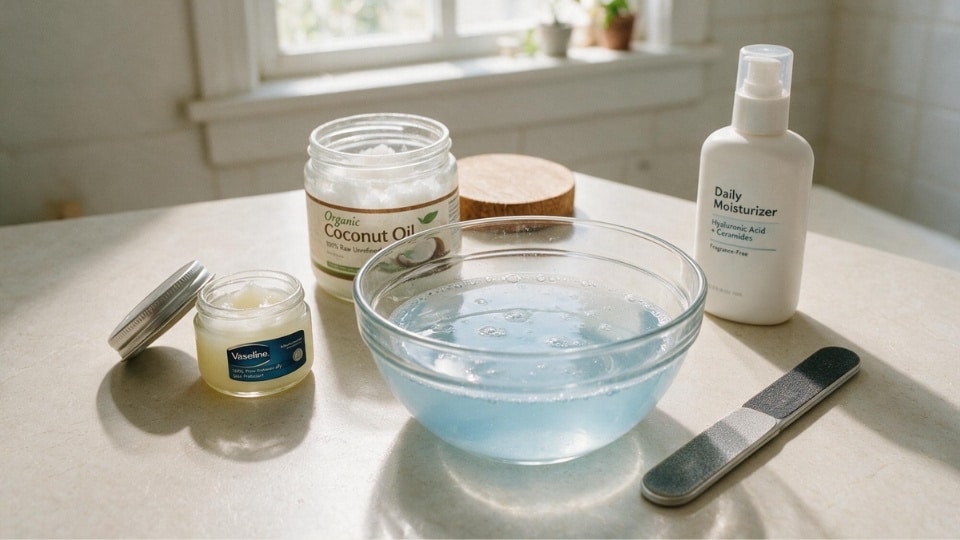
- A small glass or ceramic bowl for soaking
- Warm water and a mild dish soap
- Cuticle oil or a plain carrier oil like coconut or jojoba
- A wooden or rubber cuticle stick, never metal
- Cotton balls or pads
- Rubbing alcohol or 100% acetone, depending on your chosen method
- Aluminum foil or nail clips if you’re doing an acetone soak
- A gentle nail buffer for smoothing afterward
- A nourishing hand cream or cuticle balm for aftercare
Before you start soaking, trim down any long nails and lightly file the shiny top layer off each press-on. This one step alone cuts your soak time down noticeably, especially with acetone. If your set has any 3D charms or embellishments, pop those off first too, so they don’t get in the way of the soak.
4 Ways to Remove Press-On Nails Without Wrecking Them
I default to one of these four depending on how the set was applied and how much patience I have that day. Pick based on your adhesive strength, not just what’s fastest.
Method 1: Warm Soapy Water Soak
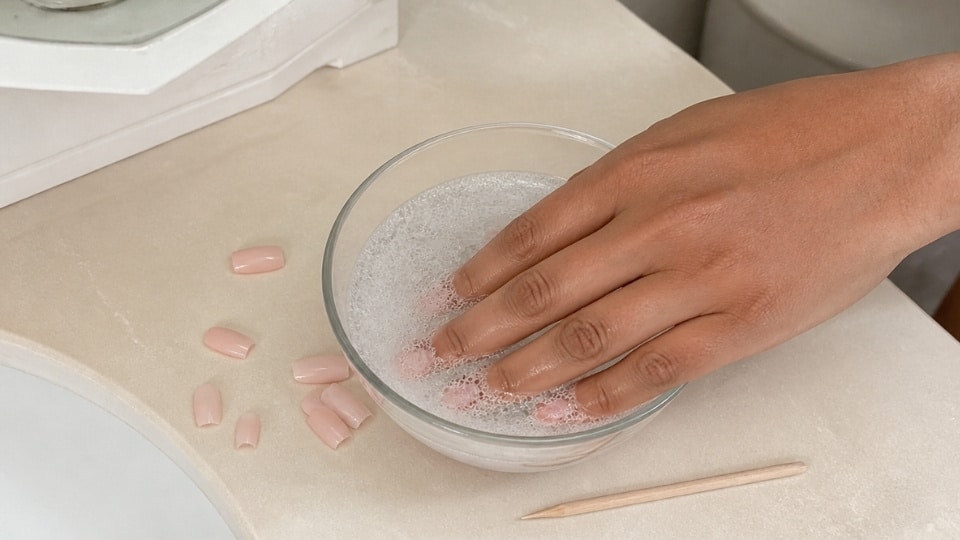
This is my go-to when I’ve used adhesive tabs or a light glue layer. It’s the gentlest option and keeps your press-ons intact if you want to wear them again.
Steps to Follow:
- Fill a bowl with warm water and a squeeze of dish soap
- Soak your fingertips for 10 to 15 minutes
- Gently wiggle each nail from the base with a cuticle stick
- Re-soak for a few more minutes if any nail still resists
Method 2: Oil + Water Soak
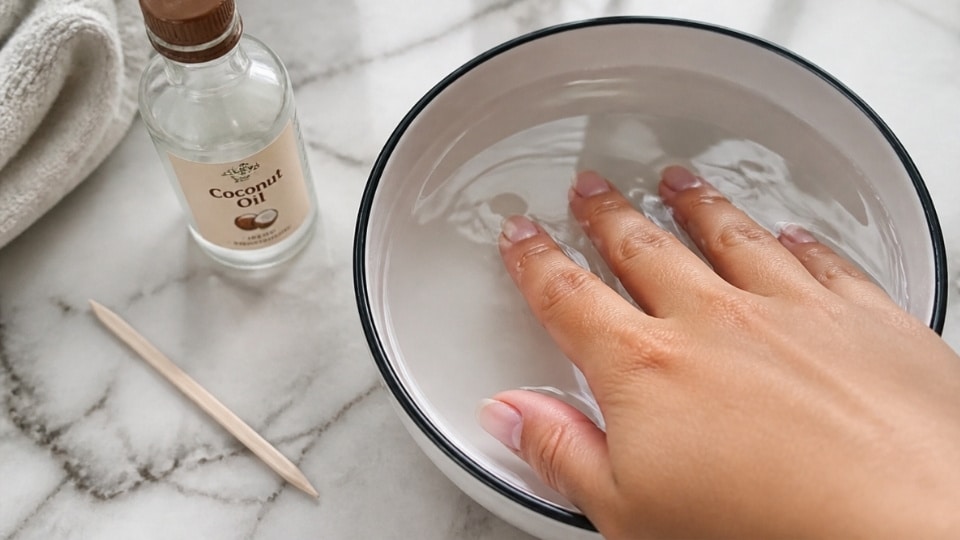
I reach for this one when my cuticles feel dry from a long week of typing and swatching products. The oil softens the glue while keeping your skin hydrated at the same time.
Steps to Follow:
- Soak fingertips in warm soapy water for 10 minutes first
- Massage a few drops of cuticle or coconut oil around each nail edge
- Let it sit for 3 to 5 minutes so the oil works into the adhesive
- Lift gently with a wooden stick, starting from the sides
Method 3: Rubbing Alcohol Method
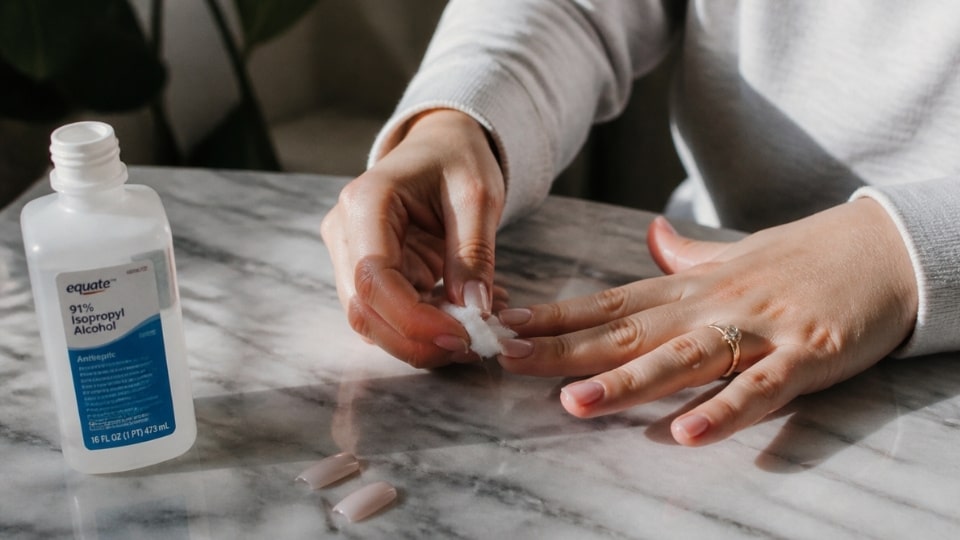
This is my quickest fix when a press-on has already started lifting on its own. It works fastest on tabs and lighter glue, not heavy-duty bonding adhesive.
Steps to Follow:
- Soak a cotton ball in rubbing alcohol and press it against the nail edge
- Hold for about 30 seconds to loosen the tab or glue
- Rock the nail gently side to side until it releases
- Wipe the back of the press-on with alcohol if you plan to reuse it
Method 4: Acetone Soak
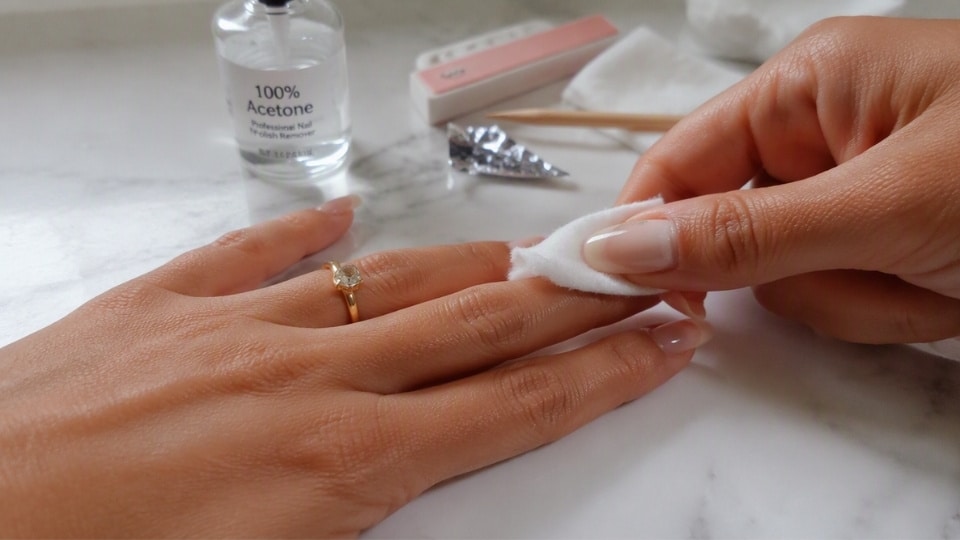
I save this for stubborn sets that used a strong bonding glue and won’t budge with anything gentler. It’s effective, but it will likely end your press-ons for good.
Steps to Follow:
- Work near an open window since the fumes are strong
- Trim and lightly file the top layer off each nail first to speed things along
- Soak cotton balls in 100% acetone and press one onto each nail
- Wrap fingertips in foil or plastic food wrap; both work, and use clips to hold the cotton in place. If you’re out of foil, the American Academy of Dermatology recommends a layer of plastic wrap instead, since it seals tighter around the nail and won’t drip acetone the way foil sometimes does.
- Keep a towel nearby too, since acetone that drips onto a sleeve is trickier to deal with than removing dried glue stains from skin.
- Wait 10 to 15 minutes, checking every few minutes. Push the softened nail off gently, never pry it
If a nail is still stubborn, re-wrap and soak again rather than forcing it; thicker or longer sets sometimes need two rounds
| How to Remove Leftover Nail Glue
Leftover glue is common, and I just buff it away instead of picking at it. A soft nail buffer smooths the ridges left behind, or a swab of acetone loosens stubborn patches fast. If your nail still feels tacky after buffing, a short second soak in warm water usually clears the rest without any extra scrubbing. Picking at dried glue instead of buffing it off is one of the sneakiest ways people thin their own nail plate without realizing it. |
How to Choose the Right Method
Matching your method to your adhesive type and nail condition saves you from over-soaking or scrubbing harder than you need to.
| Method | Best For | Reusable Press-Ons? | Time Needed |
|---|---|---|---|
| Warm Soapy Water | Adhesive tabs, light glue | Yes | 10–15 minutes |
| Oil + Water Soak | Dry cuticles, moderate glue | Yes | 10–15 soak + 3–5 oil |
| Rubbing Alcohol | Already-lifting nails, tabs | Sometimes | 2–5 minutes |
| Acetone Soak | Strong bonding glue | No | 10–15 minutes |
If your set was applied with other alternatives like builder gel or cured under UV light rather than regular glue or tabs, skip straight to acetone.
I’ve tried soaking those in soapy water out of stubbornness, and it just wastes time; the bond is closer to a gel manicure than a standard press-on.
Start with the gentlest method your adhesive allows, and only move to acetone if soaking and oil truly haven’t worked.
Habits That Are Quietly Wrecking Your Nails
Most nail damage comes from a handful of habits I see repeated over and over, usually out of impatience. According to the American Academy of Dermatology, improper removal habits are one of the biggest causes of long-term nail thinning, so here’s what to skip if you want your nail bed to bounce back fast.
- Prying or popping nails off instead of soaking them loose first
- Using metal tools that scratch or gouge the nail plate
- Removing press-ons the same day they were applied
- Skipping the soak and going straight to acetone out of impatience
- Biting or peeling instead of using a cuticle stick
- Rushing the process instead of re-soaking a stubborn nail
Avoiding these few habits matters more than which removal method you pick, since force is what actually causes the damage.
Post-Removal Care That Actually Works
Your nails need a little extra attention right after removal, especially if you used acetone. These are the steps I never skip on my own hands.
- Buff gently: Smooth out any ridges left from glue residue
- Moisturize cuticles: Massage in oil right after drying your hands
- Apply a strengthening treatment: Use it nightly for about a week
- Skip polish for a day or two: Let your nails breathe before your next set
- Take a break between sets: Give your nail bed time to recover fully
A few consistent days of care after removal make the difference between brittle nails and a bed that’s ready for your next set.
| Can Press-On Nails Be Reused After Removal
Press-ons removed with soapy water or oil usually hold up fine for a second wear, as long as you clean the backs before storing them. Acetone tends to warp or weaken the material, so I don’t count on reusing anything soaked in it. |
When to Stop and Contact a Professional
Most removals go smoothly at home, but stop if you notice redness, swelling, or pus around the nail bed. Those are signs of infection, not just irritation from the soak.
A peer-reviewed review published in Skin Appendage Disorders found that allergic contact dermatitis is the most common complication from at-home nail products, often linked to the same adhesives used in press-ons and gel applications.
Deep splitting or ongoing pain also means it’s worth a dermatologist visit rather than another home fix.
A burning rash after acetone can point to an allergic reaction, and that’s worth having checked directly. When in doubt, get it checked instead of waiting it out.
Final Thoughts
At the end of the day, how to remove press-on nails isn’t about finding the quickest method.
It’s about knowing when warm water is enough, when acetone is necessary, and when your nails simply need a little more time.
I always remind myself that a press-on set can be replaced, but healthy natural nails take much longer to grow back.
A few extra minutes during removal are a small trade-off for stronger nails and a manicure that starts on a healthy foundation every time.
Try one of these methods on your next removal and let me know in the comments how it went for you.
Frequently Asked Questions
How Long Should I Wait Before Removing Press-On Nails?
It depends on the adhesive. Sticky tabs are usually fine after a few days, but glue and builder gel sets need a week or more before removal. Taking them off too soon, in any case, weakens the nail plate and increases peeling.
Why Do My Nails Feel Thin After Taking Off Press-Ons?
This usually happens when part of the nail plate comes off with the adhesive. Soaking the nails before removal helps reduce damage.
Can I Use Nail Polish Remover Instead of Pure Acetone?
Regular nail polish remover works, but it takes much longer to dissolve strong nail glue. 100% acetone is the faster option for removal.
Is It Normal for One Nail to Come Off Faster Than the Rest?
Yes, some nails loosen sooner because they experience more daily use and friction. If one nail is still firmly attached, soak it longer instead of pulling it off.