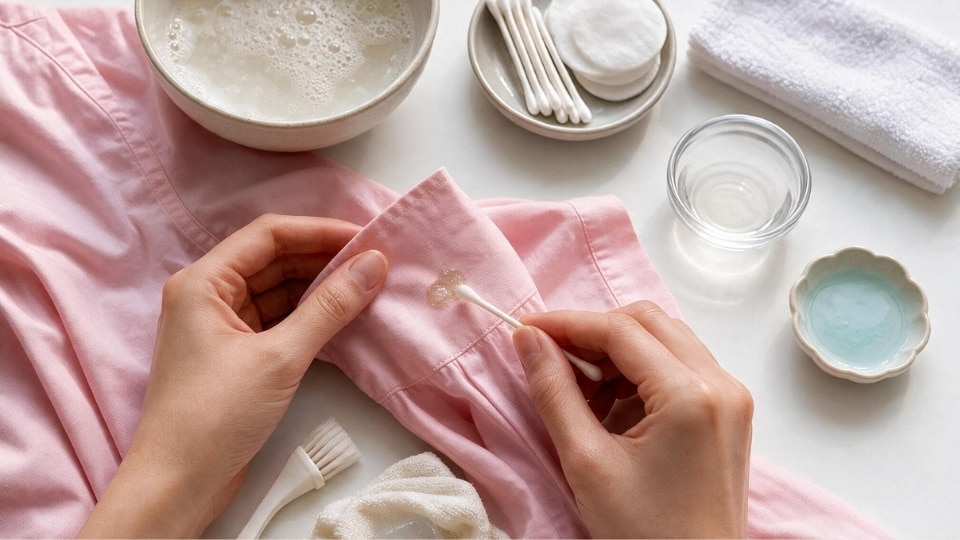
I stopped relying on traditional nail glue after it left my nails dry and irritated for weeks.
Since then, I’ve tested everything from adhesive tabs and gel base coats to some of the DIY hacks that keep making the rounds online.
A few worked far better than I expected, while others barely survived a single hand wash.
If you’re trying to figure out what to use instead of nail glue for fake nails, the best option really comes down to one question.
Do you want your press-ons to last for a few hours, a few days, or a couple of weeks?
Once you answer that, choosing the right alternative becomes much easier.
Why People Look for Nail Glue Alternatives
Running out of glue at the exact wrong moment is one reason, but it is rarely the only one.
Nail glue is essentially cyanoacrylate, the same fast-bonding compound found in household super glue, just formulated for skin contact.
Some people develop a real sensitivity to it over time. Research published on PubMed has linked cyanoacrylate nail adhesives to allergic contact dermatitis, which can show up as redness, itching, or swelling around the nail edges.
Others simply want a set they can take off and reuse without dealing with glue residue every time.
I have worn press-ons for a last-minute event before and needed them gone by the next morning.
A gentler, more removable option makes that entirely doable, and since taking them off correctly matters just as much as putting them on, it is worth having that figured out in advance, without any of the regret the next day.
What Can You Use Instead of Nail Glue for Fake Nails?
I have personally tried several of these methods myself and researched the rest closely against how nail techs and dermatologists describe them working. Here is what actually holds up, what falls short, and how to use each one properly.
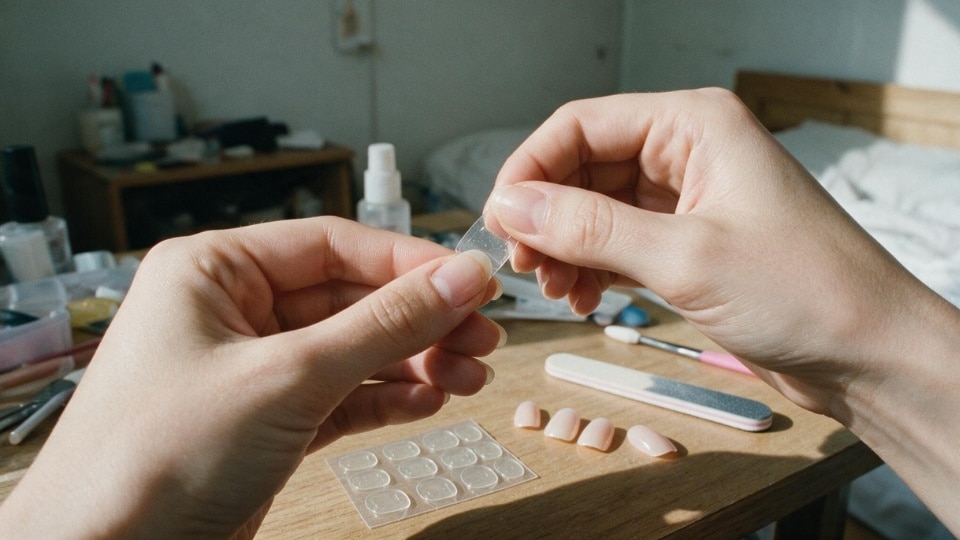
1. Adhesive Tabs (Press On Nail Adhesive Tabs)
Hold strength: 3/5 | Removal ease: 5/5 | Nail health: 5/5
Hold time: 3 to 7 days.
These small double-sided tabs are my first pick for anyone new to press-ons or short on time, and they show up in nearly every no-glue tutorial for good reason.
- Pros: Beginner-friendly and mess-free, removes cleanly without soaking, and reusable if you keep the tabs intact.
- Cons: Weaker hold than glue or gel, usually lasting only 3 to 7 days, and needs a well-matched tab size to avoid lifting at the edges.
- How to do it: Buff and wipe nails with alcohol, peel and press the tab onto your natural nail, then press the fake nail on from cuticle to tip and hold for 15 seconds.
Best for: Beginners and short events lasting a few days. Weekend trips, first-time press-on wearers.
2. Double-Sided Adhesive Stickers
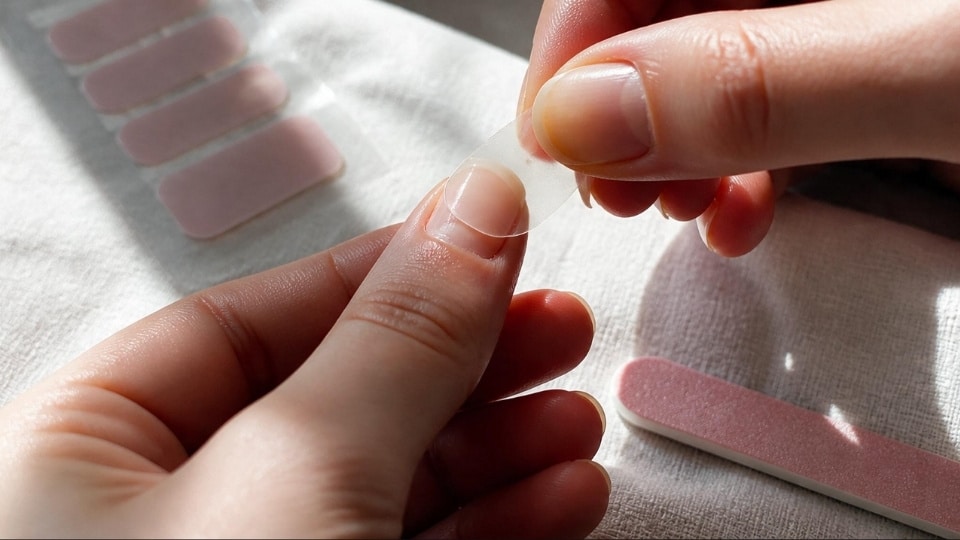
Hold strength: 2.5/5 | Removal ease: 5/5 | Nail health: 5/5
Hold time: 1 to 5 days.
Where tabs are a flat-cut piece, stickers come pre-shaped to the curve of the nail bed, which is the main reason to reach for these instead of tabs if your nails have a rounder profile.
They are very thin and sit flush under the nail with no noticeable bulk, which makes them easy for daily wear.
The trade-off is that they can peel at the sidewalls on curved nail shapes and offer a shorter wear time than tabs in humid weather.
To apply, match the sticker to your nail size, place it directly on a clean nail, peel the top film, then press your fake nail on firmly for 10 to 15 seconds.
Best for: Daily wear on thinner, flatter nail beds. Office settings, everyday low-bulk manicures.
3. Gel Polish Base Coat with UV or LED Light
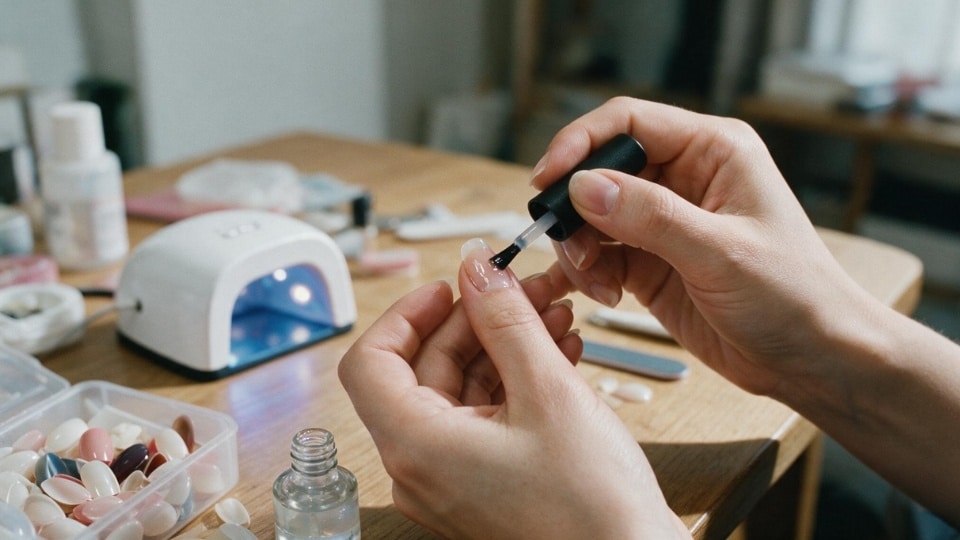
Hold strength: 4/5 | Removal ease: 3/5 | Nail health: 4/5
Hold time: 2 to 3 weeks.
This is the one I reach for when I want a set to genuinely last, without going anywhere near actual glue or dealing with a messy application process.
- Pros: Strong hold that often lasts 2 to 3 weeks, and it feels far more like a proper salon manicure.
- Cons: Needs a UV or LED lamp at home, and removal takes a proper gel soak-off rather than a quick peel.
- How to do it: Cleanse nails with alcohol, apply a thin gel base coat, press the fake nail on, then cure under the lamp for 30 to 60 seconds per hand.
Best for: Multi-week wear without an acrylic commitment. Vacations, ongoing daily use.
4. Builder Gel
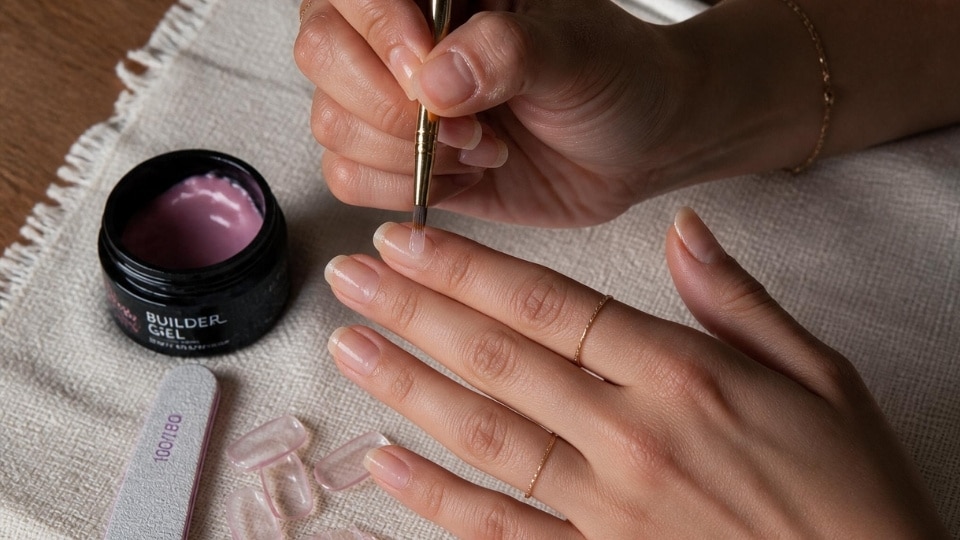
Hold strength: 4/5 | Removal ease: 2.5/5 | Nail health: 4/5
Hold time: 2 to 3 weeks.
Builder gel behaves like a protective layer over your natural nail, making it a good pick if your nails are thin, peeling, or generally weak right now.
It is flexible enough to resist cracking, and it doubles as a nail-strengthening layer while it is worn.
The downside is that it is slower to apply since it needs curing between steps, so it is not ideal if you need a quick, same-day fix.
Apply a thin layer of builder gel to the nail, press the fake nail into place, cure under a lamp, then file the edges smooth.
Best for: Weak, peeling, or thin natural nails needing reinforcement. Nail recovery periods.
5. Acrylic Liquid and Powder
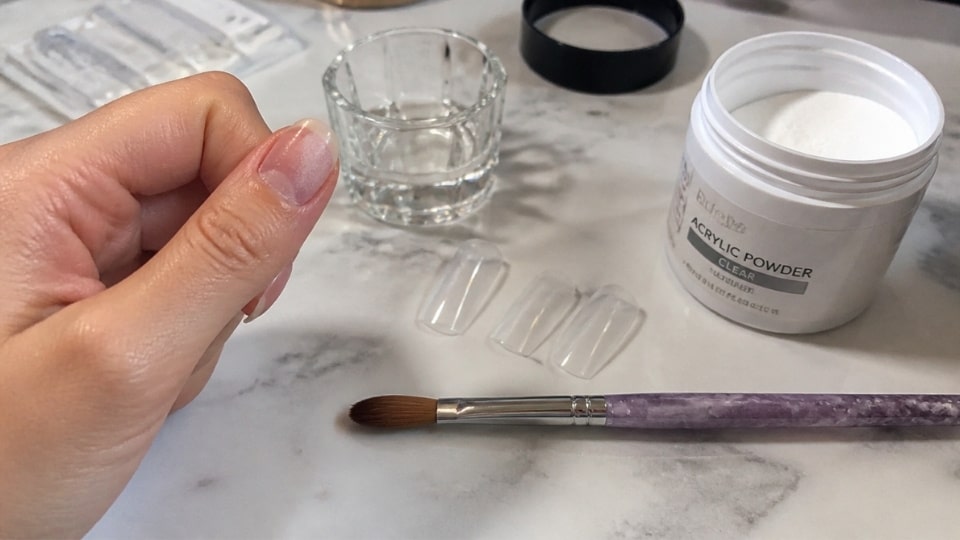
Hold strength: 5/5 | Removal ease: 2/5 | Nail health: 3/5
Hold time: 2 to 3 weeks or more.
Acrylic gives the strongest, most salon-like hold on this entire list, but it comes with a real learning curve that is worth knowing about upfront.
- Pros: Extremely strong hold that lasts 2 to 3 weeks or more, and it holds up well for people who work a lot with their hands.
- Cons: Steep learning curve for first-timers, and removal needs a proper acetone soak rather than a gentle process.
- How to do it: Dip a brush into acrylic liquid, pick up a small bead of powder, apply a thin layer to the nail, press the fake nail on, and let it set fully before filing.
Best for: Maximum hold for people with hard hands. Manual work, very active lifestyles.
6. Base Coat and Top Coat Sandwich
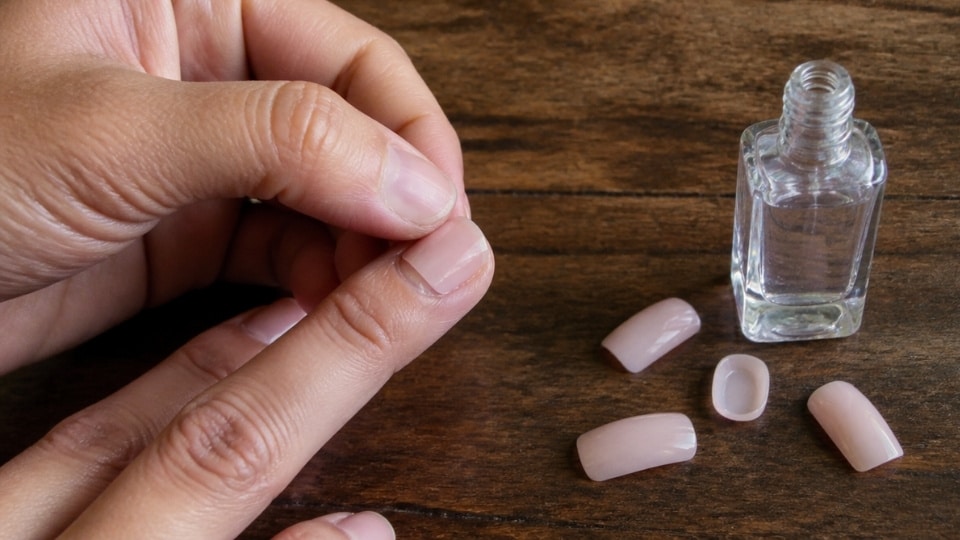
Hold strength: 1.5/5 | Removal ease: 5/5 | Nail health: 5/5
Hold time: A few hours to 2 days.
This is my go-to for a same-day emergency fix, not something I would ever plan to rely on for a full week of wear.
- Pros: Uses products most people already own, and needs no special tools or lamp to pull off.
- Cons: Only lasts a few hours to a day or two, and isn’t suited for anything active or water-heavy.
- How to do it: Paint a base coat on your natural nail, press the fake nail on, seal the edges with a top coat, and let it dry completely before touching anything.
Best for: Strictly 2-4 hour special events with no active wear. Photography, video, short performances.
7. Clear Lash Adhesive (Latex-Free Only)
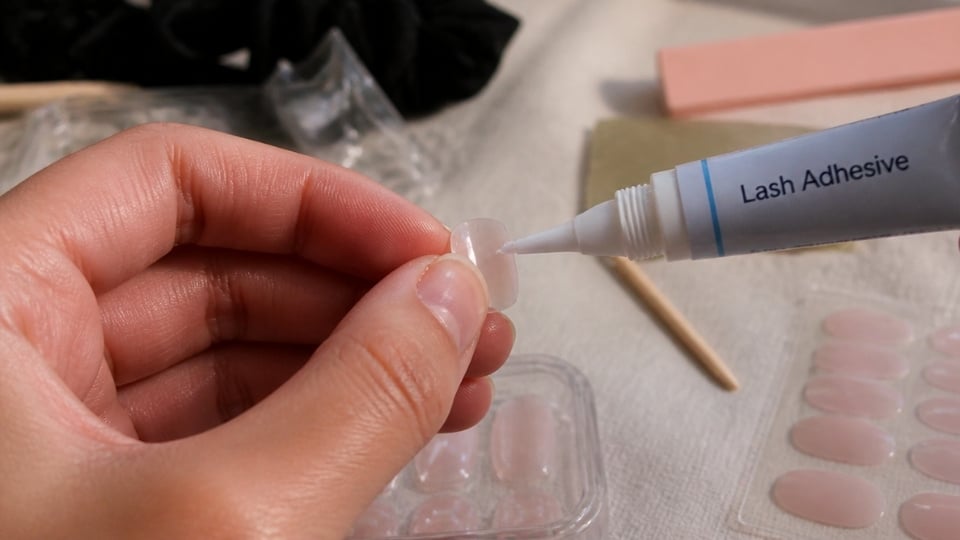
Hold strength: 2/5 | Removal ease: 4/5 | Nail health: 3/5
Hold time: Up to 24 hours.
I only bring this up because people ask about it constantly, not because I recommend reaching for it regularly.
- Pros: Strong, fast, tacky hold in a real pinch, and it is widely available if you already do your own lashes.
- Cons: Not formulated for nails or nail beds, and it should come off within 24 hours rather than being worn long-term; plus, the adhesive can end up on your fingers.
- How to do it: Apply a thin line of latex-free clear lash adhesive to the nail, press the fake nail on immediately, and hold firmly for 20 to 30 seconds.
Best for: True emergencies only, under 24 hours. A single event with no safer option on hand.
8. Sugar and Clear Nail Polish Paste
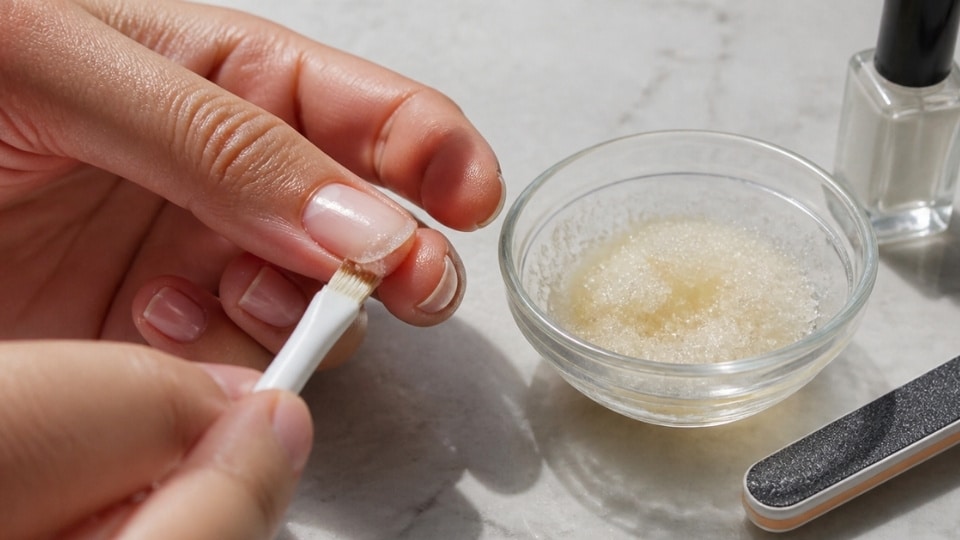
Hold strength: 1/5 | Removal ease: 5/5 | Nail health: 5/5
Hold time: A few hours.
An old backstage trick more than a true glue substitute, and I treat it that way rather than expecting it to hold a full nail.
It costs almost nothing since it uses pantry staples, and it works fine for a tiny crack or lifted edge. It isn’t strong enough to hold a full fake nail in place, and the texture can feel gritty if it isn’t filed properly.
Mix a teaspoon of fine sugar with a few drops of clear polish until it forms a paste, dab it onto the break, let it dry fully, then file smooth.
Best for: Fixing a small crack or lifted edge only. Not a full nail replacement method.
9. Magnetic or Snap Nail Bands
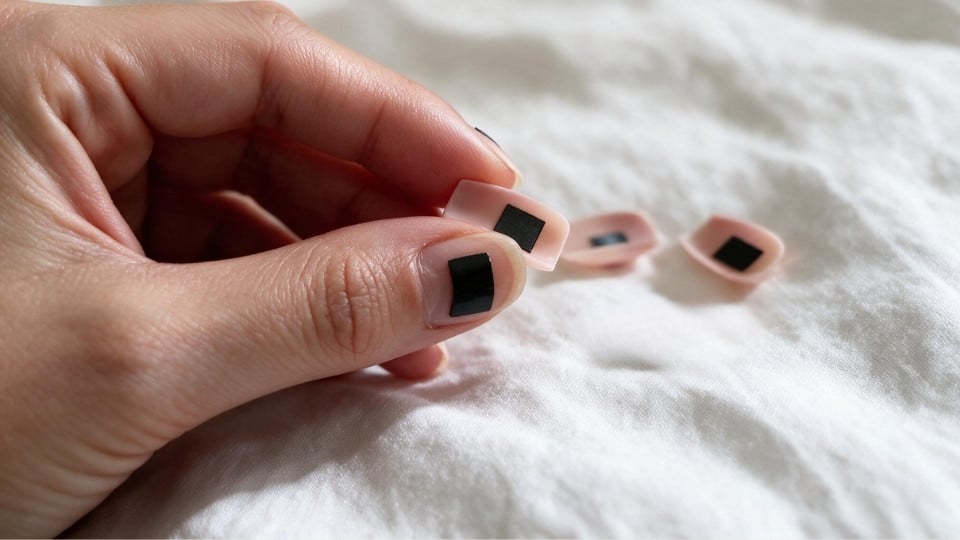
Hold strength: 2/5 | Removal ease: 5/5 | Nail health: 5/5
Hold time: A few hours to a day.
A newer option that skips adhesive entirely by using small internal bands or magnetic strips already built into certain press-on nail sets.
- Pros: No adhesive residue on your natural nail at all, and it is extremely fast to put on and take off.
- Cons: Only works with sets specifically designed for this system, and the hold is noticeably looser than any adhesive method.
- How to do it: Fit the band or magnetic strip inside the fake nail as directed by the kit, then snap it over your natural nail and adjust for a snug fit.
Best for: Fast changes with zero residue. Trying multiple looks in one day.
10. Silicone or Reusable Nail Adhesive Pads
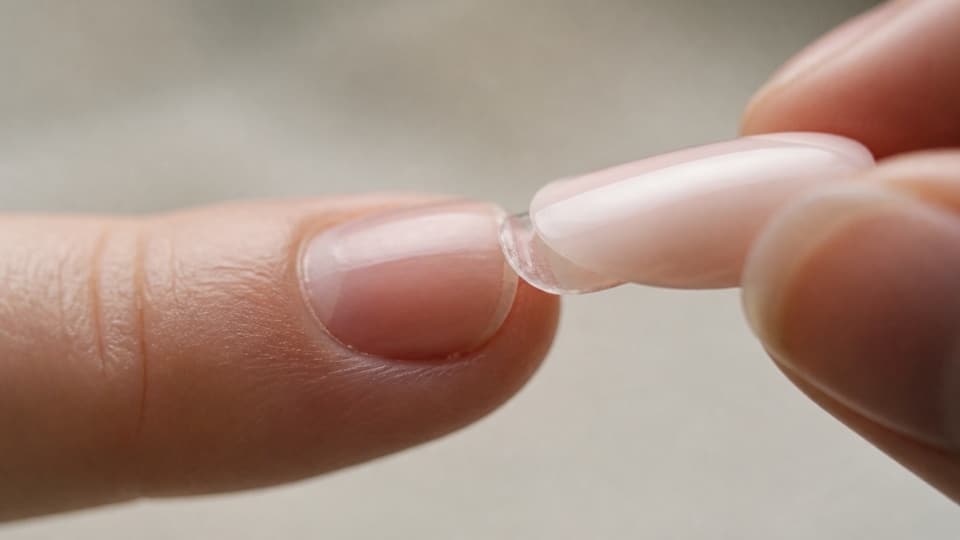
Hold strength: 1/5 | Removal ease: 5/5 | Nail health: 5/5
Hold time: A few hours.
These behave like the reusable putty you see on phone mounts, and they work surprisingly well for a set you only need for a few hours.
- Pros: Reusable multiple times before losing grip, and they leave zero residue and remove instantly.
- Cons: Shortest wear time of every method on this list, and not suited for anything beyond a few hours of wear.
- How to do it: Press the silicone pad onto your clean, dry nail, then press the fake nail on top and hold for a few seconds to bond.
Best for: A few hours of wear with instant, damage-free removal. Same-day try-ons, quick photos.
Every method above trades off differently between hold time, comfort, and how easily it comes off later. The comparison table shows how those tradeoffs stack up side by side before you commit to one.
What to Do If a Press-On Keeps Falling Off
Before switching methods, do this in order: wipe the nail with alcohol and let it fully dry, since even a trace of oil stops adhesive from bonding.
Check that the tab or sticker actually matches the width of the nail, since an undersized one leaves the edges free to lift.
Press down firmly for a full 30 to 60 seconds, not just a few seconds, since most of these adhesives need sustained pressure to set. And avoid water or hand cream for at least two hours afterward.
If a nail still won’t hold after all three of these are done correctly, that nail bed likely needs actual glue rather than an adhesive alternative.
Quick Comparison Table
|
Method |
Hold Strength |
Hold Time |
Skin/Nail Safe? |
Best For |
|---|---|---|---|---|
|
Adhesive tabs |
3/5 |
3 to 7 days |
Yes |
Beginners, easy removal |
|
Double-sided stickers |
2.5/5 |
1 to 5 days |
Yes |
Daily wear, thin profile |
|
Gel polish with UV/LED |
4/5 |
2 to 3 weeks |
Yes |
Long-lasting wear |
|
Builder gel |
4/5 |
2 to 3 weeks |
Yes |
Weak or thin natural nails |
|
Acrylic liquid and powder |
5/5 |
2 to 3 weeks or more |
Yes, with care |
Strongest, most active hands |
|
Base coat and top coat |
1.5/5 |
A few hours to 2 days |
Yes |
Same-day emergencies |
|
Clear lash adhesive (latex-free) |
2/5 |
Up to 24 hours |
Use with caution |
Last resort, short-term only |
|
Sugar and polish paste |
1/5 |
A few hours |
Yes |
Tiny cracks, not full nails |
|
Magnetic or snap bands |
2/5 |
A few hours to a day |
Yes |
Zero residue, fast changes |
|
Silicone reusable pads |
1/5 |
A few hours |
Yes |
Very short-term events |
What Not to Use Instead of Nail Glue
A few of these show up in random tutorials online, and I want to be direct about why they do not belong anywhere near your nails.
- Super glue (cyanoacrylate for household use): Formulated for materials, not skin, and bonds far too aggressively to remove safely; getting it out of fabric is even harder once it dries.
- School glue or craft glue: Water-based and simply not strong enough; it can also flake and trap moisture underneath.
- Hot glue: The temperature alone makes this a burn risk near your cuticles.
- Tape of any kind: Leaves sticky residue, does not seal edges, and traps moisture that can lead to fungal issues.
- Wood glue or other household adhesives: Never tested or approved for skin contact, with unknown long-term effects on the nail bed.
- Eyelash glue with latex, if you have a latex sensitivity: Can trigger a reaction right at the nail fold, where skin is already thin.
Filing the natural nail rough enough for artificial nails to adhere can also thin the nail plate over time, and the American Academy of Dermatology notes that frequent touch-ups and acetone soak-offs add to that damage, which is exactly why the gentler methods above are worth trying first.
None of these save you time in the long run, since a reaction or a damaged nail bed takes far longer to heal than waiting for a proper glue substitute. Stick with the methods above instead.
How to Remove Fake Nails Applied Without Glue
Removal is honestly the best part of skipping traditional glue, since most of these methods come off without a real fight.
- Soak in warm, soapy water for a few minutes to loosen adhesive tabs or stickers, then gently lift from one edge.
- Apply cuticle oil around the edges and let it sit for a minute or two before easing the fake nail off.
- Use non-acetone remover on a cotton pad for base coat, top coat, or lash adhesive applications.
- Soak in pure acetone for gel polish, builder gel, or acrylic, since these need a proper soak-off rather than a peel. The CDC notes that skin contact with acetone can leave it dry, irritated, and cracked, which is exactly why it pays to follow up any acetone soak with cuticle oil or hand cream.
- Never force or rip a fake nail off, even one applied gently, since this can still thin or tear the natural nail underneath.
Whichever method you use to remove, give your natural nails a day or two bare before the next set goes on. A little recovery time keeps them strong for whatever you apply next.
Final Thoughts
Running out of nail glue does not mean your fake nails have to wait.
From adhesive tabs to gel polish to a sugar and polish patch in an emergency, nail glue alternatives suit nearly every situation, whether you need a same-day fix or a set that lasts for weeks.
I keep a few of these on hand at all times, since needing a quick fix rarely comes with much warning.
Try the method that matches your timeline and skin needs, and let me know in the comments which one worked best for you.
Frequently Asked Questions
Will Nail Glue Alternatives Damage My Natural Nails Less than Actual Glue?
Usually, yes. Most alternatives are gentler than nail glue, but careful application and removal are still important to prevent nail damage.
Can I Mix Two Methods, Like Adhesive Tabs Plus a Top Coat Seal?
Yes, combining adhesive tabs with a clear top coat around the edges can help extend wear. Avoid sealing the entire nail to make removal easier.
Do Nail Glue Alternatives Work on Toenails the Same Way?
Yes, but they may not last as long because toenails experience more friction from shoes and socks. Gel-based options usually provide better hold.
What is the Best Nail Glue Alternative for Sensitive Skin?
Adhesive tabs are usually the safest first choice, since they skip cyanoacrylate entirely. If you have had a reaction before, patch-test any new adhesive on your wrist a day ahead, and check with a dermatologist if it happens again.