Hair that feels heavy, dull, or coated in leftover product is more common than most people admit.
Shampoo alone doesn’t always cut through the mess styling sprays, dry shampoo, and hard water leave behind.
That is where a vinegar rinse for hair comes in handy. It is a simple, budget-friendly trick that people have used for generations, long before fancy clarifying treatments hit store shelves.
A splash of diluted vinegar can strip away buildup, calm an itchy scalp, and bring back natural shine, all without harsh chemicals or a big price tag. It sounds a little old-fashioned, maybe even odd, but the results speak for themselves.
Curious how something from the kitchen pantry can fix a hair problem?
What is an Apple Cider Vinegar Rinse?
A vinegar rinse is exactly what it sounds like – a hair treatment made by mixing diluted vinegar with water. Think of it as a natural hair tonic that you pour over your hair after shampooing.
The main purpose is to cleanse and balance both your hair and scalp.
But why would anyone want to put vinegar on their hair? There are several good reasons. Vinegar rinses help balance the pH of your scalp and hair cuticles.
They also remove product buildup that can make your hair look dull. Plus, they can soften your hair and help reduce dandruff.
Worth Noting: scientific research on ACV’s hair benefits remains limited and mixed. Most of what follows reflects common anecdotal experience rather than clinical proof.
Benefits of Apple Cider Vinegar for Hair
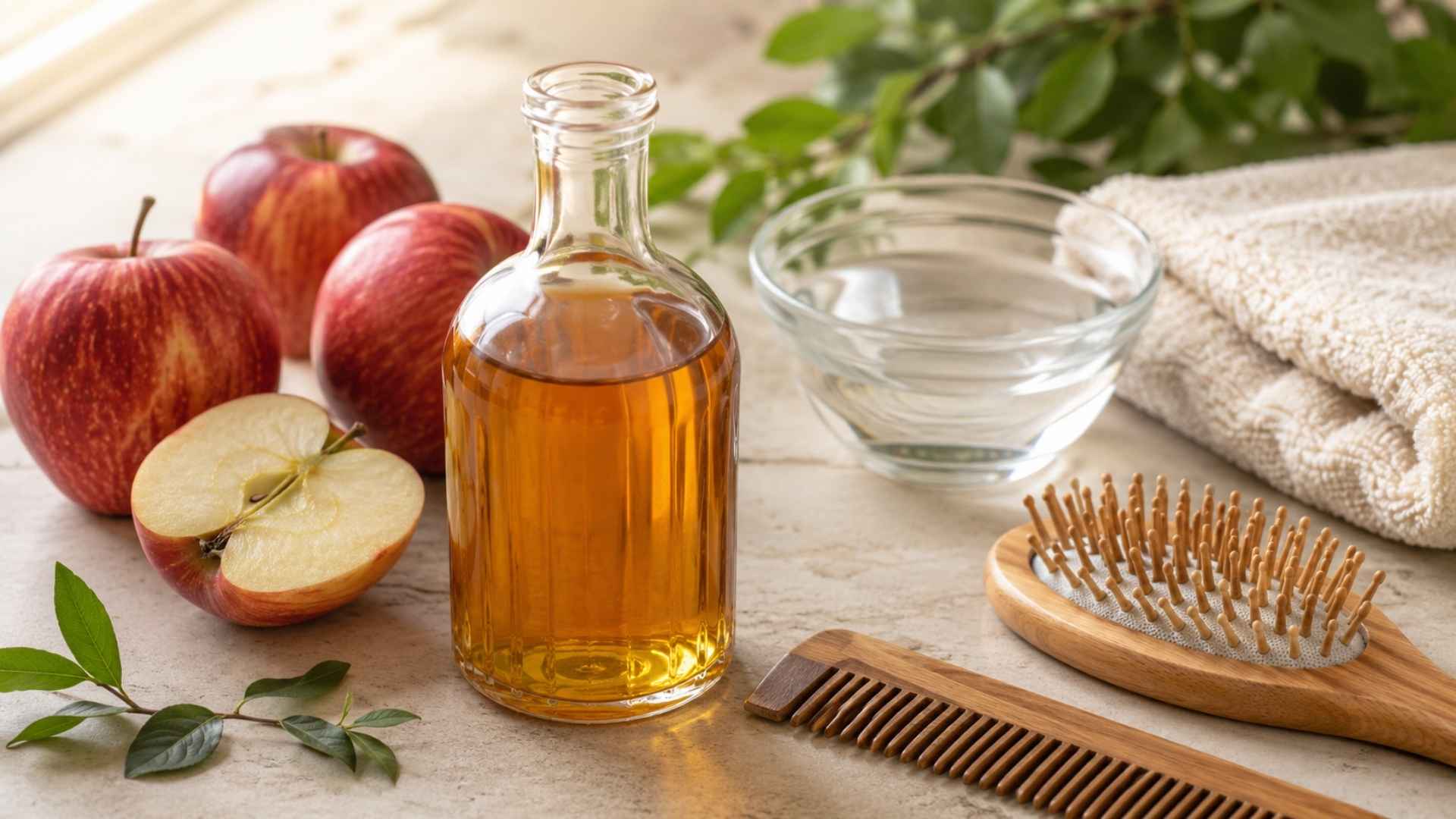
Apple cider vinegar, often called ACV, is the most popular choice for hair rinses. Here’s why it works so well:
1. pH Balance
Your hair has a natural pH level, much like your skin. When this gets out of balance, your hair can look dull and feel rough. ACV rinse helps restore the right pH balance. This helps your hair cuticles lie flat, creating smoother, shinier hair.
Healthy scalp skin typically sits in the 4 to 6 pH range, and staying within it supports the scalp’s natural barrier function, according to research published in the Journal of Clinical Medicine.
2. No Product Buildup
Over time, shampoos, conditioners, and styling products can build up on your hair. This buildup can make your hair feel heavy and look lackluster.
It might even make your scalp itchy. Apple cider vinegar acts like a gentle cleanser that removes this buildup.
3. Natural Germ Fighter
Apple cider vinegar has antibacterial and antifungal properties. This means it can help fight the germs that sometimes cause dandruff and scalp irritation.
While it’s not a cure-all, many people notice their scalp feels healthier after using vinegar rinses.
4. Possible Growth Benefits
Some people believe that apple cider vinegar can help their hair grow faster and thicker. While there isn’t strong scientific proof of this, many users report positive results.
The theory is that a healthier scalp creates better conditions for hair growth.
If you have straight or curly hair, oily or dry hair, apple cider vinegar rinses can work for you. You just need to adjust how often you use them based on your hair’s needs.
Raw vs. Filtered Apple Cider Vinegar
Not all apple cider vinegar is the same. Raw, unfiltered versions keep the “mother,” the cloudy strands of yeast and bacteria left over from fermentation, while most grocery store bottles are filtered and pasteurized for a clearer look.
| Basis | Raw, Unfiltered | Filtered, Pasteurized |
|---|---|---|
| The Mother | Keeps the mother | No mother |
| Processing | Left natural, minimally processed | Heated and strained |
| Nutrients | Rich in enzymes and nutrients | Provides acidity for pH balance |
| Hair & Scalp Benefit | Full benefits for hair and scalp | Still effective for clarifying and pH |
| Best For | Maximum benefits | A solid, still-effective alternative |
For an ACV rinse, raw, unfiltered vinegar gives your scalp the full range of nutrients. Filtered ACV still provides the acidity that drives pH balance, so it works fine in a pinch.
How to Make an ACV Rinse at Home

Making your own vinegar rinse is surprisingly easy, and it fits right into your hair-care routine without adding another expensive product to your shelf. Take a look at this simple recipe:
Basic Recipe:
- Mix 1 part apple cider vinegar with 4 to 6 parts water
- For example: 2 tablespoons of vinegar with 1/2 cup of water
For Sensitive Scalps:
If the vinegar smell bothers you or your scalp is sensitive, try these additions:
- Add a teaspoon of aloe vera gel for extra soothing
- Mix in a few drops of essential oil like lavender or rosemary
|
Step-by-Step Instructions:
|
How Often to Use: Start with once a week. This prevents your hair from becoming too dry. You can adjust based on how your hair responds: oily scalps sometimes tolerate two rinses a week, while dry or textured hair usually does better every other week.
Best ACV Rinse for Your Hair Type
Your hair type and scalp concern determine how strong to mix your vinegar rinse and how often to use it. Here is a quick starting point for specific common concerns.
| Hair Type or Concern | ACV to Water Ratio | Tips |
|---|---|---|
| Dandruff or Itchy Scalp | 1 part vinegar to 4 parts water | Focus the rinse on your scalp, massage for 30 to 60 seconds, and use once a week |
| Oily Hair or Scalp | 1 part vinegar to 4-5 parts water | Safe for up to twice a week, applied mainly at the roots |
| Dry or Textured Hair | 1 part vinegar to 6-8 parts water | Use every other week and follow with a deep conditioner |
| Fine Hair | 1 part vinegar to 6 parts water | Apply mainly to the lengths and skip a heavy conditioner afterward to protect volume |
| Color-Treated Hair | 1 part vinegar to 8 parts water | Patch test first, rinse only with cool water, and limit use to once every two weeks |
| Normal Hair | 1 part vinegar to 5 parts water | Once a week is enough to maintain shine and balance |
Start with the lower end of any ratio if you are unsure, since it is easier to add more vinegar later than to soothe an overly dry, irritated scalp afterward.
Never leave a vinegar rinse in overnight or skip the final rinse. Left on too long, the acidity can dry out your scalp and hair.
Apply Before or After Shampoo and Conditioner?
Apply a vinegar rinse right after shampooing, before conditioner. Since vinegar closes the hair cuticle much like conditioner does, using it first lets your regular conditioner absorb better afterward, giving you smoother, shinier results without leaving your hair over-coated or weighed down. Small steps like this one add up fast once they become part of your everyday hair habits.
How to Use Apple Cider Vinegar for Rinse Safely
A vinegar rinse is gentle when diluted correctly, but skipping basic precautions can lead to dryness, irritation, or an unwanted surprise on color-treated strands. These simple safety steps keep the process effective and gentle.
- Test First: Always do a patch test before using any new hair treatment. Put a small amount of the diluted mixture on a small area of your scalp. Wait 24 hours to see if you have any reaction.
- Be Careful with Damaged Hair: If your scalp is irritated or you have cuts or scratches, skip the vinegar rinse until your scalp heals. When in doubt, ask a hair professional for advice.
- Use Cool Water: After applying the vinegar rinse, use cool water for your final rinse. This helps seal your hair cuticles and locks in the benefits.
- Don’t Skip Conditioner: While vinegar rinses can soften hair, you might still need conditioner or leave-in treatments, especially if you have dry or damaged hair.
Following these precautions takes only a few extra minutes but protects your scalp and hair from unnecessary irritation, letting you enjoy the shine and clarifying benefits without any of the downsides.
Other Types of Vinegar Rinses for Hair
Apple cider vinegar isn’t the only option worth trying. White vinegar, rice vinegar, and malt vinegar each offer different benefits for your hair.
1. White Vinegar
This is stronger than apple cider vinegar, so use less of it when making your rinse. It’s excellent for removing really stubborn buildup that won’t budge with gentler options.
However, it can be harsh on sensitive scalps and may cause irritation if used too frequently. Start with a very diluted mixture – about 1 part white vinegar to 8 parts water.
Shop Here: Woeber’s White Distilled Vinegar | Good & Gather White Distilled Vinegar | Great Value Distilled White Vinegar
2. Rice Vinegar
This is gentler and has a much milder smell compared to other vinegars. It’s a good choice if you find apple cider vinegar too strong or if the smell bothers you.
Rice vinegar is popular in Asian hair care traditions and works well for fine or delicate hair. You can use it in the same ratios as apple cider vinegar without worry.
Shop Here: Kikkoman Rice Vinegar | Mizkan Natural Rice Vinegar | Nakano Natural Rice Vinegar
3. Malt Vinegar
Less common for hair care, but some people swear by it for adding shine. It has a distinctive, strong smell that not everyone enjoys, and it may linger longer than other types.
Malt vinegar can sometimes leave a slight brown tint on very light blonde hair. It’s best to do a strand test first if you have color-treated or very light hair.
Shop Here: London Pub Malt Vinegar | Sarsons Malt Vinegar | Heinz Gourmet Malt Vinegar
Choose apple cider vinegar if you’re just starting out. It’s the most balanced option for most people.
Potential Downsides and Precautions
Vinegar rinses offer real benefits, but they aren’t completely risk-free for every hair type. Knowing what to watch for ahead of time helps you avoid common issues before they start.
- Possible Scalp Irritation: Using vinegar rinses too often or making them too strong can irritate your scalp. This might cause dryness, itching, or redness. If this happens, use the rinse less often or dilute it more.
- The Smell Factor: Vinegar doesn’t smell great. The smell usually goes away once your hair dries, but some people find it bothersome. Adding essential oils can help mask the scent.
- Color-Treated Hair: If you color your hair, be extra careful. Vinegar can sometimes affect hair color, especially if it’s fresh. Always dilute the vinegar well and consider doing a strand test first.
Most of these downsides are easy to avoid with proper dilution and a little patience. Pay attention to how your hair and scalp respond, and adjust the ratio or frequency as needed.
Final Thoughts
Turns out the fix for dull, buildup-heavy hair might already be in your kitchen. A vinegar rinse won’t replace your shampoo, but mixed at the right ratio for your hair and used once a week or so, it can genuinely bring back shine, calm an itchy scalp, and get rid of that heavy, product-loaded feeling.
Start diluted, patch test first, and adjust from there based on how your hair actually feels. Some weeks you’ll want it stronger, other weeks barely at all, and that’s fine.
Save this page before your next wash day, and pass it along to anyone still fighting flat, weighed-down hair.
Frequently Asked Questions
How Long Should I Leave a Vinegar Rinse in My Hair?
Most hair types do best with 3 to 5 minutes, though you can go up to 10 minutes for tougher buildup. Don’t leave it in longer than 15 minutes, and never overnight, since the acidity can dry out your scalp and hair.
Can I Use a Vinegar Rinse Every Day?
No. Daily use is generally too drying for most hair types. Once a week is a good starting point, with some oily scalps tolerating two rinses a week and dry or textured hair doing better every other week.
Will a Vinegar Rinse Lighten My Hair Color?
It’s possible, especially on light or color-treated hair, since the acidity can very slightly lift color over repeated use. A strand test before your first full rinse is the safest way to check.
Can a Vinegar Rinse Replace My Shampoo?
No. It works alongside your regular wash routine as a clarifying step, not a substitute for it. You’ll still need shampoo and, often, conditioner afterward.
Is an ACV Rinse Good for Frizzy Hair?
It can help smooth the cuticle and reduce frizz, though results vary; very dry or textured hair may react differently.
Can I Use an ACV Rinse on Color-Treated Hair?
Yes, ACV doesn’t strip permanent color. Patch test first, dilute well, and rinse with cool water on light or fresh dye.