Redness is one of those skin concerns that can send you down a rabbit hole of “calming” products.
I’ve done it myself, only to realize that my skin wasn’t asking for more products. It was reacting to something specific.
How to reduce redness in face depends on what’s causing it, and treating the wrong cause can leave your skin even more red.
5 Reasons Why Your Face is Red
Understanding why your skin turns red is the first step toward fixing it. Different causes need different approaches, so identifying your specific trigger makes all the difference.
1. Sensitive Skin
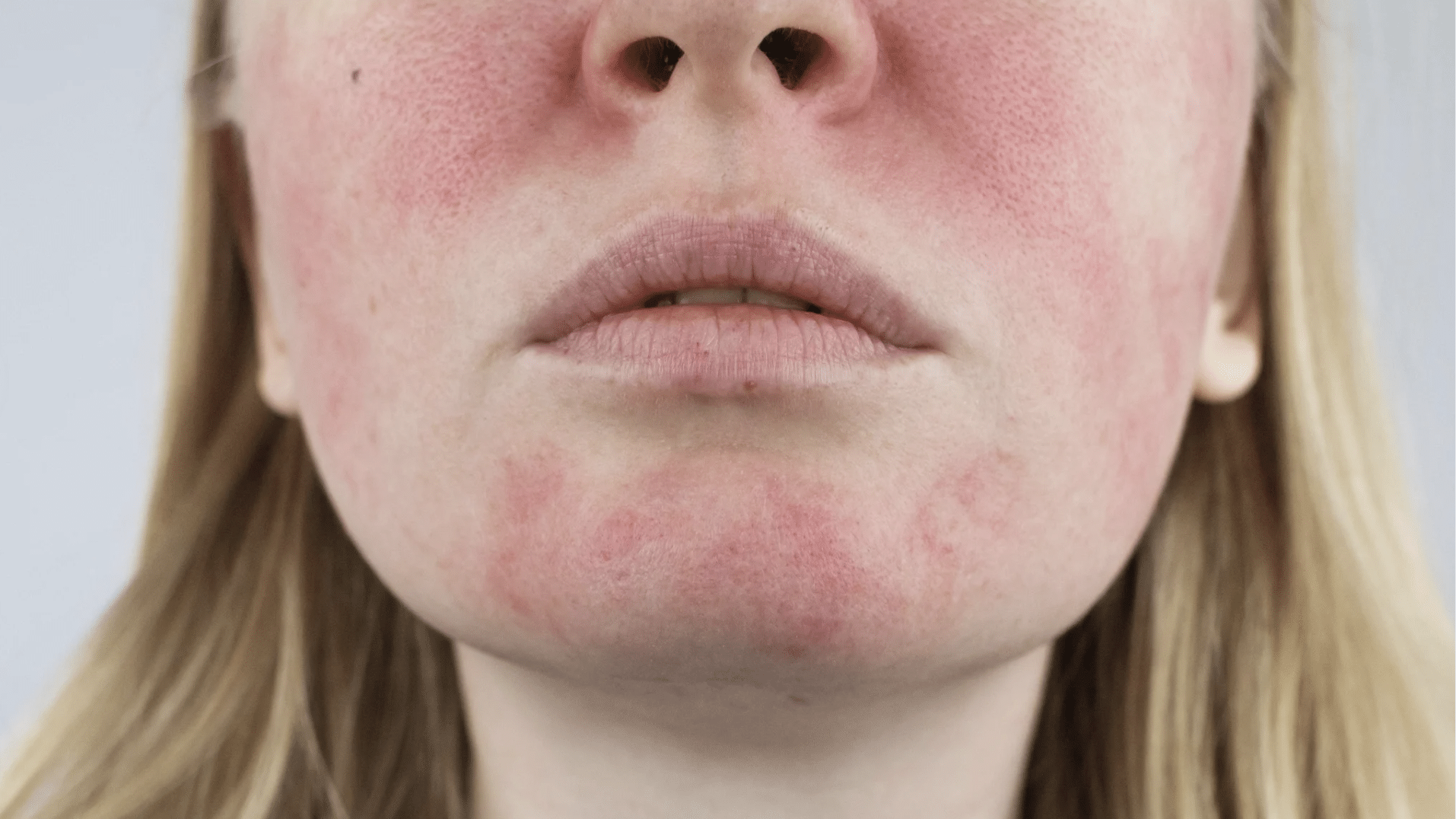
If your face gets red after trying new products or being exposed to certain ingredients, you likely have reactive skin that needs extra gentle care.
This type of redness usually appears quickly after contact with irritants and typically fades within a few hours. Common triggers include fragrances, essential oils, or harsh cleansing ingredients.
My own face used to flare up red within minutes of switching cleansers, which is what pushed me to test nearly every “gentle” formula on the market before I found ones that actually held up.
Treatment Approach:
- Switch to fragrance-free products and patch test new items. Vanicream’s Gentle Facial Cleanser works well if your skin reacts to almost everything, since it skips fragrance and dyes entirely.
- Stick to mild cleansers and lukewarm water. CeraVe’s Hydrating Facial Cleanser is a good pick if redness comes with dryness, since it layers in ceramides while it cleans.
- Follow with a soothing moisturizer. CeraVe Moisturizing Cream suits most redness-prone skin, while Neutrogena’s Hydro Boost Gel Cream is the lighter option for oilier skin types.
- Avoid over-washing your face
2. Rosacea
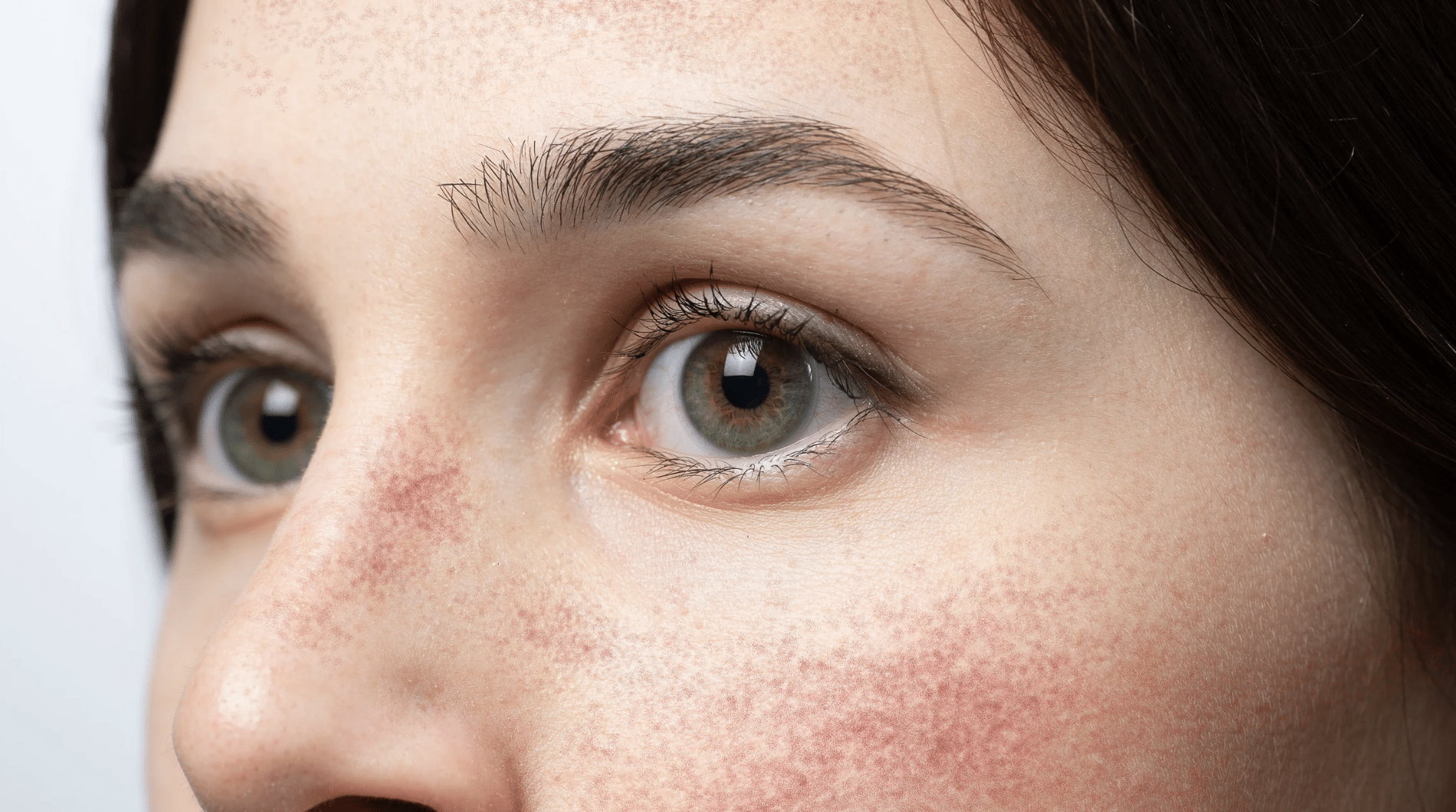
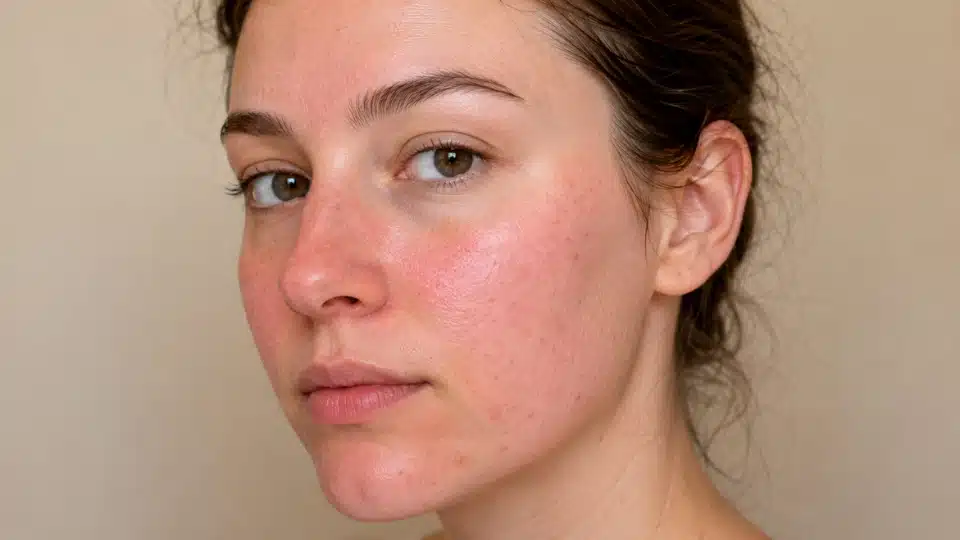
This shows up as persistent redness, usually across the cheeks, nose, chin, and forehead. This condition often comes with visible blood vessels and can worsen with triggers like spicy food, alcohol, or stress.
Unlike temporary irritation, rosacea is a chronic condition that requires ongoing management, and without a plan in place it can settle into a persistently ruddy complexion that gets harder to calm over time. The redness tends to be symmetrical and may feel warm or burning to the touch.
Azelaic acid is worth calling out here specifically. It’s the only redness-fighting ingredient with FDA approval for rosacea, available at 15% by prescription and around 10% over the counter, and it’s been used safely for over two decades.
Treatment Approach:
- Look for niacinamide, azelaic acid, or green tea extract. The Ordinary’s Azelaic Acid Suspension 10% is a good entry point, since it’s the same active found in prescription rosacea treatments at a gentler strength.
- Mineral sunscreen daily is non-negotiable here. EltaMD’s UV Clear SPF 46 is dermatologist-recommended and includes niacinamide, so it treats redness while it protects.
- Avoid known triggers like spicy food and alcohol
- Consider prescription treatments from a dermatologist
3. Post-Acne Inflammation
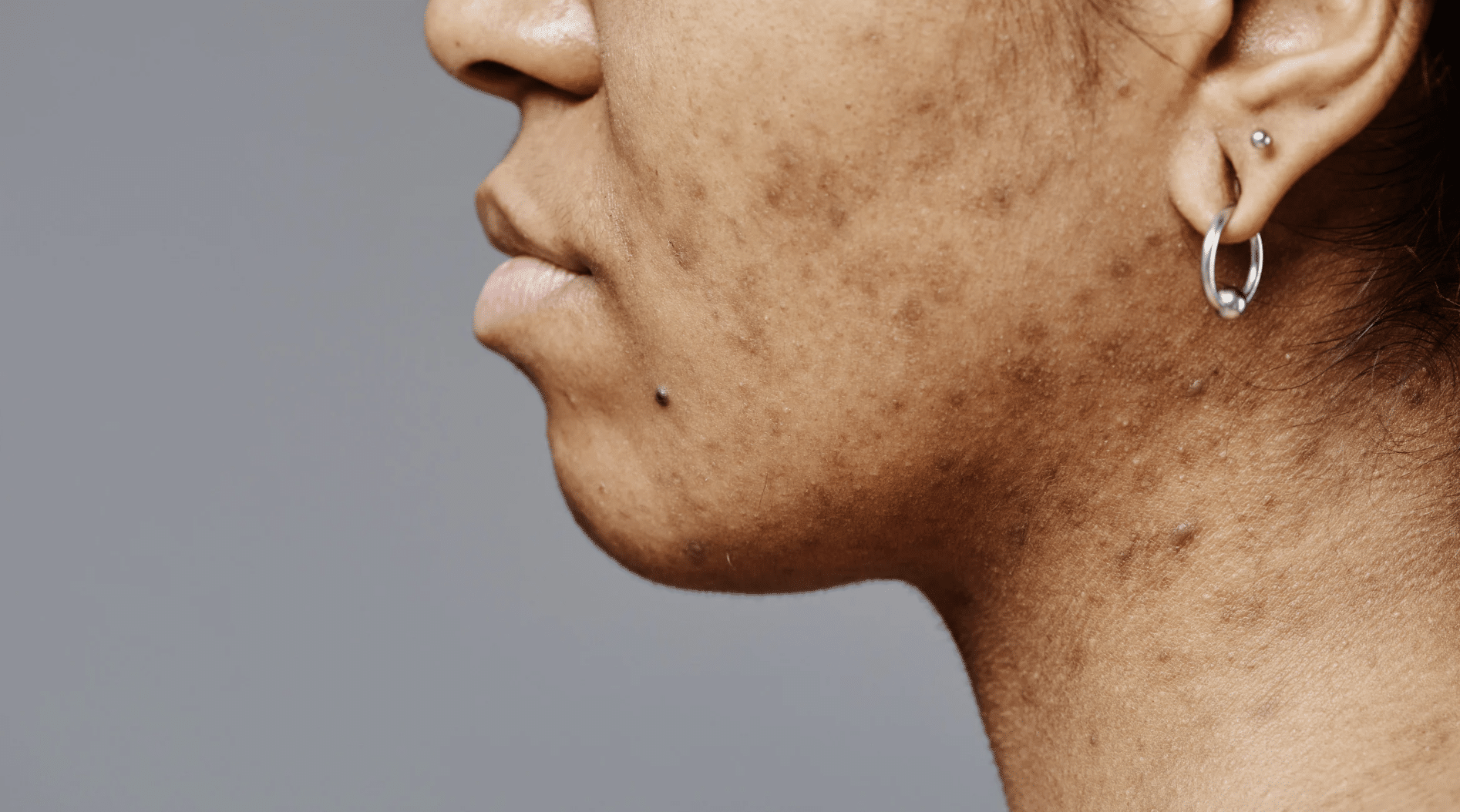
These leave red marks where pimples used to be. These spots can stick around for weeks or months after the breakout clears up.
Also called post-inflammatory erythema, these marks are your skin’s natural healing response. They’re flat, unlike raised acne scars, and will eventually fade with proper care and sun protection.
Treatment Approach:
- Niacinamide, vitamin C, or azelaic acid speeds healing. La Roche-Posay’s Mela B3 Dark Spot Serum is built specifically for fading post-breakout marks.
- Sunscreen prevents new marks from darkening further. Supergoop’s Unseen Sunscreen SPF 40 is a favorite here since it leaves no white cast on uneven tone.
- Be patient – marks fade naturally over 3-6 months
- Avoid picking at active breakouts
4. Environmental Factors

Harsh wind, extreme cold, or too much sun exposure can also cause temporary or ongoing redness. Even indoor heating can dry out your skin and make it look irritated.
This type of redness often comes with tightness, stinging, or a windburned appearance. It’s your skin’s way of reacting to external stressors that compromise its protective barrier.
Treatment Approach:
- Use a humidifier indoors during dry months
- Apply a rich moisturizer before heading outside. Aquaphor’s Healing Ointment is thick enough to act as a physical barrier against wind and cold.
- Protect with sunscreen and scarves in harsh weather. La Roche-Posay’s Anthelios Mineral Tinted Sunscreen SPF 50 doubles as color correction while it protects.
- Repair your barrier with ceramides or colloidal oatmeal. Aveeno’s Calm + Restore Oat Gel Moisturizer targets irritation from wind and cold directly.
5. Underlying Skin Conditions
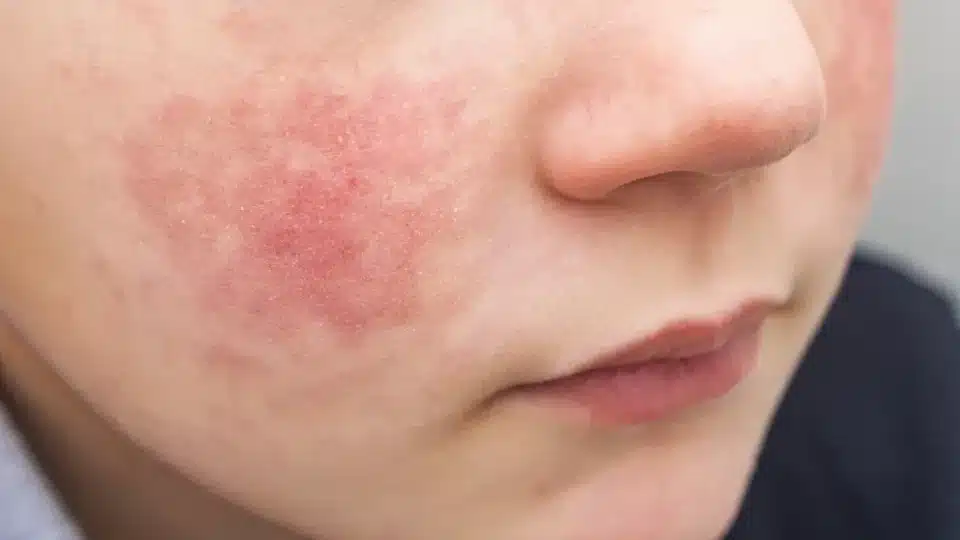
Eczema and psoriasis can also cause facial redness, usually alongside dryness, flaking, or a rash-like texture rather than a simple flush. These are chronic conditions that need a tailored treatment plan, not just soothing skincare.
Treatment Approach:
- Use fragrance-free, barrier-repairing moisturizers. Aveeno’s Eczema Therapy Daily Moisturizing Cream is accepted by the National Eczema Association, making it the better pick if eczema is behind your redness.
- Avoid known flare triggers specific to your condition
- Work with a dermatologist on a long-term management plan
- Don’t rely on general redness products alone if a diagnosed condition is the cause
| Fast Fixes for Sudden Redness
Sometimes you need your skin to look calmer in the next few minutes, not after weeks of a new routine. These tricks won’t fix the underlying cause, but they take the edge off fast.
|
How to Apply Products for Best Results
Using great products the wrong way can actually make redness worse. Here’s how to get the best results from your skincare routine.
- Start with Patch Testing: Always patch test new products on a small area before applying them to your entire face. Wait 24-48 hours to see if any irritation develops.
- Choose the Right Formulas: Choose fragrance-free formulas whenever possible. Even “natural” fragrances can trigger redness in sensitive skin.
- Layer Products Correctly: Apply products in thin layers rather than thick globs. This helps your skin absorb everything properly without feeling overwhelmed.
- Practice Patience: Give new products 4-6 weeks to show results for general redness. If you’re managing rosacea or a persistent condition, expect closer to 2-3 months before you see a real difference. Sticking with a routine long enough also leads to a better skin texture, as your barrier recovers.
Beyond your skincare routine, simple daily habits can significantly reduce facial redness and help maintain calmer, healthier-looking skin.
Ingredients That Actually Work on Redness
Once you know what’s triggering your redness, the next step is choosing products with ingredients that are actually proven to help. Here’s a quick reference for the most effective ones, how they work, and who they suit best.
| INGREDIENT | WHAT IT DOES | BEST-SUITED SKIN TYPE |
|---|---|---|
| Niacinamide | Strengthens your skin barrier while reducing inflammation and controlling oil production | Nearly all skin types, especially oily or acne-prone skin dealing with post-breakout redness |
| Centella Asiatica (Cica) | Calms inflammation and speeds up skin repair at the cellular level | Reactive, easily irritated skin, including skin that reacts badly to actives like retinol or acids |
| Azelaic Acid | Reduces inflammation and calms visible redness while also fading discoloration, without the irritation risk of stronger acids | Rosacea-prone and post-acne skin that can’t tolerate retinoids |
| Green Tea Extract | Delivers antioxidant and anti-inflammatory compounds that calm general irritation and puffiness | Skin that flares up from environmental stress, like pollution or sun exposure |
| Colloidal Oatmeal | Forms a protective film on the skin while easing itching and inflammation | Very sensitive, easily inflamed skin, including mild eczema-prone skin |
| Allantoin and Panthenol | Support the skin’s natural repair process and lock in moisture without adding any irritation risk | Compromised or over-exfoliated skin that needs to rebuild its barrier |
| Caffeine | Temporarily constricts blood vessels, which visibly reduces redness and puffiness right after application | Skin prone to flushing or under-eye puffiness, as a short-term fix |
| Beta-Glucans | Strengthens the skin barrier and calms visible redness, working similarly to ceramides but with a stronger immediate soothing effect | Barrier-damaged skin from over-exfoliation, harsh weather, or new actives |
Pick one or two ingredients that match your main trigger rather than layering all of them at once — more isn’t better here, and overlapping actives can backfire on already-irritated skin.
A Simple Daily Routine to Calm Redness
Once you know your triggers and the ingredients that help, the easiest way to see results is to build them into a routine you actually stick to. Here’s a simple morning and night routine to help calm redness without overcomplicating things.
Morning Routine to Reduce Face Redness
- Cleanse with a mild, fragrance-free cleanser using lukewarm water
- Apply a soothing serum with niacinamide or centella asiatica
- Follow with a barrier-supporting moisturizer containing ceramides or hyaluronic acid
- Finish with a broad-spectrum mineral sunscreen. The American Academy of Dermatology recommends a broad-spectrum, water-resistant SPF of 30 or higher, so treat that number as your floor, not a suggestion.
Night Routine for Calmer Skin
- Remove makeup and sunscreen with a gentle cleanser, avoiding harsh scrubbing
- Apply a treatment serum with azelaic acid if you’re managing rosacea or post-acne redness
- Layer on a richer, barrier-repairing moisturizer to support overnight recovery
- Skip active ingredients like retinol or strong acids on nights your skin feels irritated
A calm, consistent routine will always outperform a complicated one, and this simple structure gives your skin exactly what it needs.
How to Cover Facial Redness With Makeup
Skincare takes time to work, but makeup can help you feel more confident in the meantime. A few simple techniques make a real difference without looking heavy or cakey.
- Start with a Green-Tinted Primer: Apply it before any base product to visually cancel out redness at the source. Green sits opposite red on the color wheel, which is why it works so well.
- Choose Medium Coverage: Pick a medium-coverage foundation over full coverage for daily wear. It looks more natural and lets your skin breathe instead of sitting heavy on top.
- Use a Color-Correcting Concealer: Target stubborn spots like the nose or cheeks with a small amount of concealer rather than covering your whole face in a thick layer.
- Set with Lightweight Powder: Avoid layering more foundation to fix patchiness. A light dusting of powder holds everything in place without adding extra weight.
- Prep Skin First: Apply a calming moisturizer before makeup, since dry or irritated skin underneath tends to make makeup look patchy no matter what you put on top.
Makeup is a short-term cover-up, not a fix, so pair it with the skincare steps above for lasting results.
When It’s Time to See a Dermatologist
Specific signs call for a dermatologist rather than more skincare: visible spider-like blood vessels that don’t fade, a thickening or bulbous texture on the nose.
Eyes that feel gritty or inflamed alongside facial redness, or red bumps that look acne-like but don’t respond to acne treatment, are also red flags. These point toward rosacea subtypes that need a prescription-strength approach.
If redness persists for several months despite using gentle products, or you notice visible blood vessels or acne-like bumps that don’t respond to treatment, a dermatologist can help pinpoint what’s actually going on.
The same goes for severe reactions like swelling, burning, or widespread redness, since these often need more than an over-the-counter fix.
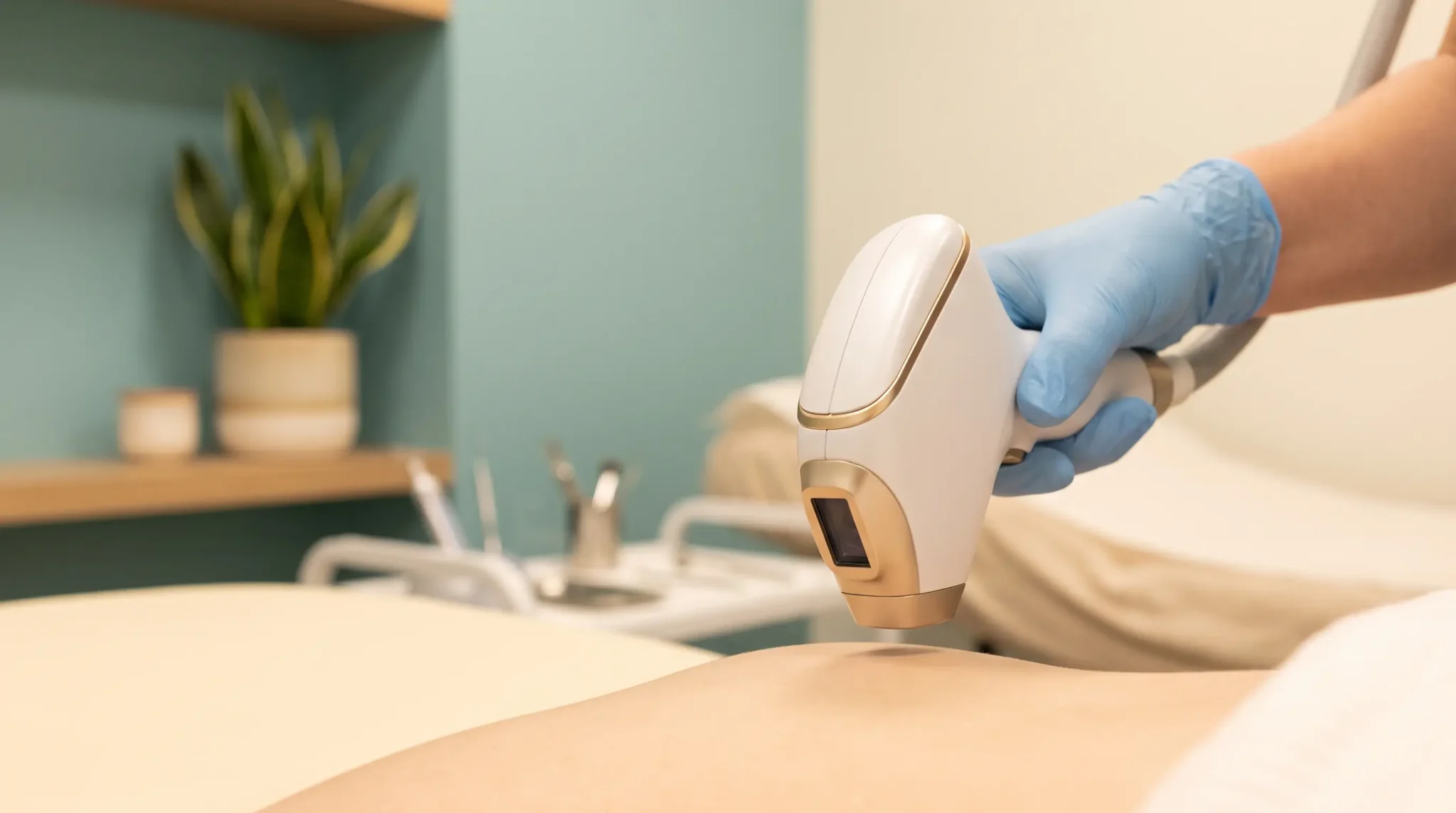
A dermatologist can also offer prescription-strength options or treatments like laser therapy for stubborn redness that home care simply can’t reach.
Daily Habits That Support Calmer Skin
Your skincare routine only does half the work. A few daily habits outside your routine can make just as much difference in keeping redness under control.
- Skip Hot Water: Wash your face with lukewarm water instead of hot. Heat strips your skin’s protective oils and triggers redness almost instantly.
- Watch Your Diet Triggers: Keep a simple log for two weeks, noting what you ate or drank before a flare-up. Spicy food and alcohol are common culprits, but triggers are personal, so tracking beats guessing.
- Manage Stress: Lower your cortisol levels through exercise or meditation. A study published via the National Library of Medicine links increased stress directly to higher inflammatory markers in the body.
- Add a Humidifier: Use one indoors during dry months to help your skin hold onto moisture and resist irritation.
- Stay Consistent: Stick with your routine instead of switching products often, since frequent changes irritate sensitive skin more than they help it.
Small, consistent habits add up faster than any single product ever will.
Final Thoughts on Reducing Face Redness
Findinghow to reduce redness in face is often a process of trial, observation, and consistency.
Some changes happen quickly, while others take a few weeks before your skin starts to settle. Give your routine time to work, protect your skin barrier, and don’t be discouraged by the occasional flare-up.
Healthy skin isn’t perfectly calm every day, but it should feel stronger and more comfortable over time. When you focus on long-term skin health instead of quick fixes, lasting results are much more likely to follow.
Frequently Asked Questions
Is Facial Redness Permanent, or Can It Be Fully Reversed?
Most facial redness from irritation or sun exposure improves with proper care. Redness caused by rosacea can be managed but may return if triggers are not controlled.
Does Exercise Make Redness Worse?
Exercise can cause temporary facial flushing that usually fades within an hour. People with rosacea may notice stronger redness during intense workouts.
Can Wearing Makeup Make Redness Worse Over Time?
Yes, heavy or pore-clogging makeup can irritate the skin if not removed properly. Using gentle, non-comedogenic products can help reduce irritation.
Can Facial Redness Be Genetic?
Yes, genetics can increase your risk of facial redness and conditions like rosacea. If a close family member has it, you may be more likely to develop it as well.
Do Men Need Different Redness Products Than Women?
No, the same redness-reducing ingredients work for both men and women. Men may simply prefer lighter gel formulas because their skin is often thicker and oilier.
Should I Avoid All Acids if I Have Red, Sensitive Skin?
Not necessarily. Gentle acids like azelaic acid can actually help reduce redness. Start with low concentrations and use them only 2-3 times per week.