Ruddy skin is often brushed off as a healthy glow, but persistent redness is not always that simple.
The same flushed cheeks can be completely normal for one person and a sign of sun damage, sensitive skin, or rosacea for another.
Knowing the difference can save you from spending time and money on products that were never the right fit in the first place.
What is a Ruddy Complexion?
A ruddy complexion describes skin with a persistent reddish or pink undertone, most noticeable on the cheeks, nose, forehead, and chin.
It is not the same as a temporary flush from heat, exercise, or embarrassment, which fades within minutes. A true ruddy complexion tends to stay visible for hours or even settle in as a constant background tone.
The redness comes from blood vessels that sit closer to the skin’s surface or dilate more easily than average. Some people are simply born with thinner, fairer skin that shows this coloring more readily.
Others develop it gradually because of sun exposure, weather, or sensitivity that builds over time. Understanding this baseline helps separate a naturally rosy tone from redness that signals irritation or an underlying skin condition.
|
In short, a ruddy complexion is skin with a lasting reddish tone across the cheeks, nose, and forehead that does not fade the way a normal flush does. I always tell people that this baseline redness is different from rosacea, though the two are often confused. |
What Causes Ruddy Skin?
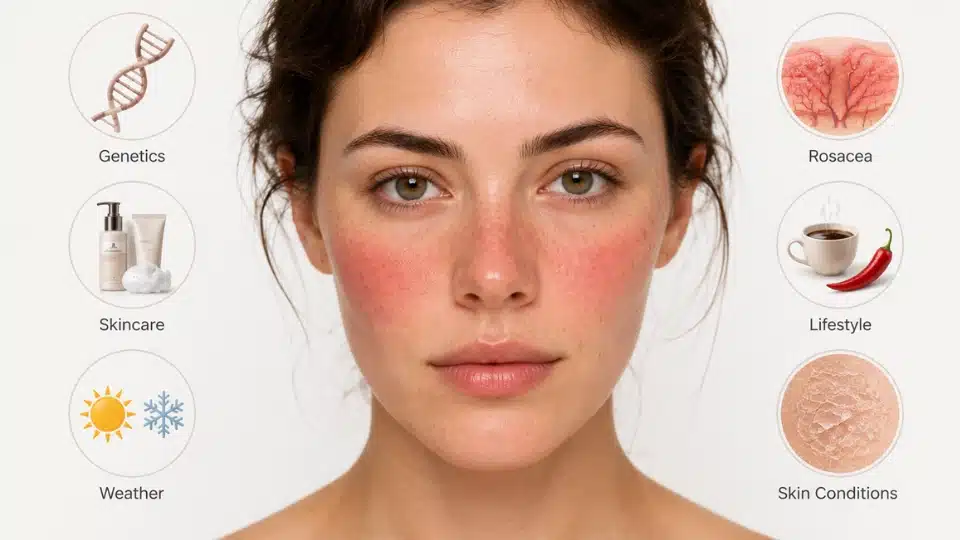
Redness rarely comes from one single source, so it helps to look at the most common contributors below before deciding on a fix.
Dermatologists, including guidance from the American Academy of Dermatology, point to a mix of factors that raise blood flow to the surface of the skin.
1. Genetics
Fair, thin skin often shows blood vessels more easily, which creates a naturally rosy or flushed look.
If a parent or sibling has similar coloring, that same trait likely plays a role for you. Genetics also shapes how reactive your skin is to weather, spicy food, and other everyday triggers.
2. Skincare Habits
Harsh cleansers, over-exfoliating, and frequent hot showers can all strip the skin barrier and leave it more reactive.
Once the barrier is compromised, it triggers inflammation, which increases blood flow near the surface and creates a flushed look that can last well after the irritation itself fades.
3. Weather and Environment
Cold wind, dry air, and strong sun exposure can all cause blood vessels to widen near the skin’s surface.
Repeated exposure without a barrier like moisturizer or sunscreen makes this redness show up more often and last longer. Over the years, sun damage alone can leave skin looking permanently flushed.
4. Rosacea
Rosacea is a chronic skin condition that causes lasting facial redness, visible vessels, and sometimes small bumps.
It often flares after triggers like heat, alcohol, or stress and tends to worsen gradually without treatment. Rosacea is one of the most common medical reasons behind a persistently ruddy complexion.
5. Lifestyle Habits
Alcohol, caffeine, and spicy meals temporarily dilate blood vessels, which can intensify an already ruddy tone.
Poor sleep and high stress levels raise inflammation in the body, making redness harder to control. Smoking also narrows circulation over time, leaving skin looking uneven and dull.
6. Other Skin Conditions
Eczema, psoriasis, seborrheic dermatitis, and even certain allergic reactions can trigger inflammation that shows up as redness and blotchiness.
Seborrheic dermatitis in particular tends to show up around the nose, eyebrows, and forehead, often with scaling and itching alongside the redness
These conditions often come with additional symptoms such as flaking, itching, or changes in texture alongside the ruddy tone. Treating the underlying condition usually improves the redness as a side effect.
Ruddy Skin vs Rosacea: What Is the Difference?
Ruddy skin and rosacea share a similar appearance, which can make them easy to confuse without a closer comparison below.
| Feature | Ruddy Skin | Rosacea |
|---|---|---|
| Cause | Genetics, weather, or lifestyle habits | Chronic inflammatory skin condition |
| Duration | Can be constant or come and go | Persistent, tends to worsen without care |
| Visible vessels | Sometimes present, often faint | Commonly visible, more pronounced |
| Bumps or pustules | Rarely present | Often present during flare-ups |
| Common triggers | Sun, cold, alcohol, spicy food | Same triggers, but reactions are stronger |
| Best next step | Gentle skincare and sun protection | Diagnosis and treatment from a dermatologist |
Rosacea usually needs medical management, while general ruddy skin often responds well to gentler daily habits and consistent sun care.
Types of Rosacea Linked to Ruddy Skin
Rosacea does not look the same for everyone, and it often falls into a few distinct patterns. Knowing the type can help explain why redness shows up differently from one person to the next.
- Erythematotelangiectatic Rosacea: Persistent redness with visible, dilated blood vessels (telangiectasia).
- Papulopustular Rosacea: Redness along with bumps and pus-filled pimples that can resemble acne.
- Phymatous Rosacea: Thickened skin texture, most often around the nose, developing gradually over time.
- Ocular Rosacea: Redness, irritation, and dryness affecting the eyes rather than the skin.
Each subtype can appear on its own or overlap with another, so a dermatologist is the best judge of which pattern fits a given case.
Signs You May Have a Ruddy Complexion
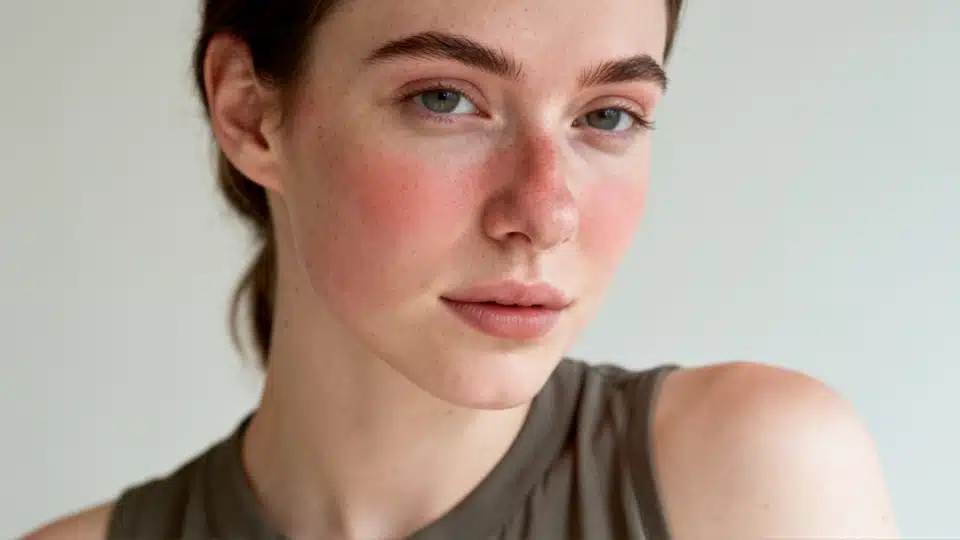
Some signs are easy to miss at first, especially if the redness has been part of your skin for years already.
- A constant flush across your cheeks and nose, visible even in cool, calm settings.
- Skin that feels warm to the touch in the areas that look the most red or pink.
- Uneven tone that shows through makeup, requiring extra coverage to balance the skin.
- Sensitivity to new skincare products, with stinging or irritation that others may not experience.
Noticing two or more of these signs regularly is a good reason to look more closely at your skincare routine and triggers.
Does Ruddy Skin Look the Same Across All Skin Tones?
Ruddy skin does not read the same way across every complexion. On fair skin, it usually shows up as bright red or pink across the cheeks and nose.
In medium and deeper skin tones, the same redness can appear more purple, deep red, or warm brown, which often leads to it being missed or misdiagnosed.
This gap shows up even in color-correcting advice, where most tips are written with only fair skin in mind, leaving out a large group of people who deal with ruddiness just as often.
How To Manage and Reduce a Ruddy Complexion
Managing ruddy skin comes down to protecting the skin barrier and avoiding the habits that make redness worse.
1. Build a Gentle Skincare Routine
Choose fragrance-free cleansers and moisturizers made for sensitive skin, since harsh formulas strip the barrier and worsen redness.
Look for calming ingredients like niacinamide, centella asiatica, and ceramides, which also support smoother skin texture as the barrier repairs. Avoid scrubbing or using hot water on the face, as both increase irritation.
2. Wear Sunscreen Every Day
Daily broad-spectrum SPF 30 or higher protects thin, reactive skin from UV rays that dilate blood vessels and deepen redness over time.
I recommend reapplying every two hours when you are outdoors, since sun exposure is one of the fastest ways to undo progress on calming redness.
Mineral sunscreens with zinc oxide tend to feel gentler on sensitive, flush-prone skin than chemical formulas.
3. Watch Diet and Lifestyle Triggers
Track how your skin reacts to alcohol, caffeine, and spicy food, then scale back on whatever consistently causes flushing. Better sleep and lower stress also help reduce how often redness flares throughout the week.
4. Use Calming, Anti-Redness Ingredients
Look for serums or creams containing azelaic acid, green tea extract, or licorice root, all of which are known to reduce visible redness. Introduce new products slowly to avoid overwhelming already sensitive skin.
In my experience, azelaic acid is usually the gentlest starting point for people new to redness-focused skincare, since it works slowly without the stinging that some stronger actives can cause.
5. Know When to Escalate Care
If home care is not enough, dermatologists can offer treatments like laser therapy or prescription creams. These options target stubborn redness that everyday products cannot fully resolve on their own.
Makeup Tips to Reduce the Appearance of Facial Redness
The right approach to makeup can balance a ruddy complexion without hiding your natural skin texture.
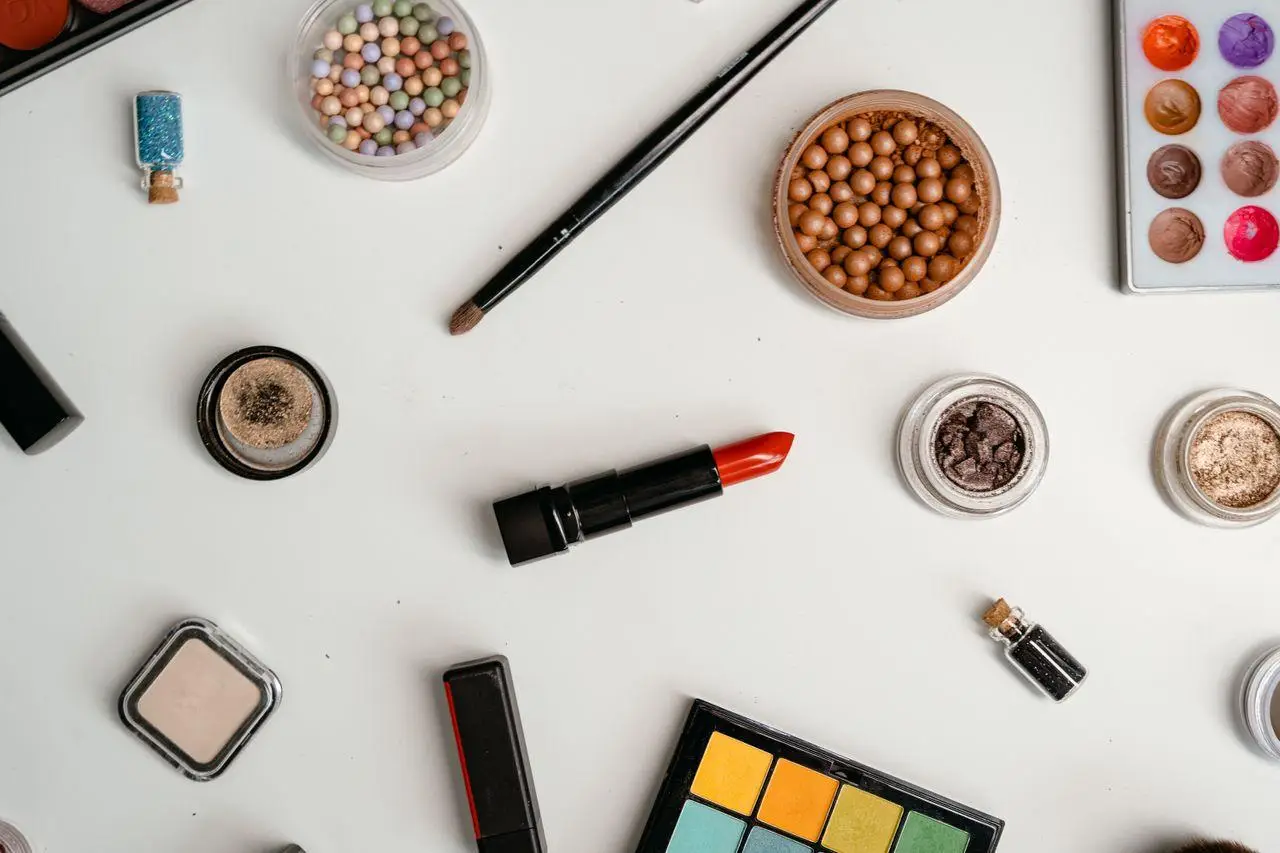
- Start with a green color corrector to neutralize red tones before applying any foundation or concealer.
- Choose a lightweight, buildable foundation instead of a heavy matte formula that can settle into fine lines.
- Set redness-prone areas with translucent powder to control shine without adding extra visible texture.
- Skip harsh matte blush shades and opt for cool-toned bronzers that will not compete with existing redness.
- Use a hydrating primer first, since dry skin can make redness look more pronounced under makeup.
- Finish with a setting spray to keep the coverage even and prevent it from looking cakey by midday.
These small adjustments help even out tone while keeping the finish natural rather than heavily masked.
When to See a Dermatologist
Occasional redness from heat or spicy food is normal and usually fades within an hour without any intervention.
Persistent redness that lasts for days, worsens over time, or comes with bumps and visible vessels deserves a closer look.
These patterns often point to rosacea or another underlying skin condition rather than simple sensitivity.
A dermatologist can confirm the cause through a physical exam and, if needed, recommend prescription treatment or in-office procedures like laser therapy.
Waiting too long to address chronic redness can allow the condition to progress and become harder to manage. If your skin has stopped responding to gentle, redness-focused products at home, professional guidance is the next right step.
Final Thoughts
Ruddy skin does not have a single cause, so there is no one-size-fits-all solution.
Small changes like protecting your skin from the sun, avoiding harsh products, and paying attention to personal triggers can gradually reduce visible redness and support a healthier skin barrier.
If those steps are not enough or the redness continues to worsen, a dermatologist can help identify the underlying cause and recommend treatments that go beyond what over-the-counter skincare can achieve.
Frequently Asked Questions
Are Men Less Likely to Have a Ruddy Complexion Than Women?
Not exactly. General skin ruddiness affects men and women fairly evenly, but rosacea, specifically, one of its most common causes, is diagnosed more often in women. Men who develop rosacea tend to notice it later and can have more severe cases, including thickened skin around the nose.
Do Certain Skincare Ingredients Make Ruddy Skin Worse?
Yes. Fragrance, alcohol-based toners, and high-strength exfoliating acids can all weaken the skin barrier and trigger more redness. Sticking to fragrance-free, gentle formulas usually keeps flare-ups to a minimum.
Can Supplements Help Improve Ruddy Skin?
Some supplements, such as omega-3s and vitamin C, may support skin health and reduce inflammation. They work best along with a good skincare routine.
Does Ruddy Skin Look the Same Across All Skin Tones?
No, ruddy skin appears bright red on lighter skin but may look deeper red, purple, or warm brown on darker skin tones.