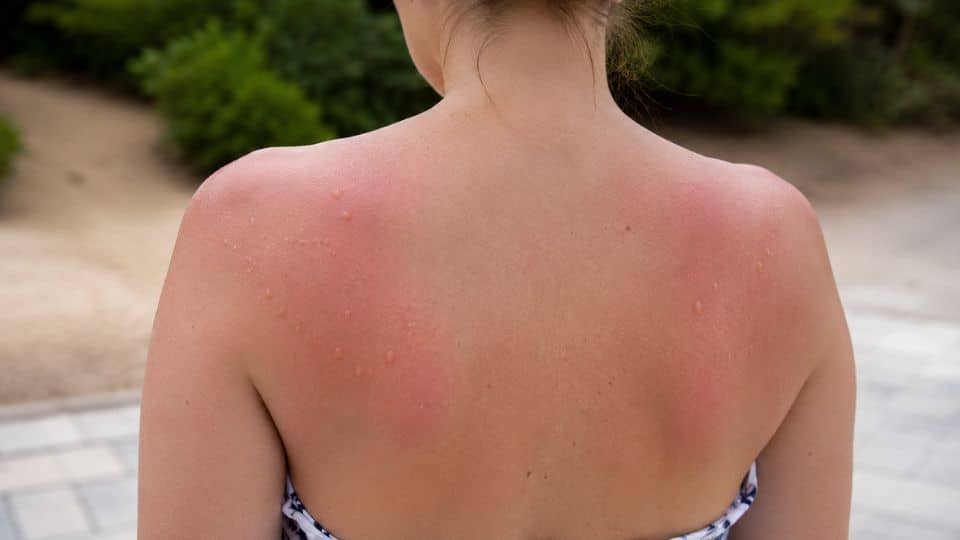
Most people don’t realize they’ve crossed the line from a simple sunburn to a second-degree burn until blisters appear.
By then, the questions come quickly.
Should you pop them or leave them alone? Is aloe vera enough, or do you need something more? How can you tell if they’re healing normally or becoming infected?
The answers aren’t always as straightforward as the internet makes them seem.
Blisters from sunburn aren’t something to ignore or guess your way through. A little knowledge early on can make a big difference in how well your skin heals.
What Are Blisters From Sunburn?
Blisters from sunburn are fluid-filled pockets that form when ultraviolet rays damage skin deeply enough to separate its layers.
Sunburn that blisters is classified as a second-degree burn, since the damage reaches past the epidermis into the dermis underneath, while a regular sunburn without blisters only affects the outer layer and counts as first-degree, and how quickly skin recovers often depends on which category it falls into.
The body sends fluid into that gap as a cushion, which is why the bumps feel soft and tender rather than hard.
They usually surface several hours after sun exposure, sometimes not until the next morning, which catches a lot of people off guard.
Why Does Sunburn Cause Blisters?
Blistering is not random. It follows a fairly predictable chain of events under the skin once UV exposure crosses a certain threshold.
- UV rays penetrate past the epidermis into the dermis: Intense or prolonged sun exposure damages both the outer skin layer and the layer beneath it. The CDC describes these as the skin’s two main layers, with the epidermis on the outside and the dermis underneath, and blistering happens once damage reaches that second layer.
- Cells release fluid to protect the area: The body pushes plasma between damaged skin layers, and that fluid pocket becomes the blister itself.
- Skin type and sun intensity both play a role: Fair skin, high altitude, reflective water or sand, and midday sun all raise blistering odds.
- Certain medications increase photosensitivity: Some antibiotics, diuretics, and NSAIDs, along with acne treatments and certain retinoid-based skincare, make skin react faster and more severely to UV exposure.
- Repeated burns lower your skin’s tolerance over time: Skin that has blistered before tends to react more severely to future sun exposure in the same areas.
None of these triggers work alone. Most bad blistering burns are actually a combination of a couple of these factors stacking up at once.
|
Are Blisters From Sunburn a Sign of Sun Poisoning? Blistering can be one sign of sun poisoning, which is really just a severe sunburn with extra symptoms attached. Watch for nausea, chills or fever, headache, dizziness, or unusual fatigue alongside the blisters. A blister alone is not automatically sun poisoning, but two or more of these together is worth monitoring closely and calling a doctor if they do not ease up. |
What Do Sunburn Blisters Look and Feel Like?
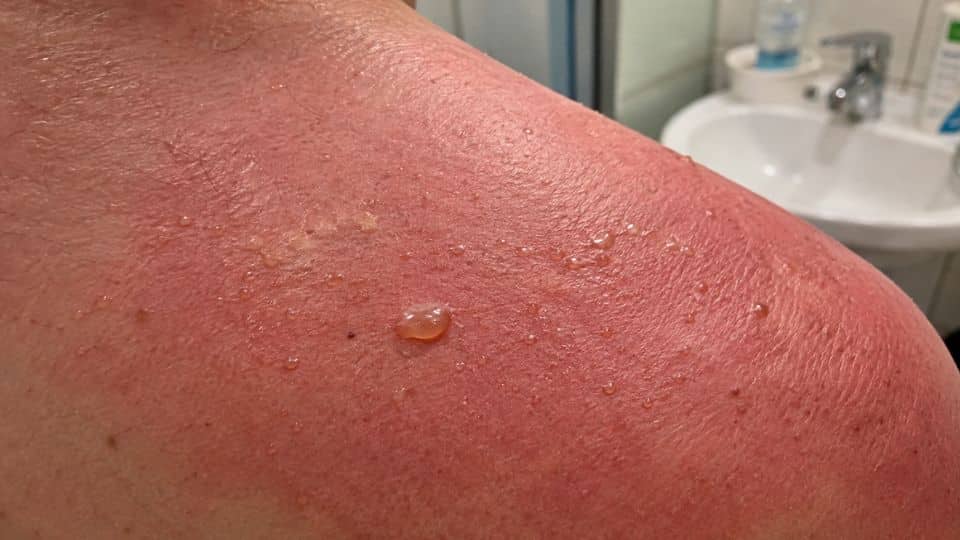
I always tell people to check both how the skin looks and how it actually feels, since the two do not always match up. A blister can look small and still feel much worse than it appears.
- Small to medium bumps filled with clear or slightly yellow fluid
- Surrounding skin that is red, swollen, and warm to the touch
- Noticeable tenderness or sharp pain when clothing brushes against the area
- Skin that feels tight or stretched around the blistered patches
- Possible itching as the fluid builds and the skin reacts
- Clusters rather than a single isolated blister in most cases
If more than one or two of these show up together, treat it as a real second-degree burn, not just a stronger regular sunburn.
How to Treat Blisters From Sunburn at Home
A few careful steps can ease the pain and lower the risk of complications while your skin works through the healing process on its own timeline.
1. Leave the Blister Intact
Popping a blister removes its natural barrier and opens the skin to bacteria. I know the urge to drain it is strong, but leaving it sealed genuinely speeds up healing.
That fluid inside is doing actual work, cushioning the raw skin underneath while new cells rebuild. If it breaks on its own, that is different from popping it yourself. Move straight into cleaning and covering it rather than leaving it exposed.
2. Cool the Area Gently
A cool compress or a cool shower can calm inflammation and ease the sting. Avoid applying ice directly to the skin, as extreme cold can cause additional damage to already irritated skin.
Combining cooling methods with other steps to calm a sunburn quickly can provide faster relief than relying on a single remedy alone.
I keep a stack of thin cotton washcloths in the freezer during summer for exactly this. Ten to fifteen minutes a few times a day makes a noticeable difference in how tight and hot the skin feels by evening.
3. Apply Aloe Vera or a Fragrance-Free Moisturizer
Pure aloe soothes and hydrates without clogging the area. Skip scented lotions or anything with alcohol, since both tend to sting broken or blistered skin.
Chilling the aloe gel in the fridge before applying it adds a cooling effect on top of the moisture.
Most people find this more comfortable than room temperature gel. Reapply a thin layer two to three times a day rather than one heavy coat.
|
Petroleum jelly actually works in your favor here, on broken skin as well as intact skin. A thin layer keeps the area from drying out and cracking, and on a popped blister it stops the bandage from sticking to raw skin underneath. Just make sure the skin is clean first, and swap the layer out each time you change the bandage rather than piling on more without cleaning underneath. |
4. Take an Over-the-Counter Pain Reliever
Ibuprofen reduces both pain and the swelling driving it. Acetaminophen works for pain relief if ibuprofen is not an option for you personally.
Timing matters here. Taking a dose before bed, rather than waiting until pain wakes you up, tends to make the first night with a fresh blister far more manageable.
5. Stay Hydrated
Blistered skin loses water faster than intact skin does. Extra fluids support your body’s repair process from the inside while the surface heals.
I try to treat this like any other injury that needs extra resources to recover. Water, herbal tea, and water-rich foods like watermelon all count toward that daily total, not just plain water alone.
6. Wear Loose, Breathable Fabric
Tight clothing rubs against blisters and can cause them to tear open early. Loose cotton pieces protect the area without adding friction throughout the day.
Linen and soft cotton tend to breathe better than synthetic blends, which trap heat right where you least want it.
If the blister sits somewhere clothing constantly touches, a loose bandage under the fabric adds one more layer of protection.
These six steps work best together rather than picked at random. Pain relief, hydration, and gentle cooling all support the same healing process from different angles.
How They Look During Healing
Healing does not happen all at once. Skin moves through a few visible stages before it looks and feels normal again.
- Fluid gradually reabsorbs and blisters flatten over several days
- Skin underneath may look shiny, pink, or slightly raw once a blister flattens
- Peeling typically follows as the damaged top layer sheds away
- Color can shift to a light tan or slightly darker tone in the healing patch
- Itching often increases right before peeling fully finishes
- New skin underneath looks noticeably softer and more sensitive at first
That new skin stays sensitive for a while. I always recommend extra sunscreen on those exact patches long after the rest of the burn has faded.
| Will Sunburn Blisters Leave Scars?
Most sunburn blisters heal without permanent scarring, since the skin regenerates naturally once the wound closes. Scarring becomes more likely when a blister is popped early, picked at, or gets infected, and picking at peeling skin later raises that risk too. Keeping the area moisturized and using sunscreen on the new skin underneath helps prevent lasting discoloration, sometimes called hyperpigmentation, which is different from a true scar but can still take anywhere from several weeks up to a year to fully fade. |
How Long Do Blisters From Sunburn Last?
Timelines vary from person to person, but most blistering sunburns follow a pattern close to what is laid out below.
| Stage | Typical Timeline |
|---|---|
| Blister forms | 6 to 24 hours after sun exposure |
| Pain and swelling peak | Days 1 to 2 |
| Fluid reabsorbs, blister flattens | Days 3 to 5 |
| Peeling begins | Days 5 to 10 |
| Skin fully resettles | 2 to 3 weeks |
A larger or deeper burn can push these stages closer to the longer end of each range. Treat this as a general guide rather than a fixed countdown.
What Should You Do If a Sunburn Blister Pops?
A blister breaking on its own is not an emergency, but the next few minutes of care matter more than people expect. Here is the order I follow every time.
- Wash your hands before touching the area to avoid introducing bacteria.
- Gently clean the broken skin with mild soap and cool water.
- Pat the area dry instead of rubbing it with a towel.
- Apply a thin layer of antibiotic ointment to the open skin.
- Cover it with a nonstick bandage to protect it from friction and dirt.
- Change the bandage daily, or sooner if it gets wet or dirty.
- Watch the site closely over the next few days for any signs of infection.
Following these steps in order lowers the odds of the wound getting worse, which matters far more once the skin’s protective barrier is already gone.
What Not to Put on Sunburn Blisters
Some common home remedies do more harm than good on already damaged skin. This table covers the ones I see people reach for most often, and why they backfire.
| Avoid | Why It Makes Things Worse |
|---|---|
| Butter or oily home remedies | Blocks air from reaching damaged skin |
| Numbing sprays with benzocaine | Can trigger irritation or allergic reactions on broken skin |
| Ice directly on the skin | Adds cold injury on top of existing burn damage |
| Scented lotions or perfumed products | Alcohol and fragrance both sting and irritate blistered areas |
| Popping or picking at the blister | Increases infection risk and raises the odds of scarring |
When in doubt, plain and fragrance-free almost always beats anything marketed as a quick fix for sunburn.
How Can You Tell If a Sunburn Blister Is Infected?
Most blisters heal without complication, but it helps to know exactly what a problem looks like versus normal healing. These signs point to infection rather than the usual recovery process.
- Increasing redness that spreads beyond the original blister edge
- Warmth or swelling that gets worse instead of improving
- Pus or cloudy, foul-smelling fluid coming from the site
- Red streaking that extends outward from the blister
- Pain that intensifies rather than gradually easing
- Fever or general malaise appearing alongside the local symptoms
If you notice even two of these together, it is worth getting the area checked rather than waiting to see if it resolves on its own.
When Should You See a Doctor for Blisters From Sunburn?
Most blistering sunburns can be handled at home, but a few situations call for professional care instead of waiting it out.
Contact a Healthcare Professional Promptly If:
- Blisters are larger than a quarter, or cover a large portion of one limb or a significant part of your body
- Signs of infection appear, including pus, spreading redness, or worsening pain
- Pain feels disproportionate to how the burn looks on the surface
- A child under one year old develops any blistering from sun exposure
- Blisters form on the face, near the eyes, or across sensitive areas like the groin
Seek Urgent Care for These Whole Body Symptoms:
- Fever above 103°F
- Chills or shivering alongside the burn
- Confusion, dizziness, or fainting
- Persistent vomiting or an inability to keep fluids down
- Signs of dehydration, such as reduced urination or extreme thirst
The Mayo Clinic lists these same whole-body symptoms as reasons to seek immediate medical care after a severe sunburn.
How to Prevent Another Blistering Sunburn
Prevention is genuinely less effort than dealing with a blistering burn afterward, and most of it comes down to a few consistent habits.
- Apply broad-spectrum sunscreen generously: Choose SPF 30 or higher and reapply every two hours, more often after swimming or sweating.
- Time outdoor activities around peak UV hours: The American Academy of Dermatology recommends seeking shade whenever your shadow looks shorter than you are, since the sun’s rays are strongest between 10 a.m. and 2 p.m.
- Layer on physical coverage, not just sunscreen: Wide-brim hats, UV-rated clothing, and sunglasses all meaningfully reduce direct exposure.
- Seek shade during long outdoor stretches: Even partial shade lowers cumulative UV exposure over the course of a day.
- Check your skin type’s actual burn tolerance: Fair skin burns faster, but every skin tone benefits from consistent protection, not just the ones that redden fastest.
- Reapply sunscreen more often than feels necessary: Sweat, water, and toweling off all remove protection faster than most people expect.
Repeated blistering sunburns, especially at a young age, are linked to a higher lifetime risk of skin cancer, including melanoma, which is why prevention matters more than treating the damage after it happens.
I keep a travel-size sunscreen in every bag I own for exactly this reason, since reapplying only works if the product is actually within reach.
Final Thoughts
Blisters from sunburn are your skin’s way of signaling that a burn went deeper than surface-level irritation.
Recognizing that early, and resisting the urge to pop or pick at a blister, makes a real difference in how cleanly the area heals.
Keep the area cool, protected from further sun, and watch for signs of infection over the following days. Most cases resolve on their own, but knowing when to escalate to a doctor matters just as much as the home care itself.
Have a sunburn story or a home remedy that worked for you? Drop it in the comments below.
Frequently Asked Questions
Can Sunburn Blisters Appear on Lips?
Yes, lips can develop sunburn blisters because their skin is thin and easily damaged by UV rays. Using a lip balm with SPF helps protect them.
Does Skin Tone Affect How Likely Blisters are to Form?
Yes, fair skin usually burns and blisters more quickly, but any skin tone can develop blisters after enough sun exposure.
Can You Get Blisters from Tanning Beds Instead of the Sun?
Yes, tanning beds emit UV radiation that can cause burns and blisters just like natural sunlight.
Is It Normal for Blisters to Appear in a Cluster Rather Than Alone?
Yes, sunburn blisters often appear in groups because UV damage usually affects larger areas of exposed skin.
Should You Avoid Showering While Blisters are Healing?
No, cool showers are safe and can help soothe the skin. Avoid hot water and gently pat the area dry instead of rubbing it.
Frequently Asked Questions
Can Sunburn Blisters Appear on Lips?
Yes, lips can develop sunburn blisters because their skin is thin and easily damaged by UV rays. Using a lip balm with SPF helps protect them.
Does Skin Tone Affect How Likely Blisters are to Form?
Yes, fair skin usually burns and blisters more quickly, but any skin tone can develop blisters after enough sun exposure.
Can You Get Blisters from Tanning Beds Instead of the Sun?
Yes, tanning beds emit UV radiation that can cause burns and blisters just like natural sunlight.
Is It Normal for Blisters to Appear in a Cluster Rather Than Alone?
Yes, sunburn blisters often appear in groups because UV damage usually affects larger areas of exposed skin.
Should You Avoid Showering While Blisters are Healing?
No, cool showers are safe and can help soothe the skin. Avoid hot water and gently pat the area dry instead of rubbing it.