Contemporary jewellery occupies a unique space between visual expression and everyday practicality. Each piece must attract attention, feel comfortable, and remain relevant beyond a single outfit. That balance depends on proportion, surface, colour, and material rather than decoration alone.
Art-led jewellery begins with a clear visual idea, such as a repeated curve, an irregular edge, or a deliberate contrast between polished and textured surfaces. These decisions give a piece character. For anyone assessing Arms of Eve jewellery, the central question is simple: does each piece carry artistic interest while remaining practical for regular wear?
Art Starts With Proportion
Proportion controls how jewellery relates to the body and the clothing around it. A fine chain creates a subtle line, while a larger pendant draws attention to the neckline. Earrings also alter the balance of an outfit through their length, width, and position next to the face.
Good wearable design keeps these relationships deliberate. A sculptural ring needs enough visual weight to read as an object, but its profile must allow natural hand movement. A bracelet requires an appealing silhouette that doesn’t catch on sleeves or compete with other jewellery.
Materials Shape the Visual Language
Material changes how jewellery catches light, ages, and feels against the skin. Gold plating adds warmth, while rhodium plating creates a cooler, brighter surface. These finishes affect the piece and connect the visual concept with practical expectations.
Material choices also influence care requirements. Waterproof construction suits daily routines, while tarnish-free finishes reduce the need for frequent polishing. Wearers still need to follow the relevant care guidance because surface treatments require sensible handling over time.
Wearability Sets the Design Limit
Art gains value in jewellery when the wearer can use a piece without constant adjustment. Designers must consider weight, edges, closures, chain movement, and the way a piece sits during ordinary activity. These functional details shape the final form as much as the original sketch.
A wearable design should also work with several clothing choices. Neutral metal finishes are suitable for casual and formal outfits, while a distinctive shape supplies character without demanding a complete change of clothing.
This balance explains why contemporary jewellery often uses clean forms. Simple lines leave room for the material and silhouette to communicate. Complicated decoration can increase weight, snagging, or visual clutter.
Layering Turns Individual Pieces Into Composition
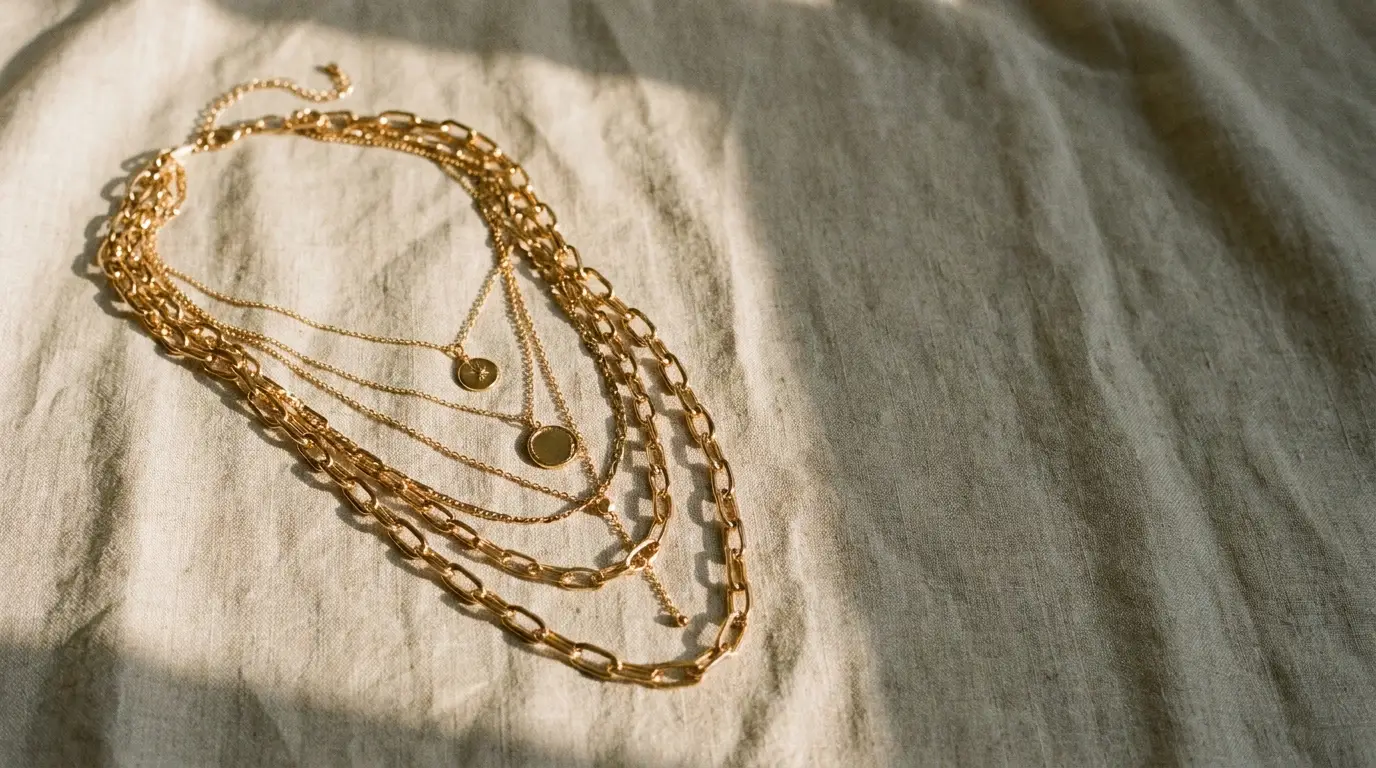
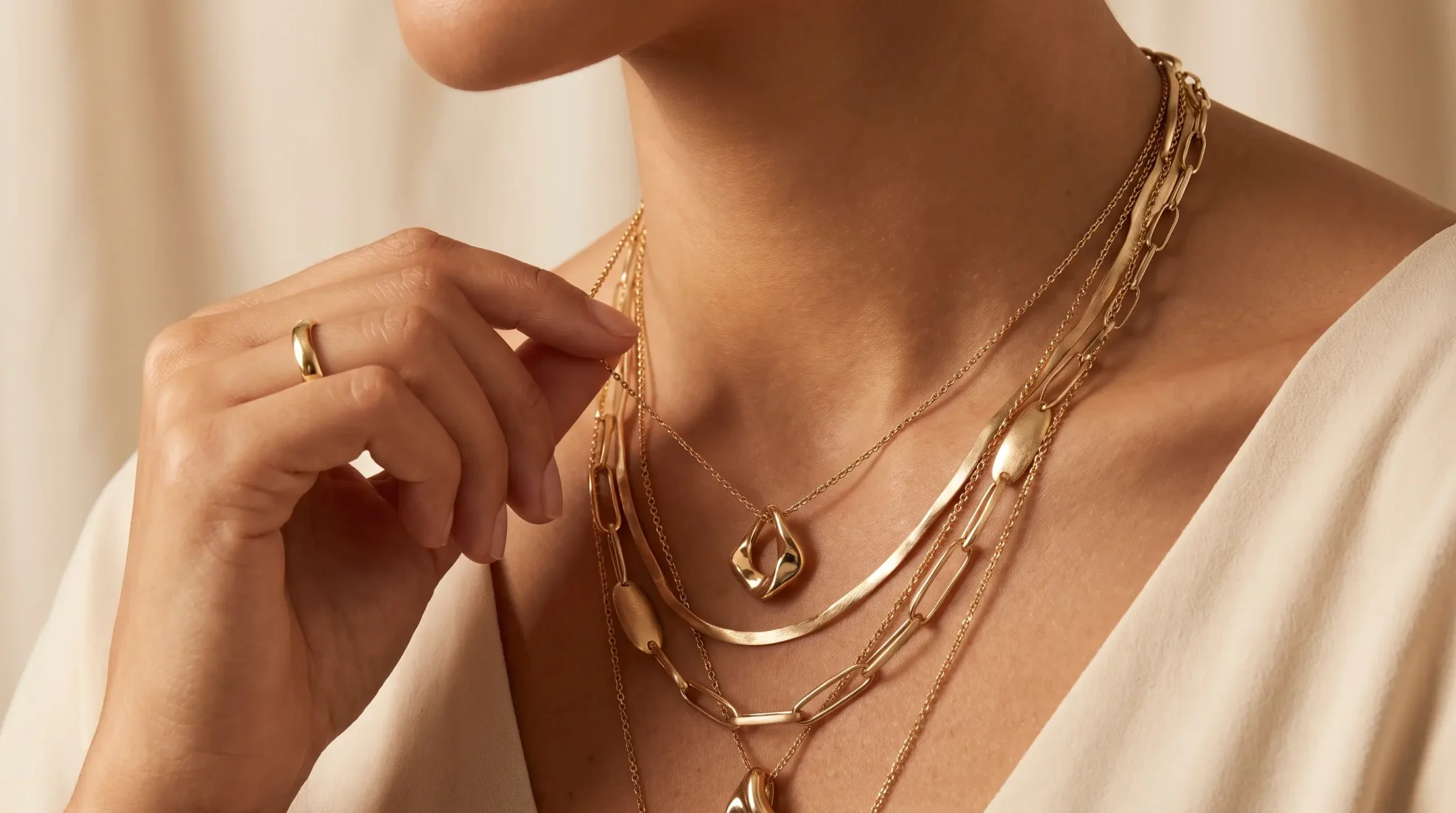
Stacking applies an art principle directly to personal styling. Several pieces create rhythm through changes in length, scale, and spacing.
Necklaces work best when each chain occupies a clear position. A short style can frame the collarbone, while a longer pendant creates a separate vertical line. Bracelets require similar spacing, especially when textures or finishes differ.
The same approach applies to rings. A slim band can be placed alongside a more sculptural design, allowing both forms to remain visible. Repeating one finish across several pieces creates cohesion, while a different shape prevents the arrangement from looking uniform.
Jewellery Can Carry Personal Meaning
Artistic jewellery becomes more useful when its form leaves room for interpretation. A charm, symbol, or unusual curve can relate to a memory without relying on a fixed trend. That personal connection gives the piece a reason to remain in regular rotation.
The wearer also controls the final meaning through placement and combination. The same pendant can appear understated over a plain shirt or become a focal point alongside layered chains. This flexibility separates wearable design from art intended solely for display.
Choosing an Artful Everyday Piece
Start with the item’s scale and intended setting. A smaller design is appropriate for frequent wear and pairs easily with existing jewellery, while a larger form needs more space around it. The finish should also suit the wearer’s usual clothing colours and preferred metal tones.
Next, examine movement and contact points. Check whether a pendant sits flat against the skin, whether an earring feels balanced, and whether a ring leaves enough room for natural hand movement.
Conclusion
Art and wearable design meet when a jewellery piece has a clear visual language and practical discipline. The strongest approach begins with proportion, surface, and material, then tests those choices against comfort and repeated wear. A useful next step is to study a piece closely, checking its scale, finish, and styling potential before choosing it.